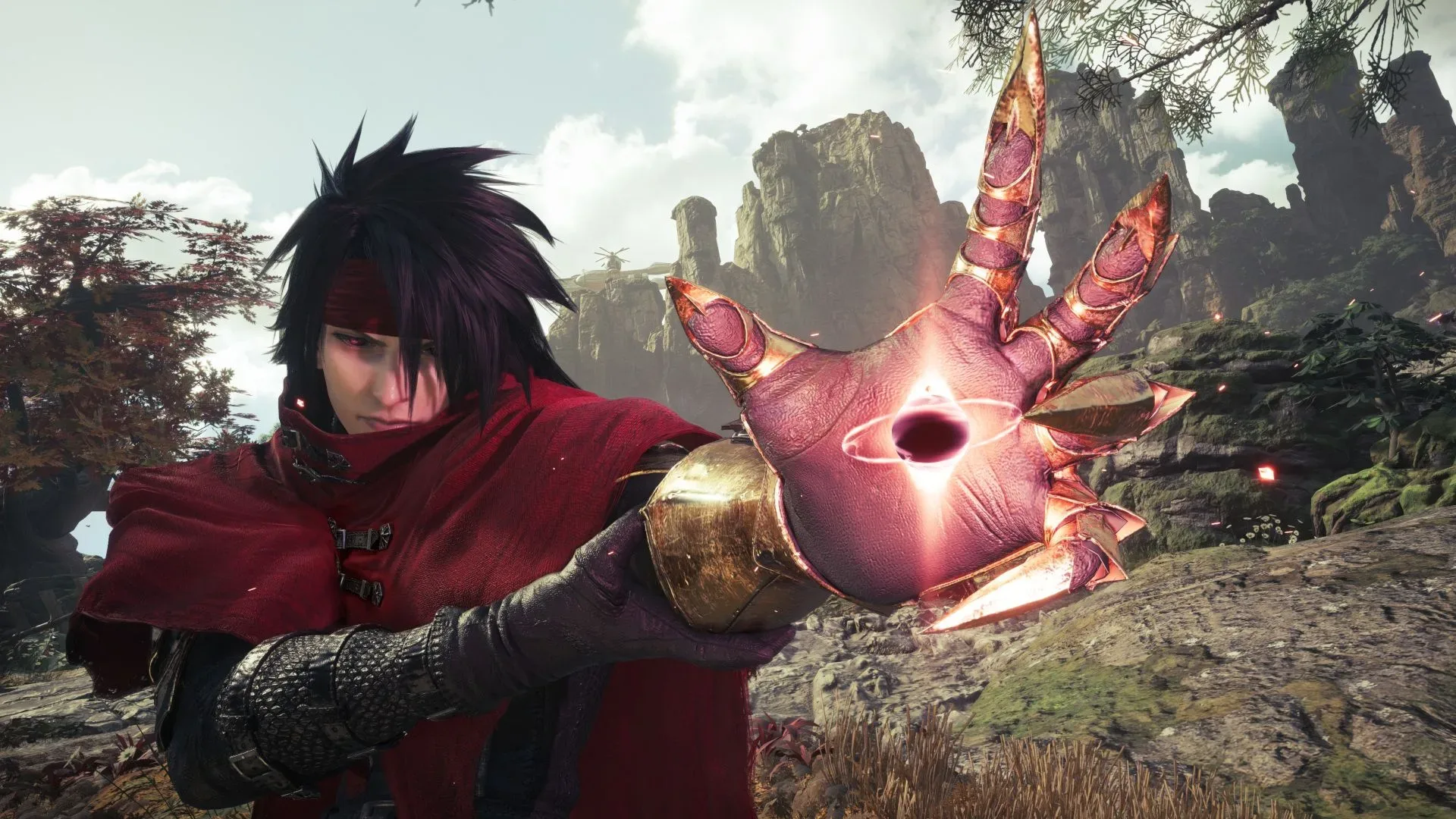
Naoki Hamaguchi believes the Final Fantasy 7 Remake series may be a rare kind of modern AAA project: a remake expanded and delivered as three major games, with one development effort needing to sustain its creative and commercial momentum from beginning to end.
Speaking about the trilogy as Final Fantasy 7 Revelation approaches, the series director said he expects well-known games to continue receiving remakes. What he is far less certain about is the prospect of many projects being split into three substantial releases in the same way. In his view, there may be very few examples—if any—that can match the Remake series’ overall scale across three titles.
“Not only is Final Fantasy 7 huge and the scale of the Remake Series is just enormous, but in a way, I don’t think a game will ever compare in terms of scale across three titles ever again.”
It is an understandably bold claim, and it is also a useful description of the particular wager behind this remake. The project is not simply a familiar game receiving refreshed visuals or a modern combat system. It is a multi-release reinterpretation of a classic JRPG, requiring a throughline between instalments while each entry must also stand as a major release in its own right.
That distinction matters. A trilogy can mean three related games made over a long period, each with its own premise and production cycle. Hamaguchi is describing something more tightly connected: one remake initiative whose divisions were planned around three titles. That creates a demanding form of continuity, not only for characters and story, but for production knowledge, technology, assets, design principles and the people responsible for carrying those decisions forward.
A remake format with unusually high stakes
Hamaguchi identified two of the core risks in attempting a project like this. First, the opening game needs to perform well enough—critically and commercially—for the larger plan to retain confidence. A three-part undertaking cannot assume its later chapters will automatically happen just because the first chapter exists. Weak reception or disappointing sales early on could force a rethink, complicate the plan or create pressure to change course.
Second, the team has to maintain a high degree of continuity. Hamaguchi described the need to keep the team as similar as possible across all titles as a “huge headache.” That phrase gets at a practical reality behind sequel development. A continuing series needs more than a shared logo and a returning cast. It benefits from institutional memory: the accumulated understanding of why a feature works as it does, how a character was interpreted, what technical trade-offs were made and where future work is meant to go.
When key knowledge moves between people or teams, replacement is not always as simple as reading a design document. Development decisions can have years of context behind them. For a three-game remake series, preserving that context is especially consequential because the later games are expected to feel connected to choices players made, systems they learned and relationships they formed in earlier entries.
Related coverage includes Naoki Hamaguchi Calls Final Fantasy 7 Remake Trilogy an Industry Outlier.
What “scale” means beyond map size
Scale is often treated as shorthand for a bigger world or a longer campaign. Hamaguchi’s comments suggest a broader definition. Here, scale includes the scope of Final Fantasy 7 itself, the act of remaking it, the three-release structure and the organizational task of steering that structure over multiple games.
That means the difficulty is not reducible to whether the games are long. The challenge is cumulative. A creative team must establish a new interpretation of existing material, preserve enough coherence that players recognize a unified series, and still provide each instalment with an identity strong enough to justify its place in the larger project. Those priorities can pull against each other. Too much repetition can make successive games feel overly dependent on the first; too much reinvention can weaken the sense that they belong to one continuous remake.
Hamaguchi appears to use “game” at times to mean the complete Remake series rather than a single boxed or digital release. That framing is central to his outlier argument. The trilogy is three individual titles in practical terms, but it is also one unusually extended creative proposition. Measuring it only as three separate games misses the production and narrative continuity he is emphasizing.
Why three-part remakes may remain uncommon
Popular older games will likely continue to be revisited, as Hamaguchi noted. But a remake does not need to adopt this structure to be ambitious. A publisher can update a single game in one release, make a sequel that uses its own setting and goals, or build a longer-running series with more flexible links between entries. Splitting one remake project across three major titles is a more rigid commitment because its early creative, technical and business decisions can shape the next two releases.
It also places a particular burden on audience trust. Players are not only being asked to engage with a remake; they are being asked to follow a story and a design direction over several instalments. The premise can be divisive precisely because it asks fans to judge both the individual entry in front of them and the larger plan that will not be fully visible until the series is complete.
The source material acknowledges that the choice to divide the classic JRPG remains contentious. That disagreement is not surprising. Some players may prefer a self-contained remake, while others may see value in an approach that gives distinct chapters more space. Hamaguchi’s comments do not settle that creative debate. Instead, they outline why the format is difficult to duplicate even if another team wanted to try: it requires an unusually large commitment, a stable long-term vision and the ability to manage the consequences of an early release across the rest of the plan.
In that sense, calling the trilogy an outlier is not necessarily a claim that no future game can be enormous. It is a claim about a specific combination of factors: a famous prior work, a remake rather than a wholly new property, three large releases, and the need to keep a closely connected team and direction throughout.
Revelation’s accessibility changes the conversation, too
Final Fantasy 7 Revelation is also set to include options aimed at reducing the grind for players who want a faster route through the campaign. The game lets players automatically level characters and move through the campaign more quickly, following requests from Rebirth players for relief from some of the genre’s progression demands.
In a JRPG, “grinding” generally means repeatedly fighting battles to earn experience, levels or other resources before moving ahead. For some players, that loop is a satisfying part of building a party and preparing for difficult encounters. For others, it can become a pacing barrier—especially in a long game or a series where returning players have already invested extensive time in earlier chapters.
Automatic leveling does not necessarily mean every player will use it, nor does it erase the strategic role of character progression for those who enjoy it. Its significance is that Revelation appears to offer a clearer accommodation for different play preferences. Players who want to focus on story progress may have a path with less repetitive leveling, while players who value conventional RPG advancement can still approach it on their own terms.
That is a practical design issue for a concluding chapter in a multi-game project. A long-running series has to account for fans arriving with different levels of time, patience and familiarity. An optional shortcut can lower a barrier without declaring the traditional approach invalid. It recognizes that accessibility is not always about difficulty in a narrow sense; it can also concern the amount of repetition a player is expected to accept in order to see the next major story development.
An achievement—and a hard model to copy
Hamaguchi said he will be proud if the Final Fantasy 7 Remake series is ultimately viewed as an outlier. That is a revealing way to present the trilogy. An outlier is not merely something large; it is something whose conditions are unusual enough that it should not be treated as an easy template for everyone else.
For players, that may be the clearest takeaway. Revelation’s arrival will complete a rare experiment in revisiting a landmark RPG through multiple major releases, while trying to maintain one connected interpretation of its world. Whether every player agrees with the structure is a separate question from whether the structure was exceptionally demanding to sustain.
The industry will continue to celebrate new releases and major creative milestones—such as the upcoming Golden Joystick Awards 2026 ceremony—but Hamaguchi’s point is about the less visible endurance behind a project of this kind. The Final Fantasy 7 Remake series has had to carry its ambitions across three games. If it feels singular when Revelation closes that arc, that may be because repeating the formula is considerably harder than admiring the result.