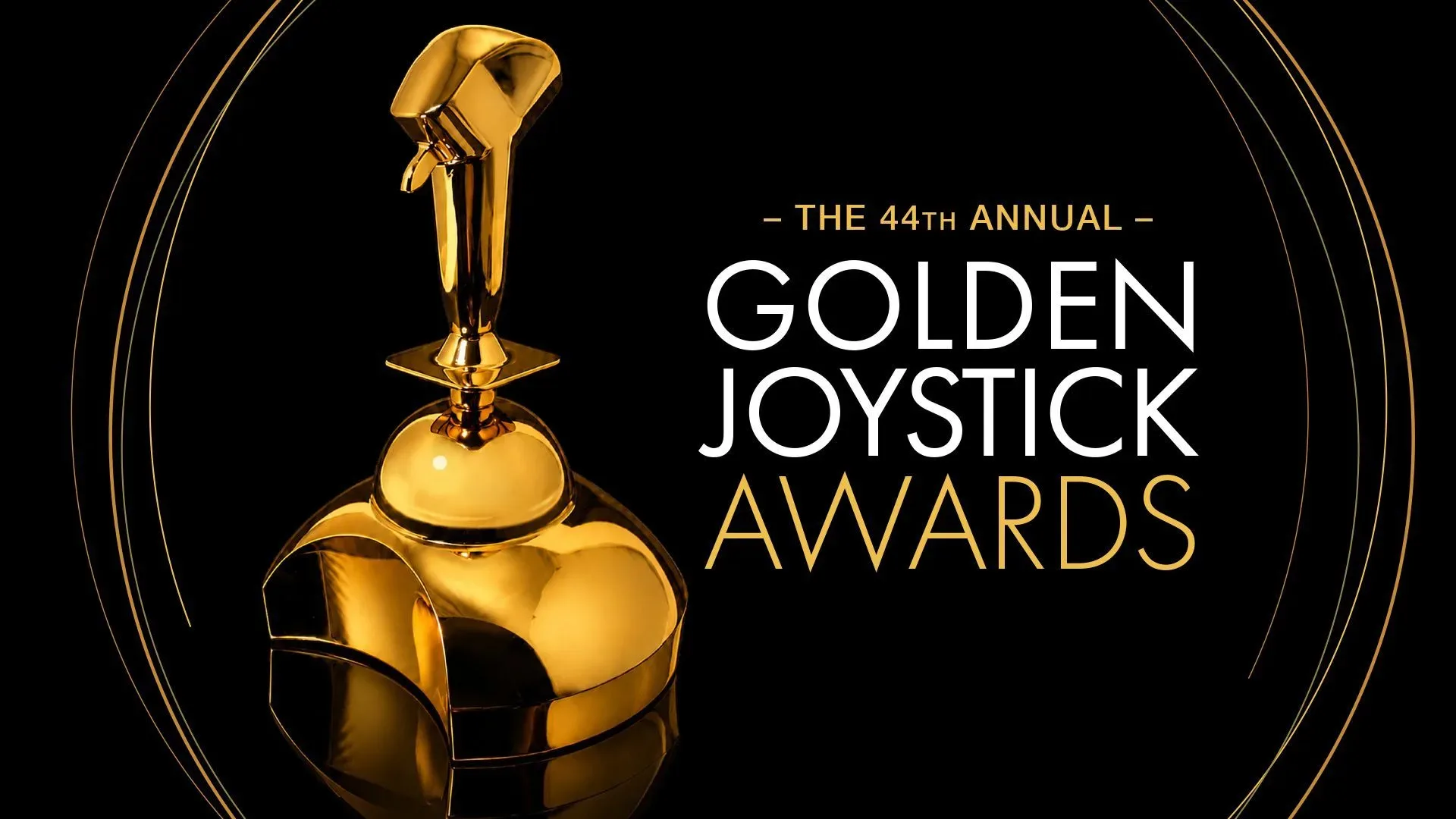
The 44th annual Golden Joystick Awards will be held on November 11, 2026, bringing back one of gaming’s longest-running publicly voted awards programs with a newly refreshed visual identity.
The first major date for players is September 25. That is when the critically curated shortlist will be published and public voting opens across the initial 21 categories. Those categories include Best Storytelling, Console Game of the Year and Best Lead Performer, alongside the rest of the opening ballot.
There is an important wrinkle in the calendar: Ultimate Game of the Year will not be voted on at the same time as the first batch. Voting for the initial categories ends on October 23, while the top prize gets its own voting period from October 26 through October 30.
That split gives more late-year releases a chance to enter the wider conversation before the biggest award is decided. It is a small scheduling choice with a meaningful effect. A game does not have to be in the earliest round of public voting to remain part of the discussion for the ceremony’s headline prize.
What the voting schedule means
The Golden Joysticks combine two distinct pieces of the awards process. First comes a critically curated shortlist: a selected list of games and people eligible for voters to consider. Then comes the public ballot, where players cast the votes that determine the eventual winners.
That distinction matters. Publicly voted does not mean every released game automatically appears on every ballot. The shortlist establishes the field, while public voting decides which shortlisted nominees take home the trophies.
The staggered Ultimate Game of the Year vote is particularly notable because it holds the final category until late October. The approach widens the window for games launching closer to the end of the year, avoiding a situation where the top prize is effectively settled before some major releases have had time to be considered.
Players planning to take part should therefore keep two dates in mind:
Related coverage includes Golden Joystick Awards 2026 Set for November 11 With New Visual Identity.
- September 25: shortlist reveal and opening of voting for the first 21 categories.
- October 23: closing date for that initial public vote.
- October 26–30: Ultimate Game of the Year voting period.
- November 11: awards ceremony.
Eligibility conditions and detailed rules are available through the awards event site. Those rules are worth checking before treating any individual game as a certainty for a category; an awards calendar can make a release feel like an obvious contender while the formal eligibility terms may set the actual boundaries.
A crowded field, but no obvious runaway
The 2026 race is shaping up as an unusually open one. The year has already produced prominent blockbuster contenders in Resident Evil: Requiem and 007: First Light, while smaller-scale games including Mina the Hollower and Big Walk have earned acclaim of their own.
More recent releases have expanded the conversation again, with Control: Resonant, Marvel’s Wolverine and The Blood of Dawnwalker all arriving to acclaim in the closing stretch. That mix matters because the Golden Joystick categories are not a single contest of scale. A game can be discussed for its story, its performance work, its platform category, or its broader impact—and those strengths do not always point to the same nominee.
For voters, the practical challenge is separating the game that generated the most immediate excitement from the one they believe delivered the strongest complete experience. Best Storytelling, for example, asks a different question from Console Game of the Year. Best Lead Performer narrows the focus further, placing attention on an individual performance rather than the game’s entire design.
It is also a year in which players may have encountered contenders across a variety of formats and genres. That makes lists more personal, but it can make consensus harder to predict. A high-profile action release, a role-playing game, an atmospheric independent title and a narrative-heavy adventure can inspire equally committed audiences without competing on identical terms.
That wider conversation is one of the benefits of a public ballot. It gives players a direct role after the shortlist is set, and it leaves room for games with devoted communities to make a serious showing alongside the year’s largest launches. Readers keeping up with the broader release slate may also be following platform-specific questions, such as the PC optimization lessons discussed in Capcom’s comments on Monster Hunter Wilds and Ascendance, which can shape how audiences experience a game even when awards categories focus on more specific achievements.
Why GTA 6 sits outside this ceremony’s immediate spotlight
Grand Theft Auto 6 is due to arrive on November 19, eight days after the November 11 ceremony. That timing naturally keeps attention on games released across the preceding awards window rather than on the imminent launch of Rockstar’s next open-world blockbuster.
The game was still a presence at last year’s Golden Joysticks, where it received awards for Best Game Trailer and Most Wanted Game. Those are categories that can recognize anticipation and promotional material, rather than a finished game competing on the same basis as released titles.
This year’s ceremony, by contrast, will serve as a snapshot of the games that have already had their moment with players before GTA 6 arrives. That does not diminish the anticipation around the November release; it simply clarifies the shape of the 2026 awards race. The most consequential ballot will be about the existing field, not the launch that follows the ceremony.
Last year’s result sets a high bar
The previous ceremony produced a dominant winner. French RPG Clair Obscur: Expedition 33 won a record-equalling seven trophies, including Ultimate Game of the Year.
Hollow Knight: Silksong and Ghost of Yōtei were also among the major winners. The result demonstrated how a single game can build momentum across multiple categories while still sharing the stage with other heavily supported releases.
Whether 2026 produces a similar sweep is far from clear. The supplied field suggests several plausible directions rather than one consensus favorite, and the delayed Ultimate Game of the Year vote creates additional time for late releases to enter the debate. A game that seems like a front-runner in September may face a different landscape by late October.
How to approach the ballot
For anyone preparing a personal awards list, it helps to think category by category instead of trying to crown a single favorite first. Consider what each category is actually asking:
- Best Storytelling: the strength of the game’s narrative delivery, not simply the size of its world or the intensity of its marketing.
- Best Lead Performer: an individual performance, rather than the collective quality of the cast or script.
- Console Game of the Year: a platform-focused recognition that should be considered separately from the overall Ultimate Game of the Year question.
- Ultimate Game of the Year: the broadest final judgment, with its own late-October voting window.
That category-first approach can make the voting process more useful and more interesting. The most technically impressive game may not be the best storytelling choice. The game with the strongest central performance may not be the one a voter considers the year’s defining release. Awards ballots are more revealing when those distinctions are allowed to stand.
The refreshed Golden Joystick Awards identity will accompany a ceremony built around that player input on November 11. Until then, the key milestone is September 25: the day the shortlist arrives, the first 21 public votes open, and the debate over 2026’s standout games moves from personal lists to an official ballot.