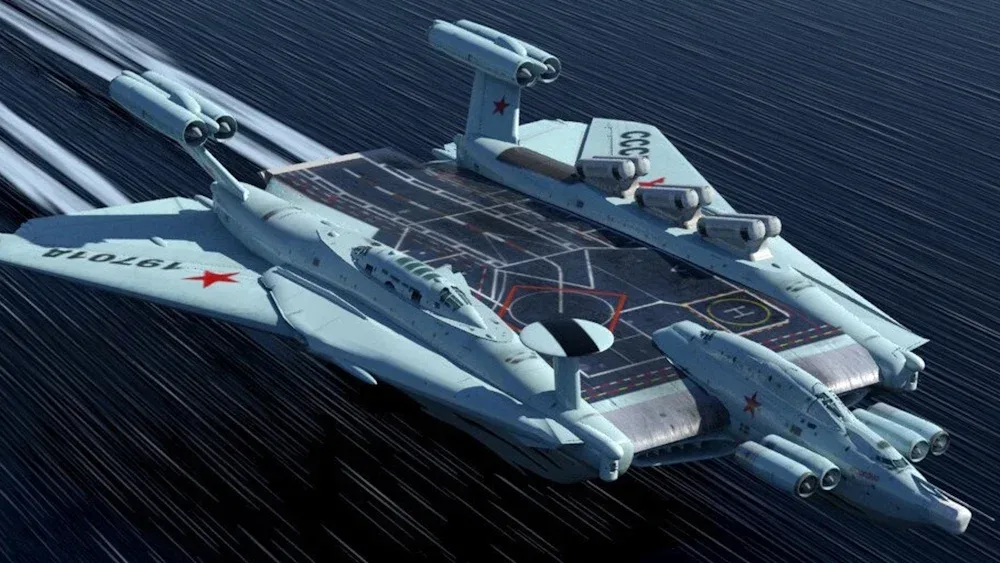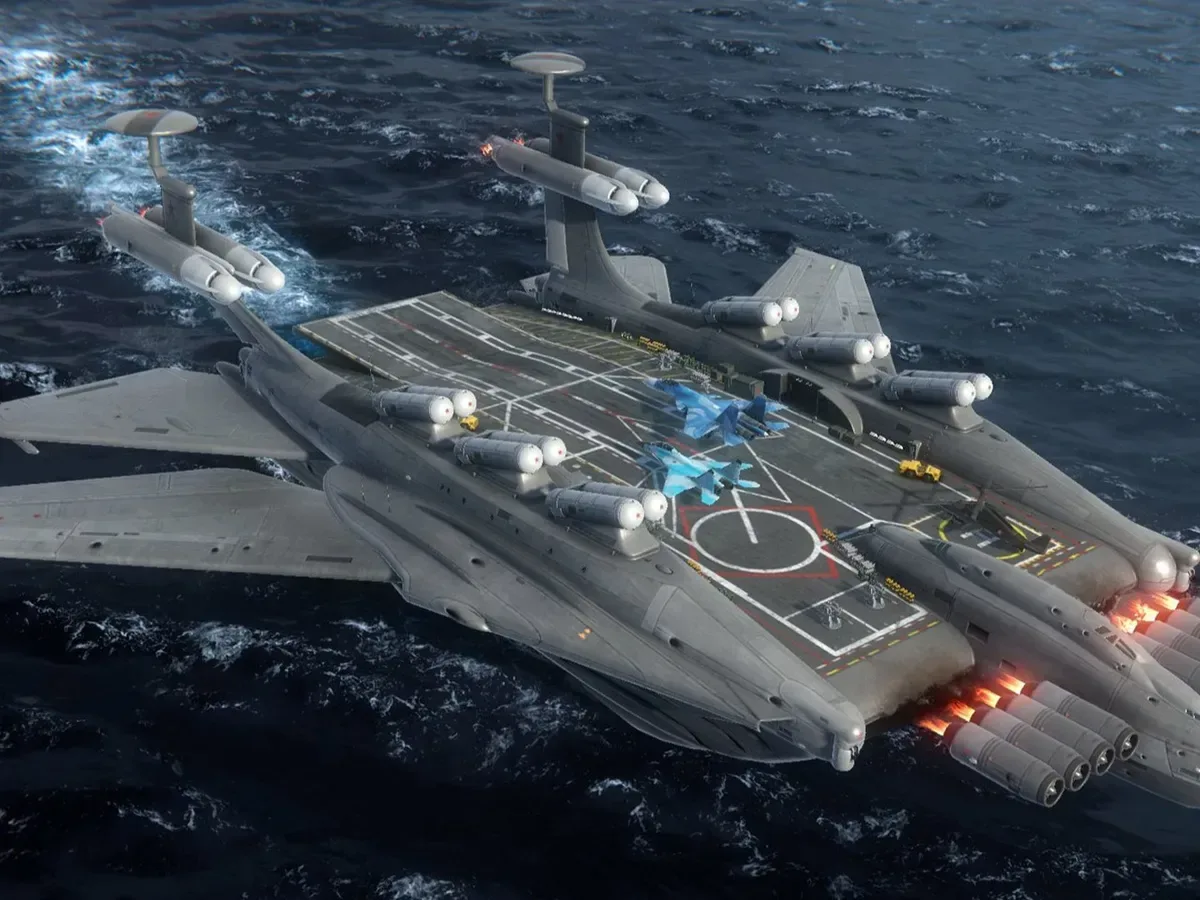
Modern Warships developer Artstorm has acknowledged using an independent artist’s vehicle concept “without proper clearance” after Alex Jay Brady identified a newly added in-game craft as closely based on their earlier ekranoplan design. Artstorm apologized publicly and said it would contact Brady directly to make the situation right.
The admission is unusually direct for a dispute over a game asset, but it does not settle every practical question raised by the episode. Brady’s concept was posted in 2014, while the version now appearing in the naval PvP game is a more fully realized 3D asset. Brady says the in-game vehicle preserves not just the central premise but nearly all of the original design’s distinctive details, including details that make little engineering sense. That matters because it frames the issue less as two artists independently arriving at a similar science-fiction idea and more as a work allegedly transferred from concept art into a commercial game without permission.
It also puts an awkward spotlight on monetization. The aircraft-like vessel is not simply a background prop: it is an in-game item that players can pursue through paid gacha spins or buy outright. Estimates presented around the controversy put the randomized route at roughly $50 to $100 and a direct purchase as high as $700. Those figures make the clearance failure more consequential than an unnoticed reference used in an early mood board. The disputed design is connected to a revenue-generating digital product.
What Brady says was copied
Brady is a concept artist who shares original vehicle designs online. The relevant piece is an imagined ekranoplan, or ground-effect vehicle: a craft designed to travel extremely close to the surface, where aerodynamic ground effect can help it glide above water. It occupies a strange conceptual space between ship and aircraft, which makes it ideal material for speculative military art and naval games.
But Brady’s design is not presented as a faithful engineering blueprint. They have described it as a “swing wing ekranoplan carrier,” a deliberately fanciful machine whose unusual aircraft-carrier elements are not based on a real historical counterpart. Brady says that absence is significant: there was no real swing-wing ekranoplan carrier from which both an illustrator and a game artist might plausibly have taken the same arrangement of features.
In Brady’s account, the alleged copying extends to errors and impractical elements from the original sketch. They pointed to engines whose wash crosses the deck and aircraft arranged to launch backward rather than into the wind. In other words, the claimed overlap is not merely a shared silhouette or the broad idea of a low-flying sea vehicle; it includes peculiar decisions that Brady says were carried into the game model.
“Your design was used as a reference without proper clearance,” Artstorm said in its public reply, adding that it would contact Brady directly.
That wording is important. A “reference” can be a legitimate part of art production when its use is licensed, permitted, in the public domain, or limited in a way that does not reproduce protected expression. Here, however, Artstorm’s qualifier is that clearance was not obtained. The developer’s response does not publicly spell out who supplied the reference, when it entered production, whether it passed through internal review, or what remedy it intends to offer. Those are the questions that determine whether an apology becomes a meaningful correction.
Related coverage includes Modern Warships Admits Using Artist's Ekranoplan Design Without Clearance.
Why an admission does not end the matter
Artstorm’s response recognizes a failure, and Brady has indicated that permission and payment could have prevented the dispute in the first place. That leaves room for a negotiated solution. A resolution could potentially involve a license, compensation, credit, changes to the asset, or some combination of those steps. No final agreement has been publicly described, so it would be premature to state which outcome will occur.
There is also a distinction between a company acknowledging improper clearance and every broader legal conclusion people may draw online. The public record here supports saying that Brady alleges their work was used and that Artstorm admits the design was used as reference without proper clearance. It does not establish the terms of a settlement, the internal chain of responsibility, or a court’s view of copyright claims. Those details remain unknown.
For players, that uncertainty does not erase the central consumer-facing problem. A live-service game asks people to spend money on digital items with the expectation that the developer has the rights necessary to sell and promote them. When a developer says an item’s underlying design was used without appropriate permission, trust is affected even if the company later reaches a deal. Players are not expected to audit every ship, aircraft, skin, icon, or illustration before paying for it; that responsibility belongs with the companies making and selling the content.
The monetization problem: gacha versus direct purchase
Gacha refers to a randomized acquisition system in which players spend currency or money for a chance at an item, rather than paying a known price for that exact item. The term is useful here because it separates two different kinds of cost. A direct price tells players what the vehicle costs if they want certainty. A gacha estimate reflects what it may take to obtain the vehicle through repeated chance-based attempts.
The reported $50-to-$100 gacha range and the possible $700 direct-purchase route should therefore not be read as identical offers. One is an estimate connected to randomized spins, while the other is a stated route to guaranteed ownership. Both, though, demonstrate that the contested design occupies premium territory in Modern Warships rather than being a free novelty with no commercial role.
That commercial setting sharpens the basic ethical issue. Independent concept art is often easy to find online, and its polished, visually clear presentation can make it tempting for a production team to treat it as a convenient design brief. Visibility is not authorization. A post on social media can establish that an artist shared work publicly; it does not automatically grant a developer permission to reproduce the work in a game, build a derivative 3D asset from it, or attach a high-value purchase path to it.
Studios working with real-world military subjects and speculative designs face a particularly obvious need for asset tracking. Naval warfare games rely on a mixture of historical inspiration, manufacturer imagery, fan research, original concept art, and third-party references. A sensible approval process should identify where a visual concept originated before it becomes an in-game product. That is not merely paperwork. It protects artists, players, and developers from a public dispute after release.
The details that make this case stand out
Many creative disputes involve broad similarities: a familiar helmet shape, a generic spaceship profile, or a common real-world vehicle. This one is more specific because Brady says the replicated qualities include eccentric technical mistakes from their own invention. If that description is accurate, those oddities act less like general genre conventions and more like fingerprints of the original sketch.
There is a strange irony in that point. Brady has been candid that the imagined carrier was not functional in several respects. The game version may be more detailed than the original drawings, but added detail does not necessarily create distance from the source concept. A high-resolution model can still retain the original’s composition, layout, and expressive choices. Production polish is not the same thing as independent authorship.
The dispute is also a reminder that an artist does not need to be a specialist engineer for their work to deserve respect. Fictional vehicle art often begins with evocative ideas rather than technically perfect diagrams. Whether the engines, deck operations, or flight direction would work in reality is beside the point when the allegedly copied object is a creative design made for visual impact. In fact, the fact that the original includes implausible choices may make its personal authorship easier to see.
What a credible response would require
Artstorm’s public apology is a necessary first move, but a credible resolution will be measured by actions that can be verified after the conversation moves out of public view. Brady should have the opportunity to decide whether they are comfortable licensing the design, what compensation is appropriate, and whether attribution or changes to the in-game asset are needed. A developer should not treat post-release contact as a substitute for asking before release.
The company also has a broader quality-control question to answer internally. If a recognizable independent concept can become a premium game item without clearance, the process that approves visual references deserves scrutiny. That does not mean every employee involved acted with the same knowledge or intent. It does mean the company needs safeguards capable of catching work that is too closely tied to a specific artist’s posted design.
Those safeguards are especially relevant across the industry as game workers seek stronger collective influence over the conditions in which games are made. Efforts such as the push to expand organized game-worker representation are separate from this dispute, but they reflect a larger concern: creative production depends on labor, authorship, and accountability, not just finished assets appearing in a store.
For now, the clearest facts are limited but substantial. Brady says the Modern Warships vehicle derives from their 2014 concept. Artstorm says that design was used as reference without proper clearance and has promised direct contact. The vehicle’s expensive acquisition path raises the stakes, while the eventual agreement—if one is reached—has not been disclosed. The next meaningful test is whether the developer’s promised remedy appropriately recognizes the artist whose work helped shape a product being sold to players.