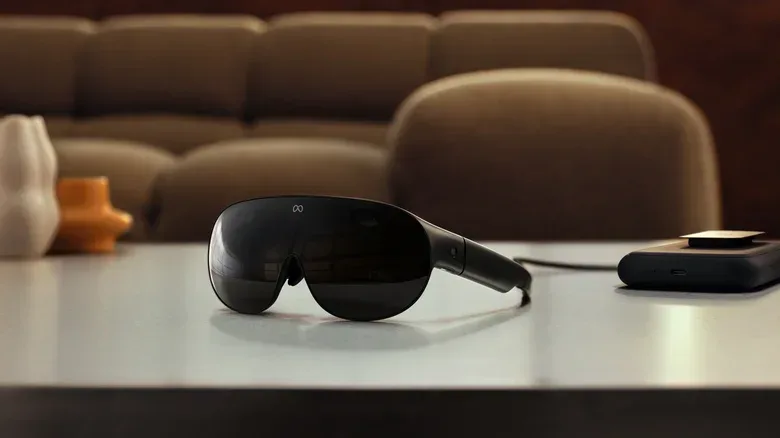
Meta’s largest hardware reveal at Connect 2026 was not a conventional new Quest headset. It was a promise of Meta VR Glasses: a glasses-style VR device due next spring for $1,300. For players, the most meaningful part of that pitch is less about the frame itself than what Meta says will run on it. The company is pairing its new hardware with Quest library compatibility, controller and hand-tracking options, cloud gaming, PC and USB-C connections, and a slate of games that ranges from a major Beat Saber overhaul to an unusually physical take on Ace Attorney.
That does not make the product an automatic recommendation before it ships. The price is substantial, several highlighted games remain future releases, and some of the platform’s biggest media promises depend on partnerships and regional availability. But the announcement makes Meta’s strategy clear: its VR glasses are being presented as a high-end entertainment device with gaming as a core use case, rather than an accessory that happens to run a few games.
The wider Connect presentation also put this hardware plan in context. The company revealed new camera-equipped and audio-only smart glasses, Display model expansions, hearing enhancement software and a small Muse Charm device. The VR Glasses, however, are where the existing Quest ecosystem, new interaction methods and bigger-screen entertainment ambitions converge.
What Meta VR Glasses are promising
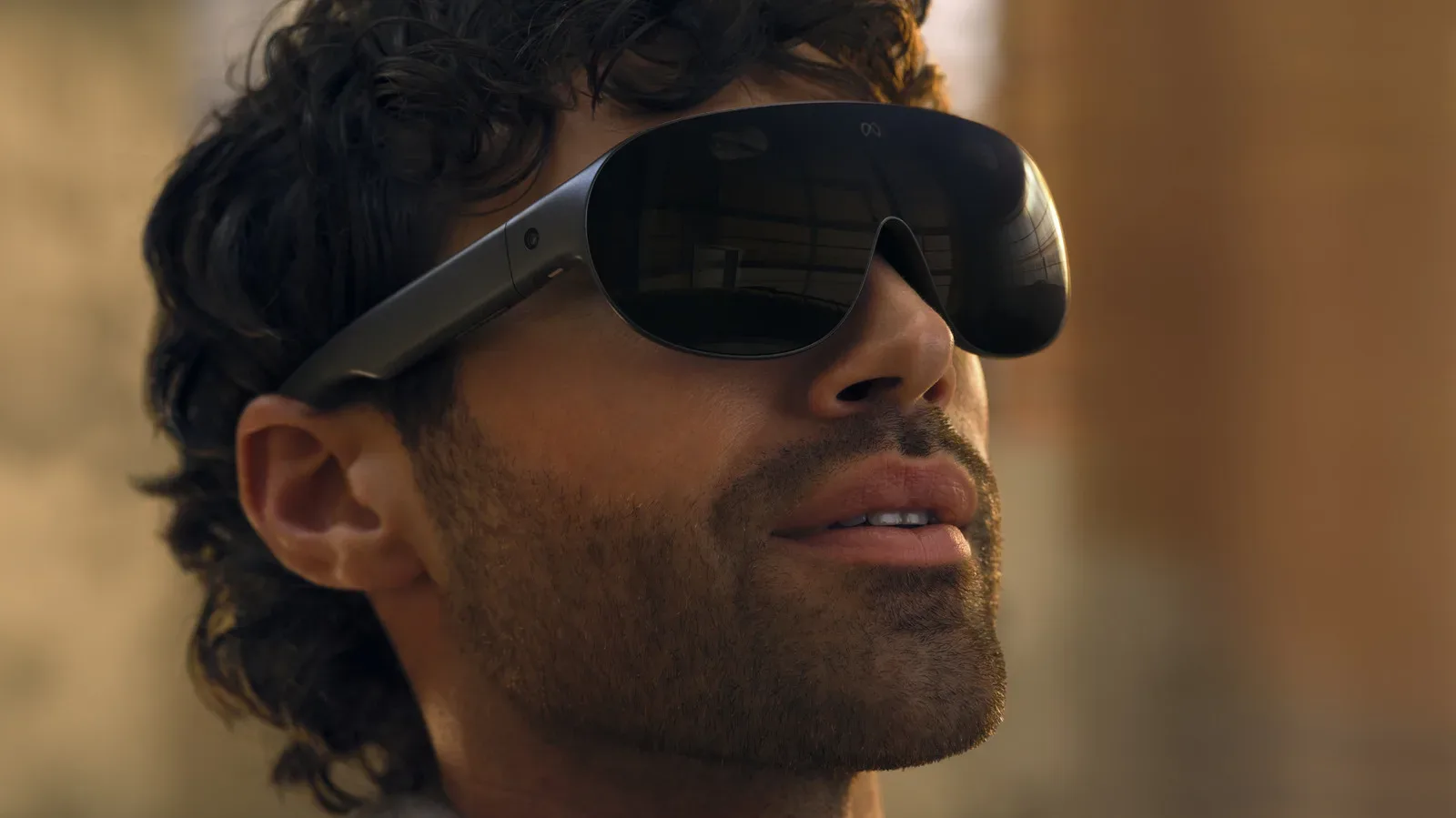
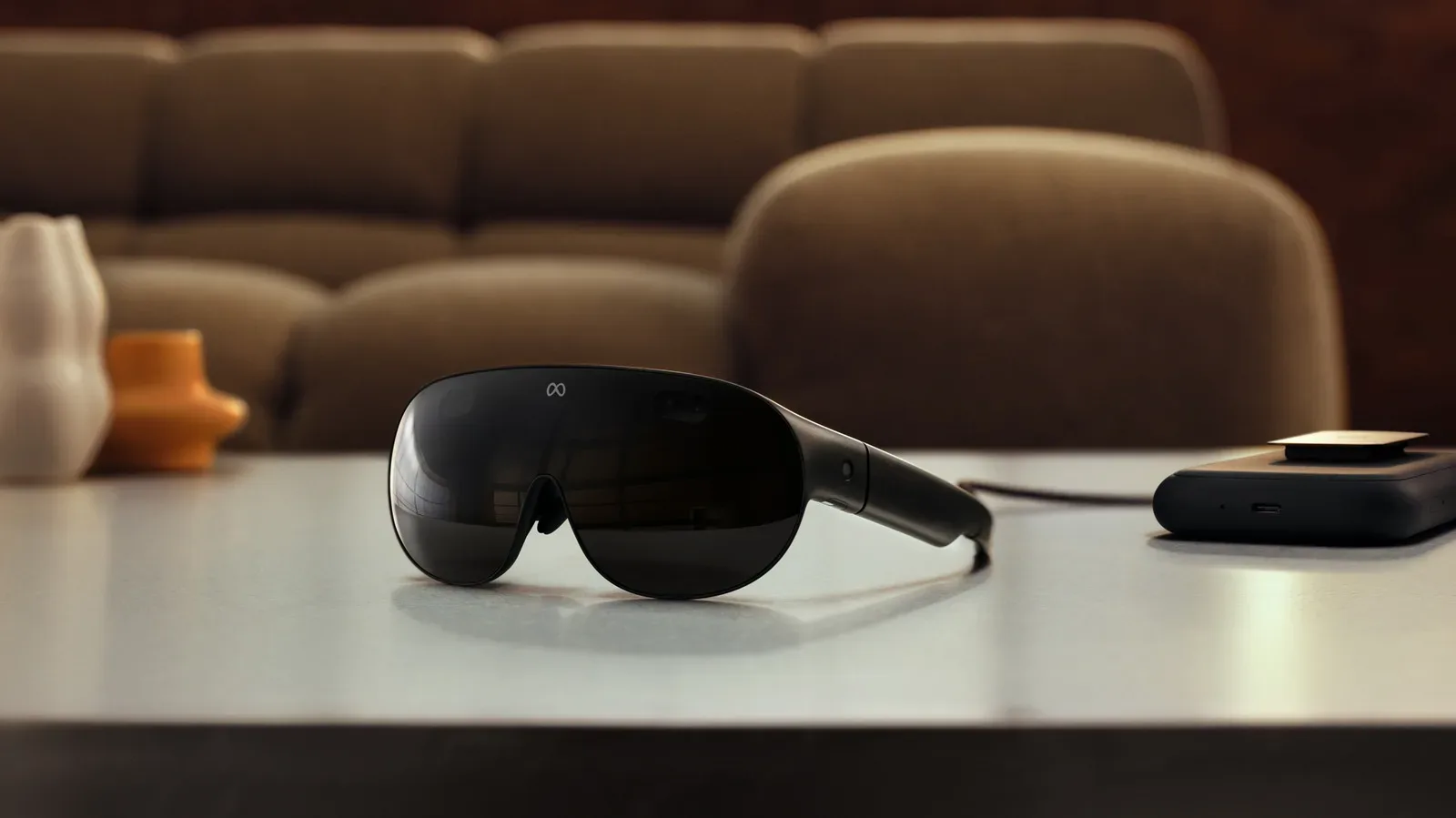
Meta says the glasses weigh roughly 100 grams, which it describes as five times lighter than Quest 3. Magnesium-alloy frames, pancake lenses, full-color passthrough and a 5K display are among the stated specifications. Pancake lenses are a compact lens design widely used to reduce the depth of a headset’s optics; in practical terms, they are part of what allows a device to be framed more like glasses than a large visor.
Passthrough is equally important to the idea. Rather than completely blocking the world, full-color passthrough uses cameras to show the room around the wearer. That is the basis for mixed reality, where virtual elements can be placed over a view of physical space. It is why a mixed-reality version of Tetris Effect can be part of the launch-window conversation, and why hand tracking can matter beyond novelty: users may interact with virtual objects without first picking up controllers.
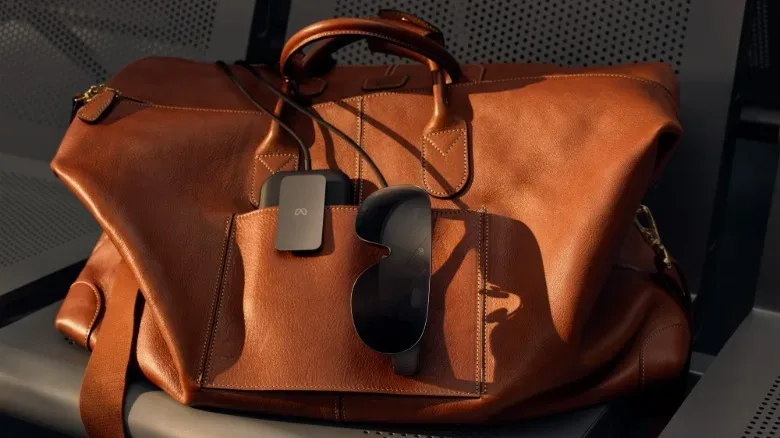
The glasses will offload their computing, storage and battery to a tethered puck running Qualcomm’s Snapdragon Reality Elite chipset. Meta says that arrangement provides up to three hours of continuous high-resolution media playback, while the puck supports 45W fast charging. Moving these components away from the frames is central to the quoted 100-gram weight, but it also means the experience relies on carrying a connected external module. That trade-off will be one of the practical questions for prospective buyers: lighter face-worn hardware may be attractive, yet the puck is still a piece of gear to manage.
Meta is positioning display and audio quality aggressively, citing Dolby Vision, Dolby Atmos spatial audio and IMAX Enhanced certification. Spatial audio means sound is positioned to correspond with locations in a virtual scene. In games, that could help establish where an effect or voice comes from; in calls, Meta says the voice of another participant’s hologram will appear to originate from that avatar’s virtual position. Dolby Vision concerns visual presentation, while Dolby Atmos is an audio format associated here with spatial sound. Those branding claims describe intended capability, not a guarantee that every game or piece of video will use each format.
The crucial games question: what will work?
At launch, Meta says there will be 75 games playable with hand gestures. More significantly, the VR Glasses are planned to run every game available for Quest headsets when used with Touch Plus controllers. That creates a familiar route for current Quest players: the new device is not being introduced as a sealed, separate games storefront.
Related coverage includes Meta Connect 2026: VR Glasses, Ray-Ban Updates and a Bigger Entertainment Push.
Hand tracking uses the device’s sensors and cameras to interpret the user’s hands as an input method. It can make actions such as grabbing, pointing or menu selection feel more direct, but the announcement stops short of saying every Quest game will be playable that way. Controller support remains important, particularly for existing games designed around traditional buttons, sticks and precise tracked inputs.
The glasses can also stream games through Xbox Cloud Gaming, subject to Microsoft’s service limits, and connect to other gaming hardware either wirelessly or through USB-C. These are useful options, but they represent different ways of playing. Cloud gaming runs titles remotely and delivers a streamed video feed; its quality and responsiveness rely on the service and connection. A wired or wireless connection to another device is a separate path. Neither claim should be read as confirmation that every game on every platform will work in every configuration.
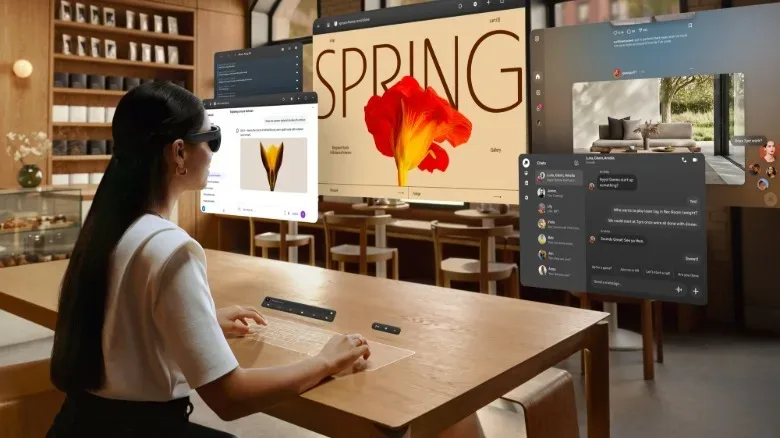
Meta also plans Windows PC and Mac connections for productivity, including a virtual keyboard and touchpad placed on a desk or table, or conventional mouse-and-keyboard use. That productivity layer is not the exciting bit for most players, but it reinforces an important distinction: the company is selling the glasses as a general spatial computer. Games will be competing for time with virtual displays, calls, films and sports rather than occupying the device’s entire identity.
Beat Saber’s Flux update is the clearest gameplay showcase
Beat Saber is set to receive what Meta calls its largest update yet this spring. The headline change is hand-tracking support, allowing users to play without Touch Plus controllers while retaining controller support for anyone who prefers it. That alone could make the game a test case for how convincingly Meta’s new glasses turn free-hand movement into a rhythm-game interface.
The larger addition is Flux, a new single-player mode arriving on both Meta VR Glasses and Meta Quest. It introduces powers including the Flux Tether, which channels power between the player’s palms to cut through notes in time with music. The mode will initially include 35 songs drawn from the existing Beat Saber catalogue, with additional tracks planned later.
The studio is also rebuilding the single-player campaign with narrative elements, new missions and a revised menu system. A new progression and reward structure will let players alter the game’s look and sound. Taken together, those changes matter because they shift the emphasis from repeating standalone songs toward a more explicitly structured solo experience. The announcement does not spell out the narrative, reward types or the cadence for future Flux songs, so those details remain unknown.
For the new hardware, Beat Saber is a particularly logical demonstration. It is immediately readable to spectators, already built around physical motion, and familiar enough that players can judge whether hand tracking is enhancing the experience or simply replacing controls they know. It is also being supported across both VR Glasses and Quest, so the update is not being held back as an expensive-hardware exclusive.
Objection: Ace Attorney goes VR
The most charmingly strange game announcement was Phoenix Wright: Ace Attorney: Dual Destinies VR, due next year for Meta VR Glasses and Meta Quest. The original Dual Destinies first released on Nintendo DS in 2013. Its VR version will support hand tracking and voice activation, allowing players to point at witnesses and shout the series’ familiar courtroom outburst.
That premise says a great deal about the kind of experiences VR can add to an established game. It does not necessarily make a visual-novel-style courtroom investigation fundamentally more complex. Instead, it turns the player’s own gesture and voice into part of the performance. The appeal is the theatricality: pointing to a witness rather than moving a cursor, and delivering an objection aloud instead of tapping a dialogue option.
It is worth keeping expectations precise. The announcement identifies input support and platforms, but does not lay out how the wider case structure, evidence presentation or navigation will change. Still, the game is a notable sign that Meta’s VR lineup is looking beyond rhythm, fitness and first-person genres for material that can be adapted around presence and physical interaction.
For another major franchise that is currently more of a debate about preservation and change than a VR announcement, see our look at what the Halo reboot debate says about the series’ identity.
Other games heading to Meta hardware
- Payday: Aces High is coming to Quest 3 and Quest 3S later this year. It will feature co-op crossplay with the PC VR version, and an open playtest begins October 19.
- Tetris Effect is scheduled for a mixed-reality version on Meta VR Glasses next year, with hand-tracking support. Mixed reality could make the familiar puzzle field appear within the player’s real surroundings.
- Two Point Hospital is on the way to Quest 3 and Quest 3S, also with hand-tracking support.
- Supernatural, the VR fitness platform, returns to the Meta Horizon Store this fall under a newly independent development team. Existing points, streaks and badges will carry over, while more HD environments, workouts and music are planned.
The list is not exclusively tied to the new glasses, which is good news for existing Quest owners but means the showcase is partly about strengthening Meta’s entire VR ecosystem. Payday: Aces High brings cooperative crossplay, Two Point Hospital explores a different simulation genre, and Tetris Effect is being used to demonstrate mixed reality rather than merely conventional VR. The spread is broad even if exact release dates, pricing and deeper feature breakdowns were not provided for each title.
Entertainment is part of the hardware argument
Meta is also making a sizable film, television and sports case for VR Glasses. Disney+ subscribers in select countries will be able to stream titles including The Avengers and Black Panther in 3D from November. Next spring, VR Glasses owners are set to receive VR Enhanced editions of Avengers: Infinity War and Star Wars: A New Hope via a Disney Immersive Cinema by ILM app, with immersive environments, effects, 3D visuals and spatial audio.
Elsewhere, Meta says it will offer hundreds of 2D and 3D movies for purchase and rental in the US later this year, expanding the library to further countries by the VR Glasses launch. National Geographic: Beyond will offer 180-degree 3D natural-world experiences. Several video apps are available, including Amazon Prime Video, YouTube, DirecTV, AMC+, Crunchyroll, Plex and Tubi, while Peacock, HBO Max and Paramount+ will provide 3D titles.
Sports are another pillar. ESPN immersive programming is said to offer 8K streams with 180-degree views, beginning with college football this year and expanding into more sports in 2027. Meta also says its VR Glasses will carry more than 100 live sports events annually through partnerships involving MLB, NBC Sports, TNT Sports and UFC. Availability, events and subscription requirements will naturally vary, but the central idea is simple: Meta wants the glasses to earn their cost through more than game sessions.
Smart-glasses updates and the unresolved Muse question
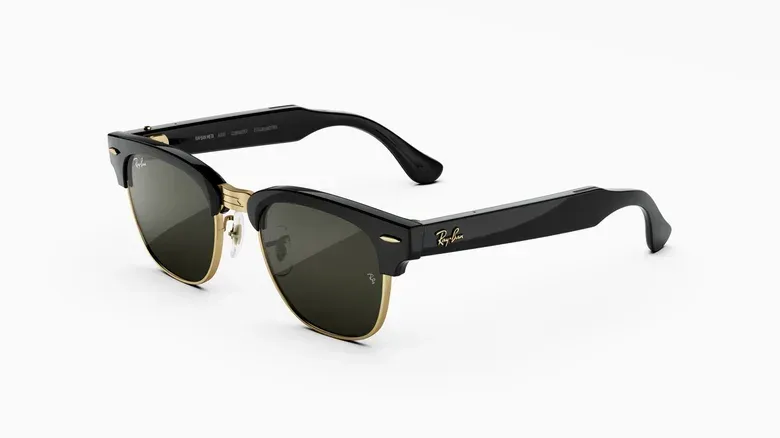
Not every Connect update concerns full VR. Ray-Ban Meta Audio is an audio-only, AI-assistant-equipped pair of glasses starting at $349, with music, podcasts and calls, a claimed 12-hour battery life and a case said to add up to 48 further hours of use. It supports prescription lenses and ships October 13 after pre-orders opened September 24.
The camera-equipped Ray-Ban Meta Gen 3 starts at $449. Meta claims nine hours of use, up from eight in the prior model, and says a six-microphone array can suppress more than 90 percent of background noise. It has a 12MP camera capable of 3K video. Meta Ray-Ban Display is now orderable online in the US for $799, with market-specific expansion in the UK, Canada, Germany, France and Italy. It is gaining cycling and public-transit directions in the US and Canada, landmark-based walking prompts, avatar calls, web apps, phone-notification mirroring and on-display photo editing.
Those products are not substitutes for a VR game system. They illustrate, instead, how Meta is spreading voice, AI, audio, camera and display functions across different wearables at radically different prices. A hearing enhancement mode is also coming to Meta Glasses in the US later this year, followed by Ray-Ban Meta Gen 3 and Ray-Ban Meta Audio. It is intended for temporarily difficult listening environments, not as a replacement for a hearing aid, and will cost a one-time $149 after a 30-day trial unless included through Meta One.
Finally, Meta briefly showed Muse Charm, a keychain-sized device with a display, speakers, microphones and fingerprint sensor, designed to house a personal Muse Agent. Specifics are scarce, so it is too early to connect it meaningfully to the games plan. For the wider AI direction surrounding the event, Meta’s earlier Muse focus and the absence of a Quest 4 announcement remain important context.
For now, Meta VR Glasses have a straightforward challenge: prove that their lighter form factor, external compute puck and premium price produce a genuinely better way to play rather than a more elaborate way to access games already available on Quest. The forthcoming Beat Saber update, Ace Attorney adaptation and mixed-reality Tetris Effect will be among the first high-profile chances to make that case.