Meta Connect returns on September 23 with an unusually broad brief: smart glasses, artificial intelligence, mixed reality, HorizonOS and the company’s still-evolving definition of the metaverse are all in play. CEO Mark Zuckerberg’s keynote is scheduled for 4 PM PT / 7 PM ET, followed by developer sessions on September 24, beginning with a developer state-of-the-union presentation at 10 AM PT / 1 PM ET.
That scope is important. Connect began as a virtual-reality-focused event, but Meta now uses it to frame a connected hardware and software strategy. The likely announcements and demonstrations point toward devices that are lighter, more socially wearable and increasingly driven by conversational AI rather than traditional screens and controllers.
None of the unannounced hardware discussed below is confirmed. Still, the available signals suggest Connect could answer several practical questions: whether Meta can make its glasses less controversial without making them less useful, whether a slim mixed reality device can work with a tethered compute unit, and whether developers have enough reason to build apps for an ecosystem that stretches from glasses to headsets.
Smart glasses may be the headline hardware story again
Meta’s smart-glasses plans appear likely to occupy substantial keynote time. One reported project is a camera-free pair of frames available in two styles. Rather than relying on outward-facing cameras, the glasses would reportedly include additional microphones for voice interactions with Meta’s AI assistant.
That distinction changes the product proposition. Camera-equipped glasses are designed to capture what a wearer sees, which can support visual AI features and recording. Camera-free frames would instead prioritize audio and voice. In plain terms, they could act more like an AI interface worn on the face: a way to ask questions, issue commands or interact with an agent without pulling out a phone.
The reported absence of cameras could also permit a slimmer, more conventional-looking design. Wearability is not merely an aesthetic concern for this category. A device that is comfortable and visually unobtrusive is more likely to become part of daily life than one that clearly reads as specialized tech. But the trade-off is equally clear: without a camera, the assistant cannot directly interpret the wearer’s surroundings through the glasses.
There is a potentially bigger reason for Meta to consider such a device: privacy. Camera glasses have drawn criticism from people concerned about being recorded in public without realizing it. Meta has recently acted against people who tamper with the glasses’ recording-indicator LEDs and then publish videos showing harassment of others. Chief technology officer Andrew Bosworth has indicated the company would address the subject further at Connect.
A camera-free model would not erase every privacy issue. Microphones still raise questions about recording and bystander consent, and AI assistants introduce their own data-handling concerns. Yet removing the camera eliminates the most visible—and often most contentious—part of the hardware. It could give Meta an option for people who want hands-free AI but do not want a device built around visual capture.
That debate lands amid wider concern about connected devices and user trust. The tension between useful features and intrusive hardware is also central to recent privacy concerns around microphones, connectivity and consumer electronics. For smart glasses, clear signals, policies and consequences for misuse may matter as much as the underlying assistant.
New Ray-Ban hardware remains possible, but unclear
Ray-Ban has hinted that new Meta-branded glasses are on the way. That tease could refer to the reported camera-free frames, a Gen 3 line, or something else entirely. The first Gen 2 models debuted at last year’s Connect, making an updated range plausible, but not certain.
Another possibility is a follow-up to Meta Ray-Ban Display. Reports have previously pointed to a device with displays in both lenses, sometimes referred to as “Hypernova 2.” A display in each lens could significantly change the interface, allowing visual information to accompany audio and voice commands. That is different from using glasses solely as a camera, speaker and microphone: it moves the product toward a lightweight head-worn computer.
However, this rumored dual-display device has been quiet for some time. It may appear at Connect, but it could also be held for a later moment. The distinction matters because a teaser, a prototype, an announcement and a commercially available product are not interchangeable things. Connect could feature any combination of those without confirming a launch timetable.
“Phoenix” could show Meta’s new headset direction
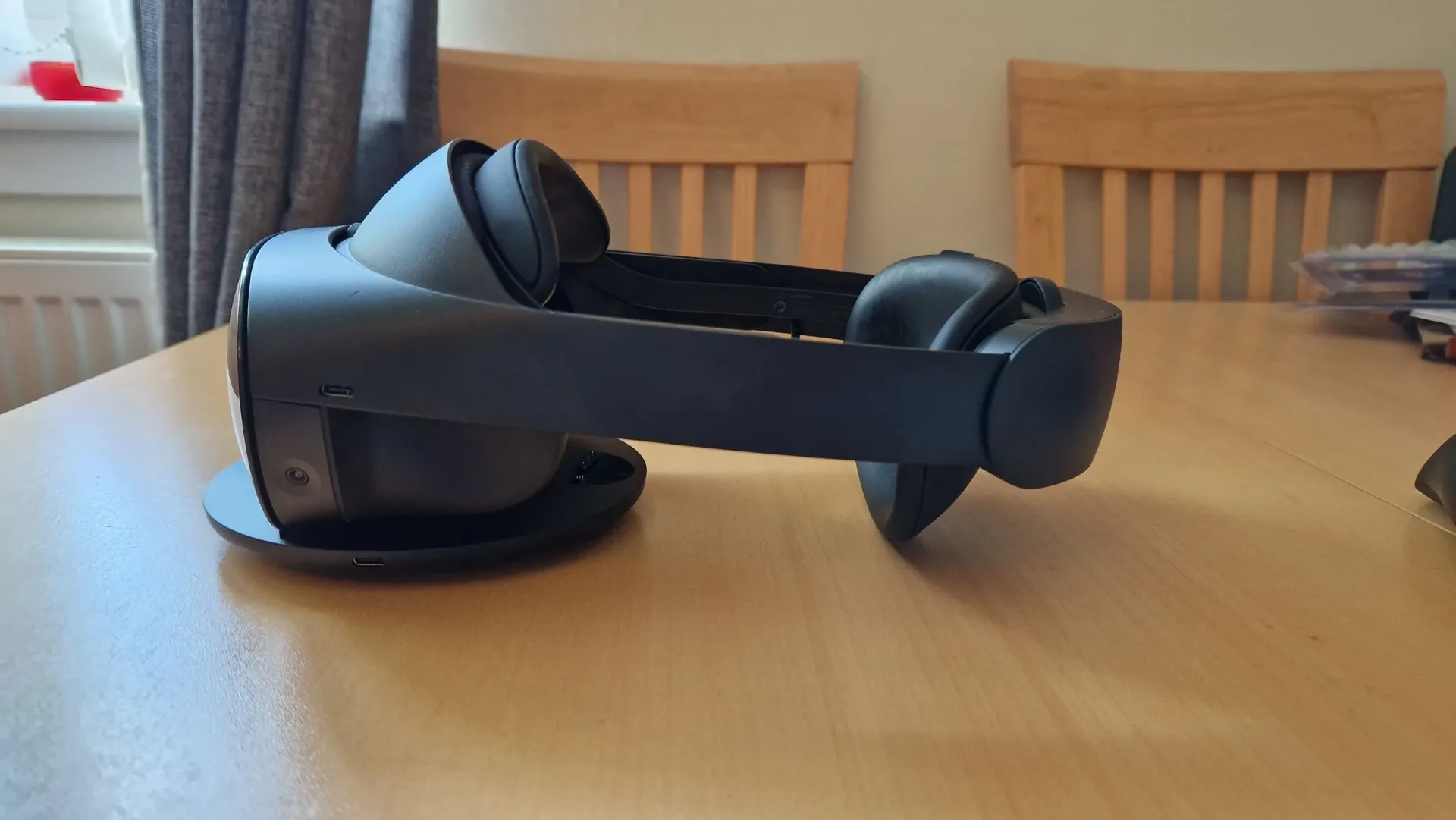
The other major hardware prospect is a mixed reality headset reportedly codenamed “Phoenix.” Images associated with the device recently appeared in a HorizonOS update, lending weight to the idea that a reveal is approaching. They depict a thin, lightweight unit that resembles goggles more than the bulkier headset silhouette many players and VR users know.
The images also show a cable. That detail aligns with earlier claims that Phoenix would connect to a separate puck rather than containing all of its computing hardware in the headset itself.
A puck, in this context, is a small external computing and battery unit. Offloading some components can help reduce the weight and heat around a wearer’s face, two practical factors that affect comfort during extended use. The potential compromise is another object to carry or attach, plus a physical cable that may limit movement or create another point of friction. Connect should be an opportunity to show how Meta expects people to wear, carry or manage that external hardware—if Phoenix is indeed unveiled.
Phoenix is also rumored to use hand and eye tracking instead of a dedicated controller. Hand tracking lets a headset interpret gestures and hand position as input. Eye tracking detects where a user is looking, potentially making menus and interactions feel more direct. These systems can reduce dependence on handheld controllers, but their usefulness ultimately depends on accuracy, comfort and the design of the software built for them.
Specifications have not been established, though the headset could be among the first to use Qualcomm’s Snapdragon Reality Elite chip. Qualcomm positioned that chip for mixed reality and slim form factors. “Mixed reality” generally refers to a blend of digital content and the physical environment, rather than a fully enclosed virtual space. A slim headset that can convincingly place virtual objects into a real room is an appealing goal; proving it through software people want to use is the harder part.
HorizonOS needs an experience story, not just a hardware reveal
New hardware generally means new demands on the operating system beneath it. HorizonOS is likely to receive attention if Phoenix appears, especially around interfaces suited to hands, eyes, voice and a lighter headset form factor.
Meta’s current circumstances make blockbuster game announcements an uncertain expectation. The company has been closing VR studios, which makes a major first-party gaming slate less likely to be the central pitch for Phoenix. That does not mean games disappear from the conversation, but it suggests the presentation may lean more heavily on broader entertainment, communications and social experiences.
One possible entertainment example is a 3D horror series based on A24’s Talk to Me, which Meta is backing for viewing in its headsets. This is the sort of content that can demonstrate why stereoscopic, immersive viewing might feel distinct from watching a conventional flat video. Still, a single horror series cannot answer the larger platform question. A headset ecosystem needs repeatable reasons to return: apps, media, social uses and tools that make the device relevant beyond a carefully staged demo.
Meta may also revisit holographic avatars. The company previously showed the technology alongside its Orion prototype and has said it would eventually come to virtual reality. Qualcomm has highlighted photorealistic avatars among the benefits associated with Snapdragon Reality Elite, while reports suggest an avatar of Bosworth could appear during the keynote.
Photorealistic avatars are digital representations intended to resemble real people in greater visual detail than simplified cartoon-style models. The appeal is obvious for remote conversations: facial expression, eye contact and personal presence can feel more natural when the avatar carries more of the person’s appearance and behavior. The challenge is that realism sets a very high bar. If movement, expressions or synchronization feel wrong, the effect may be distracting rather than convincing.
The avatar conversation also fits Meta’s broader metaverse language. Earlier this year, when Horizon Worlds in VR was nearly shut down, Bosworth described augmented reality as part of the company’s expansive metaverse concept. That matters because it places glasses, headsets and shared digital spaces under one umbrella rather than treating VR as the entire project. Whether that umbrella makes sense to users will depend on the individual experiences, not the label.
AI agent Muse could connect the devices
AI will likely be the connective tissue running through the event. This is Meta’s first Connect since a rapid set of releases from its superintelligence group, and the company has already said support for its AI agent, Muse, is coming to glasses soon.
An AI agent is more than a simple command-response chatbot in concept: it is software intended to carry out multi-step tasks or act on a user’s behalf within defined capabilities. The supplied information does not establish what Muse will be able to do on glasses, so expectations should stay measured. Connect may explain whether support means simple voice access, task completion across services, visual assistance on camera-equipped hardware, or some combination of those functions.
Camera-free glasses would make an especially interesting test case. Their microphones could offer an always-near voice route to Muse while avoiding visual capture. But that model also depends on people finding enough value in voice interactions to wear a dedicated device. The core question is not whether an agent can respond; it is whether its answers and actions are dependable, appropriately controlled and helpful often enough to change routine behavior.
Developers remain central to the glasses ecosystem
The developer program may reveal as much about Meta’s long-term plans as the hardware itself. At last year’s Connect, Meta announced several apps for its camera glasses, but momentum since then has appeared limited. Earlier this year, developers began receiving the ability to make dedicated apps for Meta Ray-Ban Display.
That is a meaningful shift. Dedicated apps can turn a device from a collection of company-provided features into a platform where other businesses and creators can build specialized experiences. For display-equipped glasses, third-party software could determine whether the screen feels essential or ornamental. For camera glasses, it could create clearer use cases beyond recording, listening and asking an AI assistant basic questions.
Connect’s second-day developer sessions are therefore more than a technical afterthought. Developers need to understand which devices are supported, what input methods are available, how AI capabilities can be used and what opportunities exist across HorizonOS and Meta’s glasses lineup. A compelling demo can create excitement for a night; practical tools and a credible app ecosystem are what give new hardware a chance to last.
For now, the September 23 keynote is chiefly a moment for clarification. Meta has several rumored products pointing in different directions—audio-first AI glasses, possible lens displays and a tethered mixed reality headset—but they may all be part of one bet: computing that is less dependent on a handheld rectangle. Connect should show whether the hardware, software and developer story are finally moving at the same pace.