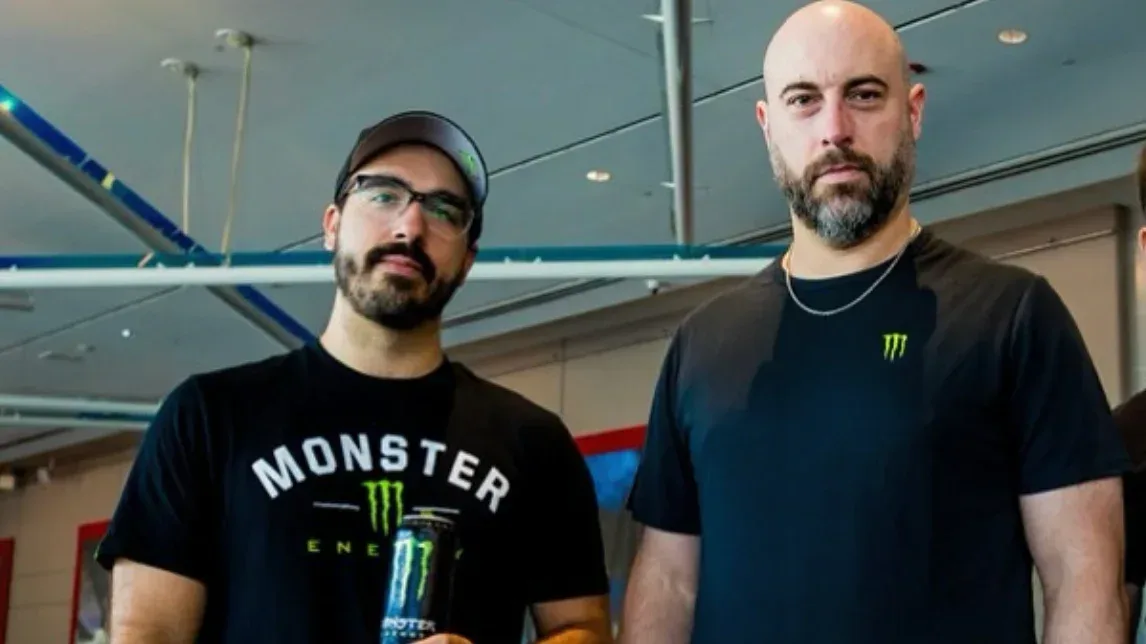
Competitive Call of Duty broadcasting is facing an abrupt and intensely personal change. Clint “Maven” Evans, a longtime shoutcaster in the scene, has said he is stepping away from Call of Duty commentary “for the foreseeable future” after confirming that he is in a relationship with Maurisa, the ex-wife of his longtime commentary partner Joseph “MerK” DeLuca.
Evans addressed the relationship in a public post, describing the circumstances as “unconventional/taboo.” He said he had been friends with the family before DeLuca’s divorce and that the relationship later became something more. His statement also asked fans to continue supporting both the Call of Duty League and DeLuca.
The announcement does not establish whether the departure was requested by the league or was Evans’ own decision. That distinction matters, and it remains unknown from the information publicly shared. What is clear is narrower: Evans says he will no longer be working Call of Duty broadcasts for the immediate future, while leaving open the possibility that he could return someday. He also acknowledged that a return may never happen.
What “shoutcasting” means in this situation
Shoutcasting is the common esports term for live match commentary. In practice, it encompasses several jobs at once: explaining a match’s momentum, identifying tactical decisions as they happen, giving viewers context on players and teams, and adding the excitement that makes a competitive broadcast feel like an event rather than a raw game feed.
Commentary duos are especially important in that format. They develop rhythms, recurring terminology, habits of play-by-play and analysis, and a shared ability to react under pressure. When two commentators have worked together over a long period, audiences can come to associate the pairing with the competition itself. That history is a major reason the personal circumstances surrounding Evans and DeLuca have become a public discussion within the community.
But a familiar broadcast partnership does not entitle spectators to private details beyond what the people involved choose to share. Evans made a public statement about his relationship and professional plans. DeLuca, by contrast, does not appear to have issued a public statement on the matter. That gap should be respected rather than filled with speculation, amateur detective work, or the recycling of old on-air clips as supposed evidence of things no one has substantiated.
What Evans did—and did not—say
Evans’ post provides several concrete points:
- He and Maurisa are in a relationship.
- He characterizes the situation as unconventional and taboo.
- He says he was friends with the family before DeLuca’s divorce.
- He is leaving Call of Duty shoutcasting for the foreseeable future.
- He encouraged fans to support DeLuca and the Call of Duty League.
- He suggested a future return is possible, while also acknowledging it might not happen.
It does not explain the terms of his departure, identify a request from the Call of Duty League, set a timetable for a return, or offer a detailed account of anyone else’s private experience. Those are meaningful absences. A responsible reading of the statement should not turn unanswered questions into claims.
In a social-media cycle built to reward certainty and escalation, this can sound obvious. It is still necessary. The people most affected by the situation are not content characters in a broadcast storyline, even when the work that connected them took place in public. The relevant professional news is Evans’ departure from a recognizable commentary role. The wider private history is not something viewers can accurately reconstruct from old posts, clips, or perceived moments of awkwardness.
A public-facing job can make private fallout louder
Esports commentary is unusually exposed work. Commentators are expected to be recognizable personalities, maintain a social presence, interact with fans, and share a spontaneous rapport with coworkers on broadcast. Those demands help create community, but they can also make it difficult to separate professional identity from personal life when a private matter becomes public.
That tension is evident here. Evans’ decision to step away immediately alters the on-air landscape for viewers who know him through Call of Duty competition. Yet it should not be treated as proof of facts beyond the statement he gave. Personal relationships can have professional consequences without turning every person involved into a fair target for public judgment.
For DeLuca, the immediate public response has included supportive messages as well as the predictable flood of hostile jokes seen whenever a personal dispute becomes a viral topic. The latter is not harmless just because it arrives in meme format. Public figures may reasonably expect commentary about their work; that does not make targeted harassment, invasive questions, or cruelty toward them and their families an inevitable part of fandom.
Why old commentary clips are not a case file
Fans have already circulated older interactions and broadcast moments involving Evans and DeLuca. That behavior is familiar to anyone who has watched an online community seize on a sudden revelation: past material gets reinterpreted through the newest information, often with far more confidence than the material can support.
There is a basic difference between context and proof. Context can help explain why people recognize a professional relationship as longstanding. It cannot, by itself, verify motivations, timelines, private conversations, or the emotional state of the people in a clip. Rewatching routine banter with the benefit of later knowledge may be tempting, but it does not produce reliable reporting.
The practical standard for viewers is straightforward: stick to what has been publicly confirmed, avoid spreading unverified claims, and do not turn archived content into ammunition. This is not about pretending the news has no impact on Call of Duty broadcasts. It plainly does. It is about recognizing the line between discussing a personnel change and participating in an online pile-on.
What this could mean for Call of Duty broadcasts
Evans has not announced a timetable, replacement, or specific next step, and no outcome beyond his stated break should be assumed. Any future broadcast arrangements will depend on decisions that have not been publicly detailed. Viewers should therefore be wary of posts framing a permanent replacement or a forced removal as settled fact.
For now, the clearest effect is the loss of an established voice from Call of Duty coverage. Live esports broadcasts rely on preparation, chemistry, and institutional knowledge. Replacing any longstanding commentator is more complicated than simply putting another person behind a microphone, particularly when the exiting caster has spent years helping define the audience’s listening experience.
At the same time, competitive gaming continues well beyond any one personality. The best response for fans who care about the broadcasts is the one Evans himself requested: continue supporting the league and the commentators still doing the work. That can coexist with recognizing that the situation is awkward, disappointing, or difficult for people who followed the duo for years.
As Call of Duty’s competitive calendar moves forward, the larger gaming news cycle will keep moving too, from broadcast changes to game releases and demos such as Night of the Idle Horde’s Steam demo. In this case, though, the appropriate takeaway is not spectacle. Evans has announced a hiatus from Call of Duty shoutcasting; DeLuca has not publicly commented; and the unsupported theories surrounding both men should remain exactly that.