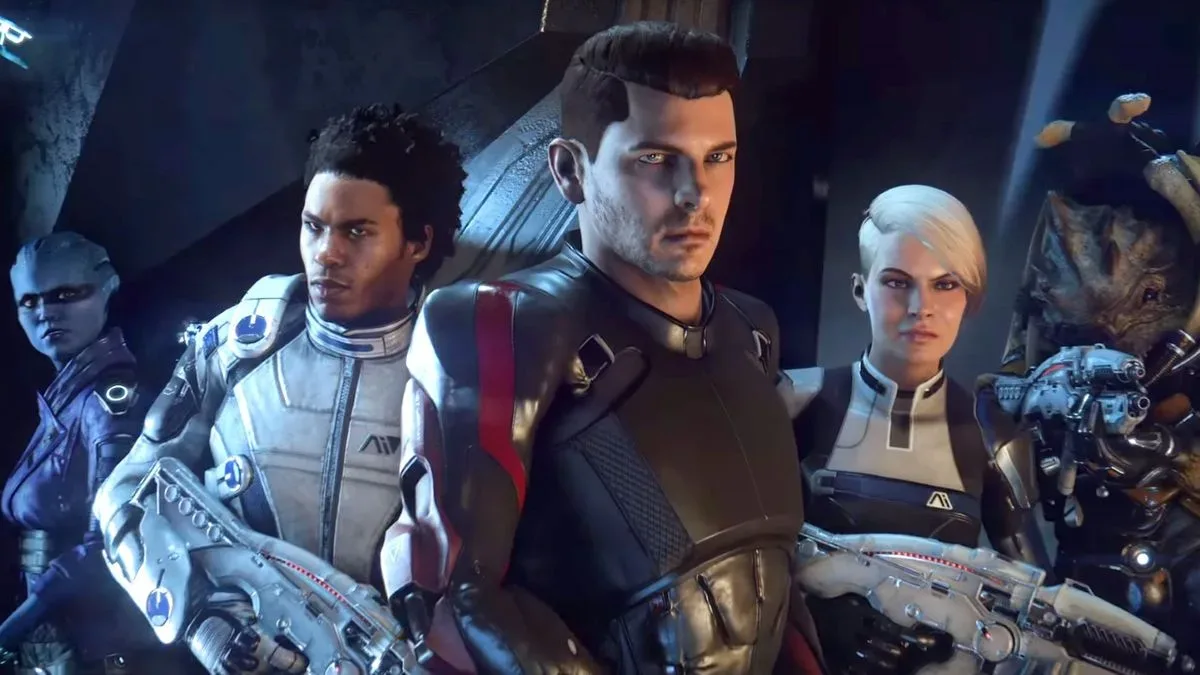
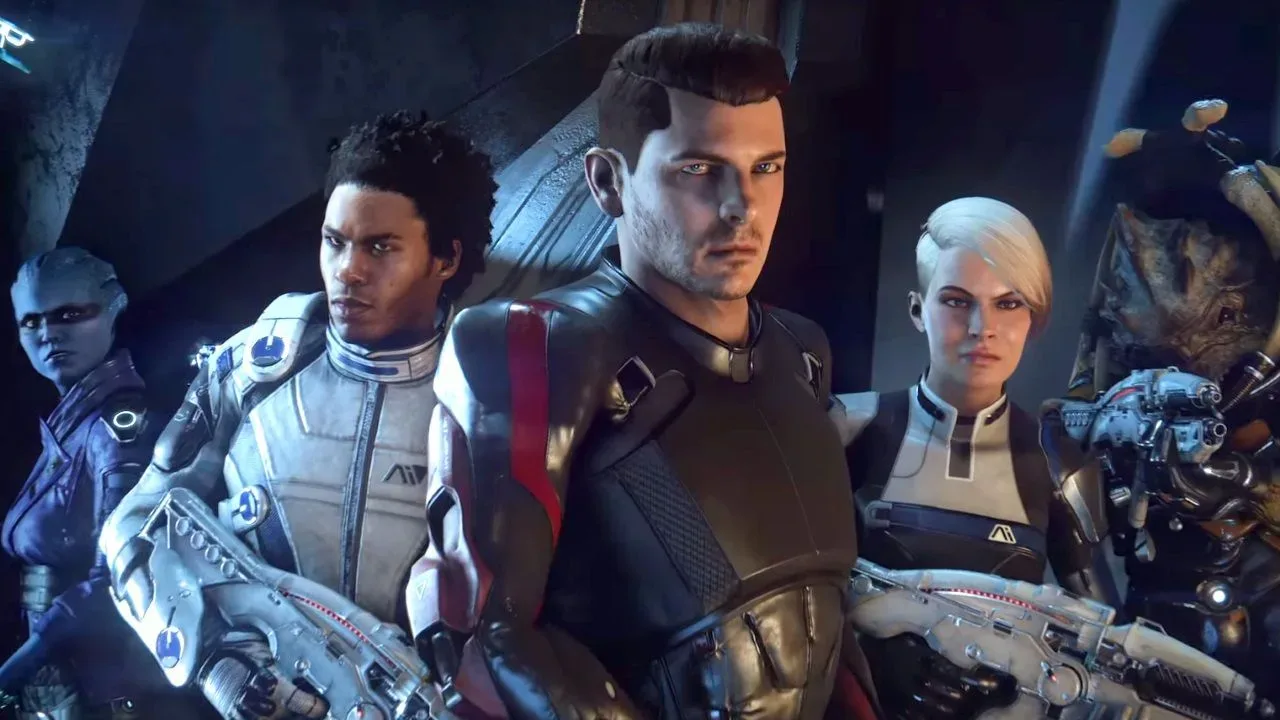
Mass Effect: Andromeda launched in March 2017, but former BioWare producer Mark Darrah says one of its biggest development problems was rooted in a feature players never received: a procedural planet-generation system that the team pursued until very late in production.
In comments shared during a discussion of BioWare’s history, Darrah described the abandoned technology as a costly bet on a particular type of space exploration. The goal, as he characterizes it, fit a long-standing idea within Mass Effect’s creative DNA: visiting and exploring random planets. But he argues that the ambition persisted beyond the point at which it could responsibly remain part of the project.
“That feature should have been cut completely and cut a year or two earlier,” Darrah said, adding that it was eventually removed.
Darrah’s point is not simply that procedural generation was difficult. It is that a major system can reshape every content plan around it. If designers, writers and environment teams expect a system to generate a substantial slice of the finished experience, they are unlikely to simultaneously build all of the authored missions, places and activities needed to cover the same ground. Remove that system late enough, and the project has lost both the feature and the time required to replace its intended contribution.
A procedural system is not the same thing as finished content
Procedural generation is a development approach in which rules and algorithms create material rather than having every element individually placed and assembled by developers. In a game about planetary travel, it might be intended to create terrain, layouts, points of interest or other explorable variations. The attraction is clear: the system may promise breadth at a scale that manual production cannot easily match.
But “generated” does not automatically mean “ready for a role-playing game.” A large RPG still needs reasons to visit a place, choices that matter, encounters that feel deliberate, story context, readable navigation and rewards that fit its progression. Those layers can be handcrafted, system-driven, or some mix of the two. Darrah’s account focuses on the production risk when the hoped-for system is expected to provide so much of the foundation that the alternatives are not being created in parallel.
He used illustrative figures rather than a confirmed production measurement, saying that if a team believes a procedural feature will furnish 40% or even 80% of the content, it does not build the material that would otherwise fill that gap. The significance lies in the dependency, not in treating either number as a documented count for Andromeda.
Once the system is cut, a studio faces an unforgiving choice: sharply reduce scope, rush replacement material, or do both. There is no easy way to reclaim the calendar time used on a feature that will not ship. That is the core of Darrah’s criticism of the Andromeda process.
Related coverage includes Mark Darrah says Mass Effect: Andromeda bet on procedural planets for too long.
Why the concept made sense for Mass Effect
Darrah linked the push to Casey Hudson’s enthusiasm for Star Control and to the series’ dormant interest in broad, unpredictable space exploration. In his telling, Mass Effect had always carried an impulse toward “random planet” exploration, even if the franchise had not fully delivered that concept in the form the proposed system envisioned.
That distinction matters. A series can have a thematic fit for a feature without the feature being a safe production decision at a given moment. Space is vast; discovering unfamiliar worlds is a natural fantasy for science-fiction games; and generated planets can appear to offer an elegant answer to the challenge of representing that scale. None of that guarantees the technology can reach the required quality, integrate cleanly with the rest of the game, or be completed before the rest of production needs final decisions.
Darrah said the team was still working on the feature in late 2016. With Andromeda arriving in March 2017, that places the work close to launch in his recollection. He did not provide a detailed development timeline, nor did he identify exactly what the system would have generated. Still, the late timing is central to his argument: a feature intended to support a substantial portion of a game cannot be safely removed at the end without consequences for everything planned around it.
The hidden cost of chasing a high-dependency feature
Large game productions are interdependent. Technical work affects level design; level design affects quests; quests affect writing, art, audio, testing and localization. A central procedural tool can sit underneath several of those disciplines at once. Until its boundaries are understood, other teams may be forced to wait, make provisional work, or build content around assumptions that later change.
That is why Darrah frames the issue as more than a failed experiment. In his view, pursuing a feature too long “prevents actual content.” A team’s time is finite, and the opportunity cost is material that could have been made instead: authored locations, missions, narrative scenes, bespoke encounters or other work that does not rely on the unfinished system.
His description also helps clarify a common misunderstanding about cuts. Cutting a feature is often healthy project management when it happens early enough. It can concentrate resources on the game’s strongest pillars and prevent teams from being pulled apart by a speculative idea. A late cut is harder because it changes the scope after the production plan has already been organized around the feature. The act of removing it may be correct, while the delay in making that decision may still be damaging.
That tension is especially acute in games built around exploration. The raw map or planet is only part of what makes exploration satisfying. Players also need a sense of discovery, meaningful direction, an understandable relationship between objectives and locations, and activities that justify time spent traveling. If a system was meant to solve a large portion of those needs and then disappears, building substitutes is not merely a matter of putting more terrain on a map.
Darrah sees a recurring BioWare production pattern
Darrah said a similar kind of feature-chasing happened on Dragon Age 4. His comments here do not establish which feature he meant, how long it stayed in development, or what its eventual impact was. The comparison nevertheless broadens his diagnosis from one Mass Effect project to a management lesson: teams can remain committed to a transformative idea long after the evidence suggests it should be narrowed or abandoned.
For players, that kind of behind-the-scenes account is useful chiefly as context, not as a complete explanation for every issue in a finished game. Games are made by many teams over years, and a former producer’s retrospective naturally reflects his own perspective and recollection. Darrah is offering an explanation of a key production decision rather than a comprehensive postmortem of Andromeda.
Even so, his explanation is unusually concrete in one important respect. Rather than blaming an abstract lack of time, he identifies how time was consumed and why its loss was compounded: the project expected a procedural solution to supply a significant share of the experience, so it postponed or omitted the authored replacement work that would be needed if that solution failed.
What this says about scope in modern RPG development
Procedural technology is not inherently at odds with authored RPG design. It can be valuable for building worlds, supporting variation or reducing repetitive manual work. The risk described by Darrah appears when the technology is given an outsized promise before it is proven enough to support the rest of the production plan.
A practical production lesson is to distinguish a prototype from a dependable pillar. A prototype demonstrates that an idea may work under selected conditions. A pillar is something multiple departments can confidently plan around. Moving from one to the other requires more than an impressive demo: it requires stable tools, clear quality standards, known constraints and time to integrate the output into the game’s quests, art direction and progression.
That broader question of development scope also surfaces in other major-game reporting. For instance, this look at why GTA 6’s “hands full” animations took months illustrates how a seemingly narrow interaction can expand when it must function across many game states. Darrah’s Andromeda account concerns a different kind of system, but it points to the same basic reality: each ambitious feature carries integration demands well beyond its original pitch.
Andromeda’s unshipped procedural planet system is therefore most revealing as a case of dependency. A game can survive a feature cut. What it may not survive easily is planning much of its content around that feature, continuing to pursue it near the finish line, and then expecting the remaining production time to close the hole it leaves behind.
Darrah’s retrospective does not turn an unfinished idea into the sole answer for Andromeda’s reception or its development history. It does, however, identify a specific gamble that he believes had a disproportionate cost: a vision of planetary exploration that was appealing enough to chase, but not settled early enough to safely build the rest of the game around.