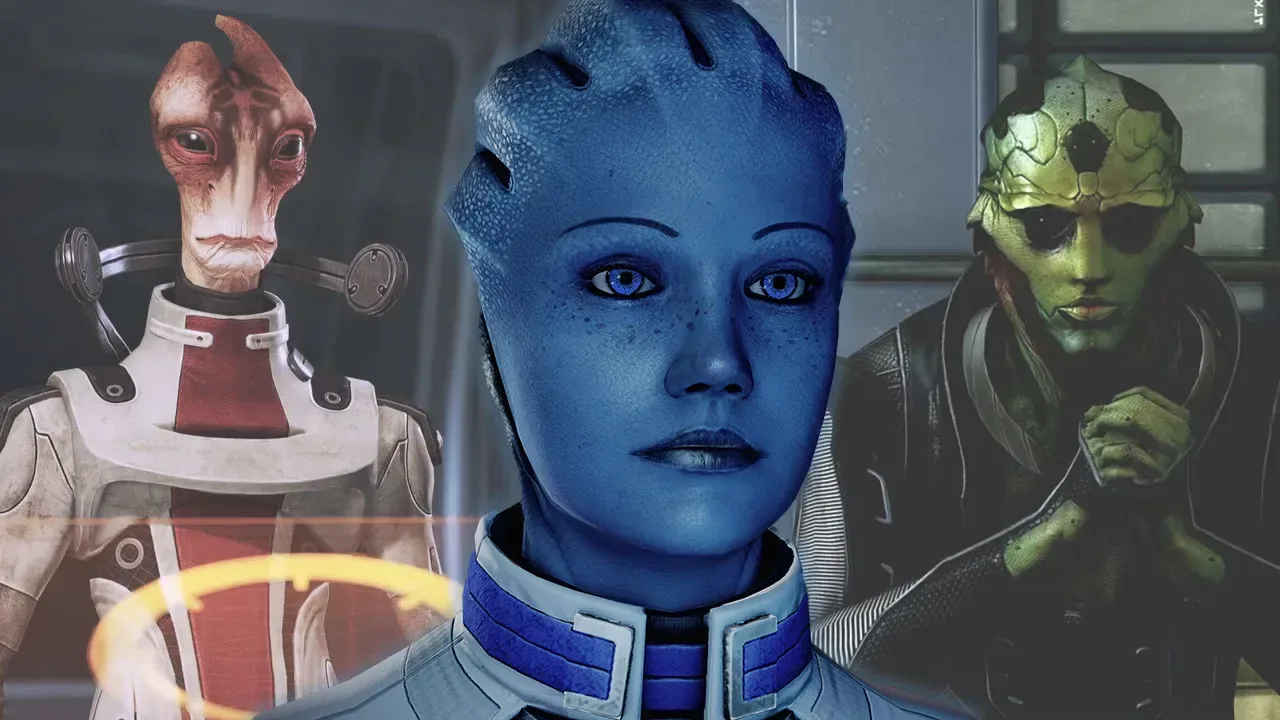
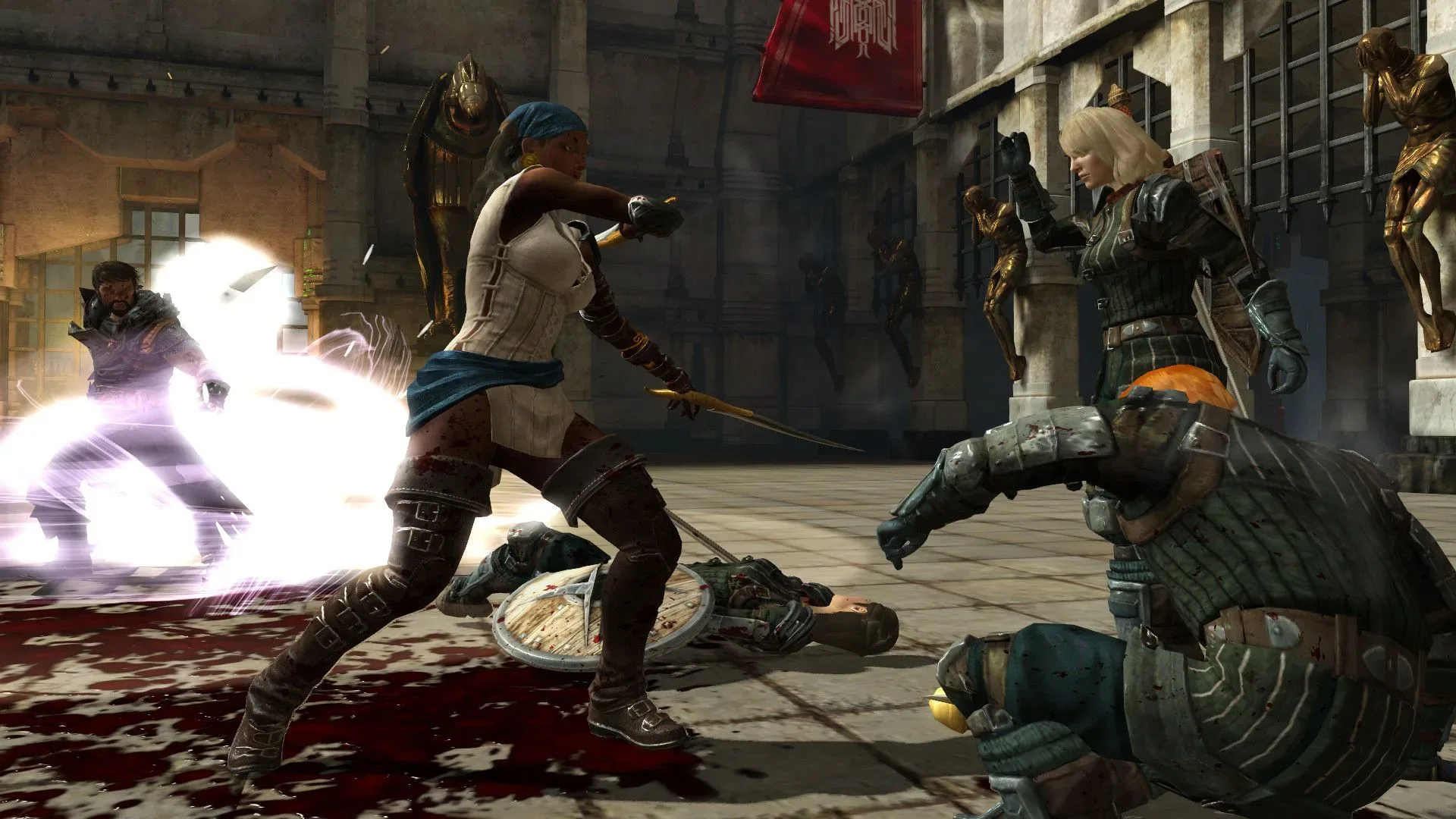
Former Dragon Age lead Mark Darrah has offered a pointed account of the pressures he believes shaped BioWare’s later years: not a simple story in which a publisher directly dictated every creative call, but one where leadership was repeatedly presented with choices so constrained that the least damaging option still carried major risks.
In remarks about the studio’s circumstances, Darrah argued that it was technically possible for EA to say BioWare made its own decisions. His objection is that this description omits the conditions surrounding them. “The options on the table were all terrible,” he said, characterizing the studio’s decisions as attempts to select the least bad route rather than freely chosen creative strategies.
Darrah connected that dynamic to three major flashpoints in BioWare’s history: its move to the Frostbite engine, the accelerated production of Dragon Age 2, and the broader situation around Anthem. He also framed financial targets as the force that made inaction impossible. “Did they make us make Dragon Age 2? No,” Darrah said. “But they made us do something.”
The difference between a decision and a real choice
Darrah’s central point is about accountability under pressure. A studio can sign off on a plan, own its execution and still be operating within limits imposed from above. In his telling, that distinction matters when interpreting BioWare’s most disputed projects and production choices.
He recalled an unnamed person’s harsh metaphor for the relationship: EA does not directly force the act, but leaves a gun on the table and keeps returning to ask whether the studio will use it. Darrah expanded on the idea by describing persistent pressure that eventually wears down resistance: people may agree not because the proposal is attractive, but because they have exhausted the alternatives available to them.
That is not the same as evidence that every bad outcome has one cause or that internal BioWare decisions were irrelevant. Darrah’s account is instead an argument about the environment in which those decisions happened. The distinction is especially important in game development, where schedules, staffing, technology requirements and sales expectations can all reshape a project long before players see it.
Financial targets, as Darrah describes them, can turn a creative planning question into a survival question. If a team is told it must hit a number, the discussion becomes less about whether a particular sequel, engine migration or new-game initiative is ideal and more about which compromise can get the organization through the immediate constraint.
Why the Frostbite reference matters
Darrah specifically cited BioWare’s pivot to Frostbite. A game engine is the foundational software framework used to build a game: it supports systems such as rendering, tools, level construction and other technical processes on which a production team depends. Moving to a different engine is therefore not a surface-level change. It can affect how teams make content, how quickly they iterate, and which technical problems they must solve before they can pursue the game’s creative goals.
Related coverage includes Mark Darrah Says EA Pressure Left BioWare With ‘Terrible’ Choices.
The supplied account does not detail the terms of BioWare’s Frostbite transition or identify every consequence it had for individual games. What Darrah’s comments establish is his view that the move belonged among the decisions shaped by outside pressure. That makes it a useful example of why ownership and creative control are not always cleanly separable from technical policy.
For players, engine talk can sound remote compared with characters, combat or quests. But engine decisions can reach those player-facing areas indirectly. When a studio changes core production technology, developers may need to redirect time toward adapting workflows and resolving technical limitations. The opportunity cost is the work that cannot be done at the same time. Darrah’s broader argument is that choices with that kind of cost should be judged in the context of the pressures that made them seem necessary.
Dragon Age 2 and the cost of a compressed schedule
Darrah also pointed to Dragon Age 2 and its “breakneck” development cycle. His formulation is careful: he does not say EA literally ordered BioWare to make that exact game. Rather, he says the financial reality presented by EA required the studio to take action. Under that premise, pursuing Dragon Age 2 was the answer BioWare chose from an unattractive set of available answers.
Compressed development is a particularly revealing case because time is not merely another resource. Time sets the ceiling on how much work can be designed, built, tested and revised. A studio can respond by cutting scope, reusing work, narrowing its ambitions or preserving only the ideas it considers most essential. Those can be responsible production measures, but they also change the final game.
Darrah contrasted this pressure-driven framing with his explanation of how BioWare completed Mass Effect 2 in 18 months. He said the studio did not fire everyone, listened to player feedback and became “ruthless” about limiting scope. In development terms, scope means the total amount of material and functionality a team intends to ship: content, systems, environments, features and other deliverables. Limiting scope means deciding, often painfully, what will not be made.
That contrast supplies the most practical lesson in Darrah’s comments. Speed alone is not his explanation for success or failure. His account suggests that a short schedule is more manageable when a team retains continuity, pays attention to audience response and makes disciplined decisions about what it can realistically deliver. A rushed project and a tightly scoped project can both have limited timelines, but they are not necessarily created under the same conditions.
Anthem and a larger argument about studio direction
Anthem is the third example Darrah named, referring to the “whole situation” around the game rather than offering a new project-by-project accounting. The available material does not provide further specifics on that situation, so it would be misleading to treat his remarks as a complete explanation of the game’s development or reception. What it does show is that Darrah sees Anthem as part of the same pattern as Frostbite and Dragon Age 2: a case where institutional pressure materially narrowed the choices BioWare could make.
BioWare had faced high-profile difficulties in its final years, including Mass Effect: Andromeda, Anthem and Dragon Age: The Veilguard, all of which the supplied account says failed to impress fans. That history has led some observers to place responsibility primarily on the studio itself. Darrah is pushing back on a version of that conclusion that treats the developer as if it operated in a vacuum.
His argument does not erase the visible record of projects or ask audiences to overlook their reactions. It asks for a wider lens: when a studio is measured against its released games, the production system that determined its available time, tools and financial obligations is relevant evidence too.
For readers following BioWare’s legacy, that is also why the conversation cannot be reduced to a binary verdict on either a publisher or a development team. The team still makes choices; the publisher still sets conditions; and those conditions may determine whether the choices on offer are genuinely viable. Darrah’s description is of a chain of responsibility rather than a single, cleanly isolated decision-maker.
What Darrah’s comments add to the BioWare discussion
BioWare built a reputation over roughly 30 years through RPGs including Mass Effect and Dragon Age. The studio’s later struggles, and its subsequent shutdown by EA after EA was acquired by private investors, have naturally prompted arguments about what changed and who bears responsibility. Darrah’s intervention adds the perspective of a former lead who believes management pressure was decisive.
His strongest claim is not that developers lacked agency. It is that agency can become largely formal when every path is costly. A company can accurately say it did not compel a single specified action while still creating a situation where a studio must take drastic action to satisfy financial demands. That is the gap Darrah wants readers to notice.
The comments about Mass Effect 2 sharpen the point further. Keeping people in place, responding to players and tightly controlling scope are presented as the ingredients that enabled an 18-month production. Taken together, they suggest a model built around stability and prioritization rather than simply demanding more output in less time.
There is no new claim here that one management choice alone explains BioWare’s entire trajectory. Nor do Darrah’s remarks provide every operational detail needed to reconstruct each project. But they are a substantial challenge to the idea that the studio’s controversial pivots were purely self-directed mistakes. In his account, BioWare often had responsibility for choosing a path—but was repeatedly asked to choose between paths it did not truly want.
That context also sits alongside ongoing interest in the series BioWare helped define. For more on the franchise’s attempts to accommodate player choice, see how the Mass Effect universe approached the endings of Mass Effect 3.