Star Wars games may be entering a broader creative phase. Lucasfilm Games executive Douglas Reilly says the company has become more flexible about who it hears pitches from, and that its work with partners both large and small should continue to produce combinations that catch fans off guard.
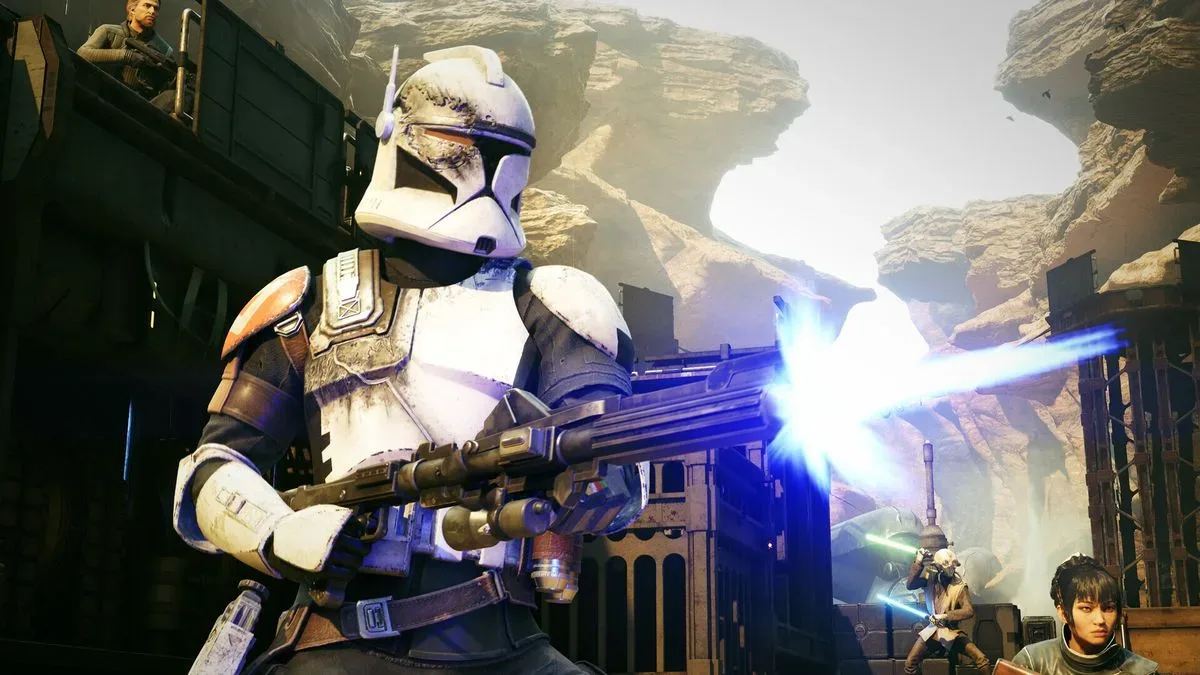
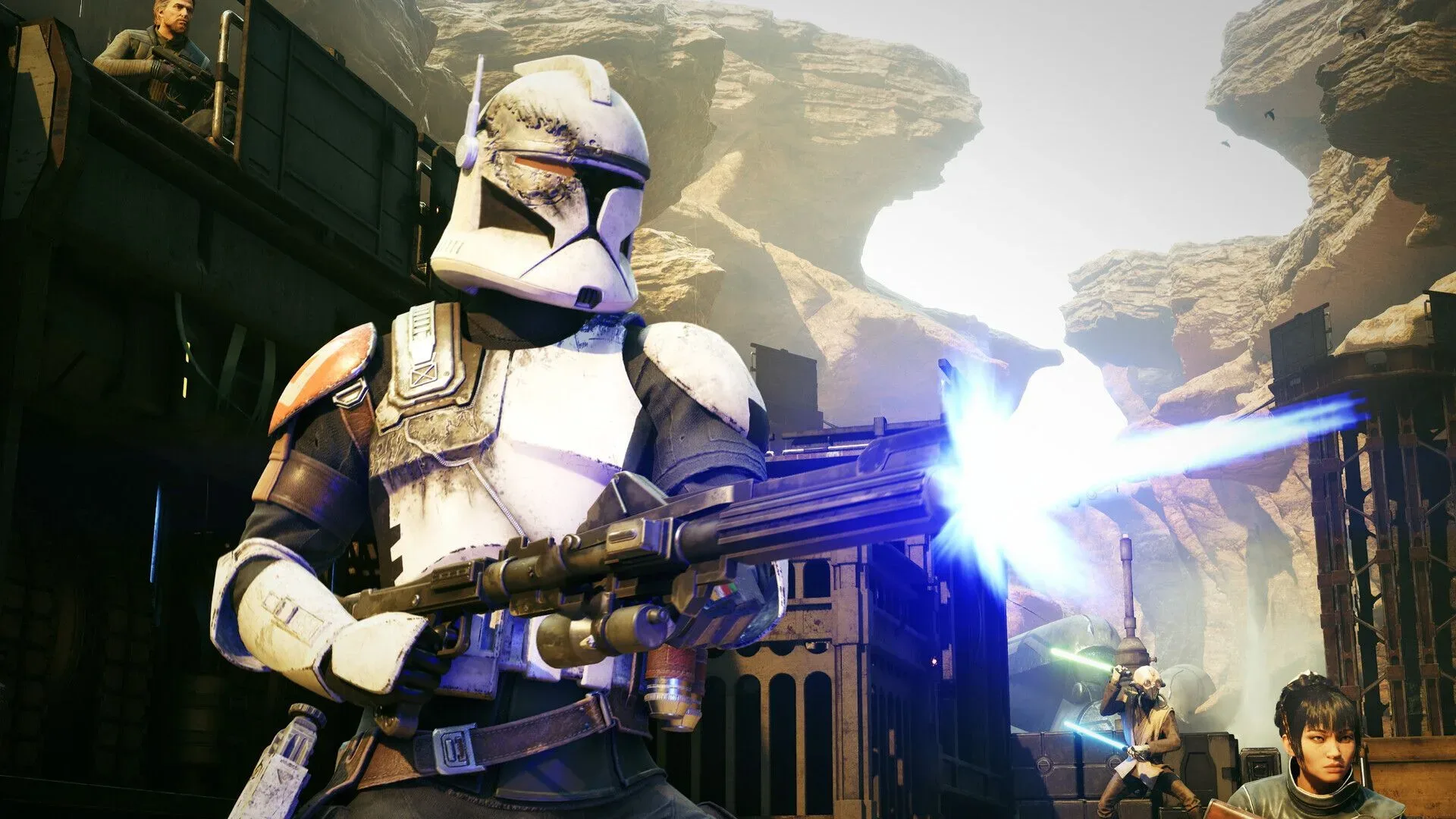
The comments arrive after a year that has already put two very different ideas under the Star Wars banner: Star Wars: Zero Company, a turn-based tactics game that adapts the broad structure of the XCOM formula to the franchise’s science-fiction setting, and Star Wars: Galactic Racer, an arcade racer made by developers with Burnout experience. Both games received strong critical receptions, and their genre contrast is the important part of the story. One asks players to think in deliberate, squad-based turns; the other leans into the immediate momentum and spectacle associated with arcade racing.
That range is not being framed as an accident. Reilly said Lucasfilm Games is being more open to pitches, with the underlying idea that worthwhile concepts can originate from many places rather than only the biggest expected publishers. He also indicated that more unexpected partnerships are being explored.
What “more flexible” means here
Flexibility should not be mistaken for a promise that every proposal will become a game, or that Lucasfilm Games is abandoning oversight of a franchise with unusually high expectations attached to it. Reilly paired his openness message with a clear qualification: the company maintains a high quality bar and normally works with teams that have established experience making strong games.
In practical terms, that suggests a wider doorway, not an unlocked vault full of lightsabers. A studio does not need to rank among the industry’s very largest publishers to be considered. But a proven record still matters. That is a meaningful distinction for players, because it potentially expands the types of teams that can bring an appropriate specialty to Star Wars without lowering the threshold for execution.
A turn-based tactics developer and an arcade-racing team do not approach game design through the same set of skills. Tactics games are commonly built around turn order, positioning, squad composition, and the consequences of committing to an action before the next move. Arcade racers, by contrast, depend on readable speed, responsive handling, track flow, and the sustained feeling of forward motion. Letting different design strengths shape projects can make a licensed portfolio feel less uniform.
The early evidence in Zero Company and Galactic Racer does not tell us what every future Star Wars title will be. It does, however, support the idea that the license is being used across distinct play styles rather than treated as a single genre. That matters more than speculation about any one unannounced project.
The licensing shift behind the broader approach
A major business change created room for this strategy. Disney previously had a 10-year agreement granting EA exclusive rights to make Star Wars video games. That agreement expired in 2023. With exclusivity over, Lucasfilm Games had the ability to consider proposals from outside that one publisher.
Related coverage includes Lucasfilm Games Signals a More Open Future for Star Wars Game Partnerships.
Ending exclusivity does not automatically produce better games, faster development, or releases from every genre fans might request. It changes the partner landscape. Instead of a single publisher serving as the exclusive route for new Star Wars projects, Lucasfilm Games can evaluate a wider selection of potential collaborators and concepts.
That can be particularly relevant for games whose appeal comes from a focused genre identity. A team known for a specific discipline may have a compelling way to translate that discipline into a galaxy-spanning setting, whether the project is large in scope or more concentrated. Reilly’s emphasis on both large and small partners points toward that possibility, while his emphasis on track records makes clear that familiarity with delivering games remains a central consideration.
It is also a reminder that a major licensed game is not simply a logo placed on an existing template. It requires the partner, the concept, and Lucasfilm Games’ standards to align. A good pitch has to offer a plausible game experience as well as a convincing use of Star Wars. The company’s stated approach appears to be seeking more opportunities for that alignment, rather than declaring that scale alone is the measure of a worthwhile collaboration.
Known projects remain a mix of certainty and uncertainty
There are still recognizable names in the active Star Wars pipeline. EA’s Respawn is developing a third game in the Star Wars Jedi series. Its existence shows that greater partner variety does not mean established relationships disappear; it means they are no longer the only model.
Star Wars Eclipse from Quantic Dream also remains in development, though the project faced a significant complication earlier this summer when developers planned to strike. That detail is important context for anyone trying to turn a broad partnership statement into a release forecast. A project can be publicly known and still have substantial development uncertainty. No new date, platform list, gameplay details, or release plan was provided in Reilly’s comments.
That restraint is worth keeping. “We are exploring” is not the same thing as “we are announcing.” Reilly’s tease establishes the direction of Lucasfilm Games’ outreach, but it does not identify the partners, titles, genres, or timing behind the potential surprises. Fans may reasonably be interested in the prospect of unexpected studio-franchise pairings, but there is not enough information to attach names or expectations to those possibilities yet.
Why genre diversity matters to players
Star Wars has always contained a large variety of settings and conflicts, from personal duels to military campaigns and high-speed pursuits. Games can select a particular piece of that breadth and build their rules around it. The recent examples make that point cleanly: Zero Company uses a tactical framework, while Galactic Racer approaches the setting through arcade competition and velocity.
For players, a more varied partner strategy could mean that interest in Star Wars games no longer depends on wanting one dominant format. Someone who prefers careful tactical decisions may find a different entry point than someone who wants a racing game. The value is not merely having a longer list of releases; it is having projects whose central mechanics are meaningfully different.
There is a related industry implication. High-profile licenses have traditionally been associated with enormous projects and equally enormous publishers, but Reilly’s comments challenge the idea that only a top-five publisher can make a great Star Wars game. That is not a dismissal of major studios. It is an argument that experience and quality can exist beyond a small group of the largest companies.
The broader games business is full of reminders that development circumstances shape which projects actually reach players. For another view of how close major series can come to a different outcome, see this look at Red Dead Redemption and Bully’s uncertain paths. In Star Wars’ case, the immediate takeaway is more modest: Lucasfilm Games has the freedom to entertain a wider field of collaborators, but each game still must meet its standards and survive the realities of development.
What has changed—and what has not
- Changed: Lucasfilm Games says it is more flexible about pitches and is exploring projects with partners of different sizes.
- Changed: EA’s former 10-year exclusivity arrangement ended in 2023, enabling work with other publishers and studios.
- Demonstrated: Zero Company and Galactic Racer show recent Star Wars releases can pursue sharply different genres.
- Not confirmed: No specific future partners, games, release dates, platforms, or features were named in these remarks.
- Still true: Lucasfilm Games says quality and experienced development teams remain essential to its selection process.
The next announcements will determine how far this more open approach reaches. For now, Lucasfilm Games is signaling a portfolio philosophy rather than revealing a slate: be willing to consider good ideas from more places, retain a demanding quality threshold, and let the result be less predictable than a franchise pipeline built around one exclusive publishing partner.