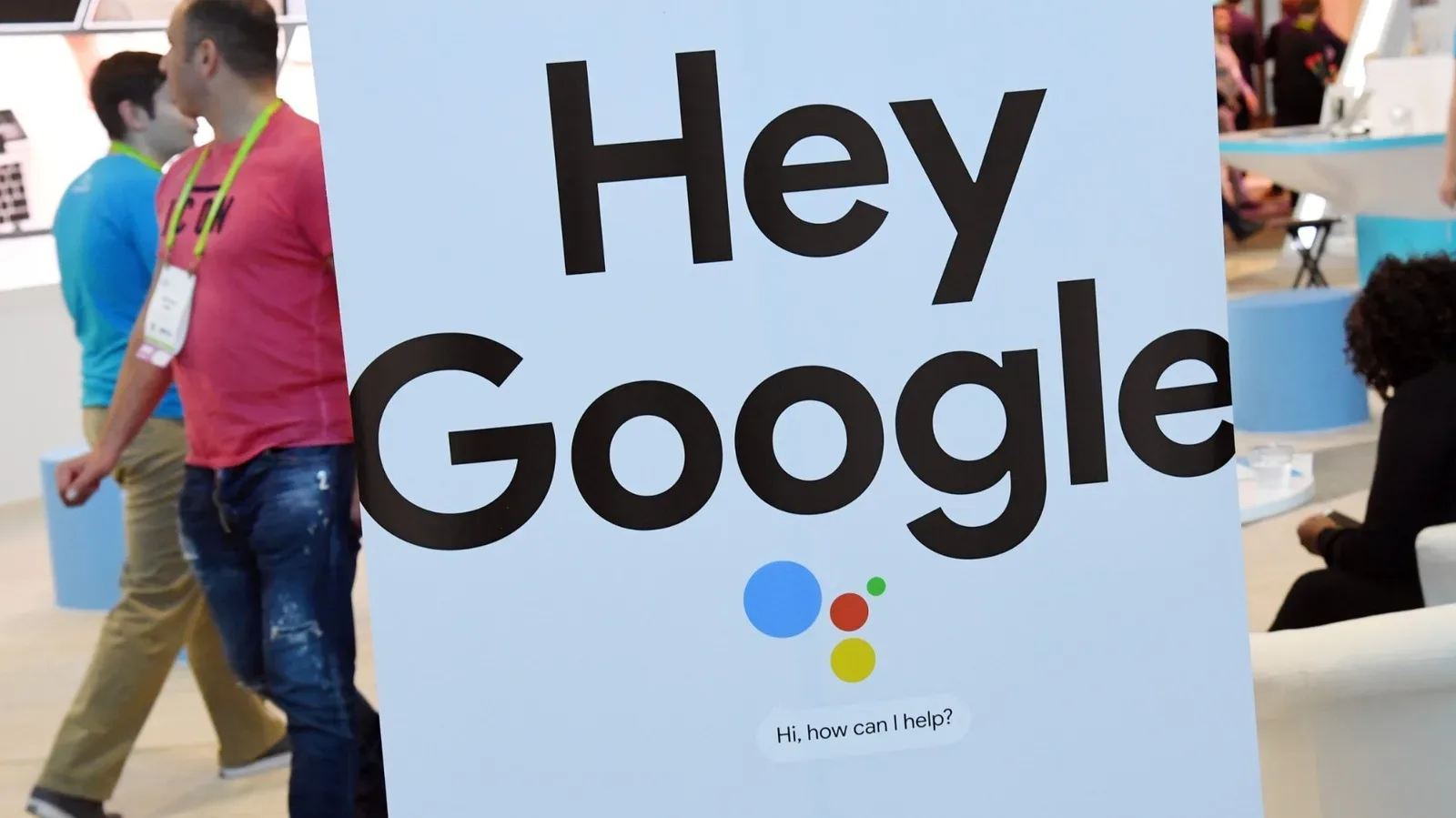

Los Angeles Unified School District has temporarily disabled Google AI Overviews on school-issued devices, creating a consequential test of Google’s position that its conventional Search product and AI-powered results cannot practically be separated for schools.
LAUSD enrolls roughly half a million students. The district did not issue a formal public announcement about the change, but students and parents noticed that the AI-generated summaries had disappeared from their search results. Schools Beyond Screens LA, a local advocacy group, subsequently asked parents to submit video evidence and received confirmation from the district that AI Overviews had been disabled.
The exact technical mechanism has not been disclosed. That detail matters: the visible outcome is clear, but there is no confirmed explanation of whether LAUSD used a third-party filtering or management tool, a configuration available through Google, or another approach. What is established is narrower and more important than any speculation: AI Overviews are no longer appearing on the district’s school-issued devices for now.
LAUSD has described the change as temporary and framed it around maintaining an experience that is age-appropriate and safe for students. The timing followed a November 13 meeting of the district’s AI committee, at which several members of Schools Beyond Screens LA spoke. Within days, the summaries were gone.
What AI Overviews are—and why the distinction matters
AI Overviews are generated summaries displayed within Google Search results. Rather than only presenting a list of links, the system can attempt to synthesize information into a direct response. That distinction is central to this dispute. A search engine traditionally directs a user toward sources to evaluate; an AI overview places an interpreted answer directly in front of the user before, or alongside, those links.
For a school district, the two experiences raise different questions. Search access can be part of everyday research, while a generated summary introduces additional concerns about how the response is produced, whether its framing is suitable for a student, and how readily a student can distinguish a summary from the underlying material. LAUSD’s stated focus on age appropriateness and safety reflects that difference without requiring the district to reject search itself.
The move also gives the debate a practical edge. It is one thing for a technology company to characterize AI and search as connected services. It is another for a large school district to demonstrate that, at least on its managed devices, the AI summaries can be removed from students’ visible search experience. The district has not detailed the implementation, so it would be premature to treat this as proof that every school system can make the same change in the same way. Still, it directly challenges the idea that administrators face only an all-or-nothing choice in practice.
Google has softened one school AI policy, but not its Search position
The LAUSD decision arrives after Google changed course on a separate policy affecting K–12 students. Gemini, the company’s chatbot, had been set to turn on by default for many students. Following backlash, Google shifted to an opt-in approach for students instead.
Related coverage includes LA schools block Google’s AI Overviews but keep Search.
Opt-in means a user must actively choose to enable or use a feature rather than having it activated automatically. In a school context, that model can give students, families, and districts more room to decide whether the tool belongs in their educational environment. It does not settle every question about access or supervision, but it is materially different from default activation.
Google has drawn a harder line around Search. Chris Phillips, Google’s vice president and general manager of education, said that Search and AI are “deeply integrated.” He indicated that if a district blocked AI, students would not have access to Search and would instead receive a school message saying it was unavailable.
LAUSD’s result is therefore notable because students’ devices reportedly lost the AI summaries after the committee meeting, not necessarily the ability to conduct ordinary searches. The district confirmation concerns the removal of AI Overviews; it does not provide a full public technical account of all Search behavior or configuration choices. That distinction should remain clear as other districts watch what happens next.
A governance issue, not just a product setting
At its core, this is an argument over institutional control. School districts manage devices for minors and are accountable for the learning environment those devices create. A company may design features as a unified experience, but administrators may still ask whether each component is appropriate for student use.
The question is especially pressing when a feature is embedded in a widely used service rather than offered as a clearly separate destination. If an AI-generated response appears within ordinary search results, a student may encounter it as part of routine homework research, not as a deliberate decision to open an AI tool. That makes configuration, notice, and choice much more consequential.
LAUSD’s action does not establish a universal answer on educational AI. The district has called it temporary, and neither the available information nor the district’s confirmation explains whether the setting will remain in place, be modified, or become permanent. But its decision shows that districts can evaluate a feature on its own educational and safety merits rather than treating all uses of a search platform as identical.
It also suggests why precise language matters. “AI” is not a single product category with a single risk profile. Gemini is a chatbot; AI Overviews are generated summaries inside search results. One requires an affirmative opt-in for students under Google’s revised policy, while the other is at the center of a dispute over whether it can be excluded without sacrificing search access. Lumping them together can obscure the choices families and schools are actually being asked to make.
Employee concern adds pressure to the policy debate
More than 500 Google workers signed a petition earlier in the month asking the company to reconsider strict requirements around AI and Search in schools. Their intervention does not dictate company policy, but it adds an internal voice to a debate already involving school administrators, parents, students, and advocates.
That pressure comes as Google navigates two competing expectations. The company is investing heavily in AI and has described it as integrated with how Search works. Schools, meanwhile, may want the utility of search while retaining the ability to decide when, where, and whether AI-generated material is presented to students.
For districts, the immediate lesson is not that one configuration will suit every school system. It is that procurement and device-management questions may be inseparable from instructional policy. Administrators need to know which features appear by default, what can be disabled, whether a block affects other services, and what students see when a setting changes. The absence of a public technical explanation from LAUSD means other districts should not assume identical tools or outcomes, but the case highlights the questions worth asking.
- Can AI-generated summaries be disabled on managed student devices?
- Does disabling an AI feature affect access to ordinary web search?
- Is a feature enabled by default, or must students opt in?
- What notice do students and families receive when the experience changes?
- How does the district assess age appropriateness and safety for a particular feature?
Why other large districts could matter
New York City, Los Angeles, and Chicago are all considering changing search engines if Google maintains its position. That possibility raises the stakes beyond a single district configuration. Large school systems are major institutional users, and a refusal to offer granular controls could turn a feature dispute into a broader platform decision.
There is an important uncertainty here: considering a switch is not the same as making one. No final changes are established by the available information. Still, the fact that several major cities are weighing the possibility signals that the issue is no longer limited to a theoretical argument about product design.
The practical implication for Google is straightforward. A policy that frames Search and AI as inseparable may conflict with districts that want to retain one while withholding the other for student accounts or managed devices. LAUSD’s temporary block makes that conflict visible. It also places attention on whether companies building AI into established services will offer schools enough control to tailor those services to minors.
For readers following the broader industry argument over where AI belongs in everyday digital products, the friction between presumed integration and meaningful user choice is becoming a recurring theme. A separate debate over AI’s role in games similarly reflects skepticism that new automated features should be treated as inevitable rather than optional.
LAUSD has not claimed to resolve that larger debate. Its step is more limited: on school-issued devices, the district has temporarily removed AI Overviews in pursuit of a safer, age-appropriate student experience. Yet that limited change carries a large message for education technology providers. When AI arrives inside a core service, schools may still demand the authority to draw a boundary around it.