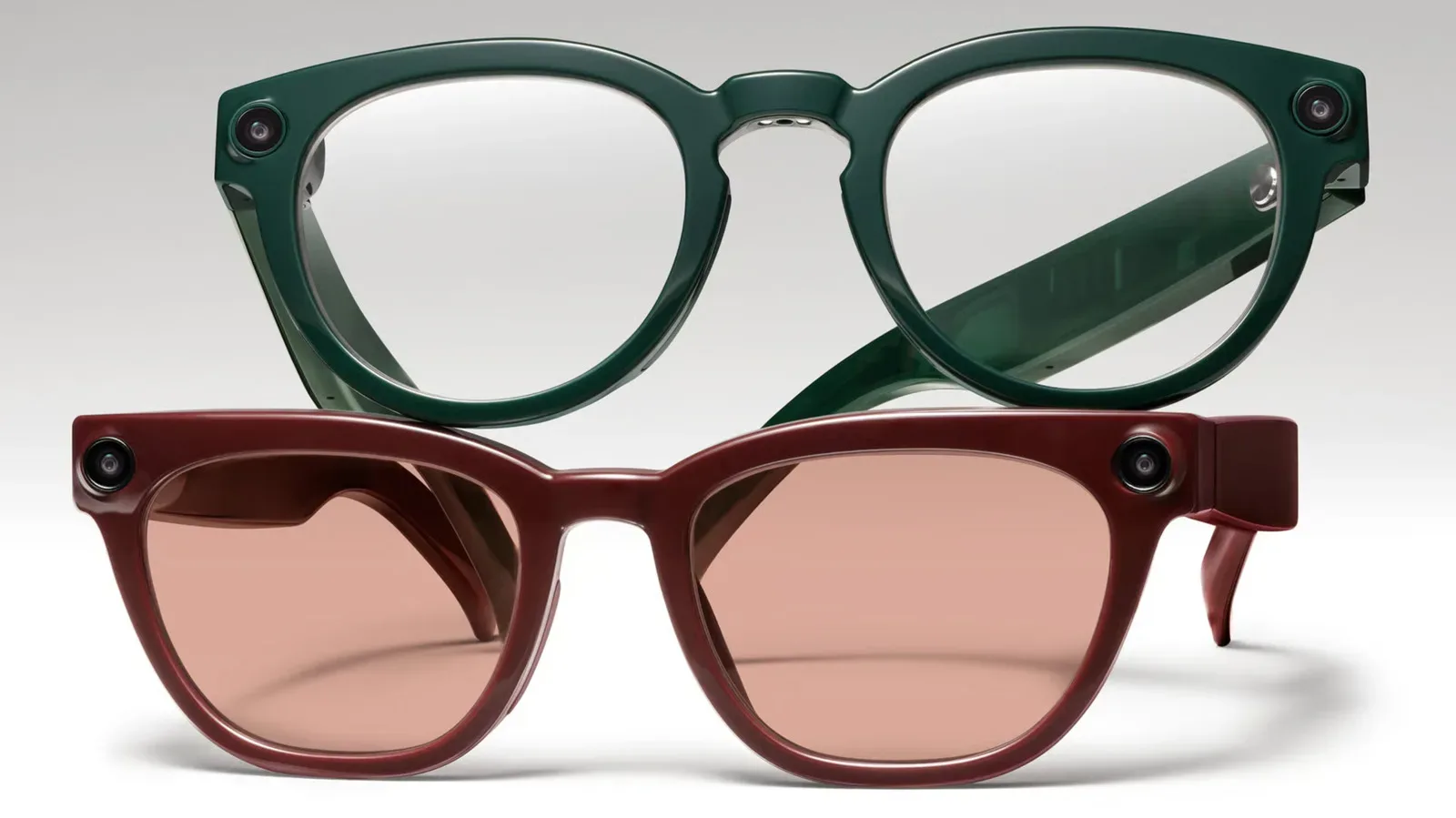
Smart glasses have a fairly obvious social problem: the person wearing them may feel like they have acquired a helpful AI assistant, while everyone else may feel like they have accidentally wandered onto a film set with no visible crew, no release form and an unnervingly fashionable boom mic.
Google’s newly launched intelligent eyewear platform is attempting to deal with that tension before the category’s reputation becomes impossible to separate from covert recording. The company’s privacy approach covers hardware signals, software permissions, Gemini AI processing, app rules, content policy and even listings for accessories designed to defeat a recording indicator.
That breadth matters. A bright light on a frame is useful, but it cannot by itself solve the social and technical questions raised by a camera and four microphones worn directly on someone’s face. Google is effectively arguing that trust in smart glasses has to be designed as a system, rather than bolted on as one tiny LED after the cameras are already rolling.
The stakes are clear. Camera-equipped glasses are arriving in an environment where short-form video can travel rapidly and where a passerby can become part of a widely shared clip without seeking that attention. The category has also faced public backlash over fears of secret filming. That makes privacy protections central not only to the experience of the wearer, but to whether strangers are willing to accept these devices in everyday places at all.
A recording light that is meant to resist the obvious workaround
The most visible safeguard is the outer LED. Google says its glasses show a light when a photo or video is being captured. The indicator sits on the left side of the frame, while the camera is near the wearer’s right eye.
What distinguishes the stated approach is that the glasses are designed to detect when the light is obstructed or tampered with. If the system detects that interference, it is supposed to prevent photo and video capture. In plain language, the product is intended to refuse recording when it cannot give people nearby its normal visual warning.
That is an important distinction between an indicator and an enforced indicator. A regular light tells bystanders that recording is occurring, but its effectiveness depends on the wearer leaving it visible. An enforced indicator makes the visibility of that warning part of the device’s ability to capture. It does not eliminate every potential evasion attempt—Google acknowledges there will be an ongoing effort to find and close loopholes—but it establishes a meaningful default: hiding the signal should stop the function rather than simply make it less polite.
It also raises a practical standard that is easy for people to understand. If a device has an outward-facing recording cue, that cue should not be treated as decorative. The protections will ultimately need real-world scrutiny, particularly because the company describes its tamper detection as effective but has not provided independent verification here. Still, giving the LED a technical role rather than an honorary one is a more substantial starting point than asking everyone to trust that a tiny glowing dot is always operating as intended.
Related coverage includes Google Sets Privacy Rules for Gemini Smart Glasses and Their Cameras.
Gemini’s view is not supposed to become a bystander archive
The glasses are designed to let Gemini use the camera view to understand what the wearer is looking at and provide contextually relevant help. That capability creates a privacy question separate from recording: even if nothing is saved as a photo or video, who or what appears in the live camera feed, and what happens to that information?
Google says visual input used in this Gemini interaction will not be stored in Gemini history. It also says the glasses are designed to automatically redact bystanders’ faces before Gemini processes the visuals. Redaction means obscuring or removing identifying visual details; in this case, the stated goal is for people other than the wearer not to be identifiable to the AI from the camera feed.
The company further says the camera stream will not be used for AI training or ad targeting. Data sent away from the glasses for processing—such as to a phone or cloud service—is said to be encrypted in transit. Encryption in transit is the protection applied while information travels between systems, helping prevent unauthorized parties from reading it along the way.
Google also plans to bring its Private AI Compute platform to glasses. The company describes this as a hardware-secured, sealed cloud environment. The key promise is that some computing can take place with additional safeguards around the data being processed. That does not turn cloud processing into a magical privacy force field; users still need to understand which information leaves the device and which controls apply. But it shows that the privacy design is intended to extend beyond the physical frames.
For wearers, the useful implication is that an AI assistant’s visual context does not necessarily have to mean a permanent visual diary. For bystanders, face redaction is one of the more consequential commitments in the package, since smart glasses naturally point wherever their users look. Its eventual value will depend on how reliably that automatic process functions across real environments, lighting conditions and crowds—questions that require verification beyond policy language.
Four microphones, beamforming and the difference between hearing and listening
Cameras get most of the attention in conversations about smart glasses, but microphones can be just as sensitive. Google’s eyewear has four microphones, supporting voice interaction with Gemini and translation features for people around the wearer.
Google says it uses beamforming to focus on people the wearer is looking at when deciding whose speech to translate. Beamforming is a microphone-processing technique that emphasizes sound coming from a particular direction while reducing competing sound. The stated purpose here is partly functional: a translation feature needs to identify the relevant speaker rather than drown in every nearby conversation.
The company also says Gemini is designed to focus on the wearer’s voice by default through directional microphones, while filtering out “world audio,” meaning surrounding bystander sound. Again, the promise has two sides. Filtering can reduce the risk that nearby speech is accidentally captured or processed. It can also stop the assistant from mistaking a stranger’s intense debate, sales call or café order for a command from the person wearing the glasses.
There is a caveat embedded in the product’s intended uses. Translation of another person’s speech necessarily involves processing that speech in some form. Directionality and filtering are safeguards, not a claim that the device can offer translation while being oblivious to language entirely. The more useful question for anyone considering the glasses is what mode is active, what permissions it requires and what the interface makes clear at that moment.
Google says each new eyewear device has a dedicated power switch and a conspicuous red indicator when shut down. That sounds basic, but clarity about whether a microphone or camera is off is a social feature as much as a technical one. Ambiguity is fuel for suspicion. A physical switch and visible off-state can give both the wearer and others nearby a more legible answer than a buried setting ever could.
Permissions remain the wearer’s control panel
The glasses can work with applications including Messages, Keep and YouTube Music, potentially helping users reply to messages or make lists. Those integrations bring personal data into the equation. Google says users must approve access for individual apps before they can use the glasses’ camera, and that permission can later be added or revoked per app.
This is familiar phone-style permission management, but it carries extra weight on an always-worn device. A permission screen is the moment when a broad promise about privacy becomes a specific choice: which app gets access, which sensor is involved, and whether the benefit is worth it.
Google also says users can see past Gemini interactions, remove individual conversations or delete all of them. They can choose whether their conversations are used for AI training. The latter setting is particularly important because “used to train AI” is not the same as “used to answer the request in front of you.” One describes a service processing an interaction to provide its function; the other concerns whether the interaction contributes to improving future models. Keeping that decision controllable and understandable is essential.
Google is trying to police misuse outside the frames, too
The most notable part of Google’s plan may be its effort to use other parts of its business to limit misuse. Hardware rules address what a wearer can do with the device. Ecosystem rules address how someone might sell workarounds, distribute invasive footage or build an app around problematic uses.
Google Shopping and Google Ads will prohibit the sale and advertising of stickers or accessories intended to hide recording lights. This will not make such accessories disappear from the wider internet, but it avoids a bizarre contradiction in which a company sells a privacy signal on one side of its operation while promoting tools to defeat it on the other.
YouTube’s existing restrictions on harassment and unwanted sexualization will apply regardless of whether the video came from a phone, camera or glasses. Google says content violating those rules is removed. This is a crucial framing: the concern is not solely a gadget problem. Invasive conduct can be made with many devices; smart glasses change the ease and visibility of the recording, but a distribution platform’s policies still determine how it responds after footage is uploaded.
There are limits to the company’s reach. The glasses will work with iOS devices, and Google cannot govern what may appear in Apple’s App Store. Nor can it stop someone from buying an LED-covering item elsewhere. That honesty is valuable. A policy can reduce risk within an ecosystem without claiming control over the entire world, which remains inconveniently full of marketplaces and people with tape.
The company is also setting restrictions for software in its own ecosystem. Play Store and API rules will prohibit apps from using the glasses camera for social live-streaming or real-time facial identification. The social live-streaming restriction also applies to YouTube. Apps will not be allowed to change the behavior of the outward recording indicator.
Real-time facial identification refers to identifying a person from their face as the camera sees them, rather than simply applying a blur or detecting that a face exists. Barring that use case helps draw a line between wearable assistance and turning the person wearing the glasses into a roaming identification system. Banning social live-streaming similarly targets a particularly high-risk scenario: continuous public broadcasting from a camera that outsiders may not immediately notice.
Google says apps seeking camera access face multiple approval layers, and that some use cases are being disallowed outright. That is more meaningful than placing all responsibility on the user to spot every risky feature in an app’s fine print. Platform review is not flawless, but it is one of the few chokepoints available before an app reaches a large audience.
The awkward but necessary social contract
There is also an age gate: activation requires a Google account belonging to someone 18 or older. Users are asked not to record others without permission or in sensitive places. These measures depend in part on individual behavior, and no terms screen can make a thoughtless person considerate. Still, they establish expectations alongside the technical controls.
The larger strategy is to reset the conversation around smart glasses before the category hardens into a symbol of secret filming. Google’s XR lead, Juston Payne, has described the effort as an attempt to raise the privacy bar and encourage other companies to tighten their own policies. That outcome would matter more than any one product’s checklist. People encountering camera glasses cannot realistically identify every brand, model and policy before deciding whether they feel comfortable in a shared space.
The standard therefore needs to become recognizable across the category: clear recording signals that cannot casually be covered, real limits on live broadcasting and face identification, sensible controls over AI data, and meaningful action against harassment after content is posted. It is not unlike the wider challenge of camera craft and responsibility discussed in this look at a century of camera craft and worker protections, except the camera crew has now been compressed into a pair of frames and a user agreement.
Google’s plan is not a guarantee that misuse will vanish. It is a set of promises that must be judged by actual product behavior, enforcement and responsiveness when people find gaps. But it recognizes the core issue accurately: for smart glasses, the feature list is not the whole product. Public confidence is a feature too, and it is the one that decides whether the rest gets worn.