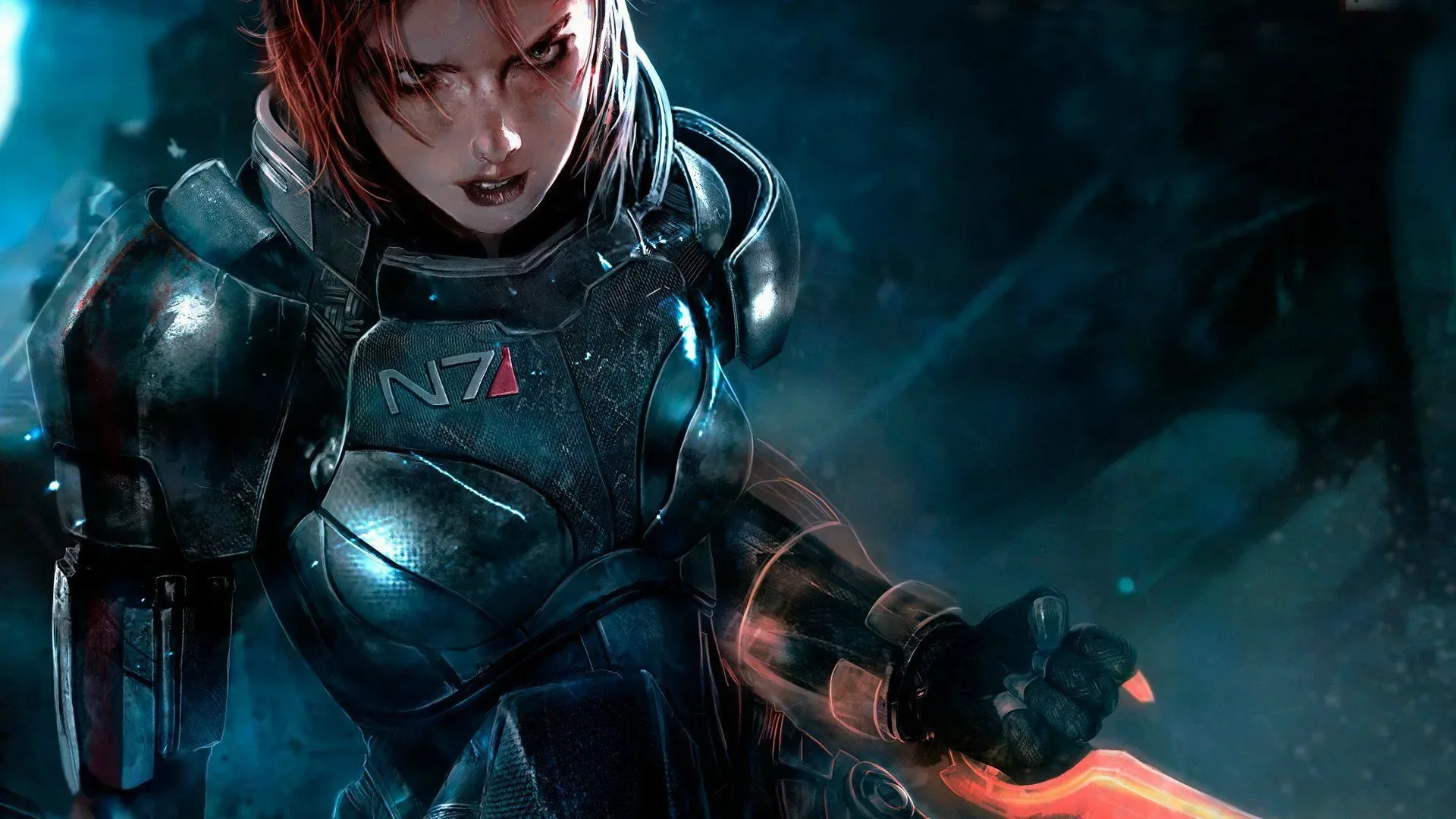
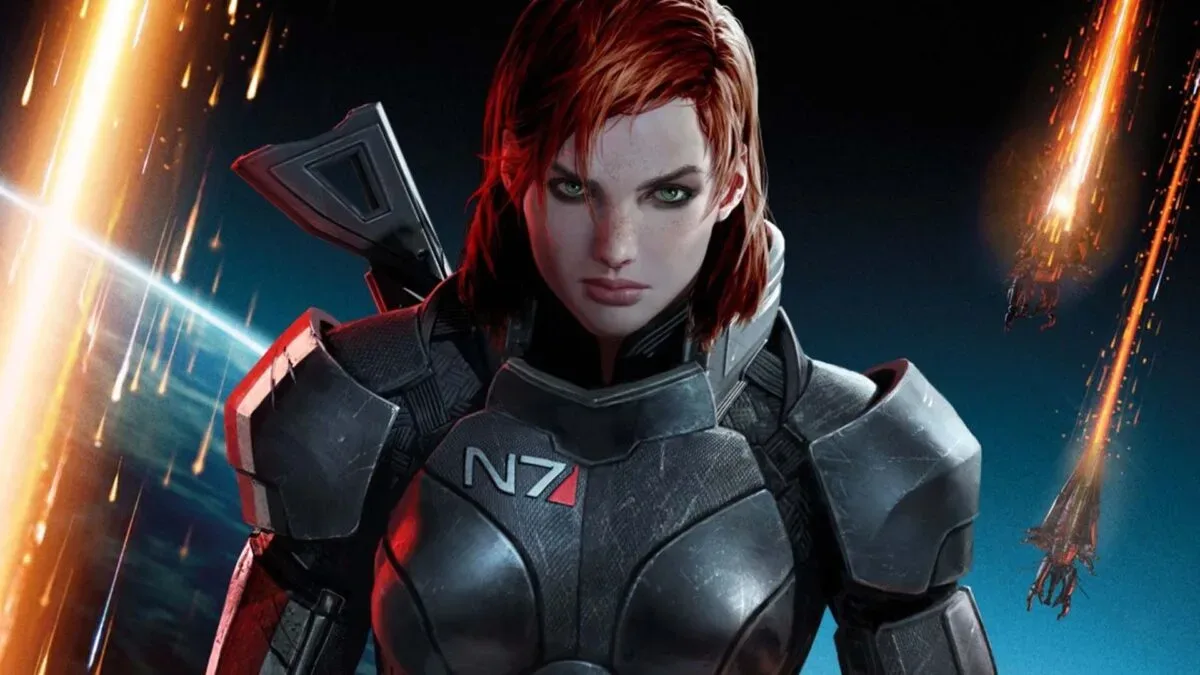
Jennifer Hale, the actor known to Mass Effect players as Commander Shepard, has offered a hopeful but explicitly speculative idea for the series’ future following the reported closure of BioWare in late October: fans could help fund a new home for the franchise if EA were ever prepared to sell its rights.
Hale’s proposal is not a report of a deal, a crowdfunding campaign, or an indication that EA intends to relinquish Mass Effect. It is a vision of what might be possible in a moment of uncertainty: a broad fan campaign, substantial outside investment, and a game developer interested in story-driven work and community involvement. Her central point is simple. Mass Effect remains a large fictional universe with a passionate audience, and she sees potential value in giving it an active future rather than leaving it dormant.
“Who knows? This could happen,” Hale said, while emphasizing that she would support any route that lets the universe continue.
A hopeful idea, not a Mass Effect transaction
The distinction matters. A beloved series having vocal fans does not mean its intellectual property is for sale, and there is no sign here that EA has offered Mass Effect to buyers, fans, or former collaborators. Hale describes a blue-sky scenario rather than a plan in motion.
In her outline, fans could organize a major Kickstarter-style campaign, potentially joined by one or two financially powerful investors. A developer with the right creative outlook could then make a game. It is an appealing picture because it puts the people who care about the series close to its next chapter. It is also a difficult chain of events, because every link would have to hold: the rights would need to become obtainable, enough capital would need to be assembled, and a qualified studio would need to take responsibility for making the game.
Intellectual property, often shortened to IP, means the legal rights connected to a creative work: its title, characters, setting, story world, associated branding and more. Buying or licensing those rights is separate from funding a game’s development. A group might be able to raise money for a project and still have no authority to use Mass Effect’s name, N7 imagery, Commander Shepard, or its galaxy. That is why the question of EA’s willingness is the unavoidable first step in Hale’s imagined path.
The current fan activity described around the series—including petitions and more playful gestures such as cupcakes—shows attachment, not ownership. It can communicate demand and build a visible community. It cannot itself transfer the legal ability to publish a Mass Effect game.
Why Hale’s involvement makes the idea resonate
Hale’s connection to the discussion is especially meaningful because of her role as Commander Shepard. Shepard is the player-facing center of the original Mass Effect experience, and Hale’s performance is deeply tied to the character for many fans. Her comments therefore carry emotional weight even though they do not establish any formal role in the franchise’s business future.
Related coverage includes Jennifer Hale Imagines a Fan-Funded Future for Mass Effect After BioWare's Closure.
She said she had worried about BioWare’s direction since EA acquired the studio in 2007 through the purchase of holding company Elevation Partners. In Hale’s view, BioWare had a particular spirit that it tried to preserve, but which became hard to sustain under corporate ownership. She contrasted that feeling with the independent version of the studio she admired, describing it as a “brave solo indie company.”
That perspective helps explain why a community-supported future appeals to her. The concept is less about reproducing a corporate structure with new names and more about finding a creative arrangement that she believes could prioritize stories, openness and the people invested in the world. Still, appreciation for that goal should not be confused with evidence that a fan-owned or fan-funded Mass Effect is close.
For players, the immediate takeaway is not to expect a new campaign, a rights sale, or an official funding page. Treat unofficial fundraising claims with care unless they identify who has the legal rights and what agreement permits the use of Mass Effect material. A crowdfunding page can finance work only within the permissions its organizers possess.
BioWare’s closure changes the emotional context, not the ownership question
The discussion arrives after EA’s decision to shutter BioWare, the studio behind both Dragon Age and Mass Effect. EA had itself been acquired by a group of private-equity firms that included Affinity Partners and the Saudi Arabia Public Investment Fund before the closure decision. Hale characterized that sale as another painful development for BioWare’s legacy.
Her argument is that the closure could also represent a moment when EA’s practical hold on Mass Effect feels weaker than it has since the 2007 acquisition. That is an assessment of the situation, not confirmation that the company’s legal ownership has changed. The difference is important: a developer closing can remove the team historically associated with a franchise, but it does not automatically put the franchise’s rights on the market.
Details connected to Universe, a Mass Effect project that did not come to fruition, have also leaked in recent weeks. Those details add to the sense of a series with unrealized possibilities, but leaked material does not establish what will happen next. Nor does it tell players whether any future project could draw on that work.
There are examples of legacy-game ownership being discussed elsewhere. Ultima creator Richard Garriott has expressed interest in reclaiming those games. Hale sees that wider possibility as reason to hope, but the supplied information gives no indication that EA is ready to make a similar arrangement for Mass Effect. Each catalog, rights holder and proposed deal is its own case.
What crowdfunding could and could not solve
Crowdfunding is a method of gathering money from many supporters, generally before a project is complete. It can demonstrate audience interest and provide early development funding. Hale invoked Critical Role as an example of fans coming together around a creative endeavor, then imagined larger investors reinforcing that foundation.
For a project at Mass Effect’s scale, though, crowdfunding would be only one part of the challenge. Hale herself acknowledged that games are expensive and that campaigns with good intentions can become boondoggles. In plain terms, a successful fundraiser is not the same as a successfully delivered game. Development still requires sustained production management, a team capable of finishing the work, and a workable relationship between budget, scope and promises made to backers.
A possible structure would have at least three distinct layers:
- Rights: permission to make and market a Mass Effect game, whether through a sale, license or another agreement.
- Capital: money from supporters, investors or both, sufficient for the project’s actual needs.
- Development: a studio that can turn a creative premise into a finished game while managing technology, narrative, production and delivery.
Hale’s comments touch all three, but as aspirations. Fans may be able to help demonstrate demand and contribute funds; well-financed backers may be able to increase the budget; a developer could supply the production capability. None of those pieces removes the need for the rights holder’s consent.
That complexity does not make the idea meaningless. It clarifies what would need to change for it to become real. Rather than viewing a petition, a Kickstarter, and a new game as a single automatic progression, it is more accurate to see them as separate steps requiring different decisions from different parties.
Fan pressure has value, but it has limits
Players are accustomed to making their priorities visible, whether they are campaigning for a franchise’s return or pushing for repairs to a smaller irritant. The conversation around GTA 6 players seeking better ATM controls is a much narrower example of how communities try to elevate concerns. The Mass Effect situation is far more consequential because it involves a closed studio and the future of a major franchise, but the shared principle is that organized feedback can make player interest difficult to ignore.
What feedback cannot do is compel a rights sale. From EA’s perspective, Mass Effect may have value as a dormant property, as a future internal project, as something to license, or as an asset it does not wish to move at all. Hale’s observation about leaving money on the table reflects one argument for a sale, but it is not proof that EA shares that calculation.
Her vision also asks a prospective studio to be “story-driven and community-conscious.” Those qualities describe an intended creative culture, not a guarantee of a particular story, cast, format or release plan. Fans hoping for continuity should be cautious about filling that blank space with assumptions. A hypothetical new owner or licensee could make choices very different from BioWare’s prior work.
The practical message for Mass Effect fans
Hale’s comments are best read as an expression of commitment to Mass Effect’s potential, not a call to send money anywhere. There is no official transaction to support, no confirmed developer, and no evidence that EA is negotiating with a fan consortium. The strongest immediate evidence is that fans still care intensely about the setting and that one of its most recognizable performers believes it deserves another chance.
For now, watch for concrete developments rather than treating enthusiasm as confirmation. A credible change in Mass Effect’s future would need a clear statement about who holds the rights, who is authorized to develop a game, and what form that game will take. Until then, the fan campaign and Hale’s remarks are a reminder that closing a studio does not erase the audience built around its worlds.
That is the opening Hale sees in a discouraging situation. Mass Effect is vast, she argues, and the end of BioWare does not have to mean the end of every possibility for Mass Effect. It simply means that any revival—especially one rooted in fans—would have to overcome unusually large legal, financial and creative obstacles before it could move from a compelling hope to an actual game.