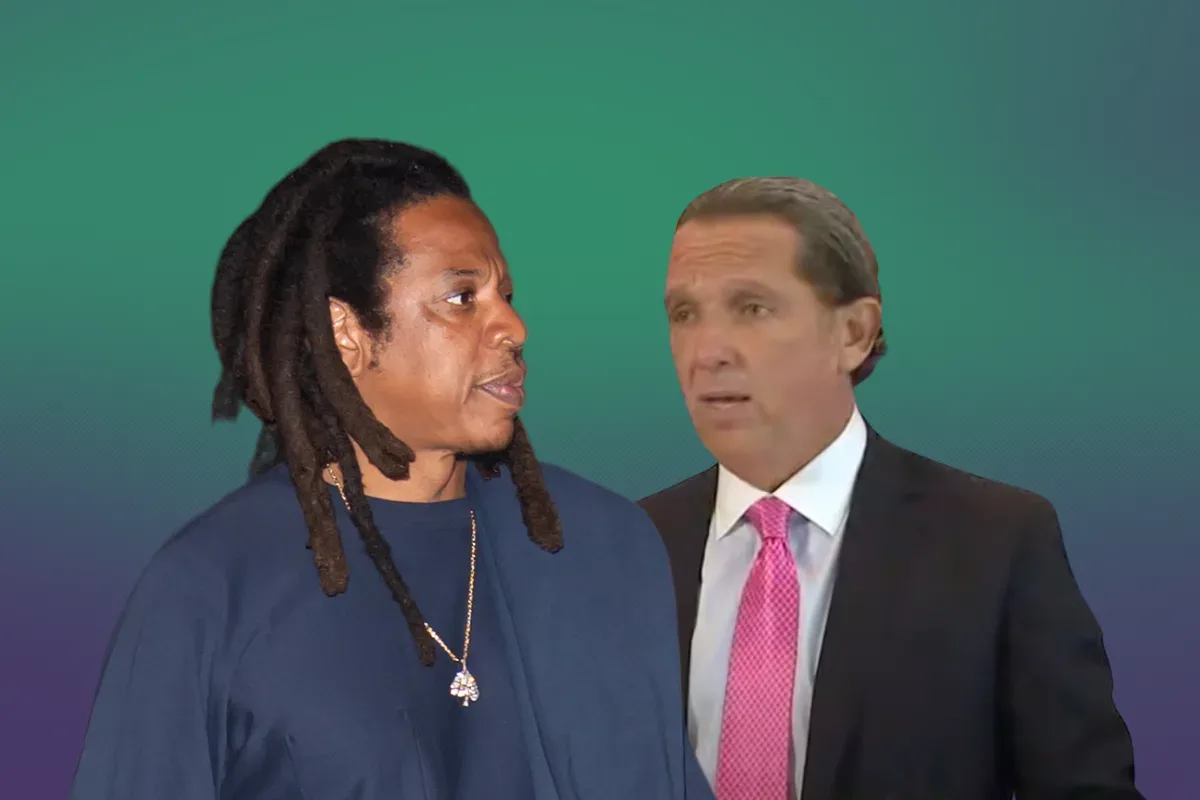
Jay-Z’s legal case against Houston attorney Tony Buzbee has hit a significant appellate setback in California. The California Court of Appeal upheld the earlier dismissal of Jay-Z’s claims for defamation, civil extortion and intentional infliction of emotional distress, ruling that the case was barred at an early stage by California’s anti-SLAPP statute.
The decision affirms a June 2025 ruling and brings one phase of a larger, deeply contested legal conflict to a close, at least for now. It is important to separate what the appeals court did decide from what it did not: the panel addressed whether Jay-Z had a viable claim against Buzbee over litigation-related communications and public statements. It did not decide whether allegations made against Jay-Z and Sean “Diddy” Combs were true or false.
Jay-Z may still seek further review, including a request for rehearing at the appellate level or a petition to the California Supreme Court. But the ruling provides a detailed look at why the court concluded that his claims could not proceed under the legal standards governing protected speech, contemplated litigation and defamation cases involving public figures.
How the dispute reached California’s appeals court
The conflict grew out of allegations brought in a federal lawsuit by a woman identified in court filings as Jane Doe. On October 20, 2024, she sued Combs in Manhattan federal court and described a second alleged assailant only as “Celebrity A.” An amended complaint filed on December 8, 2024, identified Jay-Z as that person.
Jane Doe alleged that she was 13 when she traveled from Rochester, New York, to attend the 2000 MTV Video Music Awards at Radio City Music Hall. Her complaint alleged that she was invited to an afterparty after speaking with a limousine driver outside the event, taken to a large white residence in New York City, asked to sign a nondisclosure agreement, and later sexually assaulted. The lawsuit alleged serious and lasting emotional harm.
Jay-Z emphatically denied the allegations. His attorney, Alex Spiro, characterized the account as demonstrably untrue and pointed publicly to purported problems involving the alleged timeline, location and Jane Doe’s father’s memory of events. Jane Doe acknowledged errors in some recalled details while maintaining the central allegation in the civil case.
Before Jay-Z was publicly named in the amended federal complaint, Buzbee had sent “Mediation Demand” letters dated November 5, 2024. The letters were sent on behalf of Jane Doe and another person identified as John Doe. They alleged separate sexual assaults by Jay-Z at parties connected to Combs and proposed mediation, while warning that civil litigation would follow if mediation did not occur.
Jay-Z refused mediation. On November 18, 2024, he filed suit against Buzbee in California under a pseudonym before later identifying himself and adding a defamation claim. His suit argued that the letters were an improper attempt to obtain money through threats of false allegations, damaging publicity and lawsuits. He also challenged Buzbee’s interviews and online comments concerning alleged celebrity participants, facilitators and others connected to the allegations involving Combs.
What anti-SLAPP law means in this case
California’s anti-SLAPP law is designed to give defendants an early way to challenge lawsuits that target conduct tied to free speech or petitioning activity. “SLAPP” is shorthand for a strategic lawsuit against public participation. The statute does not mean every lawsuit against a speaker fails, and it does not grant a blanket shield for knowingly false statements or unlawful behavior. Instead, it creates a multi-step process.
First, a court asks whether the challenged claims arise from protected conduct. If the answer is yes, the person bringing the suit must then demonstrate a legally sufficient likelihood of success. In a case such as this one, that burden matters enormously because the dispute concerns communications exchanged while a lawsuit was being considered and statements related to a matter of public concern.
The appeals court concluded that Buzbee’s demand letters qualified as protected pre-litigation communications. The panel highlighted that the letters sought mediation, contemplated a civil suit and were followed by the federal litigation that ultimately named Jay-Z. In other words, the court viewed the correspondence as connected to litigation that was seriously under consideration, rather than as a detached or empty threat.
The ruling also rejected the argument that a threat of civil litigation, public disclosure or reports to authorities automatically amounted to civil extortion. Under the court’s reasoning, those elements alone were not enough to establish extortion as a matter of law in this setting.
Why the defamation claim did not clear the required bar
The appellate court separately considered public statements attributed to Buzbee. It found that broad remarks about unidentified celebrities, potential enablers and other people possibly connected to the allegations did not plainly identify Jay-Z. A defamation claim generally requires a statement to be reasonably understood as referring to the plaintiff, and the court held that this threshold was not met for those generalized comments.
For statements that did relate specifically to the allegations involving Jay-Z, the court found that he had not made the necessary showing of actual malice. Because Jay-Z is a public figure, the applicable standard required clear evidence that Buzbee knew a statement was false or acted while actually doubting its truth.
The court pointed to sworn declarations from Buzbee and lawyers associated with the matter stating that they had interviewed Jane Doe and other potential claimants before concluding that the allegations were credible. The appellate opinion held that this record did not provide the clear evidence needed to show actual malice at this stage.
That legal result should not be confused with a ruling that the allegations were proven. It is a ruling about the evidence and standards required for Jay-Z’s claims against Buzbee to move forward. The distinction is central: courts can decide procedural and speech-protection questions without resolving the factual merits of underlying accusations.
The February 2025 dismissal and disputed recording
Jane Doe voluntarily dismissed her federal lawsuit against Jay-Z and Combs with prejudice on February 14, 2025. A dismissal with prejudice generally means that the same civil claims cannot simply be filed again. The appellate decision states that the dismissal followed Jay-Z’s promise that neither he nor his agents would harass or have further interaction with Jane Doe.
Jay-Z publicly described the withdrawal as vindication and said the suit had been meritless. Yet the circumstances surrounding the dismissal later became a contested part of his California case against Buzbee.
After the federal case ended, investigators working indirectly for Jay-Z’s side visited Jane Doe at her home in Alabama and secretly recorded an interview. Jay-Z’s lawyers argued that she made remarks suggesting Buzbee had encouraged her to name Jay-Z and had told her she could receive money.
Jane Doe subsequently told the court that she felt intimidated during the encounter. She maintained that her allegations were true and said she had dismissed the federal case because she feared retaliation. The California court declined to consider the recording, treating it as inadmissible hearsay and expressing concerns about the unannounced visit, the questioning and the reliability of statements obtained in those circumstances.
The court also refused Jay-Z’s request to depose Jane Doe and Buzbee. The opinion cited the lateness of the request, attorney-client privilege and Jane Doe’s privacy interests.
What the ruling does—and does not—change
For Jay-Z, the immediate result is a loss in the appeal over his California counterclaims. The earlier dismissal stands unless a higher court intervenes. The decision protects Buzbee from these particular claims at this stage and reinforces the broad role California’s anti-SLAPP law can play when legal demand letters and litigation-related communications are challenged.
For Buzbee, the ruling does not establish that every allegation made on behalf of a client is correct. It instead finds that Jay-Z did not satisfy the demanding legal requirements for his claims, including the actual-malice standard that applies to public figures.
For readers following the wider collision of celebrity, reputation management and civil litigation, this is another reminder that a court’s procedural result is not necessarily a factual verdict. Legal disputes can move through several separate tracks: the underlying allegations, the withdrawal of a lawsuit, claims over attorney communications, evidentiary fights and appeals. Each one can have a different question and a different burden of proof.
High-profile entertainment disputes also increasingly overlap with wider questions about media, public speech and the business structures around artists. That broader intersection is visible elsewhere in music-industry coverage, including the evolving plans for a licensed AI music platform for remixes and vocal experiences, where rights, reputation and control likewise carry major stakes—albeit in a very different context.
As of this appellate ruling, no finding has been made on the truth of Jane Doe’s allegations against Jay-Z or Combs. The present decision is narrower, but still consequential: Jay-Z’s attempt to hold Buzbee liable for the challenged letters and statements has been rejected on appeal, with potential further review remaining the next procedural question.