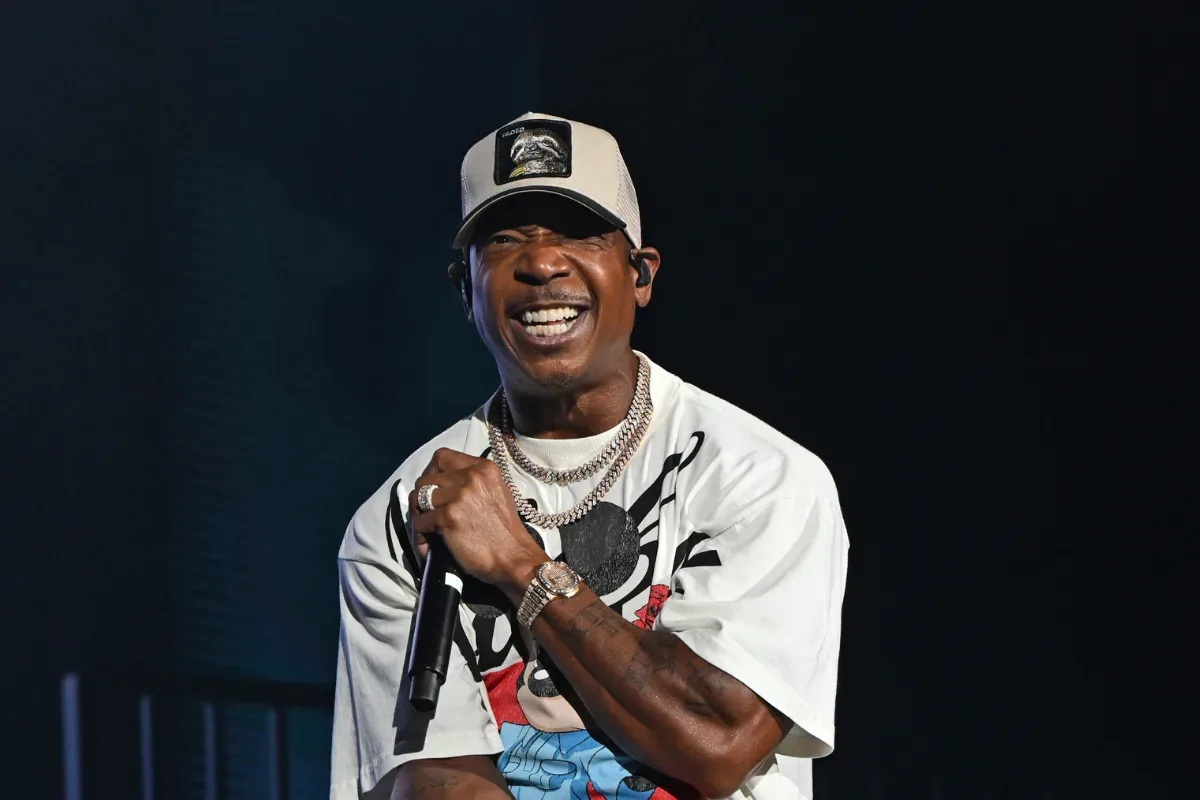
Ja Rule has taken on two connected roles at IPX: president of the company’s celebrity board of advisors and founding shareholder. The arrangement puts the artist and entrepreneur in a position to advise a business built around a familiar creative-industry question: who owns the work, who controls its use, and how is the project financed and delivered without losing sight of either?
IPX says its platform is intended to help artists, athletes and other creators retain rights while moving projects from planning to production. The company describes tools for budgets, casting, crew schedules and rights records, as well as podcast production and distribution and live broadcasts. Its pitch is not merely that a project can be made in one place, but that the operational record surrounding it can be organized there, too.
That distinction matters. A creative idea, a filmed series, a podcast, a live event and the contracts attached to each can all involve different participants and permissions. IPX’s stated focus is on bringing pieces of that process together while giving creators a clearer way to document ownership.
A board role built around creator ownership
As president of the celebrity board of advisors, Ja Rule is expected to help shape how IPX approaches rights retention, financing and production for artists, athletes and creators. Becoming a founding shareholder also gives him an ownership stake in the business itself, rather than positioning him solely as a public-facing adviser.
“I’m a creative first, and I’ve seen firsthand what can happen to artists who don’t own their work,” Ja Rule said in a statement. “When I create IP, I make sure every show is my IP, on purpose, so that content will be ours, forever.”
In that statement, the key term is IP, short for intellectual property. In practical creative-business language, intellectual property can include a show concept, title, recorded work, script, visual identity or other original material protected through a combination of copyright, trademark and contractual rights. Owning IP does not mean every possible right is automatically secured forever; rights can be licensed, shared, transferred or limited by agreements. But the identity of the owner can strongly influence who can authorize future uses and who participates when the work creates value.
Ja Rule’s emphasis is therefore on control as much as creation. An artist can be central to making a work without holding every relevant right to it. A platform promising better records of project ownership is addressing an administrative problem with major long-term consequences: people need to know what was agreed, who has authority and what rights are still available before a work is financed, distributed, repurposed or adapted.
What IPX says its tools cover
IPX describes a set of production-management functions, including budgeting, casting, crew scheduling and records identifying who holds a project’s rights. None of these functions alone resolves creative ownership. Their value, if they work as described, is in making the production process more legible to the people involved.
- Budgets set out anticipated costs and can help a team see whether financing matches the scope of a project.
- Casting and crew scheduling concern the practical coordination required to turn an idea into a completed production.
- Rights records are documentation of who holds relevant interests in a project. That can be particularly important when several contributors, producers or business partners are involved.
- Podcast production and distribution suggest that IPX is not limited to screen projects.
- Live broadcasts extend the company’s stated scope to programming and events delivered in real time.
The common thread is workflow. Creative ownership is often discussed in sweeping terms, but it is also shaped by routine documentation: agreements, approvals, credits, schedules, deliverables and payment conditions. A recordkeeping system cannot substitute for legal advice or an agreement between participants. It can, however, make it easier to locate and understand the information a project team has already established.
For creators, the appeal of an integrated system is straightforward. A project might otherwise require separate tools and services for planning, production, distribution, audience outreach and sponsorship reporting. IPX is presenting itself as a place where those categories can be connected. Whether that produces meaningful control for users will depend on the specific terms, records and partnerships behind an individual project, not simply on the presence of a dashboard or membership.
Sponsorship claims put milestones at the center
IPX also outlines a sponsor-facing arrangement in which payment is held until agreed campaign goals are achieved. The company lists audience reach and event attendance as examples of potential goals.
This is a milestone-based model: instead of treating a sponsorship payment as entirely detached from results, the arrangement ties at least some payment to predefined performance measures. The apparent benefit for a sponsor is accountability. The corresponding practical issue for creators is clarity. Everyone involved needs to understand precisely what counts as a completed goal, what evidence will be used, when a result is measured and what happens if circumstances change.
Audience reach and attendance can sound simple, yet both need definitions in an agreement. Reach may describe the number of people exposed to content, while event attendance concerns people present at an event. Those are different measures, and neither necessarily says the same thing as engagement, sales or long-term audience interest. The available information does not spell out IPX’s full terms for these campaigns, so it would be premature to infer how every dispute, delay or partial outcome would be handled.
Still, the model signals an effort to make sponsors and creators work from agreed outcomes rather than broad promotional promises. That can be useful when the relevant metrics are realistic, measurable and understood by both sides before a campaign begins.
Memberships, fan participation and an important uncertainty
IPX presents a separate route for fans through production memberships beginning at $100. The company says memberships can provide access to content, experiences and other perks. It also says members may receive payment for contributions such as testing, feedback or promotion.
The word may is essential here. IPX says any financial benefit is uncertain and depends on factors including the member’s active work. A membership should therefore not be read as a promise of earnings, a guaranteed return or an automatic ownership interest in a project. The stated offer combines access and possible participation, but the actual outcome can vary.
For anyone considering a creator- or fan-participation program, the practical questions are direct:
- What does the membership include immediately: content access, experiences, community features or another defined benefit?
- What activities could qualify someone for payment?
- How is that work tracked, evaluated and compensated?
- Does participation confer any rights in the project, or only access and potential compensation?
- What written terms govern the relationship?
Those questions are not unique to IPX. They are useful whenever creative projects ask audiences to contribute ideas, testing, promotional effort or other labor. The distinction between fandom, feedback, paid work and ownership should be specific rather than assumed.
Why Ja Rule’s business background fits the appointment
The IPX position follows another ownership-focused venture for Ja Rule: Amber & Opal, the whiskey brand he helped build after an initial investment in whiskey barrels with partners. The group later developed its own brand, which launched in Maryland in 2024.
That experience offers a grounded example of the difference between having an idea, holding a stake and operating a business. Amber & Opal’s four founders chose not to rush into a broader retail expansion, instead concentrating on seven markets they could visit and support. The business had the possibility of entering 238 stores, but the team sought additional help before taking that step.
The reason was operational, not merely aspirational. Getting bottles placed in stores was only one part of the process; the founders also needed to visit bars and retailers to support sales. The team sought $5 million to $7 million to add staff and back its next markets.
That is relevant context for a creator-services company. Ownership can create opportunity, but it also creates obligations. A founder or shareholder must contend with staffing, distribution, customer relationships and the cost of growth. In IPX’s case, the arena is creative production rather than spirits retail, but the general lesson is similar: retaining control over a project is most useful when the operation can sustain the responsibilities that come with it.
Ja Rule’s new role consequently reads as more than a conventional endorsement arrangement. IPX has given him an advisory leadership position and a founding stake while centering a theme he has explicitly emphasized: creators keeping hold of their work. The company’s tools, memberships and sponsor model point to an attempt to address several stages of creative work at once. The durable test will be how clearly those systems define rights, rewards, responsibilities and outcomes for the people using them.
The appointment also lands during a period when creator representation and business ownership remain prominent industry concerns. For another recent example of representation expanding beyond a traditional talent arrangement, see this report on Mainstay Sports signing Arkansas freshman Abdou Toure for brand representation.