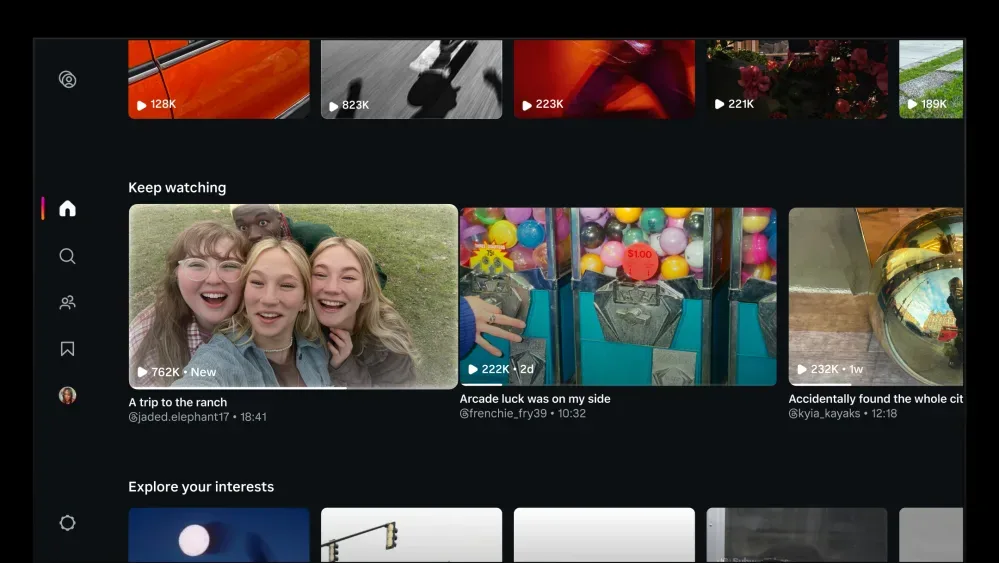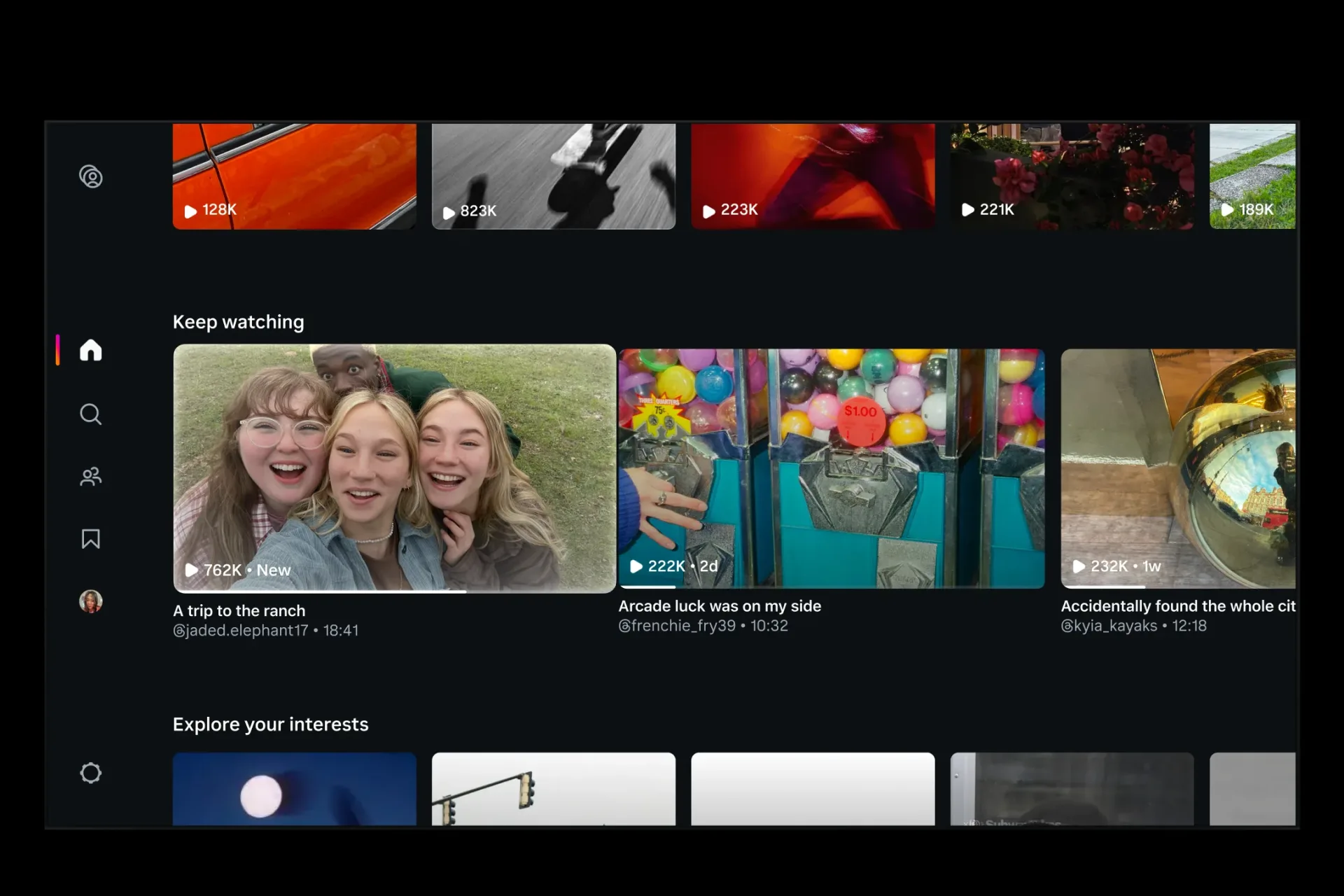
Instagram is testing a considerably longer runway for creator video: horizontal uploads that can run as long as 90 minutes in some cases. The U.S. test, limited to a small group of creators, is paired with a set of changes that make the service look more comfortable with television-style viewing and broader discovery, including Apple TV playback for Reels and other Instagram video.
The headline number is significant, but the more consequential part of the plan may be how the pieces fit together. Instagram is proposing a loop in which a creator can publish a substantial feature video, cut portions of it into Reels for discovery, and reach viewers beyond the audience that already follows them. It is also planning a phone-as-remote feature for controlling video playback on TVs.
That is a meaningful expansion of Instagram’s historic short-video and social-feed identity. It is not, however, an announcement of a YouTube-like creator business model. Instagram is not currently planning an ad-revenue-sharing program that pays creators for their videos in the manner associated with YouTube. The company says it is still too early to outline a long-term monetization model.
What Instagram is testing
The test centers on longer, horizontal video. “Horizontal” simply means the conventional widescreen orientation generally associated with TVs, computer monitors and much long-form online video, rather than the tall, vertical frame commonly used for mobile-first Reels. A ceiling of up to 90 minutes puts documentaries, extended interviews, shows, podcasts with video and other sustained formats within reach in principle—though the supplied details describe a test, not a platform-wide rollout or a guarantee that every participant receives the same maximum length.
Creators in the test can use Reels as clips that point people toward a longer feature video. That distinction matters. A Reel is designed for fast discovery and scrolling, whereas the larger upload is meant to hold the fuller work. Rather than asking a creator to choose between a short promotional clip and a complete episode-length production, the approach connects the two formats inside Instagram.
Instagram also says Lives will soon be discoverable in the Reels tab beyond a creator’s existing followers. In practical terms, a live broadcast may have a route to new viewers instead of being limited chiefly to people who have already opted into that creator’s feed. The outcome will still depend on how Instagram surfaces the broadcasts, but the intended direction is clear: live video is being treated as content that can be found, not only as a notification-driven event for a known audience.
On the living-room side, users will be able to watch Reels and more on Apple TV. A forthcoming feature is also intended to turn a phone into a remote for video playing on televisions. The announcement does not provide a release date, device-by-device compatibility list, or details on which specific video types will be supported through each TV feature. Those omissions are important for viewers: the current information describes the direction of the product rather than a complete support matrix.
A shift in Instagram’s own thinking
Instagram head Adam Mosseri described himself as having resisted long-form video on the platform for a long time. His concern was that the service should preserve connection with friends rather than become solely an entertainment destination. Alongside VP of Product Tessa Lyons, Mosseri said he has now been persuaded that Instagram needs to lean into longer video.
“I have been against doing long-form video on the platform for a long time,” Mosseri said, while raising the question of how Instagram can remain about connecting with friends as well as entertainment.
That tension explains why a 90-minute test is more than a file-length adjustment. Social platforms make choices about what their main surfaces reward: updates from people a user knows, recommended posts from unfamiliar accounts, or professionally produced entertainment. Instagram’s new tools indicate a willingness to support more of the last category while retaining the social mechanisms—following, sharing and short clips—that can help a viewer get to it.
The proposed Reel-to-feature-video path is especially revealing. It recognizes that an extended piece can be difficult to discover on its own in an app built around quick browsing. Short clips can act as an entry point, while the full video gives an interested viewer somewhere to continue. This is a distribution strategy as much as it is a format strategy.
The YouTube comparison has a major limitation
The longer videos, widescreen presentation and TV controls naturally invite comparison with YouTube. Instagram’s changes position it more directly alongside a major destination for creator-led entertainment. But length and screens are only one part of the equation for creators deciding where to put serious time, production effort and rights-managed material.
Monetization is the unresolved piece. Ad-revenue sharing generally refers to a platform sharing some advertising income generated around eligible creators’ content. It is a clearer proposition than simply being able to reach an audience: creators can evaluate whether the work needed to make longer videos has a direct platform-supported return. Instagram has not announced an equivalent program.
Instead, the company says it is exploring ways creators could earn from brands, fans and Instagram, including performance-based incentives. Those phrases describe possibilities, not a published compensation structure. Brand work can involve commercial partnerships. Fan support can refer broadly to ways an audience contributes financially. Performance-based incentives suggest payment tied to outcomes set by the platform, but no eligibility rules, measurement standards, payout terms or availability were supplied.
For now, that means creators should not treat the 90-minute test as proof of a new revenue-share opportunity. It establishes new storytelling and distribution options, while the financial arrangement remains undefined. The distinction is particularly important for anyone considering whether to create a long production specifically for Instagram rather than adapting work already being made for another audience.
What the changes could mean for creators
For a creator already publishing longer programming elsewhere, Instagram’s proposal could offer a more complete home for trailers, clips, live activity and the full feature. A single service could potentially handle the short form that introduces an idea and the long form that develops it. The Apple TV effort also acknowledges that some viewing is no longer confined to a phone held vertically for a few seconds at a time.
For smaller creators, there is an opportunity but not a promise. Expanded Live discovery could expose broadcasts to people who do not already follow the host, while Reels can provide a discovery mechanism for long videos. Yet discovery is not the same as predictable reach, and no details were provided about how recommendations will work, what formats will be favored, or what analytics creators will receive.
Longer capacity also does not mean every project should be longer. A 90-minute maximum is a technical allowance, not evidence that audiences will automatically stay for 90 minutes. The stronger practical use is likely to be format flexibility: a creator with a story or program that genuinely needs time no longer has to reduce it solely to meet a much shorter cap. Meanwhile, the option to publish clips gives that creator a way to make the opening invitation brief and accessible.
Creators who build content around games, live events or pop culture may be especially attentive to the TV component, because viewers often want a larger screen for material with detailed visuals or a communal viewing feel. But the company has not detailed upload quality, playback controls, live-TV behavior, rights tools or creator revenue terms. Those unanswered operational details will determine how useful the capability becomes in real production workflows.
What viewers should expect—and what remains unknown
The immediate change is limited. The extended horizontal uploads are being tested in the United States with only a small cohort of creators. Not every user can assume they will see 90-minute uploads or have the ability to publish them. Similarly, Instagram says the expanded Live discovery and phone remote are coming, but does not attach dates in the information available.
Viewers who do encounter the changes may see Instagram become less rigidly divided between a feed for brief updates and separate destinations for longer programs. Reels can become the preview, Live can reach beyond the follower base, and an Apple TV screen can become an endpoint for watching. That broader-screen ambition parallels the wider consumer-device conversation around portable viewing hardware, including reports around the next iPad mini’s rumored display and durability changes, though Instagram has not announced any connection to that device.
Still, it would be premature to call Instagram a full replacement for a dedicated long-form video platform. The company has communicated an experiment, a set of planned discovery and television features, and an intention to help creators build a fuller body of work. It has not announced a broad release schedule or the monetization framework that would explain how long-form creators are compensated at scale.
The test is best understood as a strategic opening. Instagram is making room for substantially longer storytelling and making a deliberate bid for the TV screen, while trying to preserve its social core. Whether creators embrace that opening will depend not just on the 90-minute limit, but on discoverability, viewing experience and the still-unsettled question of how the work pays.