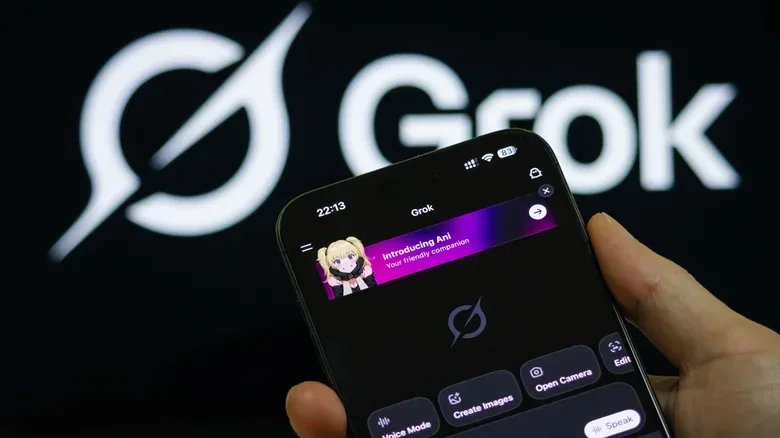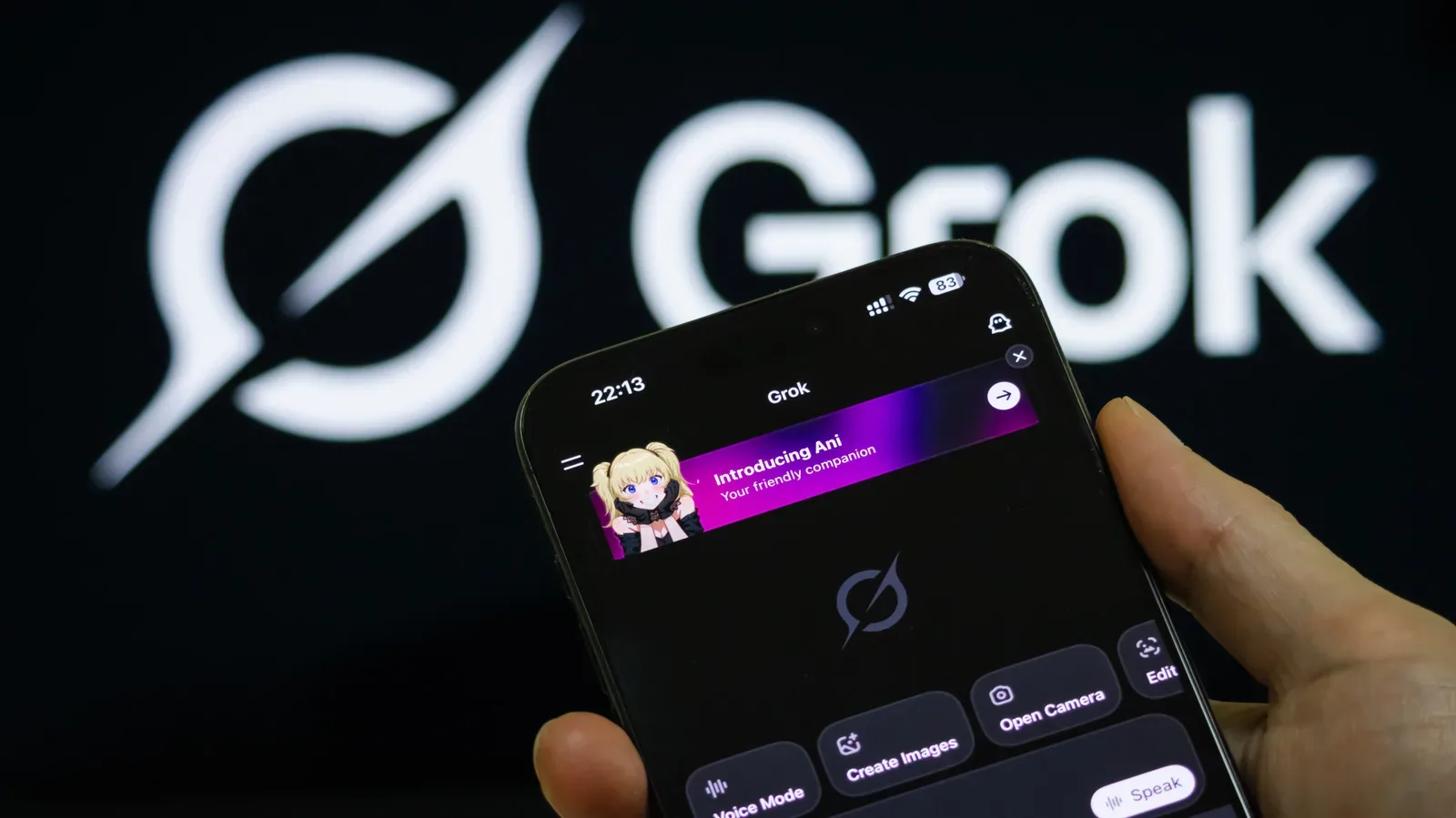
Grok is available without a payment, but “free” should be read as an entry point rather than an unlimited AI service. The no-cost version is accessible through Grok’s web and mobile experiences, with basic text chats, voice interactions, and some web and X search functionality. That can be enough for someone who wants to ask an occasional question, try the assistant’s conversational style, or determine whether it has a useful place in their routine.
The trade-off is usage caps. A free user can encounter a limit after enough requests, and the precise allowance is not something to treat as permanent. It may move with demand and the service’s plan rules. In practical terms, free access is most suitable for light, irregular use—not for an extended research session, sustained coding task, or a long chain of revisions where every follow-up consumes another request.
That distinction matters because generative AI subscriptions commonly sell two related things: capacity and access. Capacity means more opportunities to use the service before hitting a rate limit. Access means eligibility for more advanced models or tools. A paid tier can improve the amount of work a user can attempt, but it does not turn an AI answer into a guaranteed fact.
What is available on Grok’s free tier?
The free version covers the fundamentals. Users can hold basic conversations with Grok, use voice interactions, and access elements of web and X search. It is therefore a workable way to evaluate whether the chatbot’s responses, interface, and search-related capabilities suit a particular task.
For a casual user, that is a meaningful starting set. Someone might use it to outline a question, ask for a plain-language explanation, or explore a topic before moving to primary material. The limitation is less about whether Grok can answer a first prompt and more about how reliably it can support repeated work over time. When the number of requests is capped, the experience can become inconvenient for anyone who depends on many follow-ups.
A usage cap, sometimes called a rate limit, is a limit on how often a person can make requests over a defined period. It is not necessarily a judgment about the importance of a request. A short question and a more involved prompt can both count toward the user’s available allowance under whatever rules are active at the time. Because those rules can change, it is sensible to check the current plan details rather than relying on an old description of the free tier.
Free users should also not assume they receive the same model selection as subscribers. Newer and more capable models are tied to paid access, as are the most significant generative-media tools. Image and video generation are particularly important dividing lines: the higher-impact image and video features are positioned as premium capabilities, rather than as a dependable part of the free experience.
What paid Grok plans are intended to add
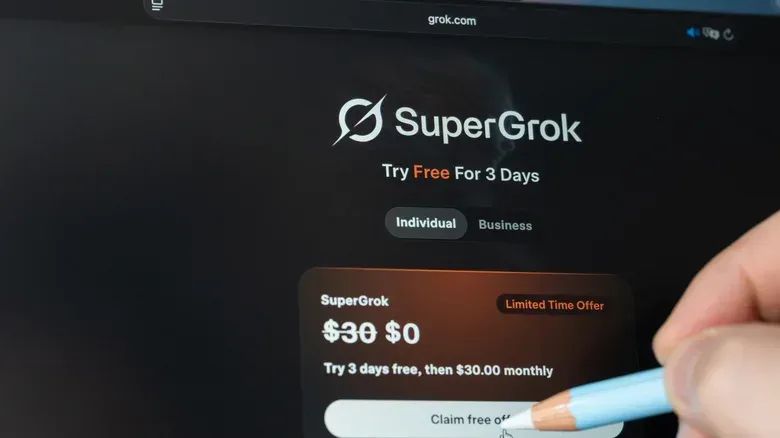
SuperGrok is the consumer-focused upgrade for people who need higher usage limits, longer conversations, access to more advanced models, and priority access to newly introduced capabilities. Put simply, it is aimed at users whose AI usage has progressed from occasional curiosity to a repeated part of their workflow.
Related coverage includes Is Grok Free in 2026? What the No-Cost Tier Includes and Where Limits Begin.
Paid tiers can include advanced reasoning models, coding tools, image or video generation, and priority when demand is high. Advanced reasoning refers to models intended for more involved problem-solving and multi-step work. That does not mean every answer will be correct; it means the available toolset and intended level of analysis are broader than the lightweight free experience.
Priority access is also best understood as a service-level benefit. During busy periods, it can improve a subscriber’s chance of continuing to use the product when a free user might be more constrained. It should not be confused with a promise of correctness, a special form of verification, or an assurance that the tool will understand every prompt.
SuperGrok Heavy is geared toward unusually demanding use and access to the most resource-intensive models. That makes it a poor fit for an individual whose needs are limited to a few chats now and then, even if they occasionally want a better answer. The useful question is whether demanding work is routine, not whether it happens once in a while.
There is also an overlap between enhanced Grok access and X subscriptions. X Premium users receive access to some more advanced Grok features and higher-priority access, while SuperGrok Heavy includes X Premium. The overlap is worth checking carefully before subscribing: a person considering paid Grok should identify the features they actually need and whether a subscription they already hold changes what is available to them.
Business and Enterprise are not simply bigger personal plans
Business and Enterprise offerings serve a different purpose from a consumer upgrade. They are intended for organizations that need centralized billing, security controls, or API-style deployment. Centralized billing means an organization can manage payment across users rather than asking each individual to maintain a separate subscription. API-style deployment refers to making AI capabilities available through software integrations, instead of only through a consumer chat interface.
Those needs can matter greatly to a company, but they do not automatically make Business or Enterprise the better choice for a person seeking a stronger chat assistant or a research aid. An individual should not equate organizational plans with a universally better everyday experience. The appropriate tier depends on the job being done, the number of users involved, and whether administrative or deployment controls are genuinely required.
Who should stay free, and who should consider paying?
The free tier is the logical first stop for people who ask only a question or two at a time, are testing Grok’s personality and usefulness, or do not expect to use AI every day. It offers a low-stakes way to learn the service’s limits without treating a subscription as a requirement.
A paid plan becomes more plausible when the limits themselves interrupt work. That could mean repeatedly reaching the request cap while researching, working through code, generating media, or maintaining longer conversations. The key signal is consistency. A recurring need for extra capacity or premium tools is a more defensible reason to upgrade than a one-off task that happens to be demanding.
A practical way to assess the value
- Start with the free version. Use the types of prompts you expect to make in normal life or work, rather than trying to judge the tool from a single novelty question.
- Notice the friction. Track whether usage limits, missing model access, or unavailable media tools genuinely prevent you from completing tasks.
- Separate need from curiosity. Wanting to try image generation once is different from needing repeated, higher-volume image or video work.
- Check current terms. Quotas and plan rules can change, so confirm the live details before making a decision based on a previous allowance.
- Keep a verification step. Treat important AI output as a starting point for checking, not the last word.
Why a subscription does not solve the accuracy problem
The most important limitation is not a rate cap. Like other AI systems, Grok can hallucinate, misunderstand a prompt, or provide claims that are not fully reliable. A hallucination is an answer that may sound confident and coherent but is unsupported or wrong. It is not necessarily an intentional falsehood; it is a failure of the system’s output to match dependable information.
That risk can be especially significant when a story is breaking or a topic is trending on X. Fast-moving discussion can supply a lot of material without guaranteeing that the material is accurate. For news, research, decisions with consequences, and any claim a reader intends to repeat publicly, the responsible workflow is to verify key details independently.
This is also a useful safeguard against the broader online ecosystem of misleading downloads, fake access offers, and urgency-based claims. The same caution behind recognizing bogus early-access offers and fake downloads applies to AI-adjacent promises: confirm what is official, do not assume a viral post is proof, and be skeptical of offers that claim unusual access without clear verification.
For many people, the sensible answer is simple: use free Grok first, assess whether the caps are a recurring obstacle, and only then consider SuperGrok or a heavier plan. Paying may provide more usage, more tools, and access to stronger models. It does not remove the need to write clear prompts, understand the task, or fact-check the result.