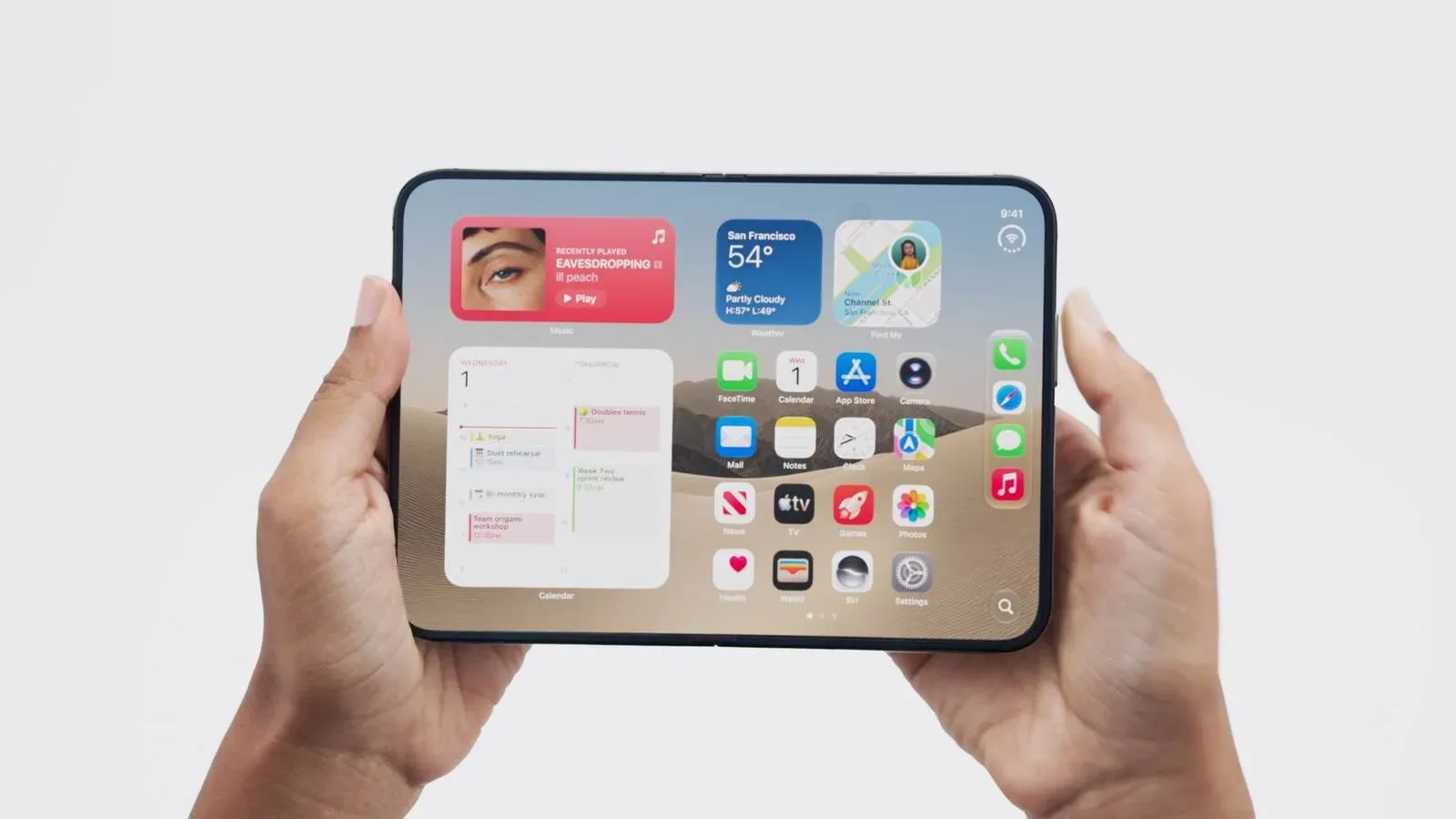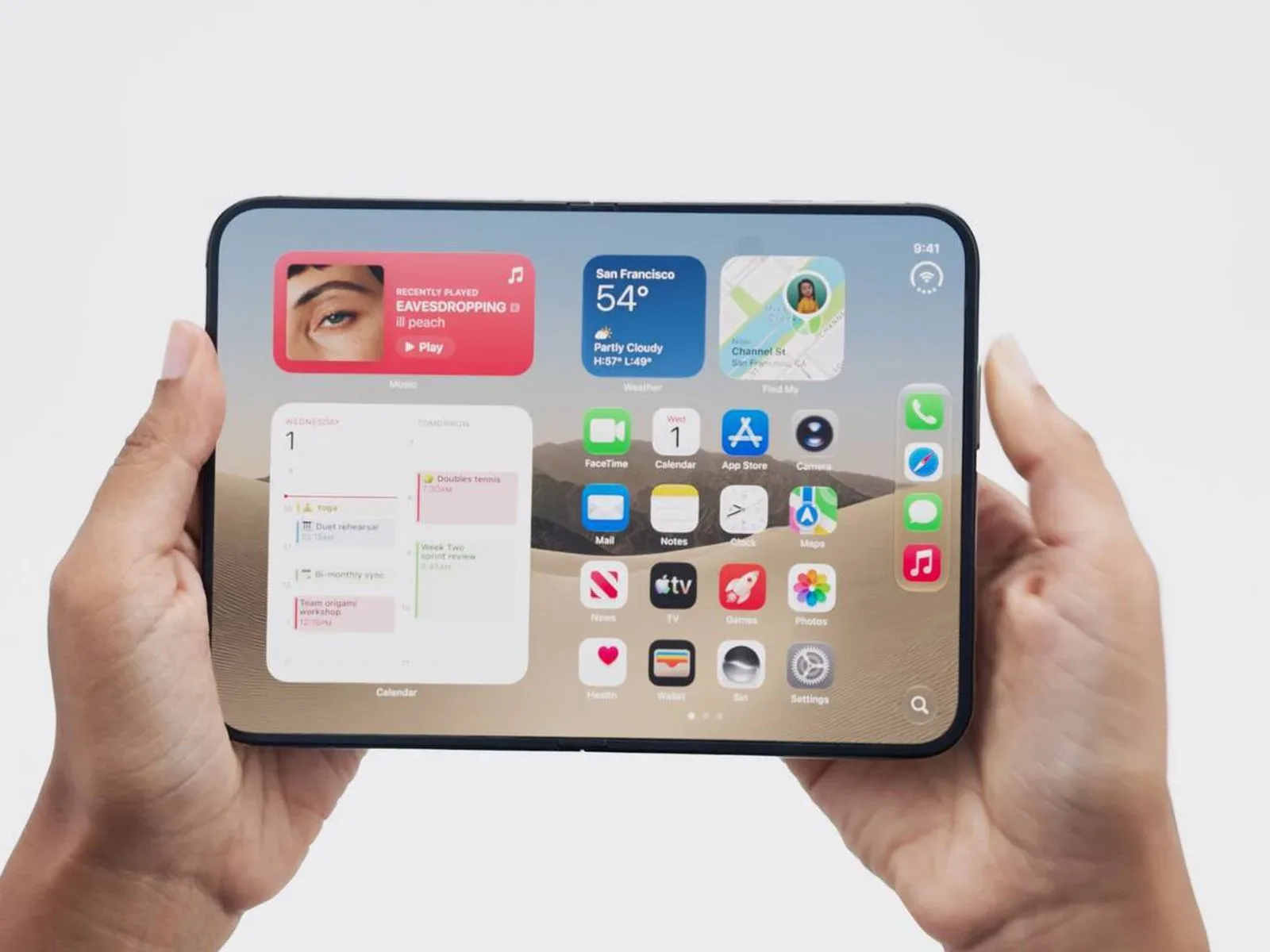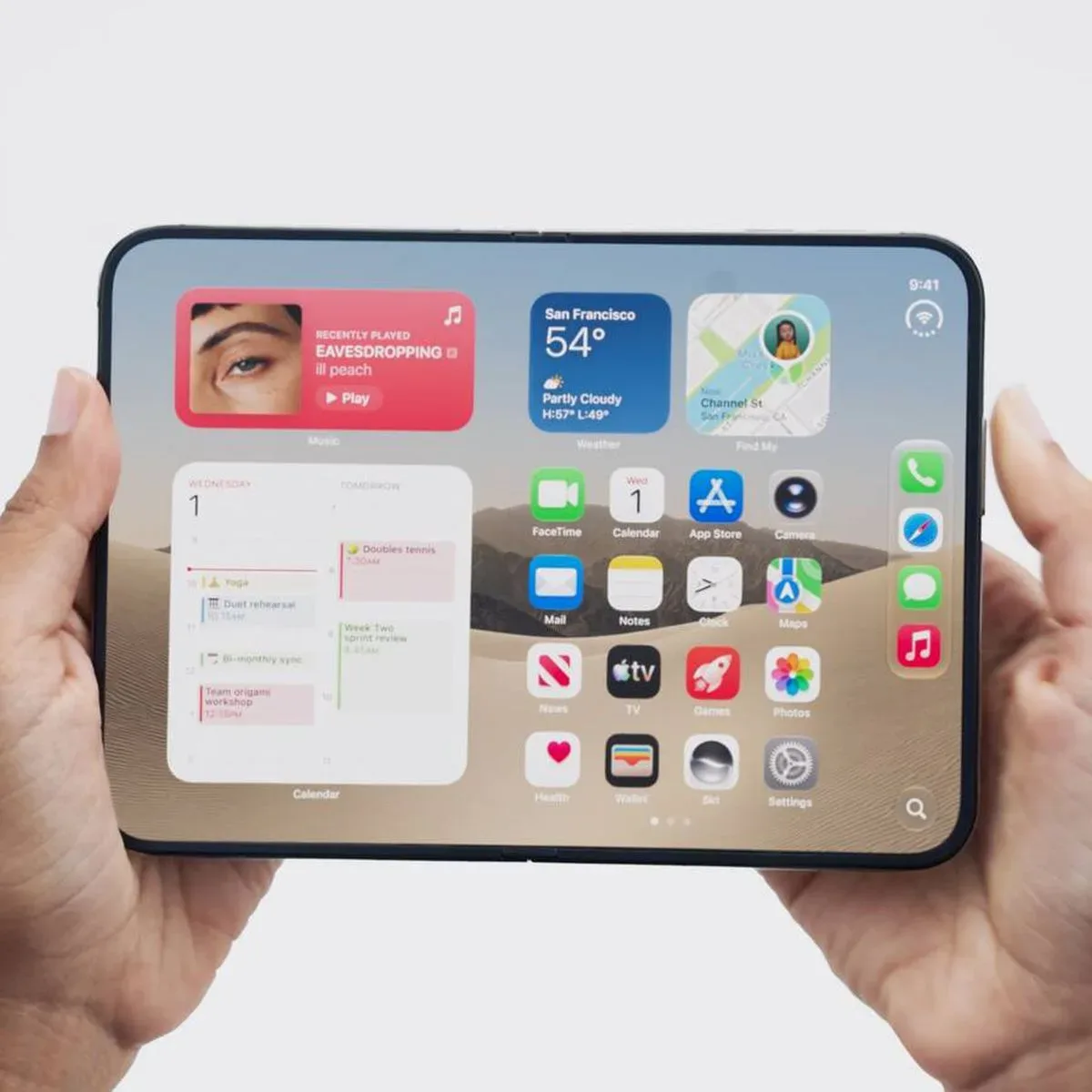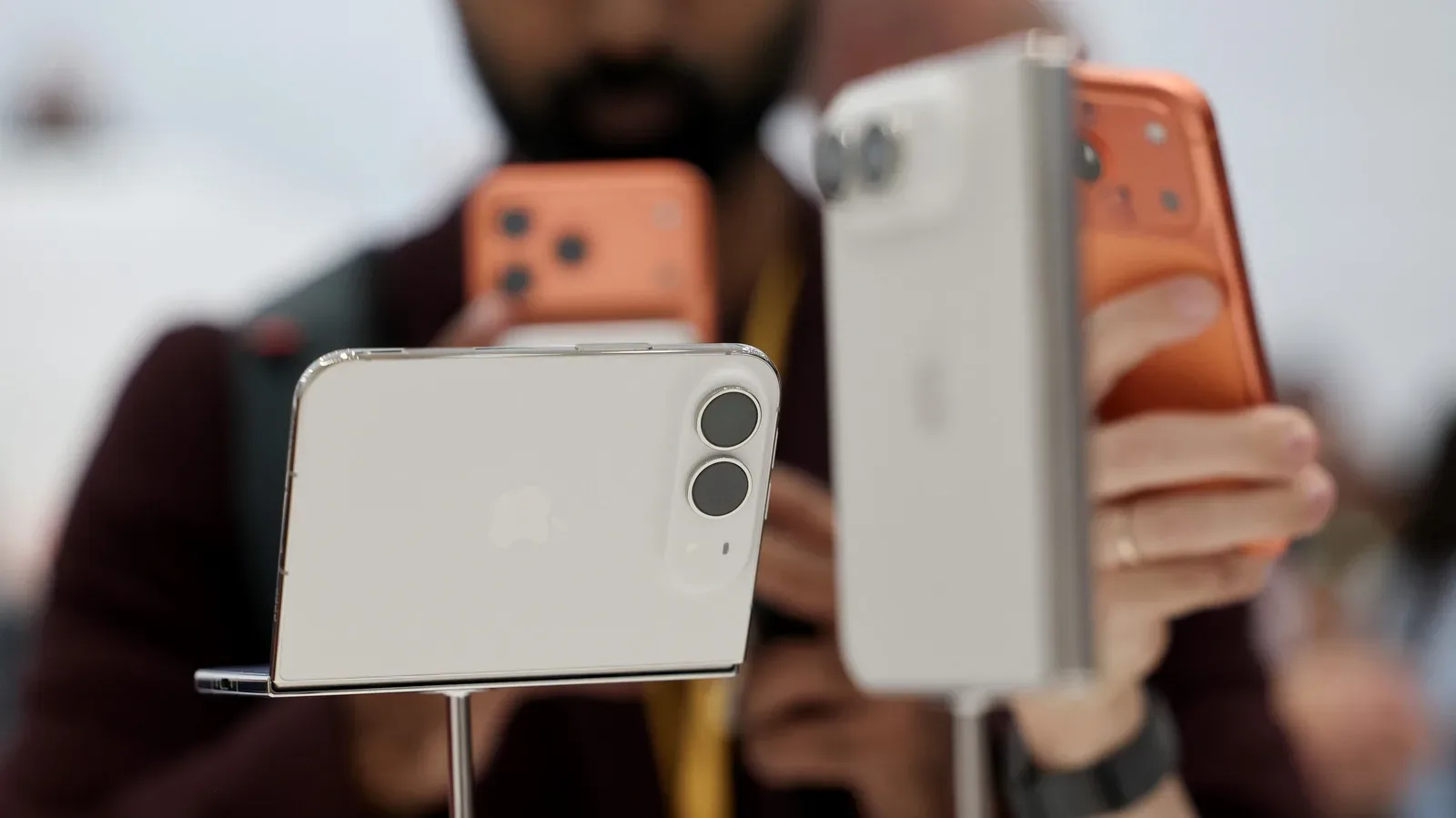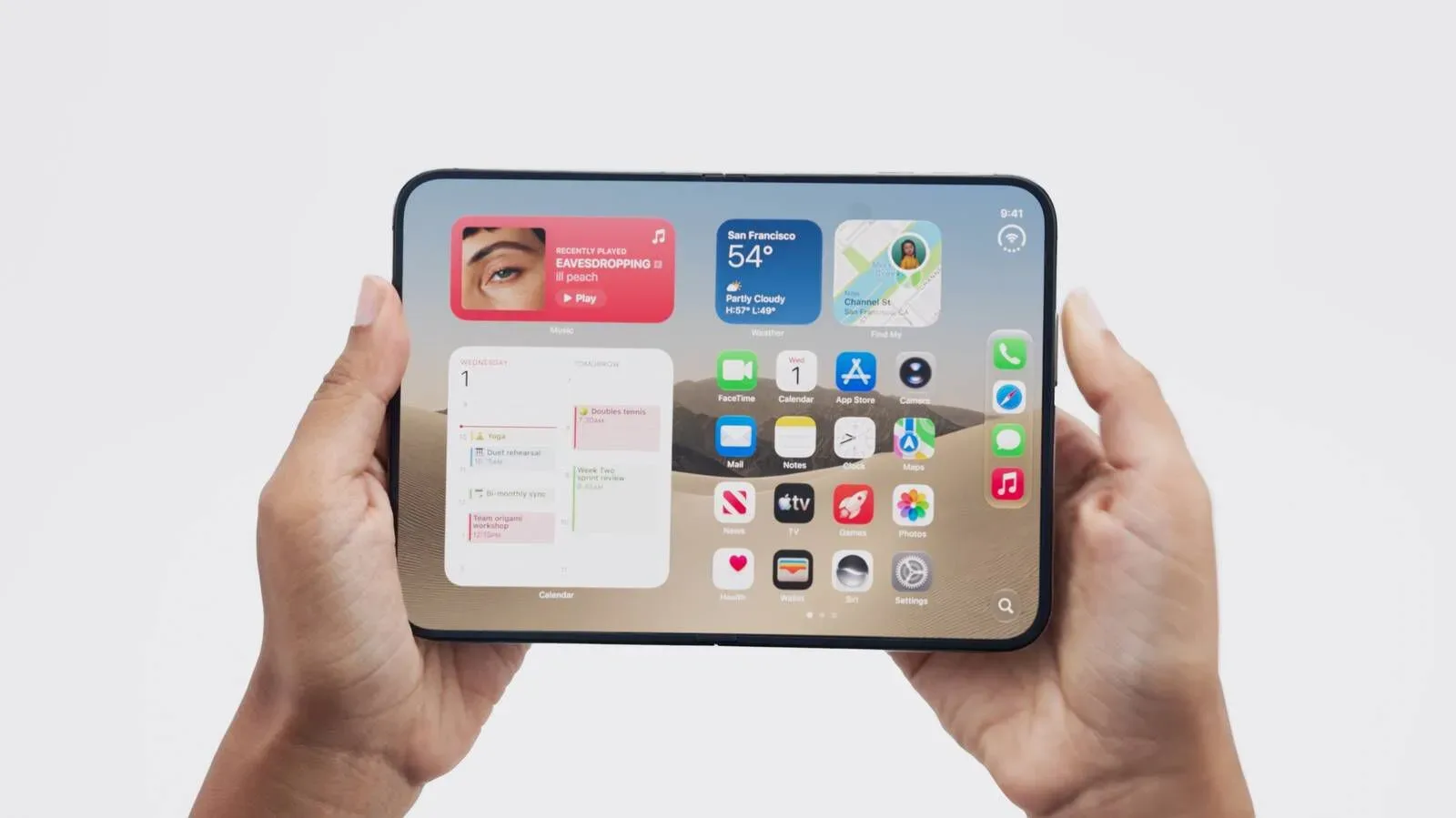
The iPhone Duo’s defining trick is also its most important battery-life variable: it has two displays, and the screen a person chooses can substantially change Apple’s advertised endurance. The foldable-style device has a 7.6-inch inner display when opened and a 5.4-inch outer display for closed-phone use. Apple lists markedly different video-playback estimates for those two modes, making the iPhone Duo less of a one-number battery proposition than a conventional phone.
With the larger inner display active, the iPhone Duo is rated for up to 31 hours of video playback. On the smaller external display, the figure rises to up to 44 hours. That 13-hour gap is a useful reminder that a bigger canvas is not free: the unfolded display is meant to offer more room for video, games, browsing, messaging, and multitasking, but it also requires more energy while it is lit and rendering content.
For prospective owners, neither figure should be treated as a promise that every day will look identical. Video playback is a defined test rather than a complete portrait of everyday use. Still, the contrast identifies a clear practical trade-off. People who spend long stretches using the iPhone Duo closed, checking notifications, listening to audio, sending messages, or watching occasional clips on the outer display have a different battery profile from people who routinely open the phone for a tablet-like screen.
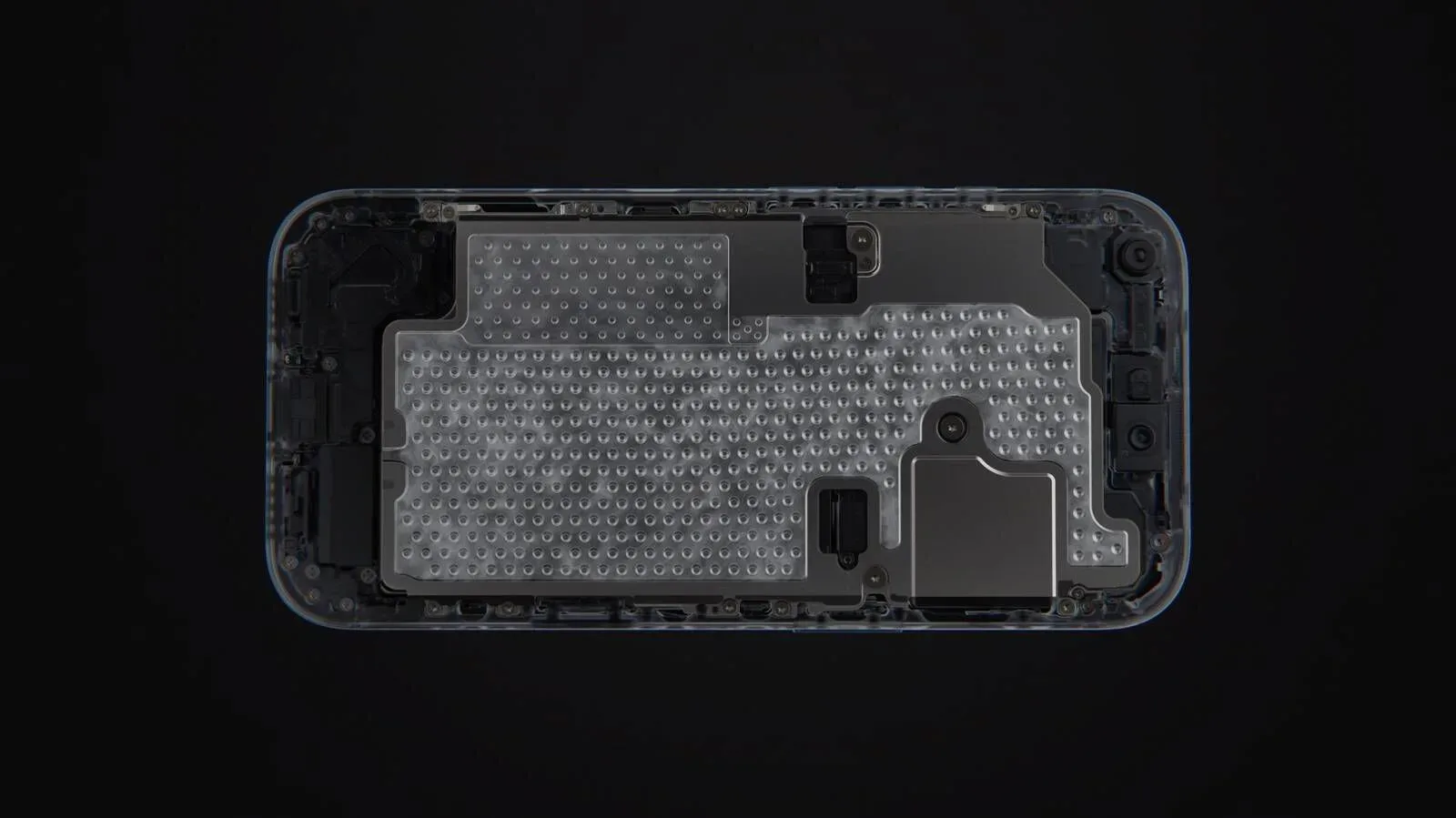
One phone, two physical batteries
Apple describes the hardware as an iPhone-first dual-battery system. There is one battery on each side of the device, a layout that uses the two halves of the chassis to make room for capacity. Although the physical arrangement is split, iOS manages the pair as one battery. In other words, users should not be expected to micromanage a left-side and right-side power meter or decide which cell should power a particular task.
The design is significant because folding hardware has an unusually awkward space problem. A conventional handset can use a single uninterrupted internal layout. A device that opens along a hinge has to work around a divided body, a moving center section, separate display assemblies, and the other components required in each half. Two batteries are an intuitive response to that geometry, but the important part is how the system presents the result: as one unified reserve rather than a novelty feature that turns charging into a party-management game.
Apple attributes its battery-life approach to several elements working together: the dual-battery design, an eSIM-only setup, the efficiency of its C2 modem, and the A20 Pro chip. The published information does not separate how much each element contributes, so there is no basis to rank those components or assign a specific endurance gain to any one of them. The company’s headline numbers should instead be read as the combined outcome of the entire design.
The everyday rating is 24 hours
Beyond its screen-specific video measurements, Apple lists the iPhone Duo at up to 24 hours of typical use. This metric assumes equal use of the inner and outer screens. Apple’s typical-use mix includes messaging, taking photos, music listening, social apps, streamed video, games, web browsing, and navigation, and is based on median usage across iPhone users.
That definition matters, especially for people viewing the Duo as a pocket device for games and entertainment. A session of a graphically busy game on the 7.6-inch display will not necessarily resemble video playback or the stated median-use pattern. The same goes for extended navigation, sustained mobile-data use, lengthy camera sessions, or high-brightness outdoor play. The 24-hour number is useful as Apple’s broad mixed-use estimate, but an individual’s results will depend on their app choices, display habits, network conditions, and the amount of time spent unfolded.
The equal-screen-use assumption also gives the figure an interesting middle-ground role. It does not represent an outer-screen-first owner chasing the 44-hour video estimate, and it does not represent a person who keeps the larger panel open for virtually every task. It represents a balanced scenario. That makes the iPhone Duo’s battery story unusually personal: a buyer’s preferred form factor is likely to matter more than it does on a standard slab phone with one screen.
How the Duo compares within the current iPhone range
Apple’s 24-hour typical-use figure for the iPhone Duo matches the stated rating for the iPhone 18 Pro. The comparison becomes more complicated when the displays are considered individually. For video playback, the Duo’s 7.6-inch inner display draws more power and delivers less endurance than the iPhone 18 Pro, while the Duo’s smaller 5.4-inch outer screen is rated to last longer.
At the top of the group, the iPhone 18 Pro Max is listed at up to 45 hours of battery life, the longest figure among these three iPhones. The iPhone Duo’s outer-display video number sits just one hour behind that mark at 44 hours, while its inner-screen estimate is much lower at 31 hours. The message is not that one model wins every battery comparison. Instead, the Duo can behave much more like two different devices depending on whether its compact or expanded screen is in use.
There is another reason this comparison will interest players. Performance, heat, and power draw tend to meet at the same crossroads when games become demanding. The iPhone Duo uses the A20 Pro, while the iPhone 18 Pro is also positioned around high-end hardware. Readers following the broader 18 Pro picture can see how Apple is framing its performance changes in our report on the iPhone 18 Pro thermal redesign and its larger vapor chamber. For the Duo specifically, however, Apple has provided battery ratings rather than a game-by-game endurance chart, so any direct gaming comparison would remain speculative.
Charging: a fast wired target and 25W wireless support
When the iPhone Duo does need power, Apple says it can reach 50 percent charge in around 20 minutes using a USB-C power adapter rated at 60W or higher. The wording is important: that is an approximate half-charge result with the specified class of adapter, not a claim that every USB-C plug will produce the same timing.
The device also supports MagSafe and can wirelessly charge at up to 25W through MagSafe or Qi2. For users who move between a desk, bedside stand, and travel bag, that means the iPhone Duo is not limited to wired charging despite its unusual internal battery arrangement. It also means owners who favor a quick wired top-up have a distinctly stated option, while those who prefer magnetic or Qi2-compatible charging have a separate, lower-maximum-power route.
As ever, the phrase “up to” does a lot of work in charging and battery specifications. Adapter capability, the wireless charging setup, device state, and conditions during charging can affect what people see in practice. The published details establish support and maximum-rated figures, but they do not provide a complete charging curve from empty to full, nor do they spell out comparative times for every charger type.
What the estimates mean for a dual-screen routine
The iPhone Duo’s numbers create a straightforward behavioral choice. The outer 5.4-inch display is the endurance-oriented option for video playback, with an advertised ceiling of 44 hours. The open 7.6-inch display is the immersion-oriented option, rated at 31 hours of playback. Neither role is inherently better. A large screen can make games, streamed shows, web pages, and photographs more comfortable to use; a smaller screen can help conserve power when that extra area is unnecessary.
Apple’s decision to manage two physical batteries as a single system should make that choice feel less complicated than the hardware itself sounds. Users can choose the form factor that fits the task rather than performing battery arithmetic between two cells. But the published ratings make the underlying physics visible: more display has a cost, and the iPhone Duo’s greatest visual advantage is also the feature most likely to shift its battery performance.
Preorders for the iPhone Duo begin on October 16, followed by launch on October 23. Until broader real-world usage data is available, Apple’s 31-hour inner-display video estimate, 44-hour outer-display video estimate, and 24-hour equal-screen typical-use rating are the clearest guide to what the dual-battery iPhone is designed to deliver.