Smart-home software is often judged by a deeply unglamorous standard: does it tell you what happened without making you sift through a pile of useless alerts? The Home app and HomeKit are reportedly getting a meaningful push in that direction with iOS 27. The biggest reported changes center on Apple Intelligence, security-camera footage and less fiddly management of Apple TV devices.
That may not have the immediate spectacle of a new phone, a console reveal or a dramatic Siri makeover. But for households with cameras, video doorbells, smoke detectors and several Apple TV boxes, the practical goal is compelling. A home dashboard should turn a long stream of events into something understandable, ideally before the delivery driver has reached the end of the driveway.
The features discussed for iOS 27 should be treated as reported details until Apple formally confirms them. In particular, the future hardware connected to these changes remains speculative. Still, the software picture described so far suggests a Home app that is trying to behave less like a notification hose and more like an event log with a little editorial judgment.
Apple Intelligence may take on the notification backlog
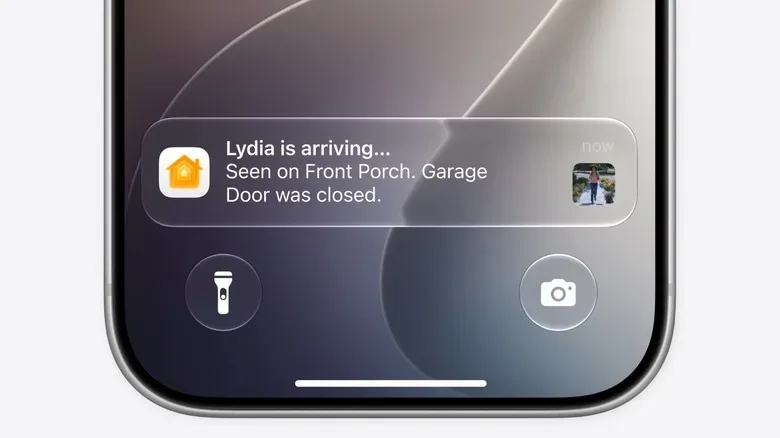
The headline change is deeper Apple Intelligence integration in the Home app. Rather than merely throwing individual smart-home notices onto a lock screen, iOS 27 is expected to summarize important activity. Examples cited for the proposed system include a person being spotted near a door or a smoke-related alert.
That matters most in setups where a single real-world event can trigger several devices. A person arriving at a home might be noticed by a driveway camera, a doorbell and an entryway camera in short order. Each alert may be technically useful, but receiving all of them separately creates the familiar smart-home paradox: more awareness, but less clarity.
A concise summary could give the user the important information first and reserve the full footage for anyone who needs to investigate. The potential benefit is not that every notification vanishes. It is that the alerts which do arrive are more likely to say something useful.
There is a major caveat, as always with automated summaries. The value depends on accuracy and on how much meaningful detail the system preserves. A badly worded summary can create confusion just as efficiently as a dozen redundant pings. The reported direction is nevertheless sensible: let the system handle the repetitive sorting work while leaving the original clips and alerts available for verification.
Camera events could become easier to follow
iOS 27 is also said to expand intelligence around camera detection. Cameras may be able to better recognize faces and animals, giving users more ways to distinguish ordinary activity from the events that deserve attention. For a household that sees pets, neighbors, family members and visiting delivery workers passing through a camera’s frame, stronger categorization could make a considerable difference.
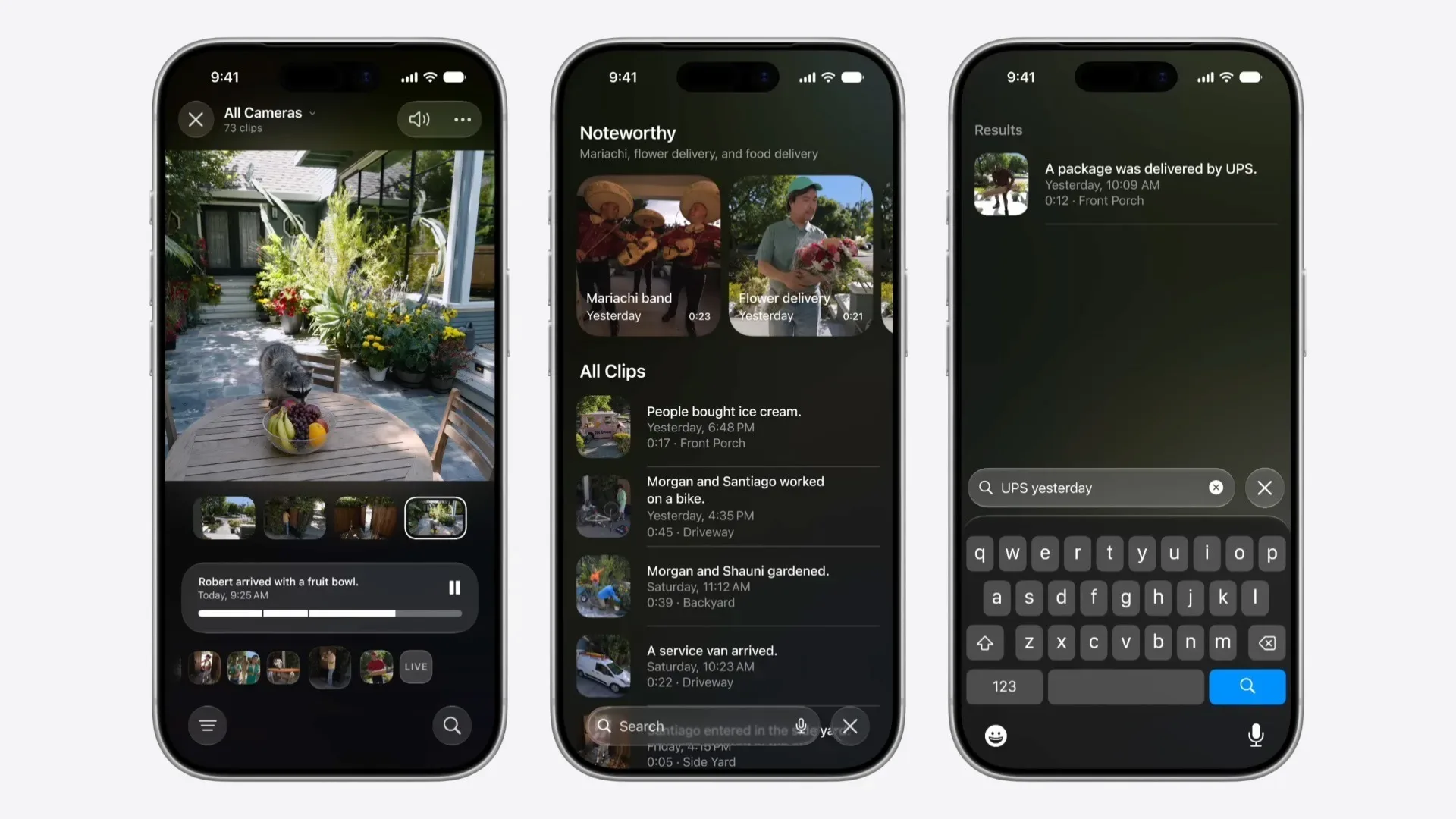
One of the more interesting reported functions is a multi-camera presentation for a single event. If someone moves through areas covered by several cameras, the Home app could assemble a sequence from the available angles. Instead of hunting through separate feeds and estimating the order in which everything occurred, a user could receive a connected view of that movement.
That idea is less flashy than it sounds because it addresses a basic navigation problem. Cameras are good at collecting fragments. They are not automatically good at telling a story. Linking clips from different rooms or locations could help the footage feel like one timeline rather than a folder full of tiny mysteries.
Reported AI-generated descriptions would serve a similar purpose. A short text explanation attached to a clip could help users decide whether they need to watch it at all. Search is also expected to be part of the upgrade, allowing people to look for recorded events rather than manually scrolling through a list of videos. Together, descriptions, recognition and search could be especially useful after a busy day when a household has generated far more footage than anyone wants to review.
4K recording is a practical upgrade, not just a spec-sheet trophy
The camera changes reportedly include 4K video recording. Resolution alone does not guarantee a useful image; lighting, lens quality, compression and camera placement still matter enormously. Yet 4K support can be meaningful for security footage, where small details can be the difference between a vague silhouette and a clearer account of what took place.
For users, the important question is likely to be how this applies across compatible hardware, storage arrangements and existing HomeKit camera setups. Those implementation details are not established here, and 4K footage naturally raises questions about bandwidth and space. More detailed video has to live somewhere, and better clips can demand more from a home network.
Still, the reported package makes internal sense. If the Home app is going to describe an event, surface a search result and join multiple camera views into a sequence, it helps for the visual record behind those tools to be as clear as supported hardware permits. The upgrade is not a promise that every dark porch suddenly becomes a film set. It is an attempt to make the evidence the app organizes more useful in the first place.
Apple TV management may finally involve less repetition
Homes with multiple Apple TV units may receive a smaller but welcome convenience: the ability to update all of them through the Home app at once. Anyone running several televisions knows the routine. A software update arrives, each device asks for attention, and an ordinarily simple maintenance job turns into an evening of visiting rooms with a remote in hand.
Batch updates would make Apple TV ownership feel more aligned with the broader idea of a centrally managed smart home. It is not a feature likely to dominate a keynote, but it removes friction from a task that should never have been complicated. The reported improvements also include general Home app reliability work, which is arguably the right priority for software responsible for locks, cameras, alerts and household automations.
Reliability is difficult to advertise because it is mostly noticed when absent. In this category, though, it is the feature underneath all the others. A clever summary or crisp 4K clip is far less helpful if an automation fails, a camera takes too long to load or devices disappear from the app at inconvenient moments.
Do not expect the revamped Siri on HomePod just yet
iOS 27’s Home-related changes are not the same thing as a confirmed rollout of the revamped Siri experience to HomePod. The reported information specifically stops short of saying that the updated Siri is coming to Apple’s smart speaker now, even if such an expansion could happen later.
That distinction is important. A smarter Home app on an iPhone is one thing; a substantially changed voice-first home assistant is another. The latter would affect how people interact with the ecosystem every day, from starting routines to asking about devices across the house. For the time being, it makes more sense to view the reported iOS 27 work as an upgrade to the visual and notification side of HomeKit rather than a confirmed HomePod reinvention.
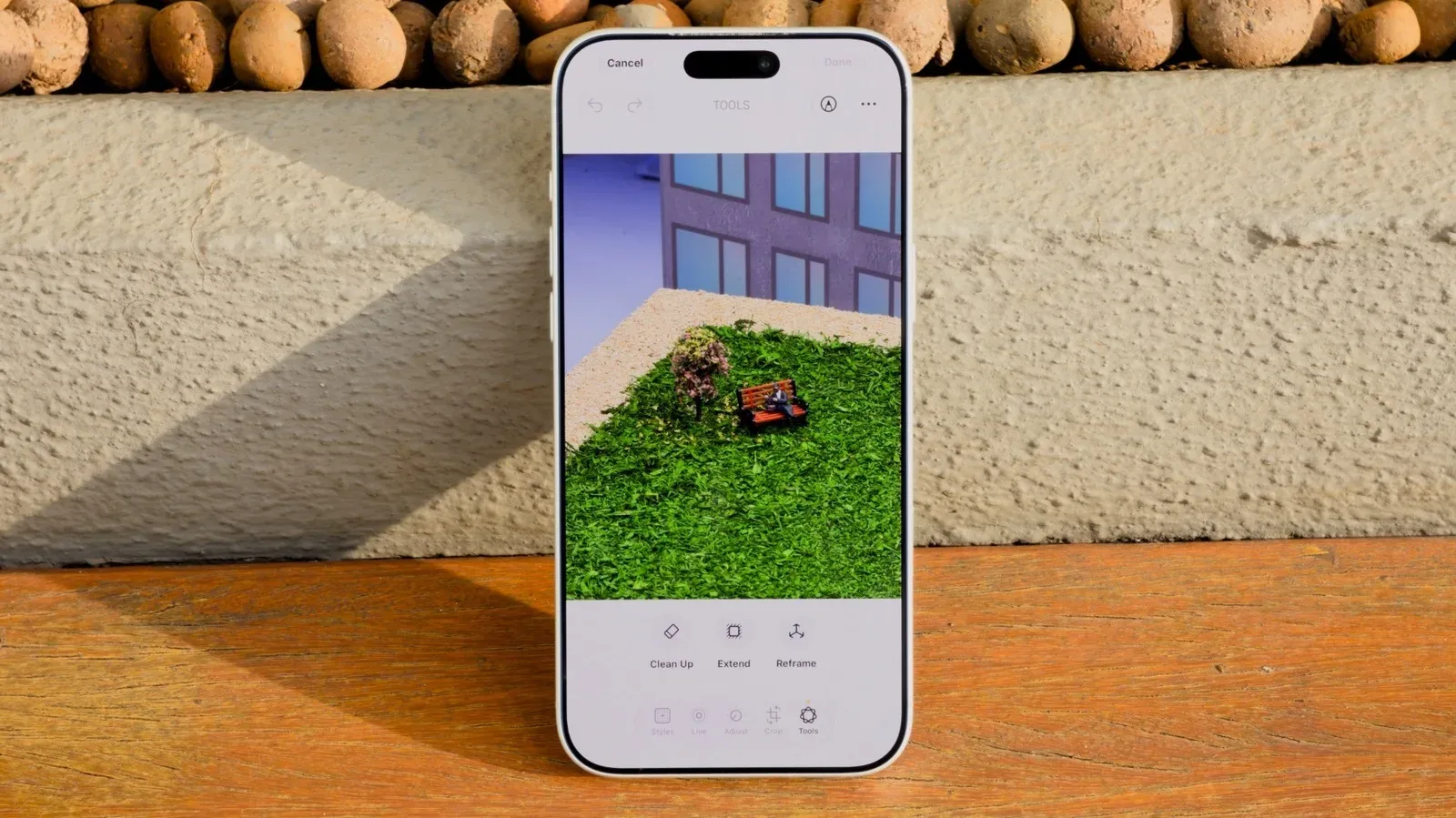
Apple’s wider iOS 27 efforts are also expected to include other AI-driven tools. For a separate look at reported photo-editing changes, see our iOS 27 Clean Up guide.
HomePad, a new HomePod mini and a tabletop robot remain rumor territory
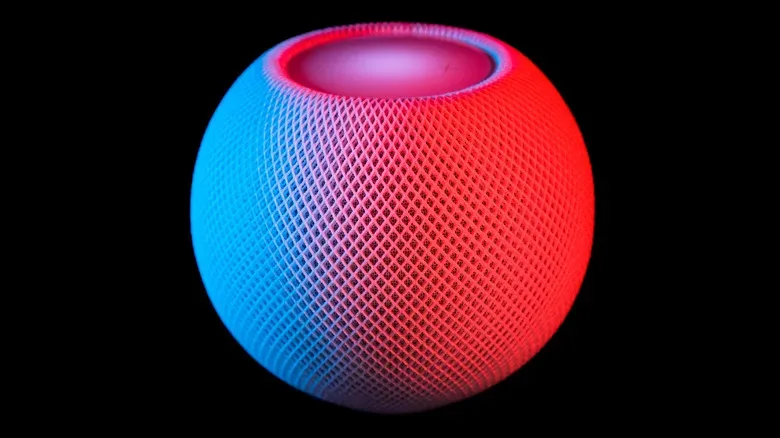
The software discussion arrives alongside talk of future Apple home hardware, but this is where the uncertainty becomes much greater. A next-generation HomePod mini has been reported, as has a possible device informally referred to as “HomePad.” Neither product has been officially announced.
The rumored HomePad is expected to blend characteristics associated with a HomePod and an iPad, effectively placing a display alongside a smart-speaker-style home interface. Comparisons to an Amazon Echo Show are natural, although the eventual product, if it materializes, could take a different approach. Reports suggest it may include a “Faces” gallery reminiscent of the customization choices found on Apple Watch.
There has also been discussion of a tabletop robot, though it is not expected soon. These possibilities should not be confused with confirmed iOS 27 features. Product names, specifications, timing and even final product direction can change before a company announces anything publicly. For now, they are useful as hints about where Apple may want the home ecosystem to go: toward a more visible, more proactive shared screen at the center of a household.
What current HomeKit users should take from iOS 27 reports
The clearest takeaway is that iOS 27 may improve the moments when HomeKit needs to explain something that already happened. Notification summaries, event descriptions, search, facial or animal recognition, multi-camera sequences and 4K recording all point toward the same aim: reducing the labor of interpreting a connected home.
- Camera-heavy homes may benefit most from summaries, search and connected views across multiple cameras.
- Apple TV households could save time if batch software updates arrive as reported.
- HomePod owners should not assume the revamped Siri experience is part of this specific update.
- Prospective buyers should keep HomePad, a new HomePod mini and the tabletop robot in the rumor column until official announcements provide details.
People considering pre-release software should be careful. Beta builds can be unstable, and that is an especially poor match for devices controlling a home’s alerts, cameras and automations. A spare device is the sensible place for testing, not the phone or tablet a household depends on every day.
If these reported iOS 27 additions ship as described, HomeKit’s biggest gain may be simple: fewer moments spent playing detective with an avalanche of clips and notifications. In a smart home, that kind of quiet improvement can be much more valuable than another gadget shouting for attention.