Apple’s evolution under Tim Cook can be measured in imposing numbers: more than 2.5 billion active devices, $416.2 billion in fiscal 2025 net sales, and a services segment that reached $109.2 billion. But the more revealing change is qualitative. Products that began with narrow, familiar jobs were steadily recast as parts of a broad, interdependent system.
The iPhone became not only a phone and camera but a payment tool and a route to satellite messaging. The Apple Watch moved well beyond relaying notifications. AirPods gained hearing and workout functions. The Mac received a new technical foundation through Apple-designed processors. Meanwhile, the company built businesses around payments, apps, cloud services, original video and the ongoing use of its hardware.
That does not make every initiative equally mature or universally accessible. Vision Pro, for example, is explicitly a major bet on a possible future platform rather than proof that one has already arrived. Yet viewed together, these changes show a company repeatedly extending the purpose of devices people already own—and making the connection between those devices increasingly important.
The Apple Watch shifted from companion screen to health-and-fitness device
When Apple Watch arrived in 2015, its basic proposition was closely tied to the iPhone: notifications, communication, applications and activity tracking on a wrist-mounted display. Apple Watch Series 2 broadened that role with built-in GPS, swim tracking and additional workout features. Those additions mattered because they made the watch more useful during activities where carrying or consulting a phone is less convenient.
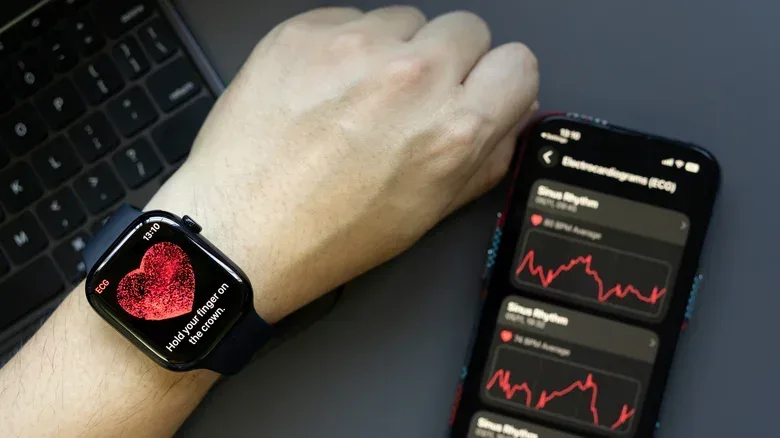
The more consequential turning point arrived with Apple Watch Series 4 in 2018. An ECG app made it possible to record a heart rhythm from the wrist, while fall detection could contact emergency services if it detected a hard fall followed by immobility. These functions set the product apart from a device whose health job was simply counting steps.
Subsequent software and hardware expanded the interpretation layer around collected data. watchOS 11, released in 2024, added sleep apnea notifications, Vitals and Training Load. In 2025, Apple Watch Series 11 added sleep scoring and hypertension notifications. Training Load, in this context, is a way of framing workout effort over time rather than merely listing individual sessions. The broader point is that the product has increasingly been asked to monitor and contextualize measurements the iPhone itself cannot capture from a wrist.
For owners, the practical implication is not that every metric automatically answers a health question. It is that Apple Watch’s role now includes ongoing measurement, notifications and fitness interpretation alongside the communication features it started with. That is a much larger assignment for a device originally framed as an iPhone accessory.
AirPods became more than an audio accessory
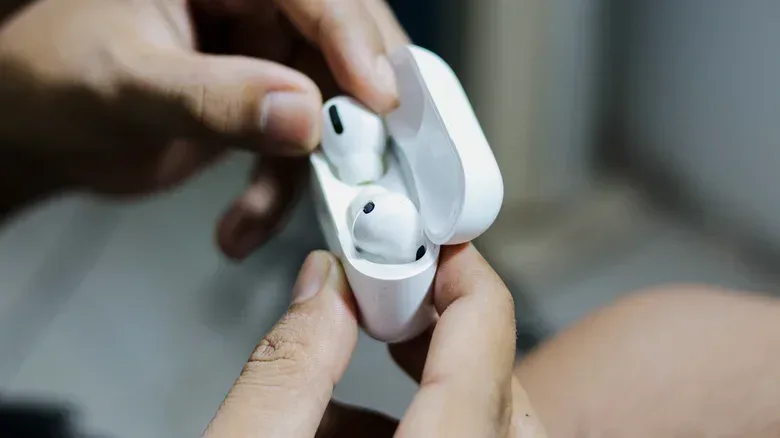
AirPods followed a related path. Wireless earbuds could have remained a straightforward way to listen from an iPhone. Instead, automatic pairing, switching between devices, active noise cancellation and spatial audio positioned them as an ecosystem product spanning more than one Apple device.
The important expansion is their move into hearing and exercise features. AirPods Pro 2 introduced a scientifically validated Hearing Test, Hearing Aid functionality for people with mild to moderate hearing loss, and Hearing Protection. AirPods Pro 3 then added heart-rate sensing intended to track workout effort while users wear the earbuds during exercise.
This is an especially clear example of Apple adding capability without requiring a wholly unfamiliar form factor. Earbuds are already a common part of music listening, calls and workouts; adding hearing and heart-rate-related functions gives an existing object further duties. It also strengthens the logic of keeping a number of Apple devices in use together, since convenience comes from the way pairing, switching and related services work across the ecosystem.
Apple silicon gave the Mac a common foundation with Apple’s mobile devices
The Mac transition to Apple silicon was one of the period’s defining technical decisions. Apple had long designed processors for iPhone, iPad and Apple Watch, while Macs used Intel processors. In 2020, it announced a two-year transition to its own silicon, and the first M1 Macs arrived later that year: the MacBook Air, 13-inch MacBook Pro and Mac mini.
An M1 is a system-on-a-chip, meaning major elements including the CPU, GPU, Neural Engine and other components are integrated into one package. The CPU is responsible for general computing work; the GPU handles graphics-oriented tasks; and the Neural Engine is a dedicated component for machine-learning-related processing. Combining those elements helped Apple pursue the performance and power efficiency associated with its mobile hardware.
The significance was not simply a claim about speed. Apple gained control over a central layer of Mac hardware while also controlling macOS and the wider product design. The shared architecture with the company’s other devices gave developers a more unified platform for making software across the ecosystem.
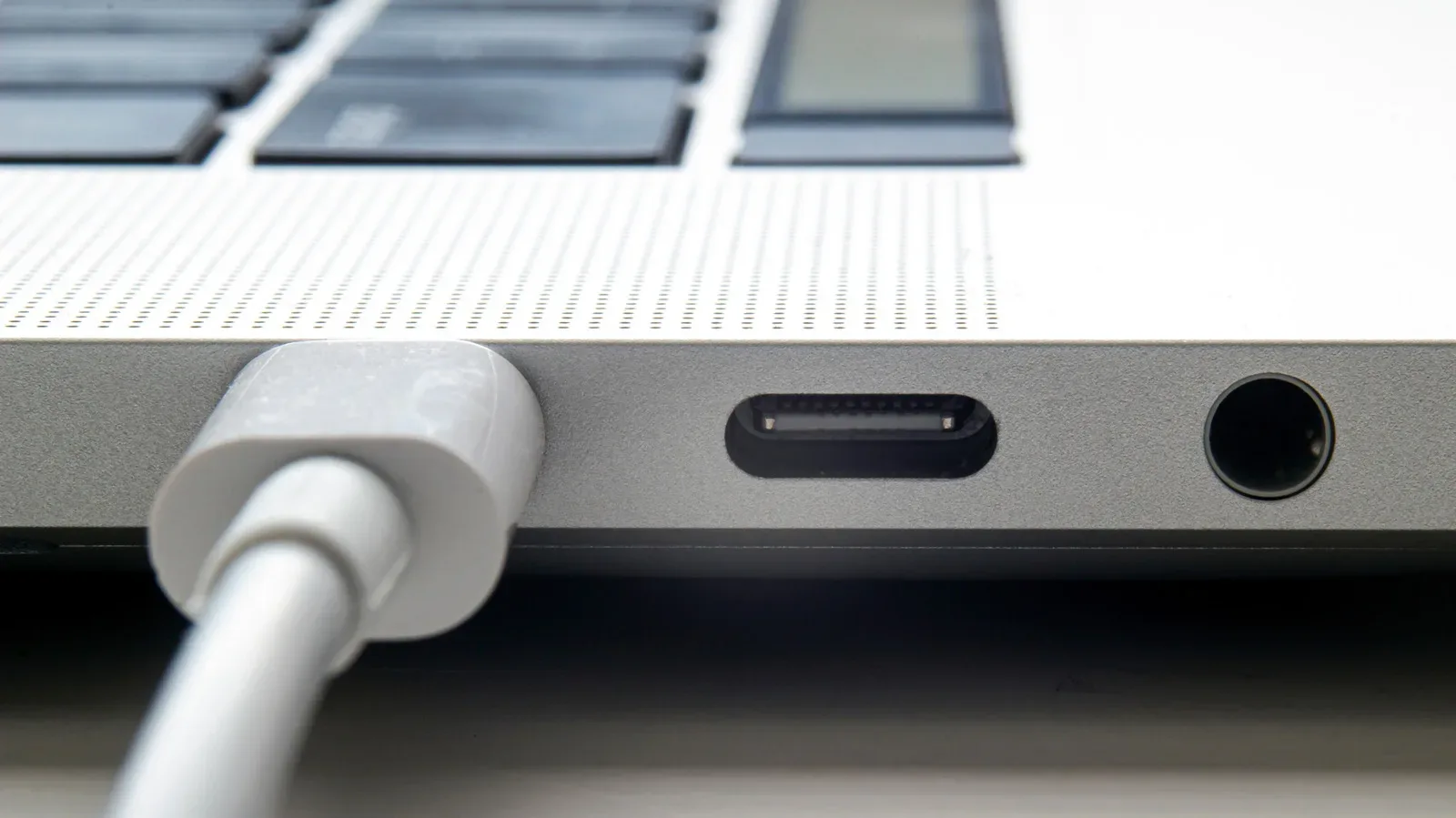
For people using a Mac for games or peripherals, software compatibility and connections remain practical concerns regardless of the processor inside. Readers facing a USB accessory problem can follow this safe MacBook USB gaming-gear troubleshooting order. Apple silicon did not erase every real-world support question, but it changed the foundation on which modern Macs are built.
The iPhone camera became a computational photography system
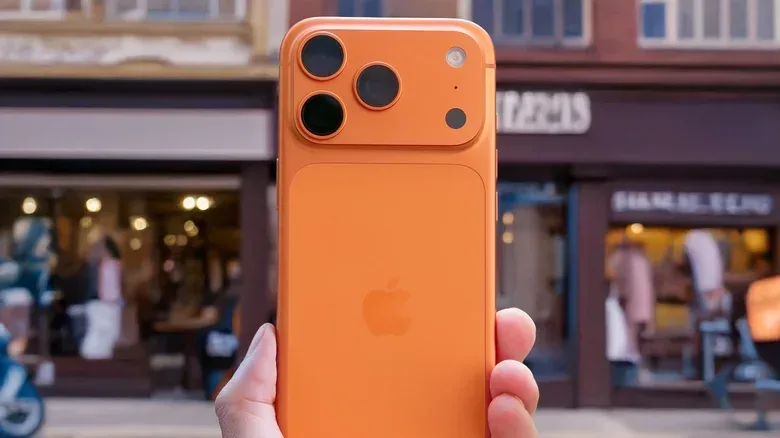
Over the same period, the iPhone camera moved from a convenient everyday camera toward a multi-lens system with advanced photo processing and more serious video options. The iPhone 11 was a meaningful waypoint: it added an Ultra Wide camera, Night mode and Deep Fusion.
Computational photography refers here to using software and machine learning as part of creating the finished picture, rather than treating the image as a simple one-shot capture from a lens and sensor. Deep Fusion processes photos pixel by pixel in pursuit of greater detail and less noise. Night mode is another example of software-assisted imaging geared toward difficult lighting conditions.
With iPhone 12 Pro, Apple introduced ProRAW, which combines the company’s computational photography with the editing flexibility associated with a RAW file. RAW formats are useful to people who want more control when adjusting an image after capture. The iPhone 15 Pro continued that direction with a 48MP main camera, multiple focal-length options, 48MP ProRAW and ProRes recording to external storage. ProRes is a professional video format, while external recording lets compatible workflows place captured video outside the phone’s internal storage.
Later iPhones brought further camera changes, including a Center Stage front camera and upgraded rear cameras on iPhone 17. Taken together, the camera story is a case of Apple treating the iPhone as a platform for image creation, not merely a communications device with a camera attached.
Wallet, 5G, MagSafe and satellite features enlarged the iPhone’s daily role
Apple Pay’s 2014 arrival gave the iPhone a conspicuous new job: payment. It eventually expanded from in-store purchases to apps, websites and devices including Apple Watch. At the 10-year mark, Apple said the system was used by hundreds of millions of people in 78 regions, across millions of websites and apps and tens of millions of stores, with more than 11,000 banks and network partners supporting it.
Apple Wallet’s scope expanded beyond payment cards. It can hold event tickets, transit cards, keys and eligible IDs. During 2025, Apple began broadening Digital ID use with participating US states and added support for Japan’s My Number Card. Ticket features also gained items such as venue maps, parking directions and event information. The wallet idea is therefore not only about checkout; it is a continuing attempt to consolidate physical credentials and event details into the phone.
Other iPhone changes focused on connection. The iPhone 12 introduced 5G in 2020, and MagSafe added a ring of magnets to simplify wireless charging and support snap-on accessories. Then the iPhone 14 introduced direct satellite connections for contacting emergency services when cellular and Wi-Fi networks are unavailable. Find My location sharing via satellite followed, while 2024 brought Messages via satellite for communicating with friends without another available connection.
Satellite capability should be understood narrowly: it is designed for circumstances where conventional cellular and Wi-Fi access cannot be used. Its importance is less about replacing normal networks than giving the iPhone a role in a connectivity gap that phones historically could not address.
Services became central to the business model
Hardware remains the larger share of Apple revenue, but services became a core business in their own right. The $109.2 billion services figure encompasses much more than recurring subscriptions: the category includes the App Store, advertising, cloud services, Apple Music, Apple TV and Apple Pay, among other activity.
The App Store illustrates the scale of that ongoing relationship after a device sale. It averaged more than 850 million weekly users in 2025, and Apple said developers had earned over $550 billion through the platform since 2008. Services then reached a quarterly record above $30 billion in early 2026.
This creates a practical economic link between the company’s devices and what people do with them after purchase: download apps, store data, pay for goods, listen, watch and use cloud-connected services. The ecosystem is not solely a collection of hardware products; it is also a recurring set of digital destinations and transactions.
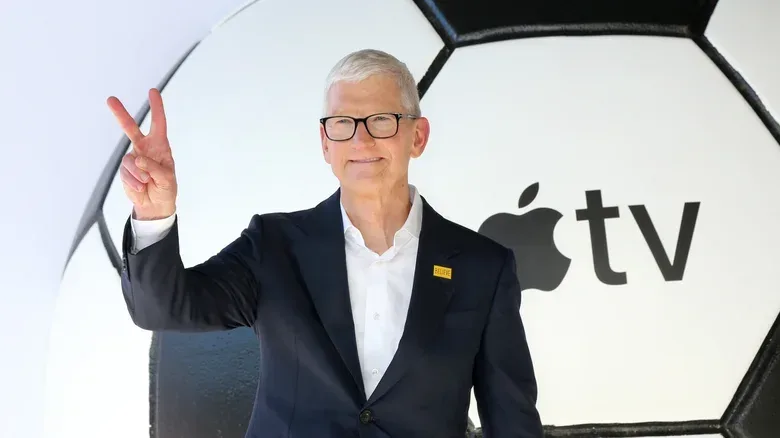
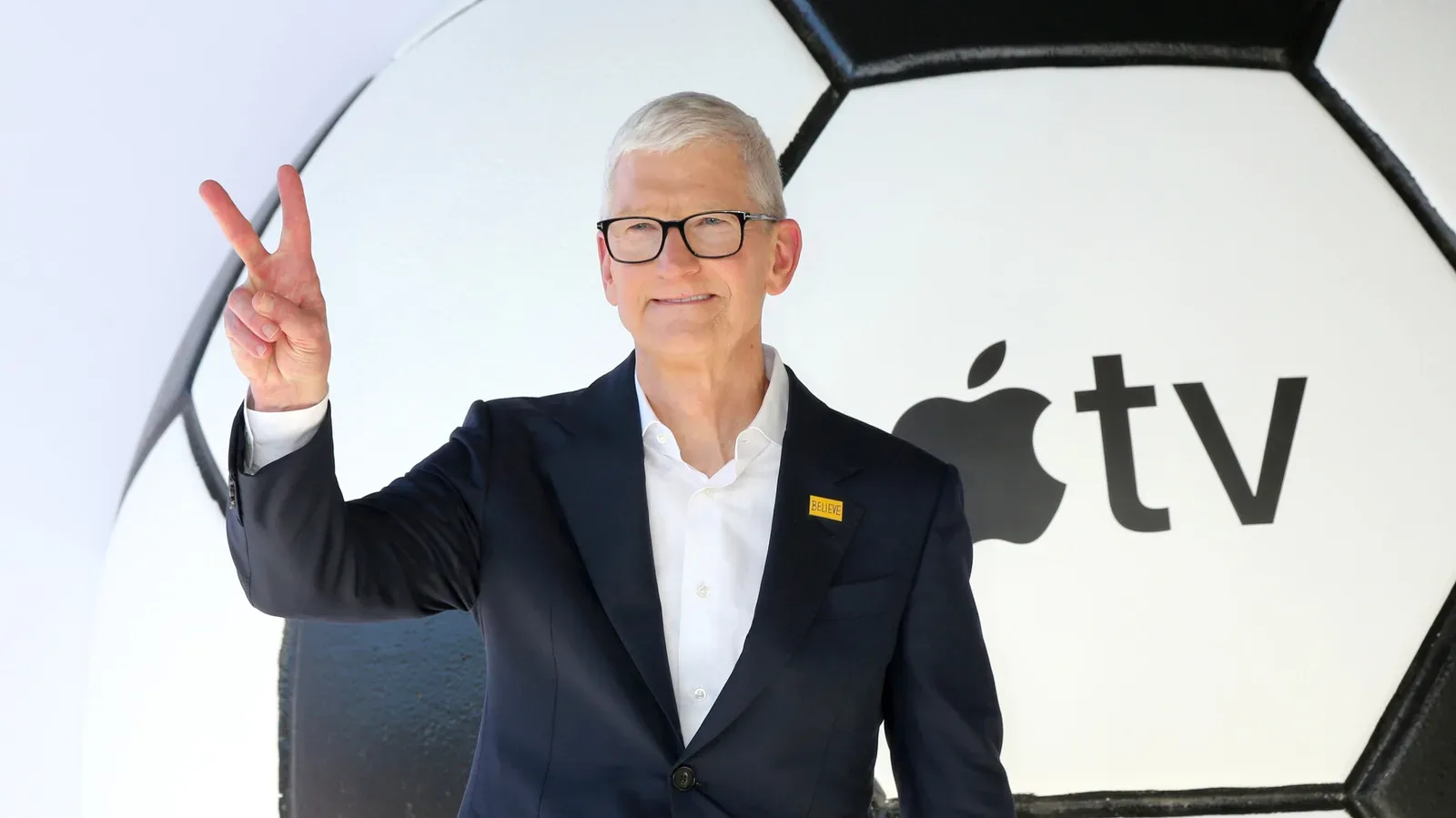
Apple TV made original programming part of the strategy
Apple sold digital content well before Apple TV, formerly Apple TV+, launched in 2019. Original programming changed the company’s role from a distributor of others’ work to a producer and commissioner of shows, movies and documentaries. Its initial original catalogue included The Morning Show, See and For All Mankind.
The effort accumulated prominent recognition. CODA became the first streaming film to win the Academy Award for Best Picture in 2022, while Ted Lasso and Severance emerged as major series. In 2025, Apple TV earned 81 Emmy nominations across 14 Apple Original titles; Severance led with 27 and The Studio had 23. Apple said by September 2025 that its originals had received 620 wins and 2,816 nominations.
Those figures do not turn entertainment into hardware, but they show how the services strategy widened the company’s cultural and commercial footprint. Original video is another reason for people to remain engaged after buying a device.
Vision Pro and AirTag show two different uses of scale
Vision Pro is Apple’s attempt to establish a different kind of computing interface. Unveiled in 2023 as a “spatial computer,” it runs visionOS and uses eye, hand and voice input. Rather than limiting apps to a conventional display, it places windows and three-dimensional content in the surrounding space. More than 600 apps and games built specifically for Vision Pro were available at launch.
Its $3,499 price and questions around accessibility make it a notably different proposition from the company’s mass-market devices. It is best read as an experiment in where personal computing might go, not a settled successor to the iPhone or Mac. The product matters precisely because it seeks a new platform instead of extending a proven one.
AirTag demonstrates the opposite approach: a simple object made powerful by an existing network. Nearby Apple devices can detect an AirTag and anonymously report its approximate location through Find My, so the tracker does not require its own GPS or cellular connection. The second-generation AirTag, released in 2026, added longer Bluetooth range and more precise finding. Share Item Location also enables secure location sharing with participating airlines to help recover lost luggage.
One product asks users to consider a new computing model. The other turns the installed base of Apple devices into a crowd-sourced locator. Both reveal the same underlying strategy: value increasingly comes not from a gadget in isolation, but from the hardware, software, services and network around it.