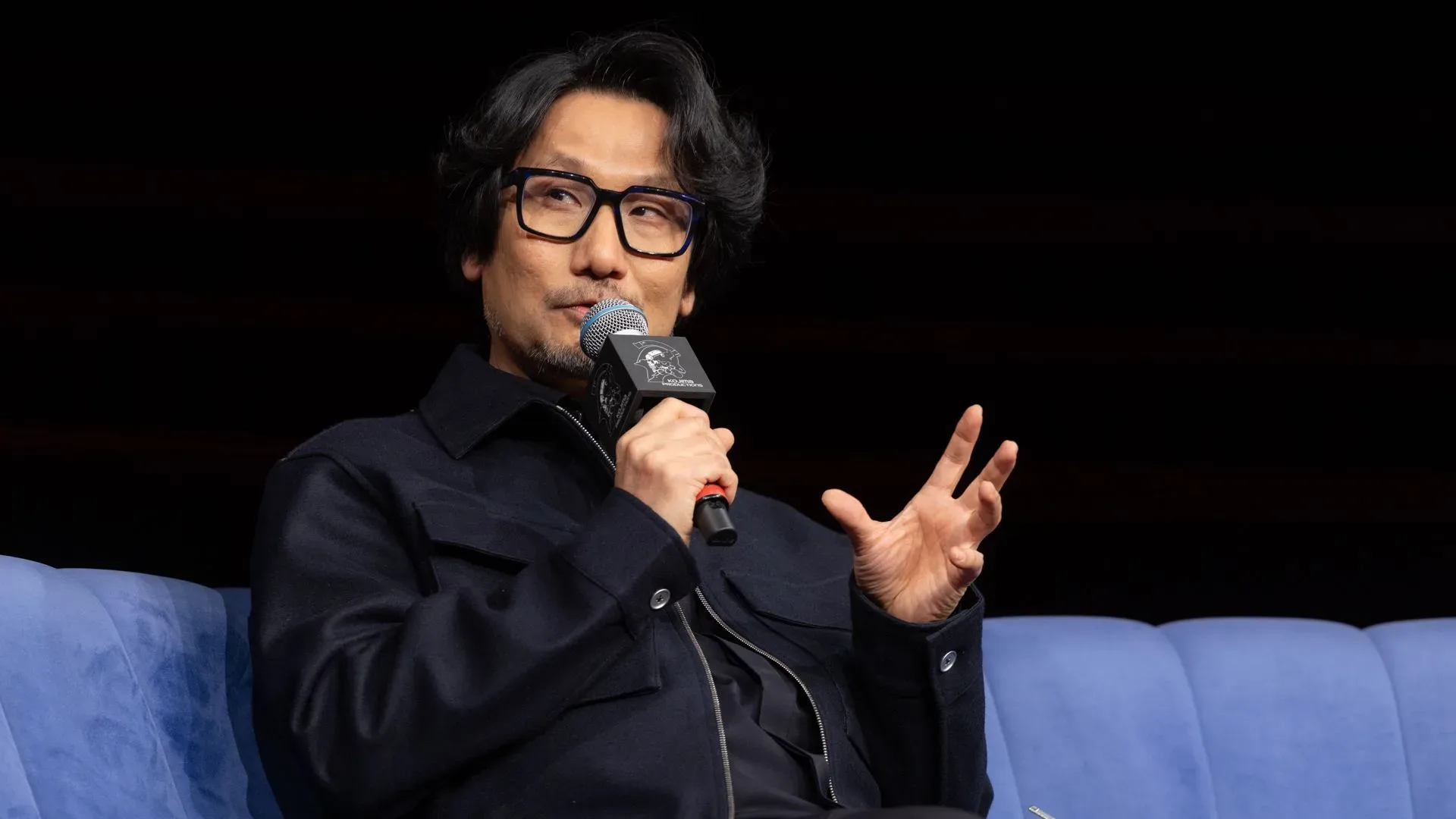
Hideo Kojima has spent plenty of time at the intersection of games, film, celebrity, and eerie things that may or may not be hiding behind the next door. So his enthusiasm for Backrooms, the feature directed by Kane Parsons, makes a remarkable amount of sense. At a September 4 screening in Roppongi, Tokyo, Kojima joined Parsons for a Q&A tied to the film’s Japanese theatrical release, praising its visual craft, its sound work, and the unnerving mystery at the center of its maze-like spaces.
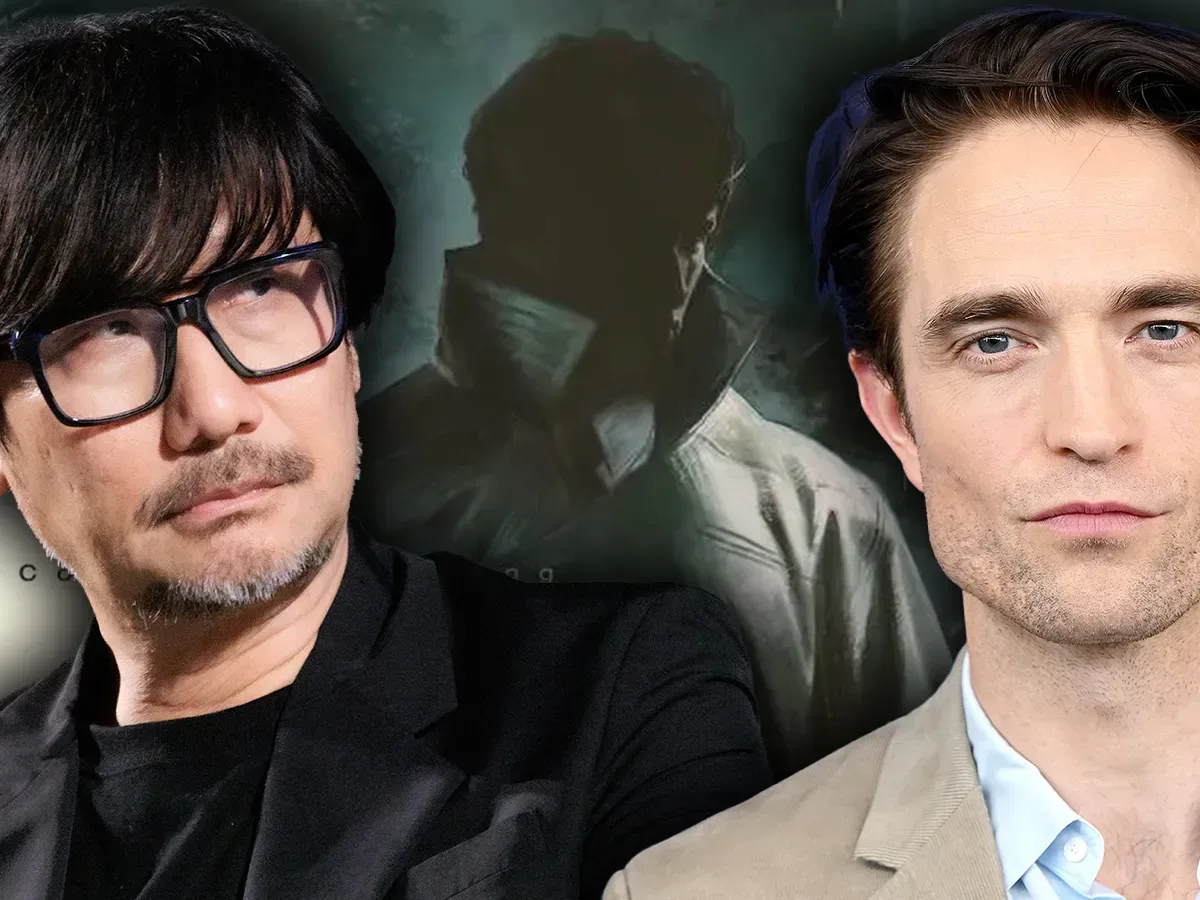
More importantly for anyone whose conspiracy board has a little red string labeled “Kojima Productions visitors,” the pair did not treat the appearance as a strictly one-night crossover event. Parsons indicated that he would like to work with “a certain someone” in the near future. No project has been announced, no format has been confirmed, and nobody should start carving a release date into a suspiciously damp concrete wall. Still, the encounter has created a very plausible question: could the creator of Death Stranding and the filmmaker behind one of the internet’s most recognizable horror concepts eventually make something together?
Kojima sees a lot to admire in the liminal nightmare
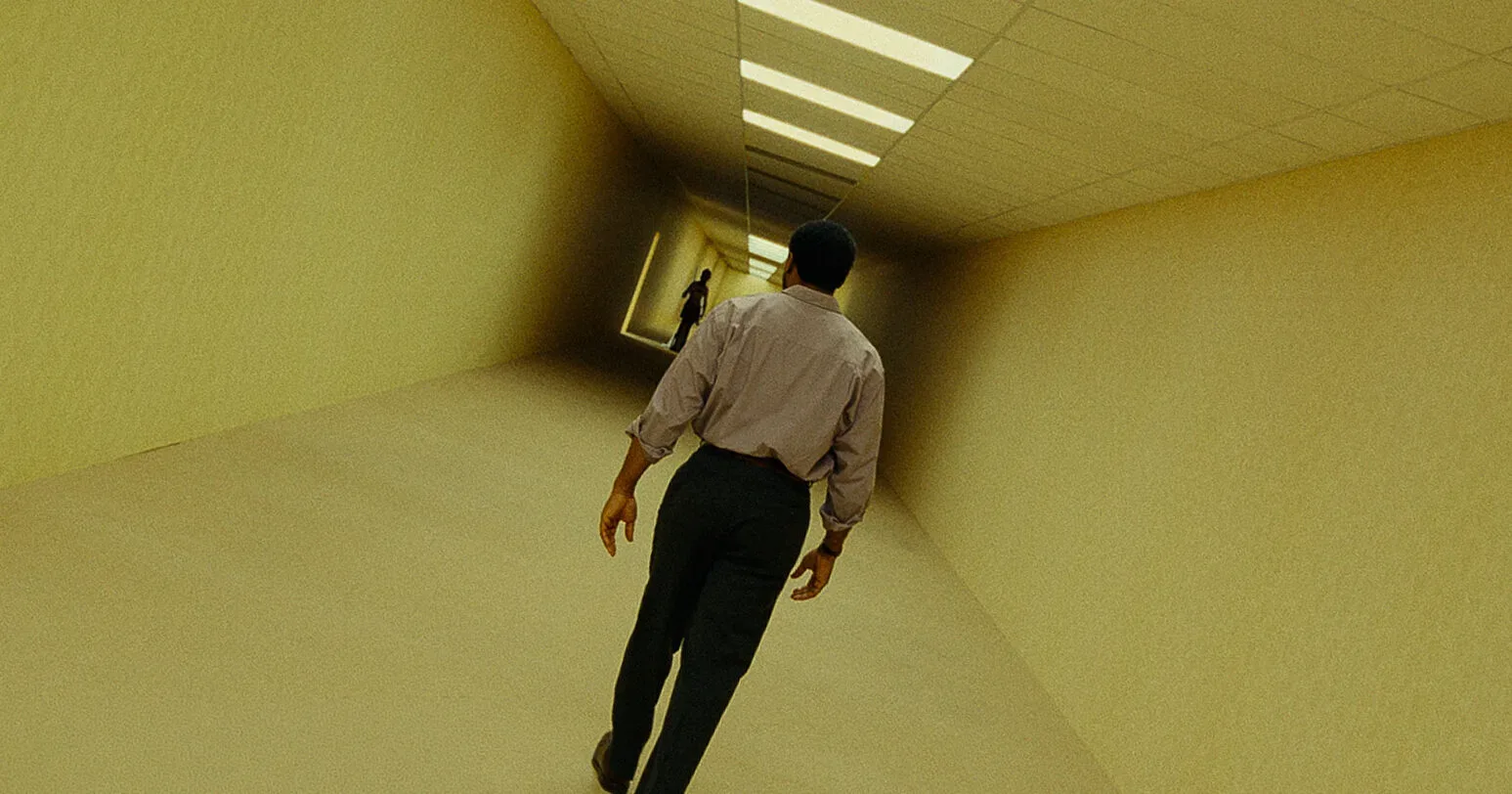
Before becoming a feature film, Backrooms was closely associated with Parsons’ short-form work and the wider online fascination with liminal spaces: locations that appear familiar enough to be ordinary but feel profoundly wrong when stripped of people, context, or an obvious exit. Endless office-like corridors, stale carpeting, buzzing lights, and rooms whose proportions seem to ignore the polite rules of architecture all make a tidy recipe for dread.
Kojima said he had already watched the earlier Backrooms short film and had long been interested in learning how the idea would function at feature length. His response after the screening was not a vague celebrity thumbs-up. He specifically highlighted the movie’s tricks, its art direction, its sound direction, and the construction of its story. He also said the quality of those elements made him “a little jealous,” which is an unusually vivid endorsement from a creator whose own work is renowned for visual ambition and meticulous audio-visual mood.
“The movie is full of clever tricks, and its art and sound direction are so inspired, it honestly makes me a little jealous!” Kojima said during the September 4 event.
He was careful not to unpack the film’s narrative mechanics in detail, citing spoilers, but pointed to its structure as another strength. That restraint matters. Horror built around uncertainty can lose much of its bite when it is diagrammed too aggressively. The pleasure—and discomfort—of the Backrooms idea comes from the sense that a viewer or player has stumbled somewhere they were never intended to see, then realizes the floor plan has become a predator.
That creative overlap may be why the exchange feels notable beyond a standard promotional Q&A. Kojima’s games regularly turn landscapes, interiors, isolation, sound, and uncertainty into active parts of their storytelling. Parsons’ work with Backrooms likewise leans on space and atmosphere rather than treating a setting as mere wallpaper between plot points. A shared interest in environments that tell on themselves is not confirmation of a collaboration, but it does make the possibility easy to imagine.
A Japanese rating contrast made the screening even stranger
The Japanese theatrical rollout also delivered an especially surreal footnote. Backrooms received an R rating in U.S. cinemas and high age classifications in many other territories. In Japan, however, it was rated G, meaning it was unrestricted for audiences of all ages.
Related coverage includes Hideo Kojima Praises Backrooms Director Kane Parsons, Raising Hopes for a Future Collaboration.
That classification meant the Roppongi screening included parents and young children. Once the lights came up, Kojima observed children telling their parents that they might not be able to sleep that night. It is hard to devise a more Backrooms-like scene than a room full of kids trying to process a disquieting artificial world while adults are presumably reconsidering what exactly “G” had promised them.
Kojima later recounted one child peppering his father with practical questions about the vast environments: how were they made, and surely they had to be computer-generated? Kojima said he nearly leaned over to reveal that the spaces were built as sets, but held back. It is a small anecdote, yet it speaks to the production design’s effectiveness. When a young viewer is trying to solve the physical logistics of an impossible-looking location, the illusion is doing its job.
The moment also gets at why the Backrooms premise travels so well across online video, horror fandom, games, and now film. It is not simply a monster story or a jump-scare delivery system. It invites people to inspect the world itself. Are these rooms real? How large are they? Who constructed them? Is there a route out? And why does a place that looks so bland somehow feel less safe than a haunted mansion with a neon sign reading definitely haunted mansion?
Parsons visits Kojima Productions as collaboration speculation grows
Parsons was photographed at Kojima Productions before the screening, an image that naturally intensified interest in the Q&A. Visits to the studio do not automatically equal casting, consulting, co-development, or a secret project. Creative people visit other creative people. Sometimes they discuss ideas, admire offices, take photos, and leave without accidentally founding the next multimedia nightmare franchise.
But Parsons’ own comment gave observers more than just a photograph to consider. After speaking about his interest in Japanese architecture and other aspects of his trip, he said he would love to collaborate with a particular person in the near future. Given the setting and Kojima’s presence, the implication was clear enough to spark excitement while remaining far short of an official reveal.
For now, the responsible reading is straightforward: there is mutual admiration, there has been a public conversation, and Parsons has expressed interest in working together. Anything beyond that remains unconfirmed. There is no announced game, film, role, production partnership, platform, launch window, or even a declared medium.
That uncertainty is not a disappointment; it is the actual news. The possibility exists because two creators with compatible fascinations have publicly acknowledged each other’s work. In an industry where every friendly photograph can become “THEORY CONFIRMED” before breakfast, keeping the distinction between enthusiasm and an announcement is essential.
Why this potential pairing fits gaming culture so neatly
Games have been borrowing the language of liminal horror for years, from unsettling empty spaces to worlds designed around environmental storytelling and the fear of being observed by something just outside the frame. The Backrooms phenomenon has found an especially receptive audience among players because its core feeling is interactive even when it is not in a game: you want to navigate it, map it, test the doors, and desperately locate the exit without finding whatever else might be inside.
Kojima, meanwhile, has made a career of treating traversal as drama. The act of crossing terrain in Death Stranding is never just a commute. Physical space imposes rules, risks, and emotional weight. That does not mean a Kojima-Parsons project would necessarily resemble either Death Stranding or Backrooms; assuming that would be like seeing two chefs enjoy the same dessert and predicting a restaurant menu. Yet the shared emphasis on mood, design, and the unsettling behavior of spaces is real.
It also arrives during a period when game creators and filmmakers increasingly move between mediums, whether through adaptations, performance capture, collaborations, or original hybrid projects. Kojima is already working with A24 on a Death Stranding film, while Backrooms itself demonstrates how a concept born online can expand into a theatrical feature. The borders between internet horror, cinema, and games are not disappearing, exactly, but they are becoming easier to walk through—provided the hallway does not loop forever.
Anyone tracking the broader business and creative pressures around game development may also find the moment encouraging. As explored in this look at the instability game developers continue to face, the industry can make long-term creative security difficult. New working relationships between established studios and emerging filmmakers do not solve that systemic problem, but they can produce fresh avenues for distinct ideas and talent.
What is confirmed—and what is still just a door at the end of the hall
Several facts are solid. Backrooms has reached Japanese cinemas. Kojima took part in a Q&A with Parsons in Roppongi on September 4. Kojima offered enthusiastic praise for the film’s craft and noted his envy of its art and sound direction. The Japanese G rating created a notably different audience situation from the film’s R classification in the United States. Parsons also voiced a desire to collaborate with someone strongly implied by the occasion.
What remains unknown is everything a formal announcement would need to answer. There is no confirmation that Kojima Productions and Parsons are developing anything together, no indication of whether any future collaboration would be for a game, movie, short film, or another medium, and no information about timing.
For the moment, fans have a compelling creative meeting, a horror hit built from liminal dread, and a carefully worded hint that the encounter may not be the last. That is more than enough to make the prospect intriguing—just not enough to declare that the elevator has arrived at Level 0.