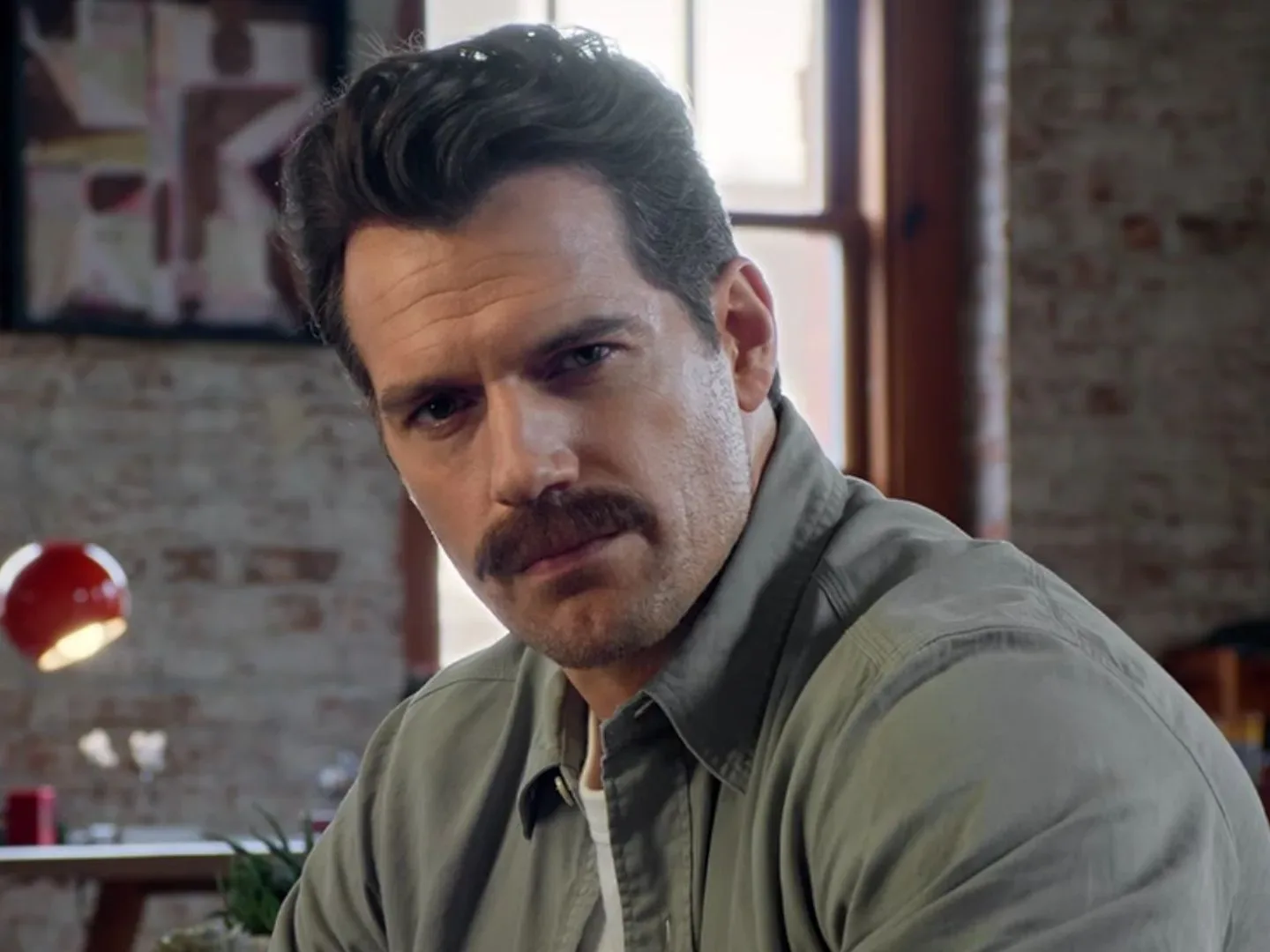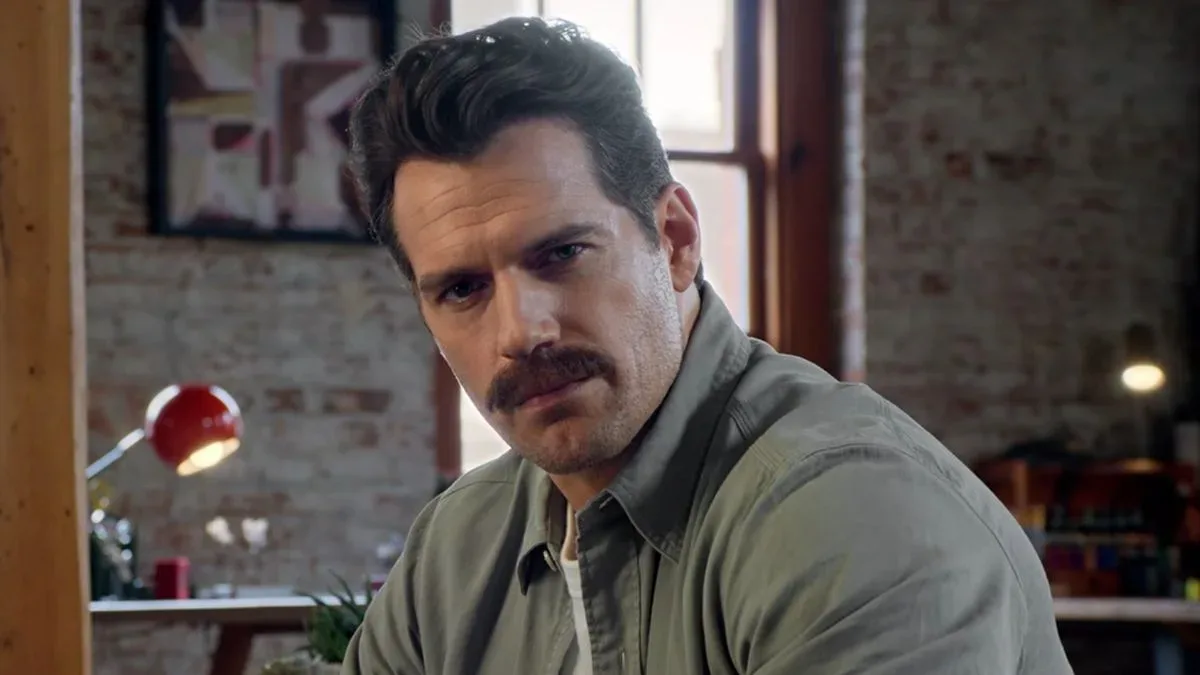
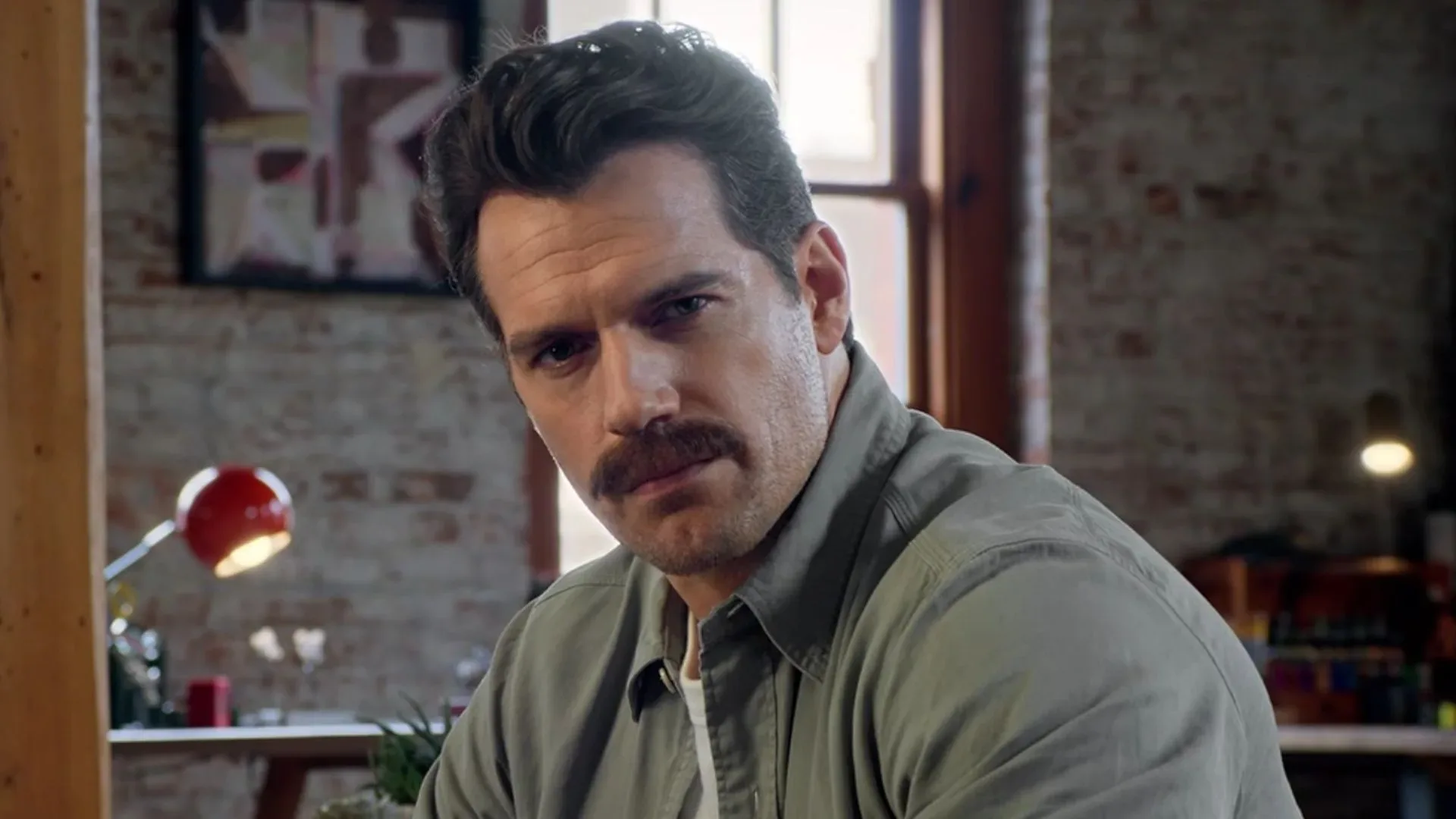
Henry Cavill’s famously hard-to-ignore mustache is becoming the center of a new mobile game with a charitable hook. Mustache Protocol, a side-scroller for mobile devices and tablets, casts Cavill as the defender of facial hair against villains using CGI to erase mustaches from the world.
That knowingly ridiculous premise is tied to a real-world campaign. For every playthrough recorded through November, Google has said it will donate $11 to Movember, up to a total of $500,000. Movember supports awareness work around suicide, testicular cancer, prostate cancer and other issues affecting men.
The game is also a high-profile showcase for Google’s AI-oriented creative and organization tools. Cavill has been working with the company on a three-part series about the project, describing the release as “a fun game for a serious problem.” The result places a conspicuously silly piece of celebrity gaming marketing beside an objective that deserves more than a punchline.
The mustache joke has a very specific origin
Mustache Protocol is built around an incident that has long been part of modern superhero-film folklore. During reshoots for Justice League, Cavill had a mustache for Mission: Impossible – Fallout. CGI was used to remove it for the superhero film, leaving viewers with an unusually prominent digital upper-lip effect.
The new game turns that situation inside out. Instead of treating computer-generated facial-hair removal as an unfortunate production compromise, it imagines it as the weapon of an anti-mustache movement. Cavill’s character fights back to protect everyone’s “taches.” It is a deliberately narrow gag, but it has an advantage many branded games lack: people immediately understand the reference and why Cavill is the person fronting it.
That self-awareness matters. Celebrity tie-in games can struggle when the promotional framing overwhelms the game’s identity. Here, the premise, spokesperson and campaign message are all connected by the same visual symbol. The mustache is the joke, the in-game target and the recognizable Movember-adjacent image.
What the game is, and what remains unclear
The supplied details identify Mustache Protocol as a side-scroller, a format in which play progresses primarily across a horizontal environment. Side-scrollers are a natural fit for phones and tablets because their rules can be communicated quickly: move, avoid threats and confront obstacles or enemies. The format does not, by itself, reveal how deep the game will be, whether it will have multiple stages, or what players must do to complete a run.
Likewise, it is known that the project is planned for mobile and tablet platforms, but no specific storefronts, release date, pricing, control scheme or accessibility features have been established in the available information. The donation language is based on a “playthrough,” which suggests players will need to reach whatever completion point the game defines, rather than merely open the app. The precise qualification rules have not been detailed here.
Related coverage includes Henry Cavill's Mustache Protocol Turns a Famous CGI Mishap Into a Mobile Game for Movember.
Those details are important for anyone interested in the charity component. A per-playthrough campaign is different from an automatic donation for a download or a social-media share: the contribution is connected to completing an in-game action. The $500,000 cap also means the campaign has a fixed maximum even if participation exceeds the number of qualifying plays needed to reach it.
At $11 per playthrough, the full cap corresponds to roughly 45,455 qualifying playthroughs. That is simple arithmetic rather than a stated participation target, but it gives the number some useful scale. The campaign can make an individual session feel concrete while also setting an upper limit on the total funding.
Google’s tools are part of the product pitch
Mustache Protocol is not presented simply as a game Cavill happened to make. It is a demonstration of a set of Google tools focused on moving from ideas to visual material and organized notes. The project reportedly used Rambler, which turns speech into constructive notes, and Antigravity, described as a generative-AI toolbox capable of producing 16-bit-style visuals from prompts.
In practical terms, generative AI refers to systems that create new output—such as text or images—in response to user instructions. A prompt is the instruction provided to the system. For a project seeking a retro-looking game aesthetic, the appeal is speed: a creator can describe a visual concept, ask for variations and iterate without starting every sketch from an empty canvas.
That does not mean an AI tool independently makes a finished game. A playable release still requires decisions about its visual direction, mechanics, structure and refinement. The campaign describes Cavill as using Rambler to organize brainstorming, then experimenting with aesthetics and accessories. It also references Magic Pointer, a tool said to allow users to select and combine visual elements on screen.
The broader pitch is continuity between devices, with projects transferable between a phone and Googlebook. For Google, that workflow is arguably the central product being marketed: capture an idea, turn speech into notes, generate or arrange visual material, and keep moving between hardware. The celebrity game provides a relatively accessible example of that process.
The AI question is bigger than a retro visual filter
“16-bit” is commonly used as shorthand for the look associated with a generation of game hardware: chunky pixels, limited-looking palettes, crisp silhouettes and tile-based environments. It is an aesthetic reference, not proof that a game runs on original 16-bit-era technology. In this case, Antigravity’s role is described as generating visuals in that style from prompts.
That distinction is worth making because retro presentation and AI-assisted production are separate ideas. Pixel-art-inspired games can be made through traditional illustration, while generative systems can be aimed at almost any art direction. Mustache Protocol combines the two because the visual shorthand is instantly readable and suits a fast-moving side-scroller.
But generative AI in creative projects remains contentious. The basic promise is faster ideation and easier experimentation; the concern is whether the systems, their output and their use fit the values or expectations of artists and players. Mustache Protocol does not settle that argument. Instead, it makes the debate unusually visible by using AI tools as a headline feature rather than an invisible part of production.
For players, the most useful standard may be straightforward: assess the game on what it actually offers, and assess the campaign on the clarity of its charitable terms. The Google tooling can be an interesting part of the project without requiring everyone to share the same view of AI-assisted creative work.
A charity mechanic with a clear message
Movember is best known for encouraging conversations and fundraising around men’s health, often using facial hair as a visible campaign symbol. Mustache Protocol’s connection to that idea is unusually direct. The game’s central joke is not merely pasted onto a charity badge at the end; its entire conflict is about saving mustaches from digital destruction.
That gives the campaign a coherent structure: the entertainment is built around a recognizable Cavill anecdote, and participation is tied to funding for an organization focused on issues affecting men. Still, the game should not be confused with a substitute for support, medical advice or crisis services. Its role is awareness and fundraising, while Movember’s stated areas of focus include serious health concerns.
Games have frequently been used to encourage charitable participation because they can turn passive attention into a completed action. The effectiveness of that approach depends on low friction and clear communication. Mustache Protocol’s donation amount is unusually easy to understand—one completed playthrough equals $11—while the November cutoff and $500,000 ceiling establish the campaign’s boundaries.
There is a wider recent example of games using a scheduled fundraising event rather than a per-play model: Date Everything! has also paired its gaming audience with a charity livestream. The mechanisms differ, but both illustrate how a game’s audience can be invited to support a cause through a defined activity.
Why Mustache Protocol could find an audience
The project has three obvious routes to attention: Cavill’s profile, a meme-ready reference to the CGI mustache, and the donation pledge. Any one of these could fuel a conventional promotional campaign. Combining them gives Mustache Protocol a clearer identity than a generic celebrity mobile game.
The limitation is that its success as a charitable campaign will depend on participation before the November window closes, and on whether the game’s completion requirement is approachable enough for a broad audience. A clever premise creates curiosity; an intuitive, short-form game is what would turn that curiosity into qualifying playthroughs.
For now, Mustache Protocol is best understood as a compact promotional game with a serious fundraising purpose, not as a fully detailed commercial release. It turns one of Cavill’s most enduring on-screen visual mishaps into the enemy of the story, uses that setup to demonstrate AI-centered tools, and gives players a defined way to contribute to Movember. The mustache is the hook. The $11-per-playthrough donation is the part with stakes.