Television may arrive in a living room as a polished episode, a competition elimination, or a clip that takes over everyone’s group chat. Before any of that happens, it is also a workplace built on scheduling, communication, locations, budgets and a huge amount of coordination that rarely appears on camera. A new 10-week Production Assistant Training program aims to introduce Los Angeles-area high school students to that side of the business.
The Television Academy Foundation is launching the free after-school program with funding from Best Buy. It is designed for students in the Los Angeles area, with activity based at YMCA facilities in Boyle Heights and Long Beach. The curriculum is intended to serve local underserved communities and combines industry education, practical production training, professional mentorship and visits to scripted and unscripted television productions.
That last detail matters. Behind-the-scenes work can be difficult to understand from a classroom description alone, especially for students who may have watched TV for years without seeing how a production team functions. Field trips can put the vocabulary of production into a practical setting: the difference between a role that plans a shoot, one that keeps information moving, and one that helps a crew handle the tasks of a working day.
What the 10-week program is meant to cover
The program’s central focus is entry-level production work, while also introducing a range of jobs that can form part of a longer career path. The roles named in its description include:
- Production assistants, or PAs: crew members who support day-to-day production needs and help information, materials and people move where they need to be.
- Production coordinators: roles associated with coordinating production operations and keeping details organized.
- Assistant directors: a production department role named as part of the program’s career overview.
- Production managers and producers: positions connected to the broader management and organization of a production.
- Location managers: professionals focused on the places where productions work.
- Production accountants: roles concerned with the financial side of production.
The program does not frame all of those jobs as immediate outcomes after 10 weeks. Rather, it presents them as positions students can begin to understand while building knowledge, confidence and connections. That distinction is important: production is not one job with one ladder. Even at an introductory level, a student can see that a television set relies on operational, creative, logistical and financial work happening alongside each other.
A PA role is a particularly useful starting point because it is a visible entry point into the workflow of a production. The name can sound vague from the outside, but the broader lesson is clear: a successful production depends on people who can communicate, stay organized and respond to the needs of a team. Those are practical habits that remain relevant as someone considers coordination, management, locations or other paths named by the program.
A behind-the-scenes route into television
Entertainment careers are often discussed through actors, directors and writers, but a television production requires an extensive crew structure. The new curriculum places its attention on that structure rather than treating television solely as a screen-facing profession. For high school students, that may widen the idea of what an entertainment career can look like.
The inclusion of both scripted and unscripted production visits reinforces that point. Scripted television and unscripted television are distinct forms of programming, yet the initiative is built around the common reality that each relies on organized production work. Students will be able to see productions firsthand instead of encountering the industry only as an abstract list of job titles.
Related coverage includes Television Academy Foundation and Best Buy Launch Free PA Training for L.A. Students.
There is a useful practical value in exposure of this kind. A student may discover an interest in how a set is organized, how locations are managed, or how a production handles administrative and financial responsibilities. Another may simply leave with a more accurate sense of the professional expectations attached to entry-level crew work. Neither requires pretending that a brief program can provide every answer; the purpose described here is exploration paired with foundational training and mentorship.
It also gives the initiative a community dimension. Operating from YMCA facilities in Boyle Heights and Long Beach places the program in local settings rather than asking students to first find a conventional industry doorway on their own. The free format removes tuition from that particular first step, although the available information does not specify enrollment numbers, application requirements, exact session dates, transportation arrangements, or placement outcomes.
Donny Hugo Herran will lead the inaugural class
Television Academy board governor Donny Hugo Herran will serve as the first instructor. Herran brings two decades of experience as an industry executive and has overseen production across both scripted and unscripted television.
His listed scripted credits include Yellowstone, Landman and MobLand. His unscripted work includes The Challenge and Martha & Snoop’s Dinner Party. That cross-format background aligns closely with the program’s stated plan to expose students to both kinds of television production.
Herran is also the author of The Production Guru: Leadership Principles and Philosophies Across Film, Television and Beyond and founded Ellevan Creative Consulting. For an introductory program built around mentorship as well as practical training, an instructor whose experience spans production leadership and multiple television formats provides a direct link between students’ first industry lessons and working production environments.
“Opening doors to production jobs helps shape a more dynamic and representative entertainment industry,” Herran said of leading the inaugural program and preparing aspiring crew members for behind-the-scenes work.
That emphasis on access is the initiative’s defining idea. Students are not being invited merely to admire television as an audience; they are being introduced to the crew roles and professional pathways that make it possible. For an industry whose final product can obscure the labor behind it, a course that names those jobs and makes the workplace visible has a straightforward educational purpose.
Why mentorship and set visits are central
Industry education can explain terminology, but production training becomes more concrete when students can connect terms to people and places. The program’s blend of practical instruction, mentorship and real-world exposure is therefore more significant than any single component on its own.
Mentorship can help translate a broad career aspiration into more specific questions: What does this department do? Which skills are useful at the entry level? How might a production office differ from work connected with locations? The publicly described program does not list individual lesson plans, but its stated role range gives students several directions to investigate.
Field trips offer a complementary kind of learning. A visit to a scripted production or an unscripted production does not automatically create a job opportunity, nor is it presented as one. What it can do is give students a closer view of the working environment they are studying. It makes the phrase “behind the scenes” less of a slogan and more of a professional landscape with departments, responsibilities and interdependent teams.
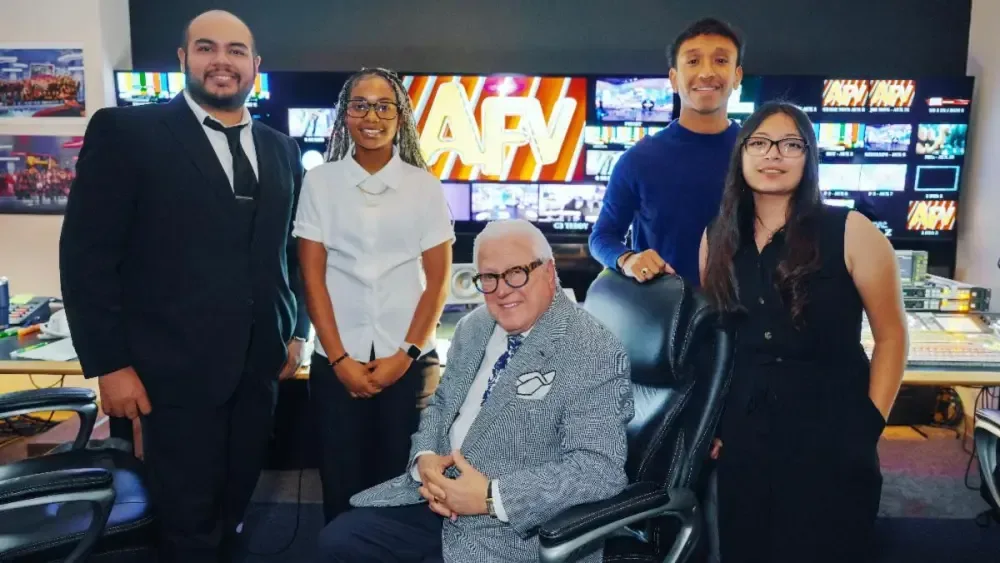
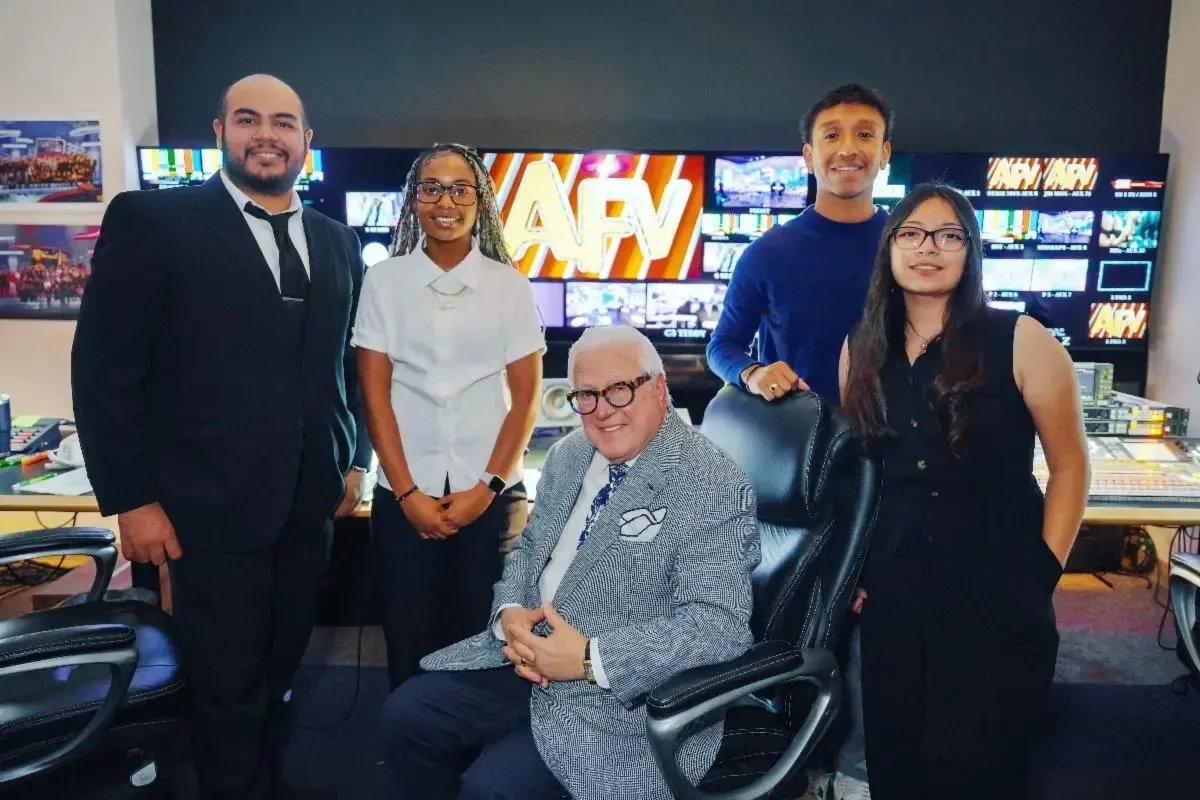
One image associated with the initiative shows YMCA chaperones David Haro and Kevin O. Campos with students Morgan Crafton and Aalijah Perez during a visit with America’s Funniest Home Videos creator and executive producer Vin Di Bona. It is a small but fitting illustration of the program’s approach: students being brought into proximity with people who have helped shape television, while learning about work that exists beyond what viewers see on screen.
A focused opportunity, not a shortcut
The strongest way to read the new program is as a foundation. Its 10-week schedule is substantial enough to provide structure, but it is not described as a substitute for every skill, professional relationship or job credential a student may need later. The Foundation’s stated aim is to help participants start exploring careers by providing education, practical training, mentorship and exposure.
That measured framing is more valuable than overpromising. Television production involves many specialties, and the course identifies several of them without flattening their differences. A student interested in managing a location is not necessarily pursuing the same responsibilities as one drawn to accounting or production coordination. Yet all can begin with a better grasp of how a production operates and how departments depend on one another.
For students in Boyle Heights, Long Beach and the wider Los Angeles area, the free program offers a structured introduction to that ecosystem. Its larger significance lies in making crew careers easier to see, ask about and imagine pursuing. As television continues to be consumed as entertainment, this initiative shifts attention to the people and systems that turn an idea into a completed production.
That perspective also sits naturally beside the wider TV conversation around what audiences watch and how programming reaches them, from production itself to streaming performance such as the audience milestones being tracked for scripted series. The new training program starts earlier in that chain: with students learning the roles that help bring a show from planning to screen.