Chinese regulatory filings have identified NVIDIA GB300 NVL72 and GB200 server racks at the Yangtze River Delta Project in Shanghai, a data-center development that has also been connected through corporate and personnel ties to Alice Huang. The records raise a consequential but unresolved question: how did hardware subject to US export-license requirements reach the facility?
The available material establishes neither a complete chain of custody nor wrongdoing by every company named in the records. It does, however, indicate that exceptionally large and capable NVIDIA AI systems were listed in documents submitted to Chinese regulators. One company, Shanghai Shuoyao, used a GB300 NVL72 rack as collateral for a loan of roughly $14 million from Shanghai Innovation Bank.
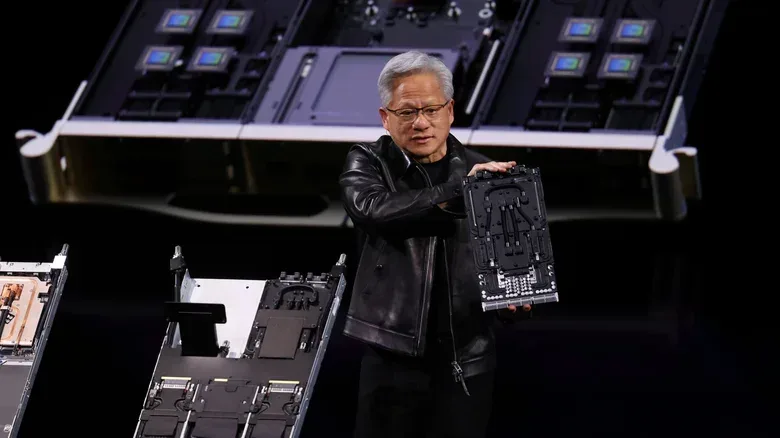
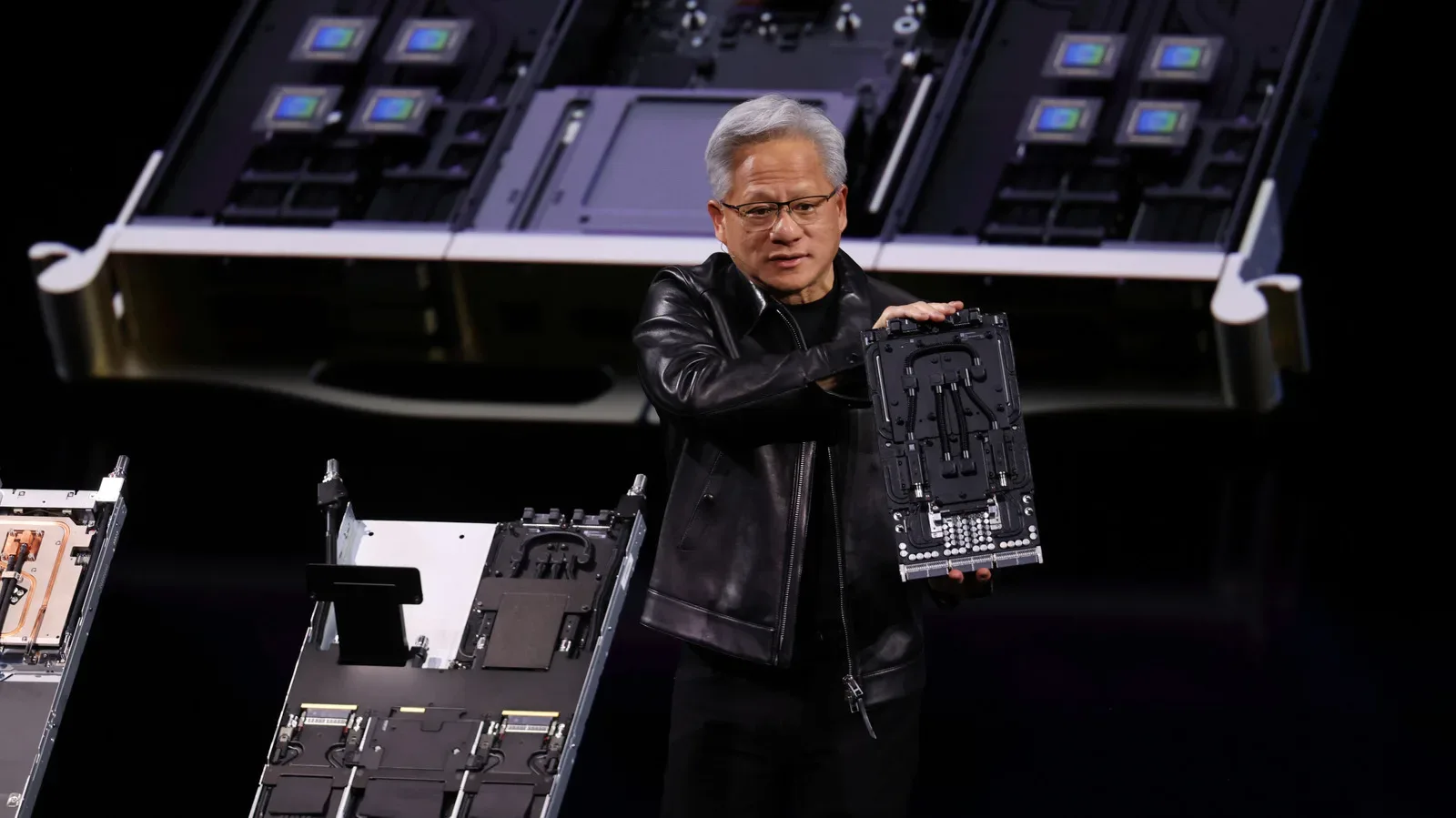
That is a notable detail because a GB300 NVL72 is not a conventional consumer graphics card that disappears into a desktop PC build. It is a rack-scale computing system built around 72 Blackwell Ultra GPUs and 36 NVIDIA Grace processors. The unit can weigh about 3,300 pounds. US rules require a license to ship Blackwell systems of this kind to China.
What the filings say
The filings from two companies reference both GB300 NVL72 and GB200 racks at the Yangtze River Delta Project. The development may eventually contain as many as 800,000 servers, making its apparent hardware inventory important well beyond the fate of one machine.
A rack is the cabinet-scale unit used to organize and operate data-center equipment. In this case, NVL72 refers to a configuration designed to link a large number of GPUs together with associated processors and infrastructure. GPUs, or graphics processing units, are best known by gamers as the components responsible for rendering games, but their massive parallel-processing capacity also makes them central to modern AI workloads. A system containing 72 of NVIDIA’s Blackwell Ultra GPUs is therefore materially different from a handful of gaming cards deployed in workstations.
The GB300 designation combines NVIDIA’s Blackwell-generation GPU architecture with Grace processors. The documents also refer to GB200 systems, another rack-scale platform in the same broad generation of AI infrastructure. Separately, evidence reportedly places servers using NVIDIA’s earlier Hopper-generation GPUs inside the project as well. Hopper GPUs likewise require US government permission for shipment to China.
The issue is not that every NVIDIA product is automatically prohibited from entering China. The relevant distinction here is the export-control status of the particular high-end systems reported at the facility. A required license is a government authorization to make a controlled export. The key unanswered factual issue is whether the reported systems were exported under an applicable authorization, transferred through another route, or reached the site some other way.
A partial manufacturing trail leads to Gigabyte
One GB300 rack’s serial number was entered into a public warranty database, producing a partial link to Taiwan-based Gigabyte Technology. PC players will recognize Gigabyte as an NVIDIA add-in-board partner: it buys NVIDIA chips and builds products for consumer and enterprise markets.
Related coverage includes Filings identify restricted NVIDIA AI racks at Shanghai data center.
That trace is significant, but its limits matter just as much. Identifying a manufacturer through a warranty record does not identify the original purchaser, every intermediary, the eventual operator or the route a product took after sale. It establishes a point in the product’s lineage, not a complete explanation of how the rack arrived at the Shanghai facility.
Gigabyte did not identify the company or party that first purchased the GB300 rack. Its representative said the company conducts business in compliance with applicable laws and regulations and that transactions are subject to internal compliance measures and the laws in force at the time.
For readers accustomed to PC hardware, the story is a reminder that familiar board-partner branding can sit within a much broader enterprise supply chain. Consumer graphics cards and integrated data-center racks originate in overlapping hardware ecosystems, yet the latter can involve system integration, financing, deployment and service arrangements that make end-user tracing much more complicated.
For more on the consumer-facing side of PC hardware buying, see our guide to PC upgrades that can outlast the hype. The systems at issue here, though, belong to a wholly different scale of computing and regulation.
Shanghai Shuoyao, Megaspeed and Alice Huang
Shanghai Shuoyao, the company that listed a GB300 NVL72 as loan collateral, has ties to the Singapore-based cloud-computing company Megaspeed. Alice Huang acquired a controlling stake in Megaspeed in 2023 and left the company in August 2025.
Shanghai Shuoyao has described itself as one of Megaspeed’s service providers and characterized the relationship as ordinary commercial cooperation with a limited scope. Megaspeed used renderings of the Yangtze River Delta Project in a 2024 presentation to investors, though the presentation did not identify China as the data center’s location.
Those relationships warrant scrutiny, but they should not be overstated. There is no presented evidence that Megaspeed itself directly diverted NVIDIA hardware to the project, and the company denies wrongdoing. Corporate connections, collateral documents and marketing materials can help map an ecosystem around a facility; they do not alone prove which actor imported, transferred or operated each rack.
A further reported connection involves Kang Wei, who was often introduced as Alice Huang’s husband and was listed as the president of the facility. He has also been reported to have ties to China’s Ministry of State Security. These details may help explain why the project has attracted attention, but they do not resolve the export-control question. The central evidentiary gap remains the hardware’s path from manufacture and sale to installation in Shanghai.
Why the physical size does not settle the case
The reported GB300 unit’s size makes the situation especially striking. A rack weighing around 3,300 pounds is not easy to confuse with ordinary IT equipment, and it is far less portable than an individual GPU. NVIDIA CEO Jensen Huang had previously suggested that GB300 racks were too large to smuggle.
Still, “difficult to move covertly” and “impossible to move or redirect” are not the same proposition. The records described here do not explain the logistics. They also do not establish whether a license was sought or granted. Until that chain is clarified, a description of the equipment’s physical bulk is context, not an answer.
The loan collateral is another useful clue with boundaries. A company offering a specific asset as collateral is representing that asset in a financing context. That is meaningful evidence that the rack was associated with the company’s assets or transaction, but it does not, by itself, identify the system’s exporter or prove that the filing party owned and controlled every stage of its deployment.
Investigation and the next public milestone
The US Justice Department is investigating whether Megaspeed violated US export rules. An investigation is not a finding of liability, and the available information does not say what conclusions investigators have reached. NVIDIA did not provide an immediate response to a request for comment on the reported findings.
Jensen Huang is scheduled to testify publicly before Congress on December 3 at 10 a.m. ET. Given the reported presence of both Blackwell- and Hopper-generation hardware at the Shanghai site, that hearing could bring further questions about export compliance, product tracking and the practical ability of manufacturers to monitor sophisticated systems after they leave the factory.
The episode highlights a difficult reality of AI-hardware controls. Rules can apply to highly specific systems and capabilities, but the commercial path around those systems may include manufacturers, original buyers, cloud firms, service providers, data-center operators, lenders and other intermediaries. Serial-number data and regulator filings can illuminate parts of that chain. They do not automatically fill in the rest.
For now, the confirmed core is narrow: regulatory documents identify restricted NVIDIA rack systems at a major Shanghai project; one GB300 rack has been partially traced to Gigabyte; and the organizations and people surrounding the facility have connections that are drawing official and public scrutiny. How the equipment reached the site—and whether any party broke US export rules—remains unresolved.