New reporting based on corporate filings has put a spotlight on a Shanghai AI operation said to contain NVIDIA hardware subject to US export restrictions. The material describes a chain involving Singapore-based cloud company Aperia Cloud Services, Dell servers carrying NVIDIA H800 chips, and servers made by Super Micro Computer Inc. with NVIDIA H100 or H200 chips.
The central issue is not whether these are recognisable parts in a server inventory. It is whether restricted chips reached Chinese users without the US authorization required for those products. That distinction matters: a document describing the hardware at a facility can be significant evidence about where equipment ended up, but it does not by itself prove the route taken by every system, who arranged a transaction, or whether a particular individual knowingly violated a rule.
That need for precision is especially important here because the accounts contain serious, disputed allegations about several people and companies. The available reporting identifies an individual, Alice Huang, as having past and alleged current connections to entities named in the filings. But the records reportedly do not state that she personally procured the chips. Those limits should remain central while regulators, companies and lawmakers assess the claims.
What the filings reportedly list
Shanghai Longteng Intelligent Computing reportedly submitted server information to Chinese authorities while using servers as collateral for financing. Collateral is an asset pledged to secure a loan; the lender may have a claim over it if the borrower cannot meet its obligations. Such filings can therefore produce unusually granular equipment descriptions, because the machines’ specifications affect their declared value.
Those records reportedly list 52 Super Micro systems fitted with NVIDIA H100 or H200 chips. Both are high-end AI accelerators: specialized processors designed to perform the parallel mathematical work behind training and operating large machine-learning models. The filings also reportedly identify Dell systems equipped with NVIDIA H800 chips.
Under the account provided, the H800-equipped servers were sold to Aperia Cloud Services, an NVIDIA Cloud Partner in Singapore. Aperia is said to have bought 22 Dell servers. Dell reportedly ended its business relationship with Aperia in February 2025 amid concerns about the transaction.
The systems were reportedly installed at the Yangtze River Delta Project, a Shanghai AI facility. Megaspeed, a Singaporean company with which Alice Huang was publicly associated, had shown investors a rendering of that project in 2024 and described it as its largest AI facility.
Why the named chips matter
NVIDIA’s H800, H100 and H200 are not interchangeable labels for ordinary consumer graphics cards. They are data-center-grade products intended for AI and high-performance computing workloads. In practical terms, clusters built with these accelerators can make a substantial difference to an organization’s capacity to train large models or serve AI applications at scale.
Related coverage includes Reported filings trace restricted NVIDIA chips to Shanghai AI project.
The reported regulatory concern is that the chips named in the documents cannot be sold to Chinese companies without explicit permission from the US government. Export controls are rules that limit the sale, transfer or re-export of specified technologies to particular destinations or end users. They can apply beyond the initial buyer: a sale to an intermediary outside China does not automatically settle the question of where a controlled item will ultimately be used.
That is why a relationship described as an “NVIDIA Cloud Partner” is relevant but not conclusive. A partner designation may explain a company’s access to products or services, but it does not establish that every later deployment complies with export rules. Conversely, the presence of a restricted component in an inventory does not, on its own, establish the precise conduct or knowledge of each organization or person mentioned in a broader supply chain.
The corporate links described in the report
Alice Huang is said to have established Shanghai Longteng Intelligent Computing roughly a decade ago, while reportedly ceasing to be part of it in 2017. The filings reportedly name Huang Yu, identified in the account as Huang’s sister, as the company’s majority owner. This is a meaningful ownership and governance detail, but it is not a substitute for evidence about a specific procurement decision.
The Yangtze River Delta Project is also reported to have connections to Huang. Its president, Kang Wei, is described in the account as Huang’s husband. The report further says Megaspeed presented the site to investors. Together, those relationships may help investigators map business affiliations. They do not erase the difference between affiliation, ownership, control, involvement in a purchase, and legal responsibility.
That distinction can seem fussy in a fast-moving technology story, but it is fundamental. Server supply chains span chip designers, system builders, distributors, cloud providers, financiers and facility operators. Evidence needs to be evaluated at each stage: what equipment was involved; who bought it; who received it; where it was installed; what permissions existed; and what the participants knew.
What remains unproven by the reported documents
The reporting says the filings do not say whether Huang was personally involved in acquiring the listed hardware. That is an important limitation, particularly given other highly consequential allegations circulating around her. Those broader claims should not be treated as established merely because filings list hardware at a company with historical or familial connections.
Similarly, the reported existence of servers at the Shanghai facility does not publicly resolve whether licenses were requested, issued, denied or bypassed. Nor does the information presented establish the actions or state of mind of Dell, Super Micro, NVIDIA, Aperia, Megaspeed, Shanghai Longteng, or the project’s operators. A documentary trail can prompt questions and scrutiny; it is not the same thing as a final regulatory or judicial finding.
For gamers and PC enthusiasts, the story is also a reminder that the most influential NVIDIA products are often invisible to consumer buyers. The company’s gaming GPUs are widely discussed in terms of frame rates, ray tracing and upscaling, while data-center accelerators can be strategically important because of their role in AI development. The same industry ecosystem that turns silicon into a graphics card also supports much larger systems built for model training and cloud workloads. For a consumer-networking example of how infrastructure choices can shape home tech, see our report on the NETGEAR Nighthawk Wi-Fi 6 router listing.
Why a congressional appearance could intensify scrutiny
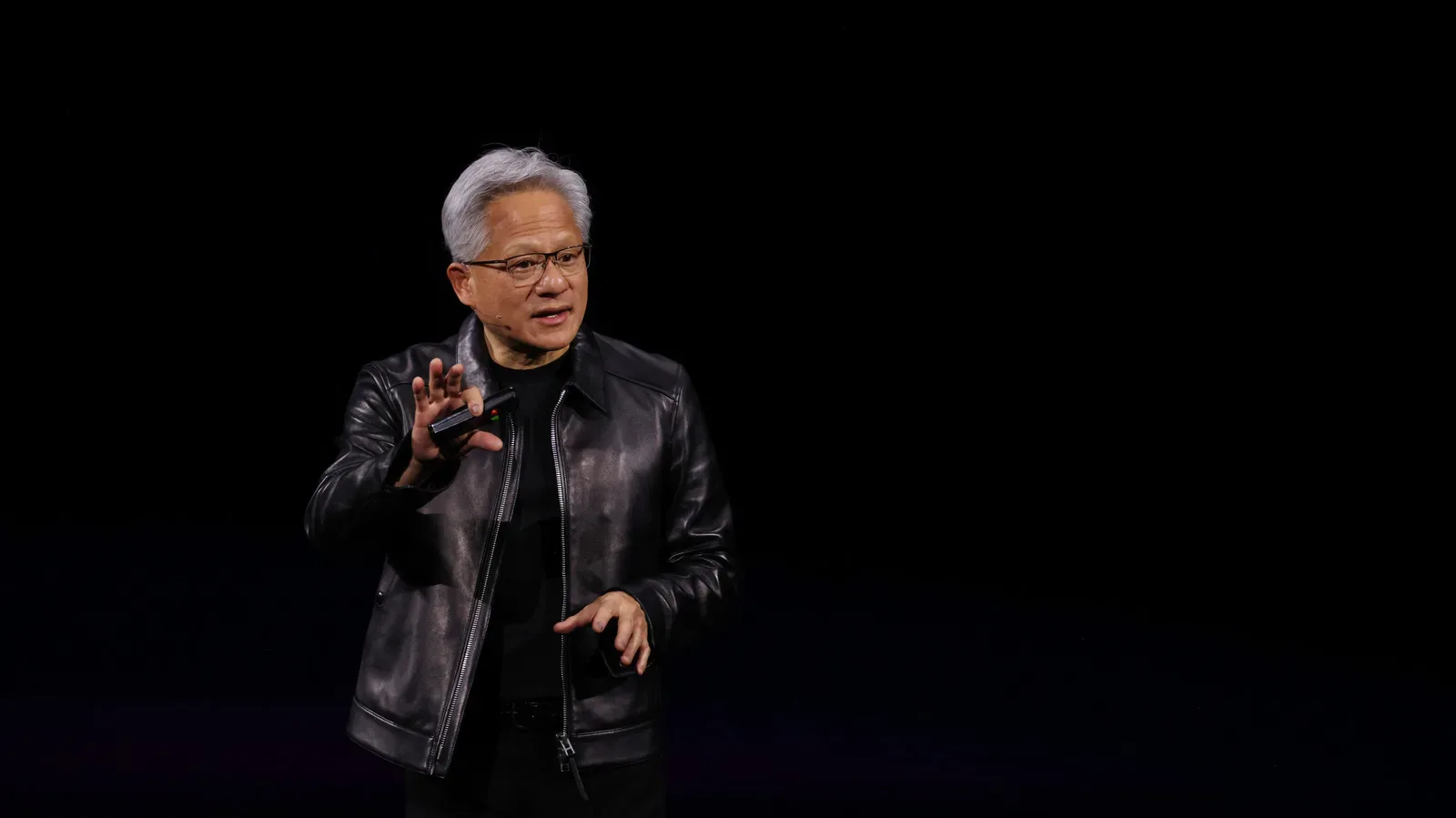
Jensen Huang, identified in the account as NVIDIA’s former CEO, is expected to testify before Congress this month. The newly reported hardware trail is likely to draw attention as officials evaluate how export restrictions function in real supply networks.
Congressional questioning can surface information and pressure companies or agencies to explain their compliance processes, but it does not determine individual liability. Any rigorous examination will need to separate confirmed documentary facts from inferences, and claims from evidence that has been independently tested.
The immediate takeaway is narrow but important: the reported filings appear to identify restricted NVIDIA hardware at a Shanghai AI site and describe links among companies and people that may warrant further examination. The most consequential unanswered questions concern authorization, end use, the route by which the systems reached the facility, and who—if anyone—was responsible for unlawful conduct. Until those questions are answered with verified evidence, certainty would be premature.