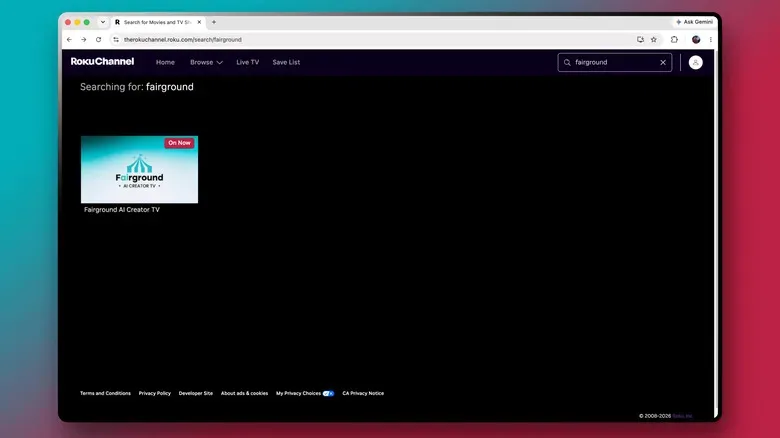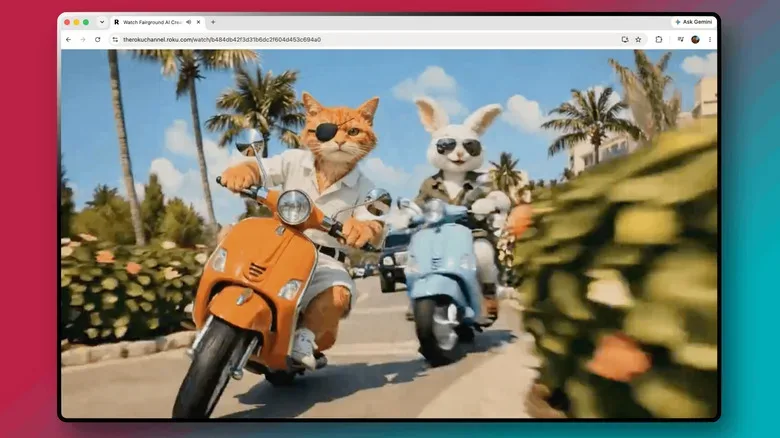
The television guide has found a new occupant: a channel built around films made with generative-AI tools. Fairground Entertainment’s AI Creator TV is a free, advertising-supported channel available through Roku and additional streaming-TV platforms, turning a category more commonly encountered as a short social-media clip into programmed, lean-back viewing.
The immediate joke writes itself. After years of people doomscrolling through strange machine-made videos, the format has graduated to the living-room screen, where it can be interrupted by commercials like the rest of civilization. But the more useful way to look at Fairground’s project is as a distribution experiment. It is an attempt to turn scattered AI-assisted filmmaking into a recognizable programming destination, with curation, schedules and the familiar mechanics of free streaming television.
Fairground says AI Creator TV features work from more than 100 AI filmmakers. The company refers to its programming as “AI Cinema,” though that label covers a wide range of possible creative processes. Some projects may lean heavily on generated imagery and voices; others involve writers, directors and editors using AI as one component of production. The important distinction is that Roku is not producing the films. Fairground Entertainment is operating the channel, selecting material from creators and handling distribution.
A FAST channel for an unfamiliar kind of film
AI Creator TV uses the FAST model: free ad-supported streaming television. Viewers do not pay a subscription fee for the channel; advertisements are the revenue mechanism. That model is already well established on connected-TV platforms, where digital channel guides increasingly resemble cable lineups without the monthly cable bill.
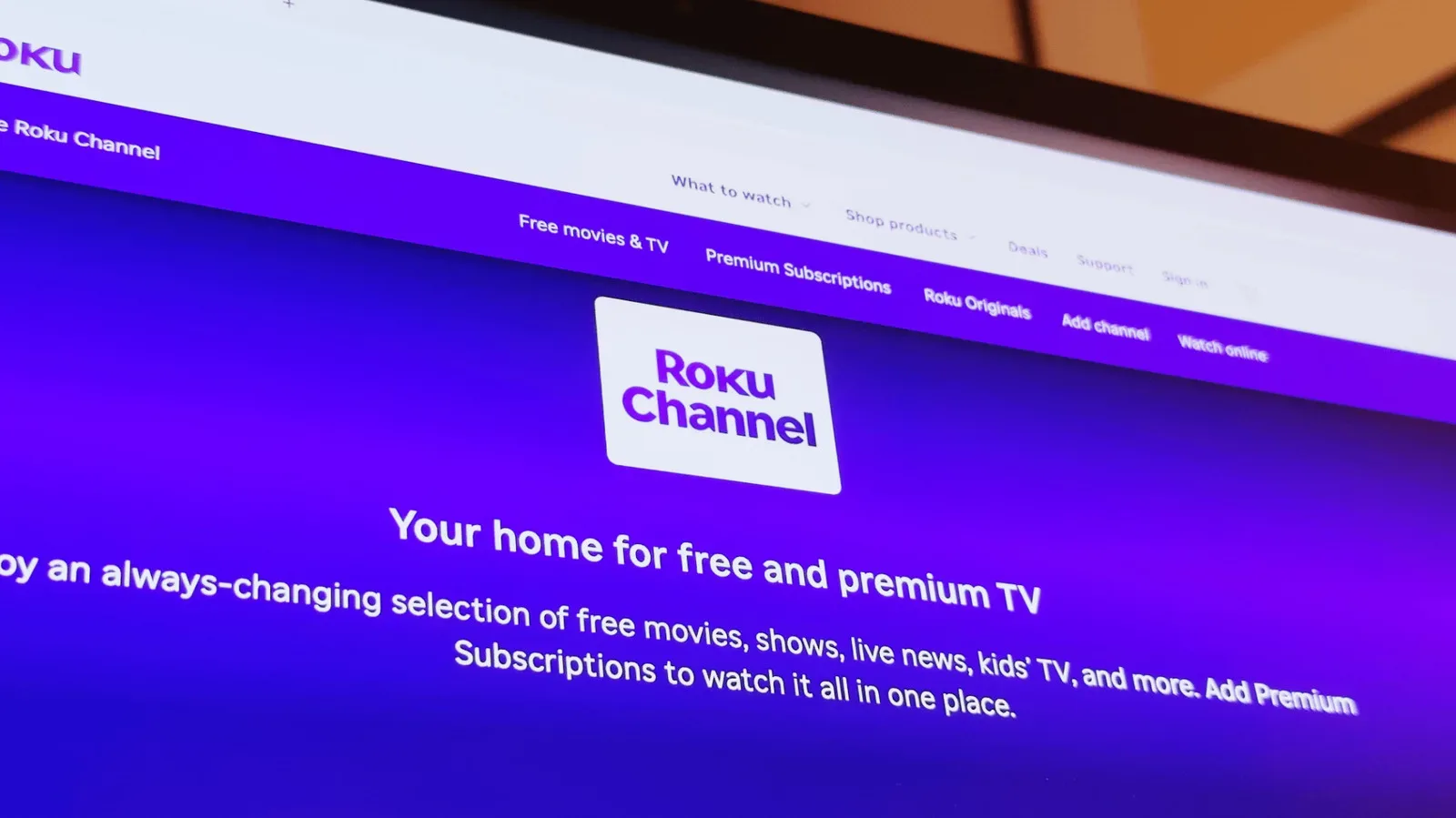
On Roku, this puts Fairground’s experiment inside an ecosystem where free live channels are hardly a novelty. The Roku Channel offers more than 500 live channels spanning news, sports, food, reality programming and other genres. AI Creator TV is not introducing a new method of watching television so much as using a known format for a newer, more disputed kind of production.
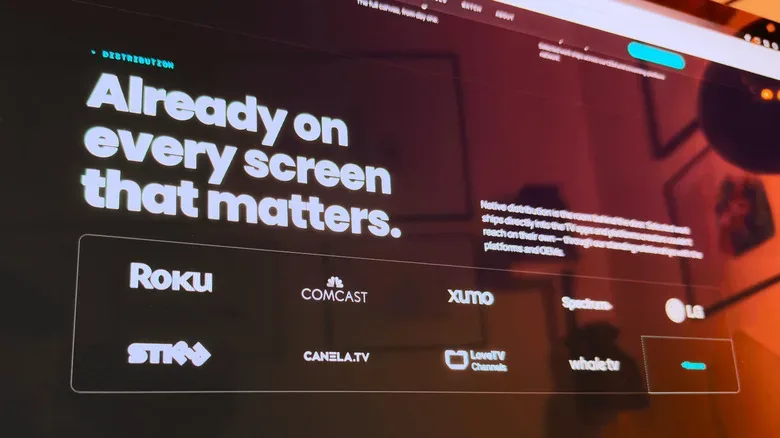
Fairground’s reach is not limited to Roku. Its films are also distributed through Xumo Play and Canela.TV, while the company’s FAST offerings appear on several streaming-TV platforms. That matters because the project is not simply an app-store curiosity designed around one device maker. Its central proposition is broader: creators submit films, Fairground curates them, and selected titles can be distributed through a network of streaming outlets.
There is a gap between being available and becoming appointment viewing, of course. A channel can earn a spot in a guide long before it earns a routine place in somebody’s evening. Yet putting AI-focused work in a FAST environment changes the presentation. Rather than asking every filmmaker to win the feed algorithm one upload at a time, it gives selected films a shared destination and lets a viewer arrive with the low-effort question television has always encouraged: What’s on?
“AI-generated” does not describe one production method
The phrase “AI-generated film” can imply a nearly automatic process: enter a prompt, wait briefly, and a complete movie somehow arrives. Fairground’s catalog offers at least one clear reminder that the reality can be more layered. Lost Garden: The Awakening of the Lantern Knight, from creator Frank Houbre, is presented as a project where Houbre created the world, characters, mythology, emotional journey and screenplay himself.
Related coverage includes Fairground Brings AI-Made Films to Free Roku TV Channel.
For that title, AI tools were used largely in animation and visual production. Additional tools helped produce voices and music, while conventional video-editing software was used to assemble the episode. That is not proof that every title carried by Fairground follows the same workflow, and viewers should not assume one production breakdown applies to the whole channel. It does demonstrate why “AI-generated” can conceal significant human authorship, planning and post-production.
The distinction is especially relevant in a moment when generative-media discussions frequently compress every process into the same argument. A human-written narrative enhanced with AI-assisted imagery is not identical to a largely automated output, even if both may be marketed with similar language. Neither category automatically settles the artistic question, but audiences deserve enough information to understand what they are being shown.
That tension may be part of the channel’s challenge. The label can attract viewers who are curious about emerging production tools, but it can also repel people who associate AI video with uncanny errors, recycled visual ideas, unclear authorship or work created with minimal intent. Fairground will need its programming choices to do more of the persuasive work than the technology label alone.
Creators are the supply chain, not a footnote
Fairground’s model depends on filmmakers creating and submitting projects. The company operates a creator portal where work can be considered for distribution across its streaming and television network. In other words, this is not presented as an endlessly self-feeding machine channel. It requires artists and producers to bring in material, then requires human curators to decide what belongs in the lineup.
Fairground has also tried to expand that pipeline through a competition connected to the FAST-channel launch. It sought films in true crime, general AI filmmaking and world-building categories. Winners were offered prize money, channel placement and 50 percent of the revenue generated by distribution of their films. Other entrants could likewise be considered for distribution and revenue sharing.
The revenue-sharing detail is a meaningful part of the pitch. Independent filmmakers often face a punishing discovery problem: finishing a project is only the first hurdle, and attracting an audience can demand constant promotion across platforms that reward volume, trends and relentless posting. A curated channel cannot erase that problem, but it can offer a different route. If selected, a film becomes one part of a larger programmed service rather than another isolated upload asking strangers to press play.
That route also creates a familiar editorial responsibility. Curating more than 100 filmmakers’ work means maintaining standards across storytelling, technical quality, attribution and audience expectations. The channel’s long-term value will rest not merely on whether AI tools were involved, but on whether Fairground can consistently identify films with a reason to hold attention. A connected TV is a more patient screen than a phone in some ways, but it is also surrounded by thousands of alternatives.
From the endless feed to the living-room screen
There is a format shift beneath the novelty. Short-form feeds ask users to decide repeatedly, second by second, whether to keep watching. A FAST channel reverses that rhythm. It invites a viewer to let programming continue, to sample whatever follows, and to accept a degree of curation. That is a very old television behavior dressed in very new visual technology.
For creators, that could make placement more valuable than another post that disappears beneath the next wave of uploads. For viewers, it could mean discovering experimental work without conducting a search for it. And for Fairground, it creates a test of whether AI-assisted films can function as a sustained programming category rather than a momentary curiosity.
The question is not just whether machine-assisted visuals can look impressive in a trailer or a scrolling feed. It is whether viewers will stay for characters, stories and emotional momentum. The answer may vary title by title, which is why the human work behind writing, world-building, editing and selection deserves more attention than the generic “AI” tag often receives.
This is also a wider media question, not solely a tech question. Television has always been shaped by the systems that decide what gets made, bundled and placed in front of audiences. AI Creator TV adds another gatekeeper-and-distribution model to that history, one aimed at creators whose work might otherwise remain scattered across the internet. For a darker look at how media systems can turn audience attention into the product, see our take on Primetime and its suffocating ratings chase.
The TV guide is only the opening level
Fairground has cleared a notable threshold by bringing AI-focused filmmaking into the free streaming-channel environment. Roku viewers and users of other supported platforms can encounter this material in the same general place they browse news, reality shows and niche entertainment channels. That visibility is real, and the more than 100 filmmakers attached to the programming give the initiative a larger base than a one-off showcase.
Still, channel availability alone cannot answer the fundamental viewer question: is there something here worth watching after the novelty fades? Fairground’s most persuasive response will not come from calling the material AI Cinema. It will come from programming films whose ideas, craft and human creative choices make people stop on the channel—and choose not to leave.