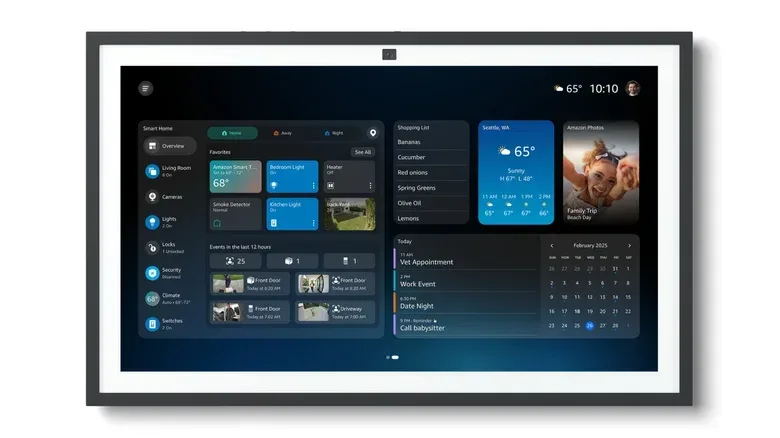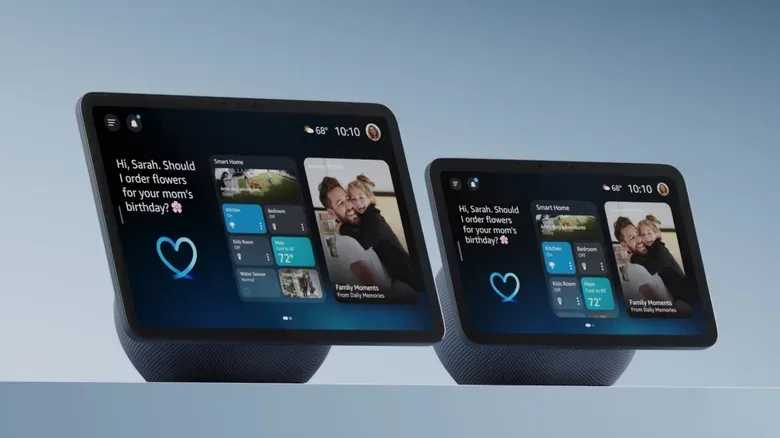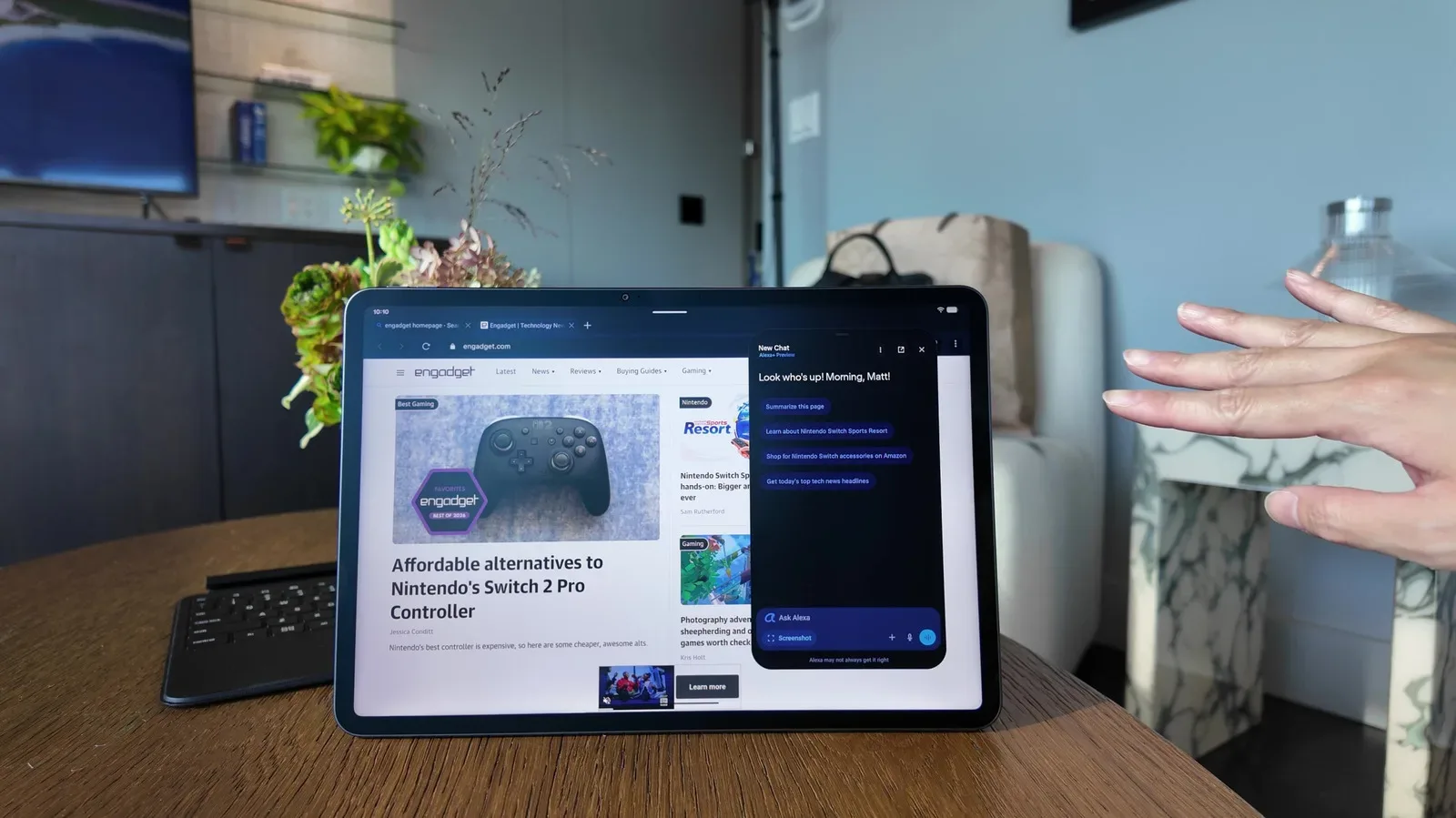
Amazon’s Alexa+ is now included with a full Amazon Prime membership, giving Prime subscribers access to the company’s generative-AI version of Alexa without paying for the separate Alexa+ plan. That is a consequential change for anyone with an Echo, Fire TV, compatible Fire TV hardware, or simply the Alexa app: an assistant once largely associated with timers, music and weather is being positioned as a conversational tool that can research, plan and, in some cases, carry out multi-step tasks.
It is also worth separating the promise from the practical reality. Alexa+ is built around large language models, or LLMs: AI systems designed to interpret and generate natural language. Amazon says its version draws on models from Anthropic and its own Amazon Nova AI suite. The intended result is an Alexa that can hold a more flexible conversation than the older command-and-response assistant and connect requests across a much broader set of services.
That can be useful, particularly in a living room where voice remains a convenient interface. But generative AI is not an automatic upgrade in trustworthiness. Reports from early users point to inconsistent answers, imperfect memory, delays and occasional difficulty hearing requests. Alexa+ may be a worthwhile Prime perk, then, without being a reason to hand an AI assistant unchecked control over reservations, tickets, purchases or important information.
What Prime members get
Full Amazon Prime subscribers can access Alexa+ through Alexa-enabled devices, the Alexa app and the web interface at www.alexa.com. Amazon says Alexa+ can also be accessed in the Amazon Music app. Owners of certain compatible Fire TV products, including Fire TV, Fire TV Stick, Amazon Ember televisions and Fire TV Cube, can use the assistant at no additional cost as well.
There is a free route for people who do not have Prime: Alexa+ is available as a text chatbot in the app and on the website. However, that free experience has usage limits. Full access outside Prime costs $19.99 per month. By comparison, the stated price of full Prime is $14.99 monthly or $139 annually. Prime includes other benefits beyond Alexa+, such as delivery benefits, Prime Video, Amazon Music and Kindle-related perks.
That comparison makes the standalone assistant subscription a difficult proposition for many people. Someone already paying for Prime effectively receives Alexa+ as part of an existing bundle. Someone who only wants the AI assistant, however, has to decide whether its expanded capabilities are genuinely worth more each month than a broader Prime membership. People with Prime Video-only or Free Shipping memberships do not receive Alexa+ through those narrower plans; they must switch to full Prime.
From commands to “agentic” tasks
The central pitch is not merely that Alexa+ can chat. Amazon is trying to move Alexa toward an agentic assistant. In AI terminology, agentic behavior refers to a system that does more than return an answer: it can navigate services, combine steps and attempt to complete a task in the background.
Amazon calls the underlying task-focused building blocks “experts.” These are groups of systems, capabilities, application programming interfaces and instructions intended to handle particular categories of customer requests. An API, or application programming interface, is the technical connection that lets software exchange information or request actions from another service. In principle, that is what turns a voice request from a general suggestion into an action involving a partner platform.
The services named as Alexa+ integrations include Ticketmaster, Uber, Grubhub and OpenTable. Amazon’s broad scenario is an evening planned through one assistant: tickets purchased, a dinner reservation booked, transport arranged and food ordered for later. It is a compelling demonstration because it takes a series of minor chores and frames them as one conversational request.
The catch is embedded in the same example. Each extra step raises the stakes. A factual error in an answer can be inconvenient; a wrong concert date, unwanted food order, poorly timed ride or bad booking can have a direct cost. The more Alexa+ acts rather than informs, the more users should review the details it presents before confirming anything.
This is the sensible way to treat the technology at its current stage. Use it to shorten the search and coordination work, but retain the final decision. Ask it to surface options, organize an itinerary or collect the relevant details. Then verify the venue, time, address, price, party size and purchase conditions before an order or booking is completed.
Why a more conversational Alexa is not necessarily a more reliable one
Older voice assistants generally worked best when a user gave a clearly recognized command within a defined skill: play a song, set a timer, turn off a connected light. LLM-based assistants are designed to accept looser wording and manage follow-up questions. This can make an interaction feel much more natural, especially for planning, quick research or open-ended questions.
However, fluency and accuracy are different qualities. An AI system can phrase a response confidently while still misunderstanding a request, losing relevant context or giving information that needs checking. The early concerns around Alexa+—consistency, functional memory, response lag and hearing issues—are therefore not minor complaints about personality. They affect whether an assistant can be trusted to execute the next part of a task.
Amazon offers four conversation styles: Brief, Chill, Sweet and Sassy. The choice may make Alexa+ feel more tailored to a household, but it does not alter the fundamental verification problem. A concise answer is not inherently more accurate, and a playful delivery cannot make an uncertain action safe. Personality settings are interface preference, not a measure of capability.
That distinction is increasingly useful across consumer AI. Services built around AI-generated music tools, search tools and assistants are adding new kinds of convenience, but their value depends on the reliability and boundaries of the underlying system. For a related look at the expanding AI-services landscape, see Spotify’s planned licensed AI remix tool.
How to try Alexa+ without giving it the keys to the house
For curious Prime members, the practical starting point is low risk: use Alexa+ for text-based research, planning or everyday household questions, then compare important results with a trusted source. The Alexa app and website are appropriate places to get a sense of the chatbot format without requiring a dedicated smart speaker.
On an Alexa device, Amazon says users can request the upgrade with: “Alexa, upgrade to Alexa plus.” They can also sign in through the Alexa+ website. A 30-day trial may be available to eligible users who prefer to assess full access before committing to a subscription.
A few checks are especially worthwhile before treating its more ambitious tools as routine:
- Confirm the final transaction: Review dates, locations, quantities, prices and cancellation terms for bookings, tickets, rides and orders.
- Check important factual answers: Treat AI output as a starting point for research rather than the final authority when accuracy matters.
- Be specific in voice requests: Clear names, times and destinations reduce ambiguity, particularly if Alexa+ has had trouble hearing or retaining context.
- Start with reversible jobs: Planning an outing is safer than purchasing every part of it. Build confidence in the assistant before relying on automation.
- Understand regional availability: Full access is available in the United States and Canada, while early access is offered in Mexico, the UK, Brazil, Italy, Germany, Austria, France, Australia, Spain and India. Features can vary by region.
The Prime inclusion changes the value equation, not the maturity of the product
Alexa+ launched in 2025 as Amazon’s attempt to give its long-running assistant a generative-AI overhaul. Making it part of Prime removes a separate financial hurdle for a large group of potential users and lets Amazon put the new system in front of people already using Echo speakers, Fire TV devices and its mobile apps.
For Prime subscribers, that makes trying Alexa+ straightforward. Its strongest immediate role may be as a flexible household helper: a way to ask questions, make plans, manage compatible devices and move through familiar Amazon-connected services with less rigid phrasing. The free, limited text experience also provides a way for non-subscribers to inspect the assistant’s conversational side.
But Alexa+ should be judged by the mundane moments, not the grand demo: whether it understands a request, retains the needed context, returns dependable details and avoids making the user redo the work. Amazon’s integrations and agentic ambitions make the system more potentially useful than a traditional smart speaker. They also make its mistakes more consequential. Prime members now have access to the upgrade; the prudent upgrade in behavior is to keep a human confirmation step between Alexa+ and anything that spends money or depends on precision.
Shop the products
Check current price, model and availability at the retailer.