
A cluster of technology disruptions across the United States has put a very unglamorous part of modern connectivity in the spotlight: the systems behind the screen. Flights were stopped, people encountered trouble with banking and online services, and public figures including Flavor Flav and Jeezy dealt with the immediate human consequences of travel disruption.
The incidents should not be treated as one confirmed event. Officials said there was no evidence connecting the failures to a coordinated cyberattack. The available details instead point to several separate problems across separate organizations, including excessive data traffic in the air-traffic-control disruption, a software bug affecting Chase customers, an internal update tied to trouble with Apple services, and scheduled maintenance associated with an NSA internal-network interruption.
That distinction matters. A busy news cycle can make unrelated outages feel like a single systemic collapse. It is more accurate to say that the week demonstrated how many vital activities rely on complex, interconnected technology—and how quickly a fault in one service can become a problem for travelers, customers, employees, venues and anyone trying to make plans around an expected connection.
The flight stoppage had the most visible knock-on effects
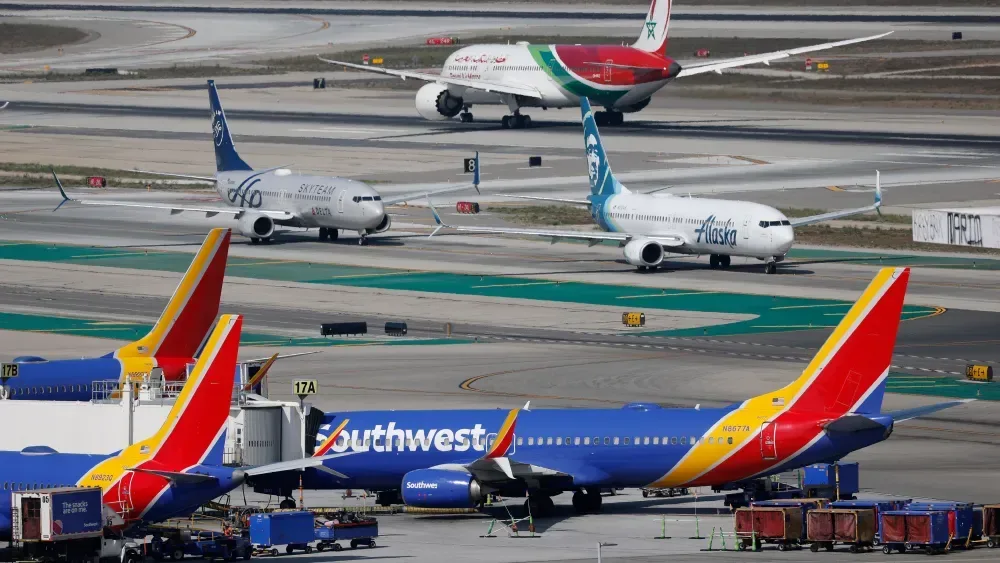
On November 13, the FAA imposed a ground stop after excessive data traffic destabilized communications and radar feeds at 17 of its 22 air traffic control centers. A ground stop is a safety measure that prevents flights from departing while an issue affecting the air-traffic system is addressed. It does not mean every aircraft is suddenly out of control: the FAA said planes already airborne landed safely.
The agency examined two sites during its investigation, one of them an Arkansas facility where a contractor had installed a router. A router is network equipment that directs data between systems. The information currently available does not establish that the router installation caused the failure; it identifies it as part of the investigation.
Flights resumed at 8:15 p.m. that day, though airline interruptions continued beyond the formal resumption. As a precaution, the FAA disabled a function on more than 60 comparable routers and halted additional installations while investigators worked to identify the root cause. The FAA said it had found no evidence of a cyberattack and that the investigation remained ongoing.
Flavor Flav captured the passenger-side reality of the event from Atlanta, posting that the ground stop could last “multiple hours” before signing off in the style of an airport correspondent and handing over, jokingly, to Chuck D at JFK. The post was light in presentation, but it underlined the central problem with an aviation outage: even a temporary interruption can turn schedules into uncertainty for a huge number of people at once.
Jeezy faced a related, practical scheduling decision in Las Vegas. He moved a postponed Friday appearance into a Saturday doubleheader at PH Live, citing fans who had already spent money traveling to the city. In an Instagram announcement, he called it a conscious executive decision to do two back-to-back shows.
Related coverage includes Flavor Flav and Jeezy Respond as U.S. Flight and Tech Outages Disrupt Travel.
That response is an example of how technical incidents escape the technical department. A fault that begins in communications and radar feeds can affect airline crews, concert staffing, ticket holders, hotel reservations and performers. Restoring the affected system is essential, but it does not automatically restore everybody’s original plan.
Other services experienced distinct problems
The aviation disruption arrived in a period that also included problems affecting widely used workplace, financial and consumer platforms. Microsoft’s earlier issue disrupted Outlook and Teams, services used for email, calendars, meetings and workplace collaboration. For people working remotely or coordinating an event, a communications platform failure can be less visible than a cancelled flight but still disruptive: messages, invitations and meeting access may all be caught in the same interruption.
Chase attributed banking difficulties reported on November 16 to a software bug. A software bug is an error in code or in the way a system behaves; it is not inherently evidence of intrusion or malicious activity. The label is important because “outage” describes what users experience, while the underlying causes of different outages can vary substantially.
United Airlines separately experienced an interruption affecting outbound flights. Charles Schwab said its November 17 webpage issue had been resolved and that trading had remained available through other access routes. This is a useful reminder that a company website and its entire service are not necessarily the same thing. In Schwab’s case, the reported web problem did not mean every method of trading was unavailable.
Apple said problems involving iCloud and Apple Pay stemmed from an internal update. An internal update is a change deployed within an organization’s systems or software environment. Updates are an ordinary part of maintaining services, but an ordinary change can still have unexpected effects if it interacts badly with another component or configuration.
The NSA also reported disruption to some internal systems during scheduled maintenance. It said mission-critical capabilities remained operational, including its ability to defend national security. Again, scope is the key word: an interruption in internal systems is not the same claim as a loss of every capability.
Complexity is the common theme, not a proven common cause
Cybersecurity specialist Alex Hamerstone pointed to aging infrastructure and increasing complexity, noting that everything is becoming more technically connected and more complex. That observation fits the broad lesson of the week without erasing the differences among the incidents.
Interconnected does not have to mean that every affected organization uses the same system or suffered the same fault. It means services increasingly depend on layers of networks, software, equipment, access methods and people. Air travel relies on communications and radar feeds; digital payments rely on online services; a live performance relies on people physically reaching the venue. When one layer fails, the effect can appear in another part of daily life.
For players and anyone whose social life runs through apps, that can mean an outage is not merely an inconvenience inside a single program. A down communication tool can interrupt a planned group session. A payment-service issue can complicate a purchase. A flight delay can derail a trip to a show, tournament or family gathering. None of the reported incidents establishes a game-platform outage, but the same dependency on connected services is familiar to anyone who has tried to coordinate online.
It is also why good outage reporting should avoid jumping from simultaneous problems to a definitive theory. The FAA’s findings so far rule out evidence of a cyberattack, not every possible technical explanation; its root-cause investigation is still underway. Chase, Apple, Schwab and the NSA each described circumstances specific to their own service issues. Those details make a single explanation less useful than a careful look at the scope and stated cause of each event.
What people can take from the disruptions
The immediate lesson is not that people can prevent a national aviation or platform failure on their own. They cannot. But there are sensible ways to reduce the impact of smaller service interruptions, especially when travel, payments or time-sensitive plans are involved.
- Check official status information when travel changes quickly. A scheduled departure, an airline app and the situation at the airport may not all update at the same moment. Expect downstream delays to outlast the initial technical fix.
- Keep important plans accessible without relying on one service. Reservation details, venue information and key contact details are more useful if they can be found when email, a cloud account or a payment tool is having trouble.
- Distinguish a website problem from a total service failure. Schwab’s statement that trading remained available through other routes shows why it can be worth checking whether an alternative official access method exists.
- Wait for a confirmed cause before treating an outage as an attack. Technical failures, maintenance problems, software bugs and traffic overload can all look alarming from the outside. The FAA’s continuing inquiry is a good example of why early certainty is often misplaced.
There is a gaming-adjacent reason to care about this beyond the week’s headlines. Modern entertainment depends on the same broad expectation that messages arrive, accounts work, payments clear and people can travel to where they need to be. Even something as straightforward as picking up a new controller can rely on a functioning web storefront, payment system and delivery chain; hardware itself may be local, as with the GC-style Bluetooth gamepad built for Switch, Switch 2 and Windows, but the surrounding services often are not.
President Donald Trump was asked about the outages in Manila and said he was not concerned, describing such events as something that happens when a country is big and powerful. “It’s fine,” he added. For the people delayed at airports or trying to access a service at the wrong moment, the more useful assessment remains narrower: the separate incidents had real effects, the FAA issue is still being investigated, and there is no evidence at present that ties the week’s failures to a coordinated cyberattack.