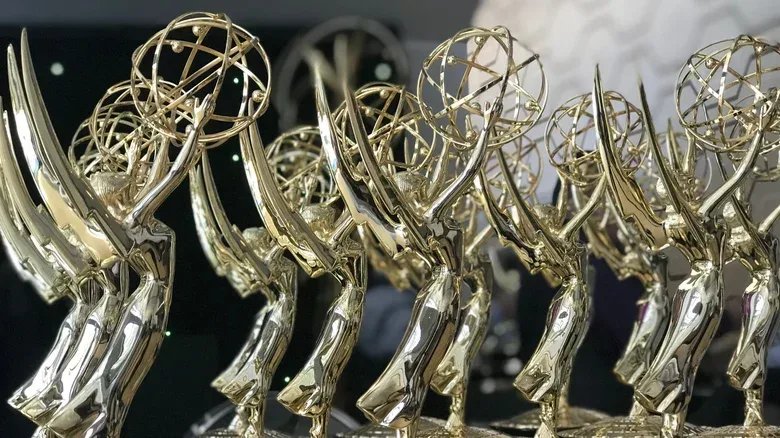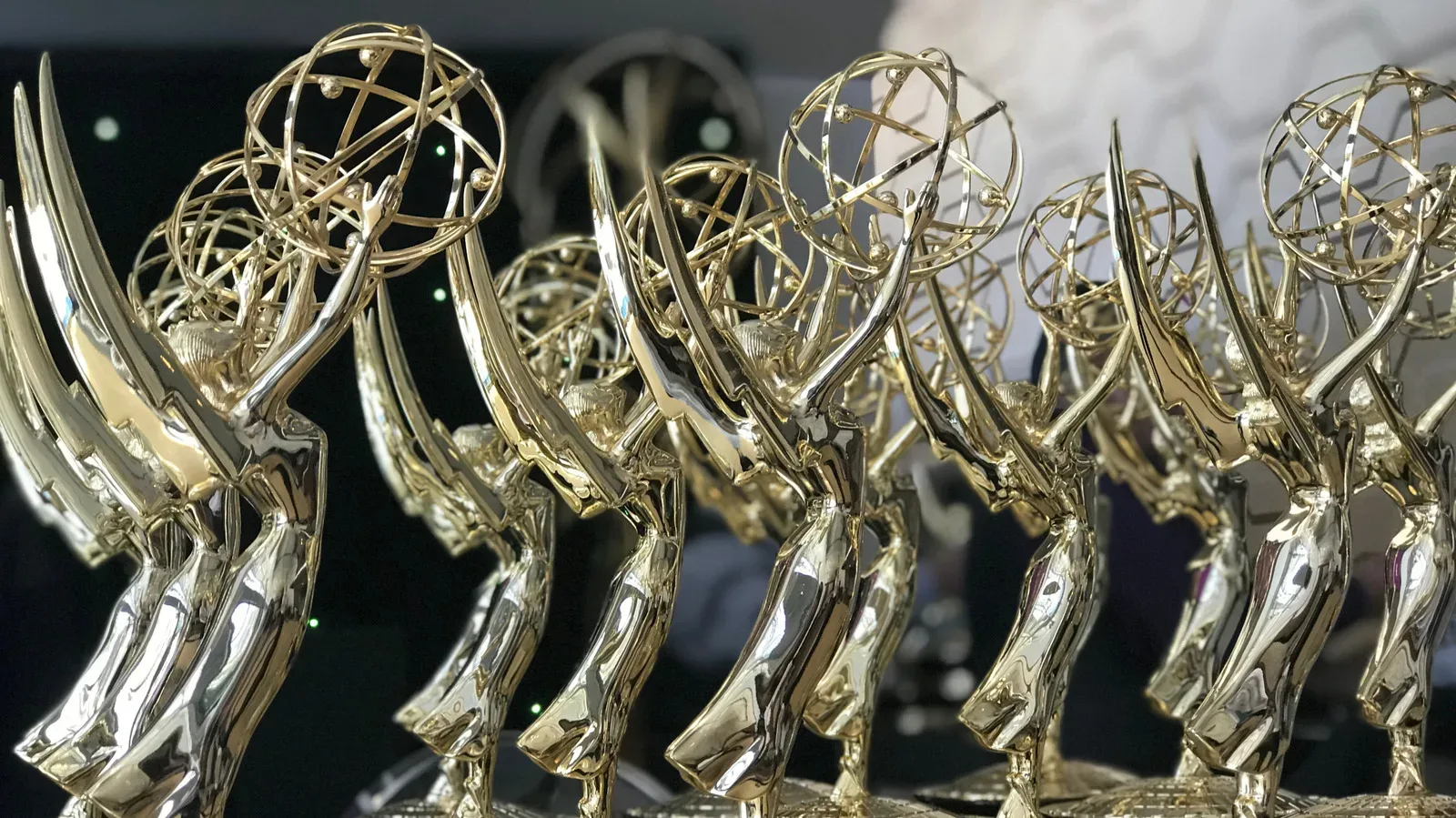
The Emmy Awards are heading to Prime Video in 2027, ending the long-running arrangement in which ABC, CBS, FOX and NBC rotated the job of airing television’s biggest awards ceremony. Under a six-year agreement with the Television Academy, Prime Video will hold exclusive global streaming rights to the main event.
The most immediately important detail for viewers is access: the ceremony is set to stream free on Prime Video across more than 240 countries and territories, with no Amazon Prime membership required. That distinguishes the Emmys from programming locked behind a conventional streaming subscription and gives the ceremony a potentially enormous international audience.
It is also a major symbolic shift. An awards show that celebrates television’s most acclaimed work is leaving the broadcast-network carousel for a streaming-first destination. The move does not mean the Emmys are abandoning the biggest screen in the house; it means the route to that screen is changing. Viewers will use Prime Video rather than tuning into one of the traditional broadcast networks.
What has changed for the Emmys
For years, the main Emmy Awards telecast has rotated annually between ABC, CBS, FOX and NBC. That arrangement tied one of television’s most visible industry events to the linear-broadcast model: a scheduled program, shown by a network at a particular time.
Prime Video’s deal removes that annual rotation starting with the 2027 ceremony. The agreement is exclusive and runs for six years, placing the main telecast in one global streaming home rather than passing it among competing U.S. broadcast partners.
“Exclusive” matters here because it means Prime Video is the designated place to watch the principal ceremony. The reported rights package is global, not merely a U.S. agreement, and its free access is a notable part of the plan. A viewer should not need to pay for a Prime subscription simply to watch the show.
That combination—exclusive distribution, global reach and free viewing—suggests an attempt to keep an event designed around broad cultural visibility from becoming a subscriber-only perk. Free access does not make it a broadcast telecast, but it does lower one of the most common barriers associated with streaming exclusives.
A reported $20 million to $25 million annual rights deal
The financial terms have not been formally detailed in the supplied information, but the annual cost of the main-ceremony rights has been reported in the range of $20 million to $25 million. If that range is accurate across the six-year term, the commitment illustrates how valuable high-profile live cultural events have become to major digital platforms.
Related coverage includes Prime Video Will Stream the Emmy Awards Exclusively Starting in 2027.
In media-rights language, a rights deal is an agreement that gives a distributor permission to carry a program or event, often for a defined period and territory. Exclusive rights mean the buyer is the sole authorized destination for that defined programming package. In this case, the key package is the main Emmy Awards ceremony.
For Prime Video, an event of this scale can serve several purposes beyond the single night of programming. It can bring occasional viewers into the Prime Video app, reinforce Amazon’s position in premium entertainment, and connect the service directly to an awards show whose nominees and winners increasingly emerge from streaming services themselves. Those are practical business implications, not guarantees about how the service will present the show or what future Emmys programming will look like.
For the Television Academy, a worldwide streaming arrangement offers a cleaner international distribution proposition than a deal designed around an American network rotation. The intended availability across more than 240 countries and territories is particularly significant for an awards ceremony with an international audience, industry participants and television fans well beyond the U.S.
The important questions that remain unanswered
The agreement concerns the main ceremony, but it does not settle every Emmy-related viewing question. It remains unclear where the Creative Arts Emmys will be available going forward.
The Creative Arts Emmys are a separate part of the wider Emmy program, recognizing numerous craft and specialty categories. Their distribution matters to nominated artists and crews, as well as viewers who want a fuller picture of television production than the principal telecast can contain. At this stage, there is no confirmed viewing destination in the information available.
Prime Video may also carry other Television Academy programming, with the Hall of Fame ceremony identified as a possible example. That possibility should be treated as just that: potential additional programming, not a confirmed slate or a guarantee that every Academy event will arrive on the service.
There are also ordinary viewer details yet to be specified. The agreement establishes the platform, timing and broad availability model, but it does not establish the show’s presentation, regional interface arrangements, pre-show coverage, companion programming or access workflow. “Free on Prime Video” is a meaningful promise, yet audiences will still want practical information closer to the ceremony about where the stream appears and how it will be offered in their region.
Why the switch fits the television business now
There is a clear irony in the industry’s top television awards leaving broadcast networks. But the change reflects where prestige television has been heading. Streaming platforms have become central players in the awards conversation, not peripheral distributors.
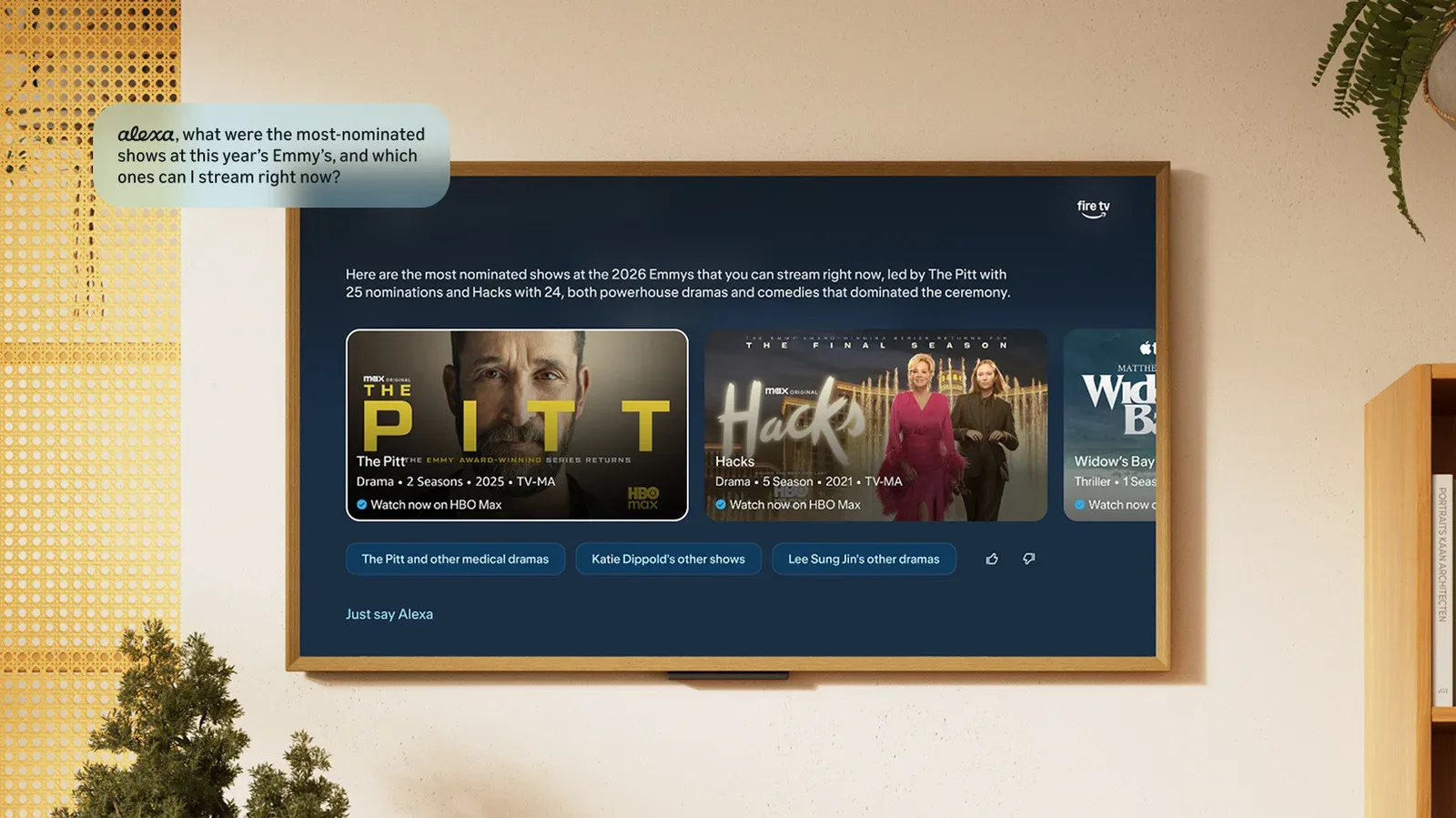
This year’s winners for best drama series and best comedy series, The Pitt and Widow’s Bay, are both streaming exclusives. Those results do not by themselves explain the Prime Video agreement, but they demonstrate the larger shift: the programs being honored, the services funding and distributing them, and the place viewers expect to find them are increasingly tied to streaming.
The Emmys will become the first major entertainment awards ceremony to be shown exclusively on a streaming service. That makes the 2027 switch a meaningful marker in the evolution of awards-show distribution. It is no longer merely that streaming platforms compete for trophies; one of those platforms will now be the only home for the ceremony itself.
The next major benchmark is already visible. YouTube is set to become the exclusive home of the Oscars beginning in 2029. Taken together, the Emmy and Oscar arrangements show that the question is no longer whether streaming services can host major awards shows. The live issue is which platforms will obtain those events and whether they retain broad, uncomplicated public access.
What free streaming may mean for viewers
The lack of a Prime-subscription requirement is the most audience-friendly element of the announced Emmys plan. It gives people who do not currently pay for Prime a stated way to watch the ceremony, while still asking them to use Prime Video’s platform rather than a broadcast channel.
That can be especially useful for an awards show, whose viewers often include people who do not otherwise use a specific service. A drama or comedy can build an audience over weeks or months; an awards ceremony concentrates attention into one shared live event. Keeping that event free gives casual viewers a reason to show up without treating a subscription as the admission ticket.
It also places greater importance on streaming-device readiness. The move arrives as television hardware and platform features continue to evolve, including reported software clues around expanded home-theater possibilities for Apple TV 4K and HomePod surround sound. Those device developments are separate from the Emmy deal, but they underline a simple reality: marquee television events are increasingly experienced through apps and connected-TV ecosystems, not only through a traditional channel number.
There is a distinction worth keeping clear. Free access means viewers are not required to have a Prime membership for the ceremony; it does not turn the event into a conventional over-the-air broadcast. The experience is still streaming-led, which makes internet-connected devices and the Prime Video service part of the path to watching.
The broader stakes for live entertainment
Live awards shows have traditionally been important to broadcast networks because they can create a shared appointment-viewing moment. Their value is not solely the trophies handed out onstage. They gather casts, creators, industry figures and fans around a single conversation as winners are revealed.
Prime Video’s Emmys agreement brings that kind of event to a service already operating within the competitive streaming economy. The move can be read as an assertion that live, culturally recognizable programming belongs in the same strategic conversation as series libraries and original productions.
For the Emmys, the central test will be whether the platform transition preserves the ease and visibility expected of a major entertainment event. The basic terms offer a promising starting point: global scope, no required Prime subscription and a six-year home. Yet the unresolved Creative Arts Emmys question shows that the full distribution picture is not complete.
What is certain is the direction of travel. Starting in 2027, the main Emmy Awards ceremony will no longer rotate among ABC, CBS, FOX and NBC. It will live exclusively on Prime Video, becoming a prominent example of an entertainment institution moving from broadcast’s traditional center to streaming’s global stage.