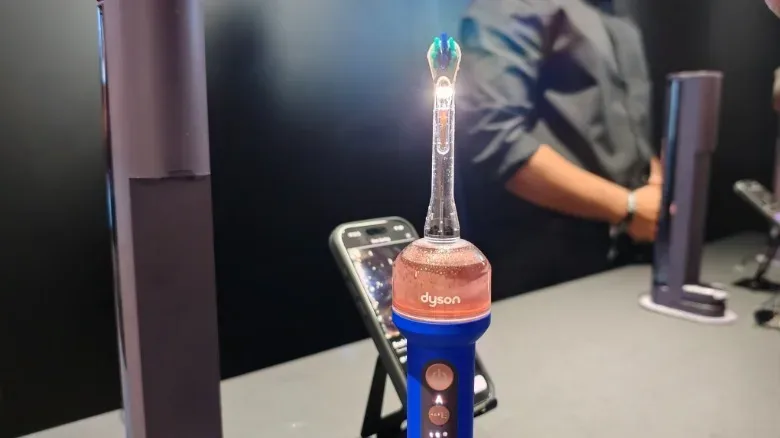
There are product names that immediately explain themselves, and then there is CameraJet, which sounds less like an oral-care device than a gadget a secret agent might use to inspect a volcano. It is, however, Dyson’s newly revealed connected toothbrush and water flosser: a device attempting to combine brushing, interdental cleaning, imaging hardware and app support in one unusually ambitious handle.
Dyson presented the CameraJet around IFA, placing it among the company’s better-known robot vacuums, hair-care equipment and air purifiers. That context matters. The company is not simply adding another electric toothbrush to an already crowded bathroom counter; it is entering a new category with a product built around sensors, software and a distinctly Dyson-ish desire to rethink the conventional appliance.
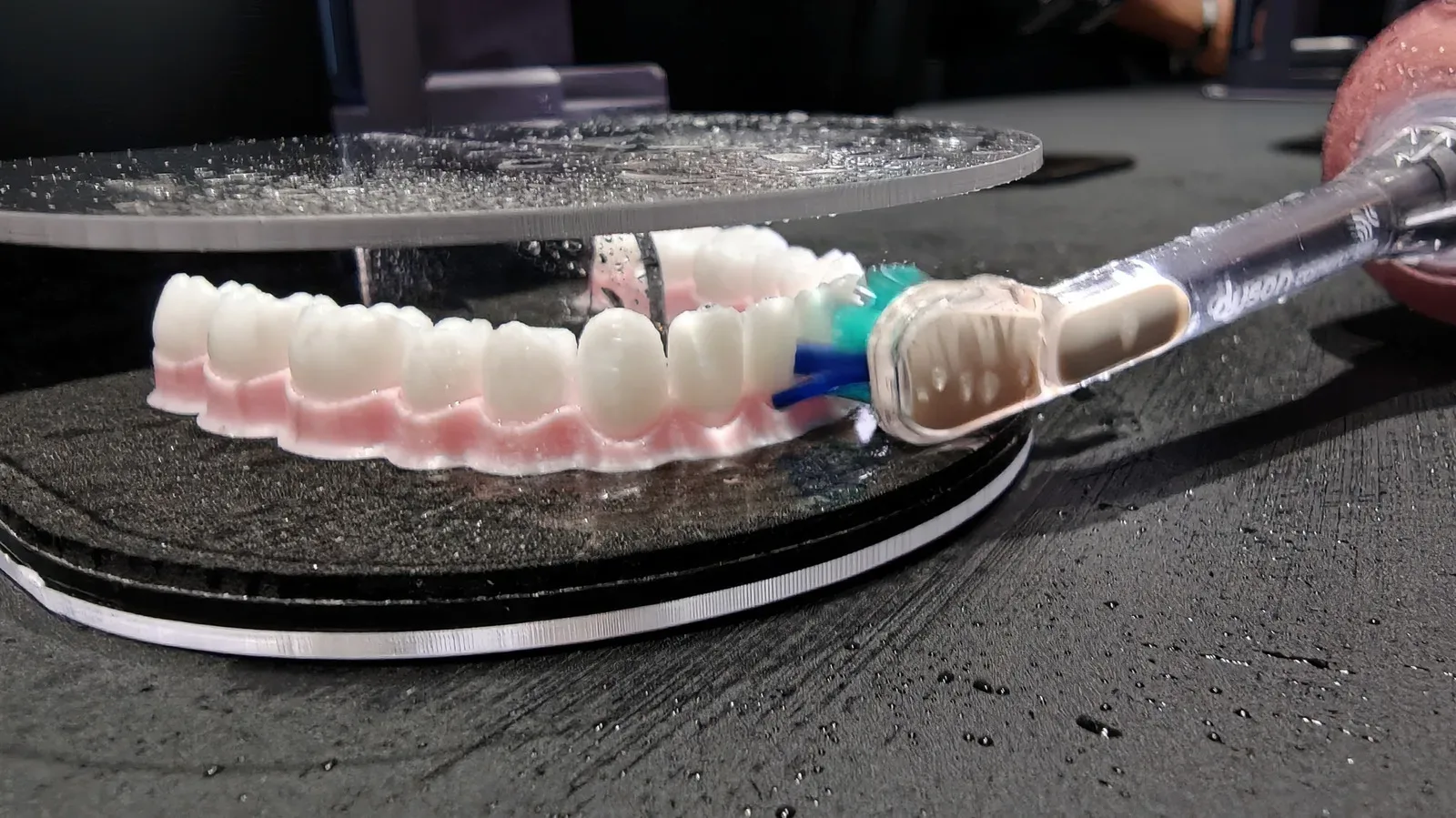
The resulting device may be among the most feature-dense toothbrushes yet shown. Whether all that technology makes the daily ritual genuinely easier is a question that will have to wait for full real-world use. But the fundamentals of Dyson’s approach are already clear: use a camera to identify the gaps between teeth, direct water where it is needed, and let the user see a live view through a companion app.
A toothbrush that does double duty
The CameraJet can operate in brushing mode, flossing mode, or a combined mode that runs both functions together. In broad terms, that places it between an electric toothbrush and a countertop water flosser, but its format is much closer to the former. The aim appears to be making water flossing more portable and less cumbersome than devices that need larger reservoirs and a dedicated place beside the sink.
Its key feature is called Gap Optical Targeting. A built-in 100,000-pixel camera captures and processes 28 images per second, allowing the CameraJet to identify spaces at the gumline and between teeth. It then sends controlled water jets toward those areas. The practical pitch is efficiency: rather than broadly spraying water throughout the mouth, it should use water only when it detects a gap that needs attention.
That selective behavior could distinguish it from familiar water-flossing routines. Anyone who has accidentally started a water flosser before getting it into position knows the genre’s capacity for bathroom slapstick. Dyson’s automatic targeting is designed to avoid immediate spraying merely because the device has been switched on. There is also a manual jetting option, though that understandably carries a greater chance of sending mint-flavored water somewhere it was never meant to go—such as directly into an eye.
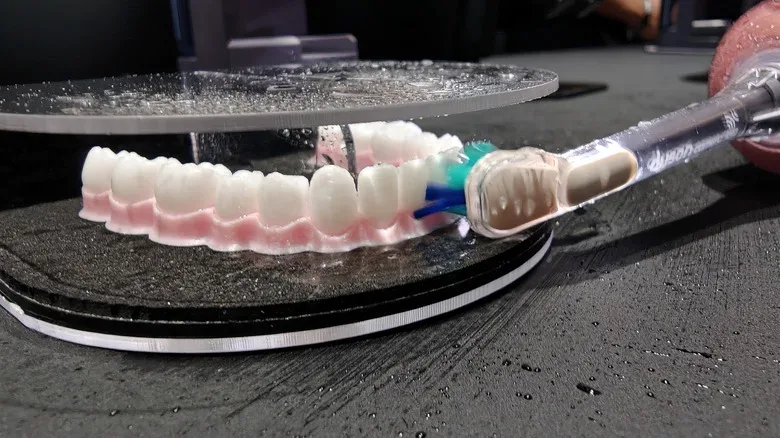
A brief demonstration on artificial teeth suggested that the CameraJet’s compact tank could support at least two passes before needing a refill. That is encouraging for a portable combination device, though artificial dentures are not a substitute for the unpredictable shapes, movement, toothpaste residue and real-life time pressure of an actual morning routine. The device has not yet provided enough evidence to settle how often typical users will need to top it up.
The camera is the point—and the complication
Dyson’s small onboard camera streams a live image to an iPhone running the companion app. The feed has been described as surprisingly clear considering the vibration, motion and water involved, even if it naturally resembles imagery from a medical inspection camera more than something made for sharing in a group chat. That image gives the CameraJet its defining identity: it is not only cleaning, but trying to show people where it is cleaning.
There is obvious appeal in feedback. Many people brush on autopilot, and flossing is the task most likely to be skipped, rushed or performed with the confidence of a speedrunner ignoring optional objectives. A live view could make the otherwise invisible geography of gumlines and interdental spaces more tangible. It might also help explain why the device is targeting a specific point instead of continuously firing water.
It also raises the inevitable question: why is there a camera in my toothbrush? Dyson says the video feed is not processed anywhere beyond its stream to the user’s smartphone, and that it remains private to the user. That is a meaningful reassurance, especially for a connected device designed to look inside someone’s mouth. Still, privacy-conscious shoppers will reasonably want the company’s final documentation to spell out how the app, permissions, storage and connectivity work before treating the feature as a no-brainer.
Connected hardware has taught consumers to ask what happens to data, where it travels, and what functions still work if an app changes years after purchase. Those questions apply here even if the intended footage never leaves the phone. A camera-equipped toothbrush is a very strange little computer, and strange little computers deserve clear answers.
Portability may be CameraJet’s strongest everyday argument
As a standard toothbrush, the CameraJet appears potentially more unwieldy than familiar electric options. That is not hard to imagine: it has to accommodate brushing hardware, a water tank, a camera and a water-jet system. Yet that bulk is part of the compromise behind its most compelling advantage. As a water flosser, it is portable.
That portability is particularly relevant to travelers, frequent overnighters and people whose bathrooms do not have the space—or patience—for another countertop appliance. Dyson has already published guidance covering CameraJet functions, troubleshooting, factory resets and a travel mode. The latter is intended to stop the device from activating in luggage and draining its battery, a small but welcome recognition that baggage is where buttons go to make bad decisions.
Pre-release how-to material does not prove that the product will be effortless to own, but it suggests Dyson has considered life beyond the launch-stage demo. A product with camera targeting, multiple cleaning modes and app support needs clear onboarding. Nobody wants to consult an instruction manual halfway through brushing their molars, particularly before coffee.
The price is likely to be the boss battle
For all of its technical novelty, CameraJet will meet the same obstacle that often shadows Dyson launches: cost. The device is positioned at roughly a couple of hundred dollars more than the priciest Philips Sonicare and Oral-B iO toothbrushes. It does include water-flossing capability, which complicates a straight toothbrush-to-toothbrush comparison, but this is plainly not a budget-minded experiment.
Ownership expenses may extend beyond the initial purchase. Dyson has its own replacement heads, non-foaming toothpaste and specialized mouthwash in the broader CameraJet ecosystem. Other brands can be used for the toothpaste and mouthwash, but replacement-head pricing and availability will be especially important once the product is on the market. Premium appliances are easier to justify when their continuing costs remain understandable rather than becoming a recurring side quest.
There is a bigger market question too. Plenty of people are happy with a conventional electric brush, string floss, or an inexpensive water flosser. CameraJet will need to demonstrate that its imaging and targeted water system provide an advantage worth paying for—not merely an entertaining pile of engineering. The device’s ability to reduce water use, avoid indiscriminate spraying and combine two tools in a travel-friendly form could make that argument. It simply has a high bar to clear.
What remains unknown
At this stage, CameraJet is best understood as an intriguing revealed product rather than a settled recommendation. The demonstration showed its modes, camera feed and targeted jets on fake teeth, but several daily-use questions remain open. How well does the lens cope with toothpaste? Does the camera remain useful with different toothpaste types, including foaming formulas? Does the size feel manageable during a complete routine? How does battery life hold up over time? And how much maintenance does the water system require?
Those are not trivial details. Oral-care gear lives in a warm, wet environment and must be simple enough to use twice a day for months, not just impressive under exhibition lighting. Dyson’s CameraJet is technically fascinating precisely because it puts complicated hardware into one of the least glamorous, most repetitive parts of the day.
For now, it stands as a daring attempt to make a toothbrush behave more like an assisted-aim device: identify the target, deploy a controlled jet, and provide a screen-based view of the action. That may sound excessive, but the best gadgets occasionally begin with a premise that seems absurd until it becomes useful. CameraJet still has to prove it belongs in the bathroom rather than the novelty-tech drawer. Until then, collectors of oddball future-facing hardware can enjoy the thought that the next arms race in smart devices may be happening at the gumline.
For a reminder that not every gadget purchase needs to turn into a long campaign, see The Collector’s Five Stages of Buying One Small Thing. The CameraJet, admittedly, is unlikely to qualify as a small thing in either price or ambition.