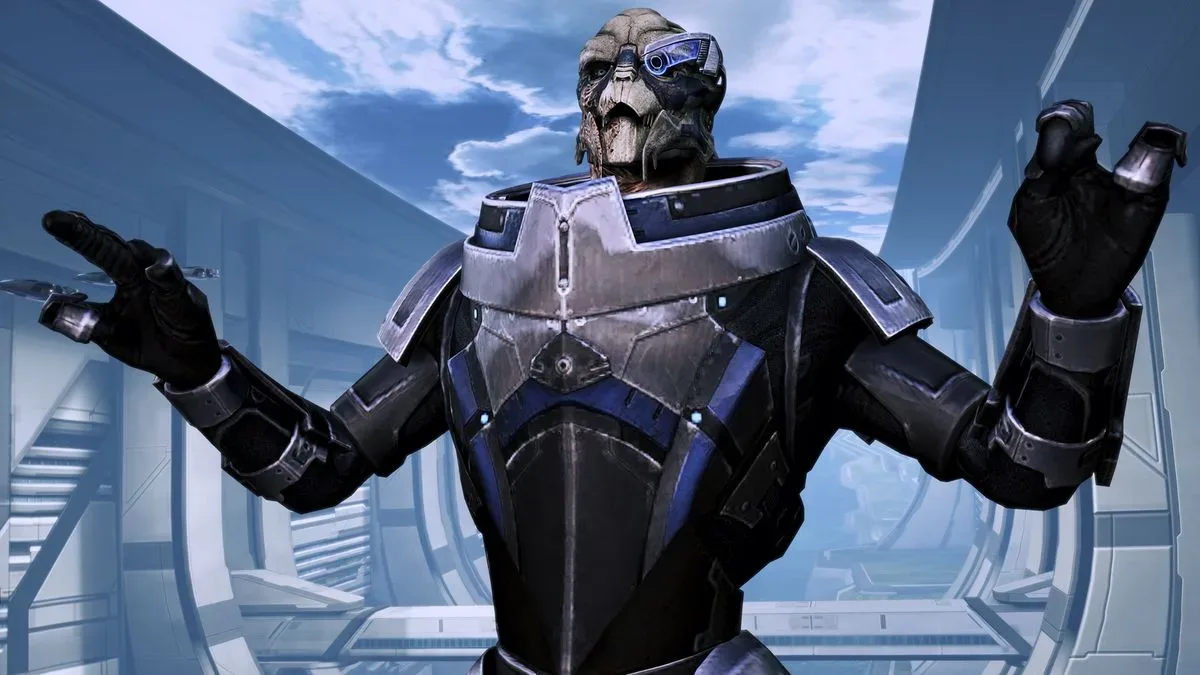
BioWare’s reported closure and the cancellation of Mass Effect 5 have revived a painful question for players and developers alike: what, exactly, is lost when a studio is dismantled?
For Greg Zeschuk, BioWare’s co-founder and former general manager, the answer is not simply a brand name, an office, or an individual project. It is the accumulated practical knowledge of people who have learned how to make games together. Speaking after the closure, Zeschuk challenged what he described as a misguided assumption among decision-makers: that a successful development team can be reconstructed with interchangeable hires and artificial-intelligence tools.
“There’s this weird belief that you can just kind of recreate great games with random people and AI. It doesn’t work.”
The remark comes amid a difficult period for EA and its studios. The company was taken private through a $55 billion acquisition involving Saudi Arabia’s Public Investment Fund, Affinity Partners, and Silver Lake. Less than three months after that deal closed, BioWare’s shutdown and the end of Mass Effect 5 became a particularly stark example of the disruption that employees had feared.
For fans, the immediate disappointment is straightforward: there is no longer a new Mass Effect installment moving forward at BioWare. But Zeschuk’s comments point to a wider industry issue. Games are made through specialized, closely connected work: design, writing, art, engineering, production, quality assurance, audio, and many other disciplines must repeatedly coordinate over a long development cycle. Removing experienced people does not merely reduce headcount. It can erase the hard-won context that lets a team recognize problems, communicate efficiently, and turn broad creative ambitions into a finished game.
Why a studio’s experience is more than a staff list
BioWare has long been associated with role-playing games built around characters, choice, and expansive fictional settings, including Dragon Age and Mass Effect. That kind of work is especially dependent on institutional knowledge: the informal understanding of how a team approaches narrative branches, technical constraints, production handoffs, feedback, and the countless compromises that occur while a game is being made.
Institutional knowledge is the useful experience held by a group rather than stored neatly in a document. It can include knowing why an old technical decision was made, which production risks tend to appear late, how one department’s change affects another, or what a particular audience expects from a franchise. Some of that knowledge can be documented. Much of it is learned by working through real deadlines and problems with colleagues.
This does not mean that every person at a studio must remain forever for games to improve, nor does it suggest that new developers cannot make excellent work. Fresh perspectives are valuable. Zeschuk’s point is narrower and more practical: a team is not a collection of slots that can be emptied and refilled without consequences. The connections between experienced contributors matter.
Related coverage includes BioWare Co-Founder Warns Studios Cannot Replace Game-Making Experience With AI.
That is why major layoffs and closures can have effects that outlast the immediate news cycle. People may find other work, start new teams, or leave the industry. Yet the original group’s shared process and accumulated familiarity do not automatically reappear under a different corporate structure. A famous intellectual property can remain owned and recognizable while the people who knew its most recent development challenges are gone.
That distinction is central to the uncertainty now surrounding both Mass Effect and Dragon Age. A franchise can survive on paper, but continuing a project already in development is different from simply possessing the right to use a title. Former BioWare employees have reportedly been pessimistic about the prospect of EA selling the series so another studio can continue what had been started on Mass Effect 5.
Zeschuk’s criticism of executive distance
Zeschuk left BioWare in 2012 and said he had needed to emotionally separate himself from the company years ago. Even so, he characterized the acquisition as the “final nail in the coffin” for the studio and expressed concern about the treatment of developers across the business.
His criticism was aimed at a perceived divide between corporate leadership and hands-on development. In his view, people who follow a business path at large companies often have not personally made a game from beginning to end, even a small one. That absence of direct experience, he argued, can produce a weak understanding of how development actually works.
“Because none of these people have ever made a game, like, never really sat and made one, like, from start to finish, even a small thing, they just don’t know how it works.”
The claim should not be read as saying that every executive needs to be a programmer, artist, or designer. Large studios need finance, operations, legal, publishing, marketing, and leadership expertise. The practical issue is whether business decisions fully account for the realities of building a game: uncertainty, iteration, specialized labor, creative collaboration, and the cost of losing continuity during development.
Game production is not a simple assembly line. A feature may look promising in planning, expose technical limits during implementation, require revision after testing, and affect story, interface, performance, or accessibility along the way. A decision that appears efficient on a spreadsheet can create additional work if it breaks the relationships and context required to solve those interlocking problems.
The criticism also lands at a moment when employees have reportedly described EA leadership as disconnected from both staff concerns and the development process. The debate is not unique to EA; gaming audiences have similarly questioned senior industry appointments that prioritize broader technology or business credentials over direct game-making experience. Zeschuk’s remarks put the focus less on résumés alone and more on whether leaders understand the work their decisions reshape.
What the AI argument does — and does not — mean
Artificial intelligence is at the center of this discussion because anonymous EA developers have reportedly said AI tools are being pushed within the company. Those accounts say use of the tools is not formally mandatory, but that employees could find it extremely difficult to do their jobs without them. Managers were also reportedly telling staff that AI is the future and that they need to get onboard. The same reports described morale at the publisher as terrible.
It is important to separate a tool from a staffing strategy. AI tools is a broad term that can cover systems used to generate, summarize, organize, analyze, or assist with work. Zeschuk’s objection is not presented as a claim that no AI-assisted tool can ever be useful. Rather, it is a warning against treating AI as a substitute for the people and shared experience needed to create a great game.
That difference matters. A tool can speed up a discrete task without deciding what the game should be, resolving a difficult design tradeoff, understanding a long-running series’ creative identity, or maintaining trust among a team under pressure. Even when a tool produces material quickly, developers still need to assess whether it fits the project, works technically, supports the intended experience, and creates new downstream problems.
For players, the concern is ultimately about accountability and craft. Who understands the game’s systems well enough to make a judgment call? Who can identify when a familiar franchise is losing its identity? Who remembers a previous solution, or why it was rejected? And who has the authority and time to fix a problem rather than merely generate more output?
Those questions cannot be answered by treating an AI system as a replacement for experience. They also cannot be solved by assuming every developer is interchangeable because their role has a familiar title. Two teams with the same number of employees can possess very different levels of shared context, trust, and ability to navigate a project’s unresolved problems.
What BioWare’s closure means for Mass Effect and Dragon Age
There is understandable fan interest in preserving Mass Effect, including efforts urging that the series be saved. But no confirmed path for the property’s future is established here. The cancellation of Mass Effect 5 means players should be wary of reading hope, petitions, or franchise recognition as evidence that another developer will automatically pick up the existing work.
Continuing a game after a studio closure can involve far more than transferring a logo and a concept. Work in progress can depend on internal tools, unfinished systems, production decisions, and knowledge spread among people who are no longer on the project. A new team could potentially approach the series differently in the future, but that would not necessarily be the same as resuming the canceled game as it stood.
The wider backdrop also makes the moment feel especially fraught. Reports have said that the Mass Effect 5 team had toned down inclusivity with EA in mind to avoid causing offense. Alongside the closure, that claim raises further questions for fans about how much creative direction may have been shaped by corporate pressures before the game was canceled. It should remain a reported claim rather than a settled account of the project’s final direction.
For a reminder that game-industry conversation is often spread across very different kinds of projects and concerns, recent coverage has also followed a Final Fantasy 14 keyboard-brawler issue involving umlauts and cheating concerns. BioWare’s situation, however, is on a different scale: it is a story about a studio’s closure, a canceled sequel, and the people whose experience will not be easily reconstructed.
The practical lesson behind the anger
Zeschuk’s comments resonate because they challenge a convenient corporate idea: that creative production can be made more efficient simply by replacing people, centralizing decisions, and adding new technology. His argument is that development experience is not an optional extra that arrives after a team is assembled. It is part of what makes a team capable of delivering the work at all.
For publishers, the lesson is not that change is impossible or that technology has no role in game development. It is that cost-cutting and AI adoption have practical limits when they disregard the human systems that make games possible. For developers, it reinforces why layoffs and closures are not just temporary business adjustments. They can destroy years of expertise, working relationships, and creative continuity.
And for fans of Mass Effect and Dragon Age, the loss is bigger than one canceled release. The uncertainty now lies in whether the knowledge behind those worlds can be carried forward in a meaningful way—or whether the industry will keep learning, too late, that a beloved studio cannot be recreated by treating its people as replaceable parts.