DoorDash is preparing to bring its food-delivery network into the low-altitude airspace above Northern California. Chipotle and Popeyes are among the first restaurant partners for DoorDash Air, the company’s drone-delivery program, which is planned to begin in that region.
The announcement is less a promise that every burrito bowl will now arrive from the heavens than a look at how DoorDash sees drones fitting into its wider logistics system. The company says roughly 80 percent of restaurant orders available through its platform are small and light enough to qualify for drone delivery. That is a large theoretical pool, but the company also says an automated delivery-management system will decide which individual orders are suitable for air transport.
That distinction matters. A delivery being physically light enough to carry is not the same as it being an appropriate drone delivery. DoorDash says the system will weigh ground traffic, weather conditions and projected flight time. In practice, the drone is being positioned as one possible delivery route rather than a replacement for every Dasher trip.
What DoorDash has said about the aircraft
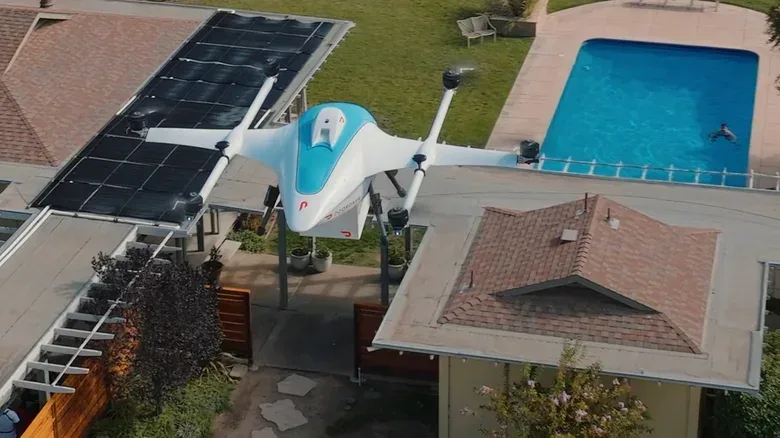
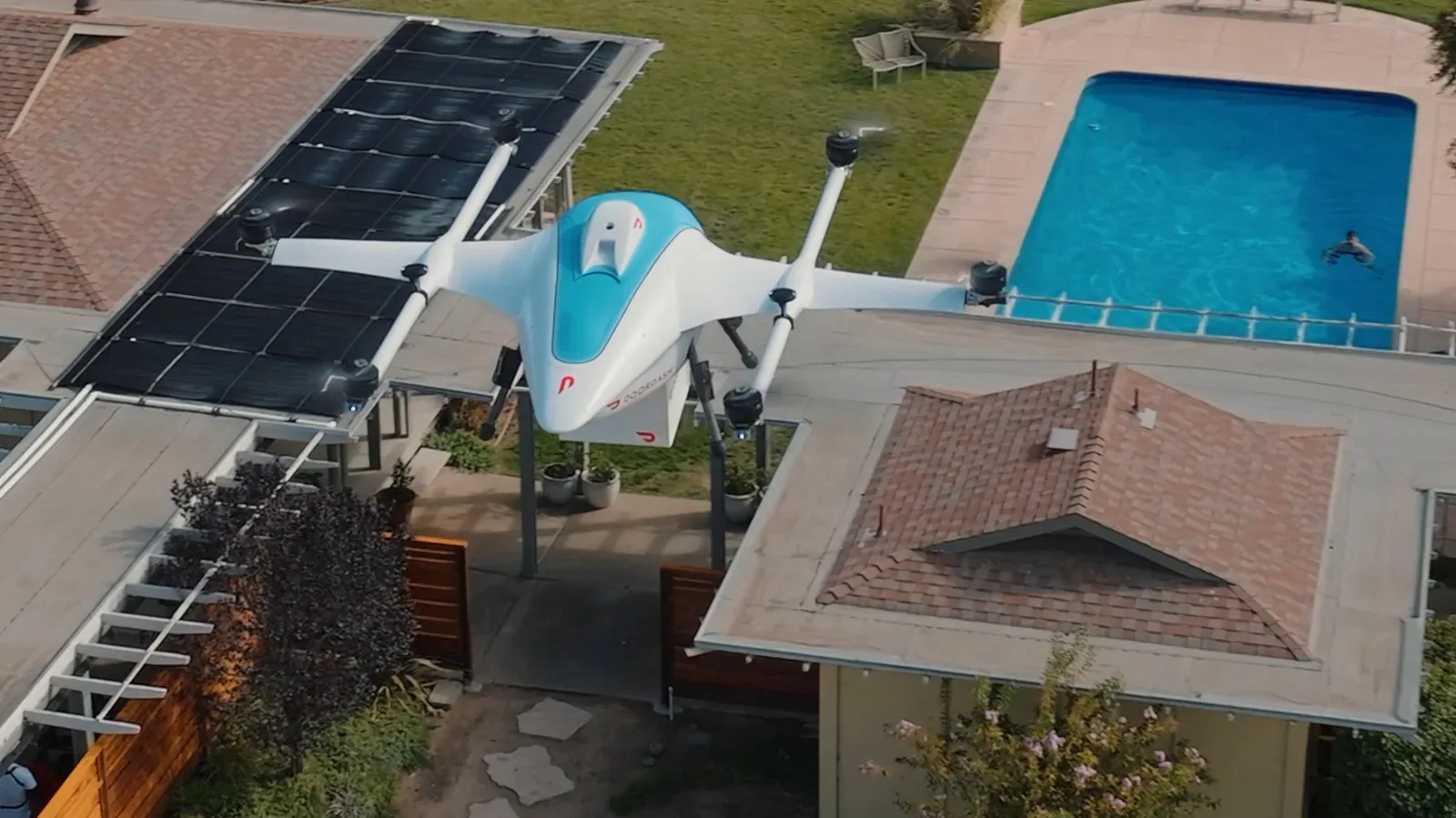
DoorDash described its drone as having six propellers. It also says its cruising sound at delivery height is comparable to that of a passing car. Noise is a central practical issue for delivery aircraft because the service operates close to homes, businesses and people going about their days. The company says it designed the drone to fit the communities where it intends to operate.
For more context, explore The CW at 20: How Nexstar Rebuilt a YA Drama Network Around Live Sports, Procedurals and Game Shows.
Six propellers do not, by themselves, explain every detail of how the aircraft operates, its range or its payload limit; those specifics were not provided. But the configuration is an important part of the company’s description because it signals that DoorDash is discussing a purpose-built delivery aircraft rather than simply treating the drone as a novelty attached to its ordering service.
For customers, the more consequential detail may be the company’s estimate from initial testing: restaurant-to-door delivery times averaged under five minutes. That is an estimate based on early tests, not a guarantee for every delivery. Weather, routing decisions and whether a particular order is selected for aerial transport will all matter. Still, the figure explains the appeal of the concept: a direct airborne route can avoid portions of the street-level delay that define conventional food delivery.
What “delivery management system” means here
A delivery-management system is the software layer that assigns and coordinates orders. DoorDash says its system will consider traffic, weather and flight times when determining whether an order should travel by air. Rather than asking a customer to make the operational call, the platform is designed to evaluate the conditions behind the order.
Ground traffic is the clearest factor. If roads are congested, the difference between driving a meal across town and flying it directly may be substantial. Weather creates the opposite kind of check: even a fast aerial route is only useful when conditions allow it. Flight time, meanwhile, helps the system compare the expected aerial journey with alternative ways of fulfilling the order.
That framing makes DoorDash Air a logistics product first. The drone is the high-visibility hardware, but the real decision point is the platform’s ability to match an order with a viable delivery method. It is also why the company’s 80 percent estimate should be read carefully. It identifies how many orders may fit the size and weight profile, not how many will ultimately be delivered by drone.
Why the early restaurant partners matter
Chipotle and Popeyes give the initial program recognizable restaurant names, but their role is more meaningful than branding alone. Drone delivery needs orders that fit within the aircraft’s limits, can be prepared quickly enough for a fast handoff and can be dispatched through a coordinated ordering workflow. DoorDash has not detailed item-level eligibility, delivery zones or which locations will participate, so customers should not assume that every order from either chain will be eligible when the program begins.
The company’s statement that a substantial share of its restaurant orders are small and light suggests that many everyday meals could fit the broad profile. Yet a multi-item family order, a large drink-heavy order or any delivery affected by poor conditions could reasonably be handled another way. The important practical point is that drone delivery is likely to be conditional: availability will depend on the order and the operating circumstances, not merely on whether a customer lives near a participating restaurant.
For participating restaurants, the potential upside is speed on well-suited trips. For customers, it could mean that short, lightweight orders arrive quickly when the system finds a workable route. The company’s stated average of under five minutes from restaurant to consumer door is particularly striking in a category where travel time can dominate the experience. But it remains an early-test estimate, and DoorDash has not supplied enough operational detail to treat it as a universal service standard.
A broader push to make ordering less app-bound
DoorDash Air was announced alongside changes that extend beyond drones. On Apple devices, DoorDash is allowing customers to place orders through the Messages app instead of requiring the DoorDash app or website. The feature builds on the company’s Ask DoorDash assistant and is set to be available in the United States initially, with a waitlist available.
The change is notable because it shifts ordering into a place many people already use for conversations. It does not eliminate the delivery platform behind the transaction; rather, it adds another front door. The app, website and Messages can be understood as different interfaces to the same delivery network. A text-based ordering option may be useful for customers who prefer a conversational prompt over navigating menus in a separate app.
DoorDash is also extending that interface idea to businesses. Companies will be able to connect DoorDash to their internal apps and AI agents for tasks such as organizing team lunches and replenishing needed items. An AI agent in this context is software that can work through a task or workflow on behalf of a user or business. DoorDash has described potential uses, but has not detailed exactly how every internal system or agent will connect.
Together, the text-ordering and business-integration plans point to a wider ambition: DoorDash wants ordering to happen where a customer or business is already doing work, not only inside its own consumer-facing destination. The drone initiative follows the same broader logic on the physical side. One is about reducing friction before an order is placed; the other is about selecting a potentially faster path after it has been prepared.
Retail delivery and a paid returns option
Food is not the only category DoorDash is adding. Macy’s, Anthropologie, The North Face, Vans and Timberland are joining the DoorDash Marketplace, bringing clothing, footwear and beauty offerings further into the platform’s delivery catalog.
Those additions illustrate how the company is widening the types of errands it can handle. A restaurant meal is usually immediate and perishable. Apparel and footwear are different purchases, but they still benefit from a marketplace that can bring items to a customer. The expansion also places more attention on the other half of retail ordering: returns.
DoorDash says customers will be able to send items back through its Dasher Returns service for a flat $8 fee. This is a separate service proposition from drone delivery and no connection between the return option and DoorDash Air has been stated. The fee is straightforward, but customers will still need to assess whether the convenience is worth $8 for a given item and return situation.
The broader picture is a delivery company experimenting across several layers at once: a six-propeller aircraft for certain lightweight restaurant orders, Messages-based ordering on Apple devices, internal business connections and a wider retail marketplace with a paid return route. Northern California will be the first test area for the drone program, with Chipotle and Popeyes among the initial partners. The service’s key question is not whether a drone can make a quick trip in ideal conditions; DoorDash’s own approach suggests the real test is whether its software can consistently identify the situations where flying an order is the sensible option.
That makes DoorDash Air’s most interesting feature its selectivity. The company is not presenting the sky as a universal shortcut. It is presenting aerial delivery as one tool in a network that must account for the size of an order, the weather outside, traffic below and the expected time to a customer’s door.