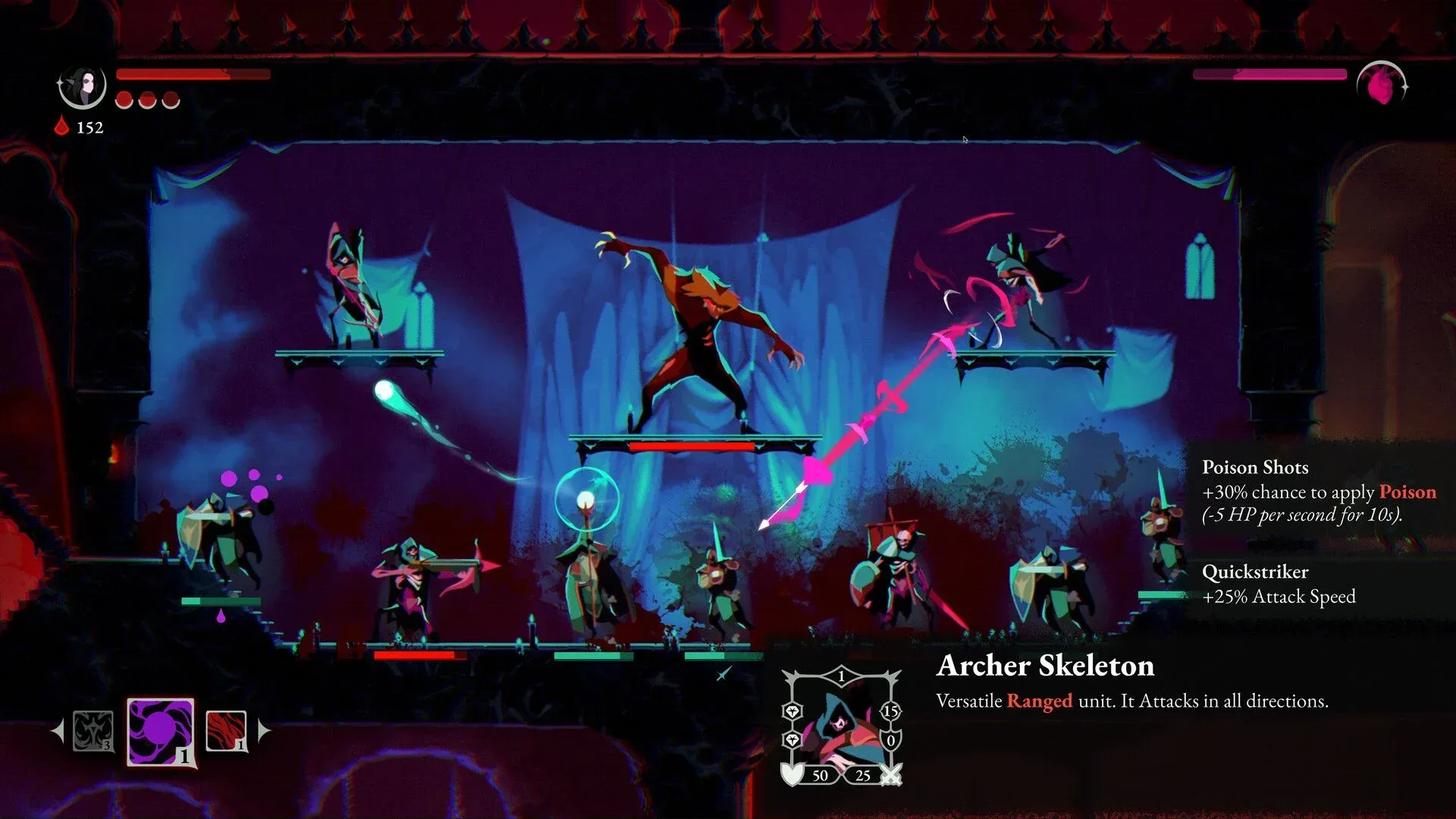
Digital Sun is changing how players will get their first chance to try ReVamp. The developer had planned a broadly accessible Steam playtest for the forthcoming game, but will instead begin with a substantially smaller test through its Discord community. The stated reason is concern over recent reports of games being reverse-engineered, cloned and put online before their original releases.
ReVamp is described as a “tower defensevania” and a Dracula-based base-builder. It is not due to launch until March 2027, making the protection of an early playable build especially important to the studio. Players who requested Steam access have been told that a wider public playtest is now hoped for around January, while registration for the Discord test remains open ahead of October 29.
The decision puts a sharp focus on an uncomfortable trade-off for independent developers: public tests can build an audience, reveal technical problems and collect useful feedback, but every distributed build also gives outsiders access to material that may be unfinished, commercially sensitive or vulnerable to misuse.
A smaller test instead of a Steam-wide opening
Digital Sun thanked players who had signed up for the Steam test, while explaining that the team had chosen a more contained Discord rollout first. That is a meaningful change in scale rather than simply a change in where participants click to download. A broad Steam test can expose a build to a far larger group quickly; a controlled community test allows a studio to select or manage access more closely.
That does not make a Discord build impossible to copy, inspect or redistribute. It does, however, reduce the immediate distribution footprint and may give the developer more oversight of who is participating. For a project still far from release, that narrower circle can be a practical way to gather early impressions without making a build as widely available as originally intended.
For players, the immediate consequence is straightforward: those who expected automatic or wide Steam access may have to wait for the proposed January public window. Anyone interested in the earlier, limited test needs to follow Digital Sun’s Discord sign-up process before the stated deadline.
Why playable builds are a different kind of exposure
A trailer, screenshots or a written description can communicate a game’s premise, but a playable build contains interactive systems and implementation details. It has to run. That distinction matters when a studio is worried about imitation or unauthorized reconstruction.
Reverse engineering generally means examining a compiled program—software that has already been transformed into a form computers can execute—to understand how it works. Decompilation is an attempt to turn that compiled form into code that humans can read and modify. Neither term means a perfect recovery of a developer’s original project files, comments or design intentions. But a successful reconstruction can provide enough understanding to reproduce systems, behavior or structure.
Related coverage includes ReVamp Public Playtest Scaled Back as Digital Sun Cites AI Cloning Fears.
The concern raised around Anthropic’s Claude Opus is that newer AI tools may make portions of that work faster or more accessible than they were for a determined specialist working manually. Digital Sun’s decision is based on reports of games being reconstructed and published online in playable browser form. The key risk is not merely that an early build leaks, but that its underlying play loop or technical behavior could be repackaged before the official game arrives.
That possibility is particularly troubling for smaller teams. An early demo is often one of the main tools available to explain a new idea to players who have never heard of the studio. Yet the same demo may now be seen as handing over a useful reference point to anyone attempting an unauthorized clone.
What developers lose when they cannot show games early
Digital Sun’s statement recognizes the stakes beyond one project. Early public exposure is how many independent games find the people who might follow them through development, share the project with friends or eventually buy it. A playtest can also turn a vague pitch into something tangible: players can test whether a game’s controls make sense, whether its systems are readable and whether its central hook is compelling.
Public testing is not just marketing. It can provide feedback that a closed internal team may miss. Players approach games in unexpected ways, encounter edge cases and communicate where instructions or interfaces are unclear. A team can decide which feedback to act on, but it first needs enough people playing to surface those issues.
Restricting a test therefore has costs. Fewer participants can mean less varied feedback. It may slow the spread of word-of-mouth. It can also make a community feel excluded when it had already registered for an expected public opportunity. Digital Sun apologized to people who requested Steam access, an acknowledgement that the new approach affects an audience that was ready to take part.
Still, delaying broad access may be rational if the studio believes the downside of a copied or reconstructed build now outweighs the early-test benefits. This is not necessarily a permanent rejection of public demos; Digital Sun says it hopes to open the public playtest around January. It is a shift in timing and in the level of control during a more vulnerable phase.
Demos and playtests do not carry identical risk
The current anxiety does not mean every demo presents exactly the same exposure. A demo is normally a bounded slice of a game. A playtest can be broader, potentially containing more systems, content or technical structure for participants to examine. Digital Sun’s move suggests that the size and scope of a distributed build are becoming central questions in release planning.
Alliance Arts, the developer of Drunken Goddess Reflux, has also canceled plans for a Next Fest demo over the same technology concerns. At the same time, Steam’s Next Fest is still set to contain more than 8,000 demos, a figure said to be double the number in March’s event. The contrast is important: public demos remain a major part of the PC game ecosystem, but at least some developers are reassessing the risks of participation.
The practical distinction is not simply “demo safe, beta unsafe.” An early build’s exposure depends on what is included, how long it is available, who can access it and how easily it can be copied once downloaded. A time-limited test can be removed from an official store page, but removal does not necessarily undo distribution if participants have already obtained the software.
What a controlled playtest can and cannot solve
A smaller Discord test is best understood as risk reduction, not a complete technical shield. Limiting participants can make access less frictionless and can create a more manageable feedback group. It may also allow a studio to respond faster if it sees unexpected distribution or other problems.
But a developer cannot assume that community membership itself secures a build. Any arrangement that gives players executable software requires trust and carries some chance of copying or redistribution. The point of a staged rollout is to avoid the largest possible exposure while the studio judges the situation, rather than to promise total prevention.
For the industry, the difficult issue is whether platforms can offer stronger protection without stripping away the openness that makes events, demos and community testing worthwhile. Digital Sun specifically called for platforms to keep strengthening protections for original work. Its request reflects a broader concern: developers need ways to let genuine players discover and help improve a game without turning early access into an unacceptable business risk.
That question fits into a wider industry conversation about how studios protect work in progress while maintaining sustainable development and audience relationships. Sustainable development pressures are already shaping how teams approach their projects; potential AI-assisted cloning adds another complication to decisions that were once primarily about scheduling, quality assurance and promotion.
What to watch next for ReVamp
The next concrete milestone is the Discord playtest sign-up deadline of October 29. Digital Sun has not presented the Discord phase as the final form of testing: its current plan is to seek a public playtest around January. As with any development plan, that timing remains a stated intention rather than a guarantee.
The more consequential development may be what happens after this first restricted test. If Digital Sun can collect worthwhile feedback while keeping the build within a smaller group, other studios may view staged access as a more attractive option. If fears of reverse engineering and rapid cloning continue to influence demo plans, public playtesting could become less automatic—especially for games that rely on a distinctive mechanical premise before launch.
For now, ReVamp is a clear example of a changing calculation. Digital Sun still wants players involved before release, but it is choosing a narrower first step. The studio’s challenge is the same one facing many independent creators: get seen early enough to build a community, while keeping the work protected enough to reach the audience in its intended form.