Even on Arrakis, where every drop of water matters, the most precious resource in game development may be a prompt reply from the people who own the universe you are borrowing.
Funcom chief creative officer Jon Bylos has described how the studio handles approvals for Dune: Awakening, the survival game set in Frank Herbert’s science-fiction world. The process is notable less for grand creative showdowns than for its practical machinery: proposed work is submitted through Jira, Legendary provides a decision within an agreed window, and an escalation follows if that window passes without an answer.
There is, however, one wonderfully human wrinkle in that orderly system. Denis Villeneuve, who directed the two Dune films produced by Legendary, at one point felt that the title Dune: Awakening “could be a little too close to Star Wars.” Funcom kept the name, and Bylos says the relationship has since become a strong collaboration built on trust.
That is a small anecdote with a large implication. A licensed game is not simply a studio placing familiar names and imagery into its own design. It is a continuing negotiation over what belongs in a fictional world, what fits its established tone, and who has the authority to make the final call.
A title can carry more baggage than it seems
Villeneuve’s observation was not presented as a demand to rename the game, and there is no indication that it stopped the project. Still, it illustrates why titles are unusually sensitive in major entertainment properties.
“Awakening” is an evocative word: it suggests discovery, change and a major force coming into view. But it is also a broad piece of genre language, and associations can matter as much as literal meaning when a game sits beside an enormous film franchise. The concern appears to have been about the title’s perceived echo rather than a claim that the words were identical or that Dune: Awakening was not distinctly Dune.
Funcom ultimately proceeded with the name. That decision signals that creative discussion in a licensed project does not necessarily mean a veto. Consultation can identify a potential concern, let participants weigh it, and still end with the developer’s original choice intact.
It is also a reminder that a game title does several jobs simultaneously. It has to communicate the property, establish an identity of its own, suit the kind of game being made and remain usable over years of marketing, updates and community discussion. A survival game expected to continue growing needs a name that can carry more than a launch moment.
Related coverage includes Denis Villeneuve Once Worried Dune: Awakening's Name Was Too Close to Star Wars.
What Jira has to do with the sands of Arrakis
The strikingly ordinary answer is: quite a lot. Jira is project-management software commonly used to organize work through individual records often called tickets or issues. A ticket can document a request, assign responsibility, track its current status and preserve the discussion or decision attached to it.
In Funcom’s case, Bylos says the studio submits material to Jira for Legendary’s approval. If an answer does not arrive within the intended time, the request is escalated. That sounds far removed from sandworms and spice, but it is a meaningful production detail.
Game development involves interdependent work. An artist, designer, writer, audio team or marketing group may be waiting on a decision before their own work can safely continue. When an outside approval is needed, uncertainty can spread outward: assets may need to remain provisional, a related feature may be delayed, and scheduling becomes harder to predict.
A documented approval route cannot eliminate those pressures. It can, however, make responsibility clearer. The team knows what is awaiting review, who needs to respond, when the request was sent and when it should be raised again. This is what Bylos means by an automated process that generally runs solidly: not that creative approvals are decided by a machine, but that the handoff and follow-up are structured rather than left to a chain of ad hoc calls.
That distinction matters. A ticketing system is not an artistic authority, and it does not decide whether a proposed idea feels like Dune. Its value is operational. It gives a large collaboration a shared place to record and move decisions.
For more on how production-focused technology is being positioned across screen media, see this look at a proposed production-intelligence layer for film and TV. The tools and claims differ, but the underlying need is familiar: creative work gets harder to coordinate as more teams, stakeholders and deliverables become involved.
Who is involved in Dune approvals?
Most requests can go directly to Legendary for a yes-or-no decision, Bylos says. Legendary holds the movie license and produced Villeneuve’s two films based on Herbert’s novels so far. That makes it the regular approval partner in the workflow described by Funcom.
Some matters take a different route. Bylos says the studio is occasionally directed to Herbert’s estate or to Villeneuve for guidance or input. The existence of multiple potential reviewers is unsurprising for an adaptation with several creative and rights-related interests, but it does not mean every request goes through every party. The account instead describes Legendary as the usual stop, with other consultation reserved for particular cases.
That structure helps explain why trust is such a valuable asset. A project with many possible stakeholders can become sluggish if every contribution is treated as unproven or every decision requires a fresh negotiation about basic intent. Bylos’s view is that, once trust has been established, the mechanics of the process become less central than the confidence that each side is protecting the intellectual property.
Intellectual property, often shortened to IP in games and entertainment, refers here to the protected fictional property and the associated rights around it. In everyday creative terms, “having the IP’s back” means acting as a responsible custodian: understanding the setting, respecting the elements that define it, and not treating the license as a convenient coat of paint for unrelated ideas.
Trust is not the same thing as fewer standards
It would be easy to read “the processes aren’t necessarily as important” as an argument that formal approvals no longer matter. Bylos’s fuller point is more measured. Processes remain useful, particularly while teams are establishing how they work together. But an efficient ticket flow is only a framework; it cannot substitute for a shared judgment about the world being adapted.
In practice, trust may make a process faster because a developer’s submission arrives with a record of good decisions behind it. Reviewers can spend their attention on genuinely difficult questions instead of relitigating whether the studio understands the property at all. Conversely, a weak or inconsistent creative record would make even a well-organized system feel slow, because every decision may need more scrutiny.
This is an analysis of the workflow described by Funcom, not a claim that every licensed game operates identically. The available details concern Dune: Awakening specifically. Yet they offer a useful corrective to the idea that licensed development is either total creative freedom or constant executive interference. It can be both structured and collaborative, with routine decisions moving quickly while certain questions reach people closer to the property’s literary or cinematic legacy.
What it means for a live survival game
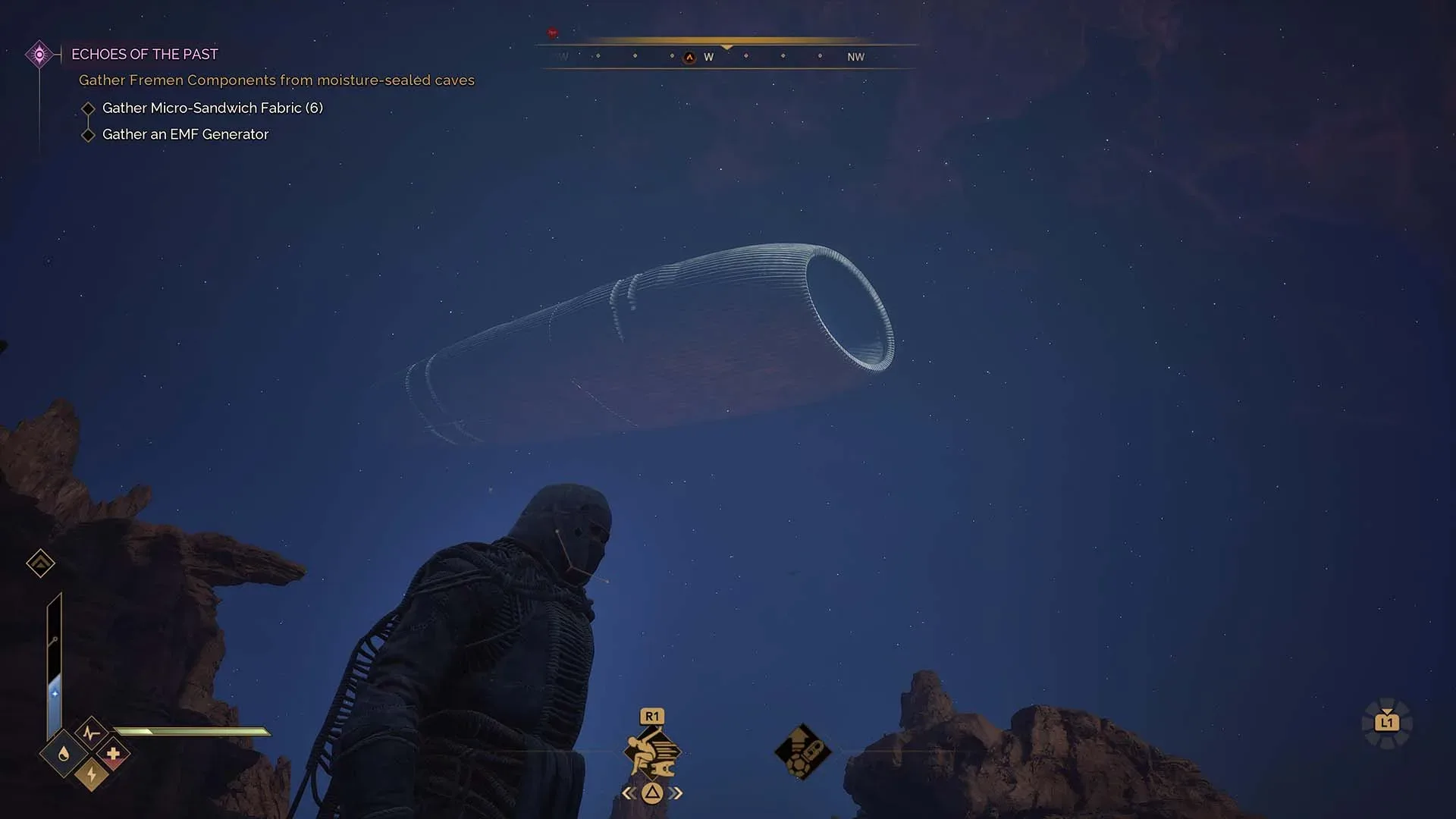
Dune: Awakening is now entering its second year and has a community built around life on Arrakis, including riding sandworms. That continuing life makes the approval process more relevant than it would be for a project that ended at release.
A game that grows over time creates continuing creative questions. New additions must remain coherent with what players already know, while also giving the community reasons to stay engaged. The source material describes Funcom’s system as capable of handling regular submissions and escalation, which is exactly the kind of reliability a continuing game benefits from. No specific future additions, timing or plans were detailed, so it would be premature to infer what Funcom will add next. The point is simply that durable collaboration gives a live game a better foundation for making decisions as it evolves.
There is also an important expectation-setting point for prospective players. A lead on the game has described the MMO as potentially a very good solo experience, while cautioning that players looking for something like The Last of Us are seeking the wrong kind of experience.
MMO means massively multiplayer online game: a game designed around a shared online world and a population of other players. A strong solo path in an MMO does not turn it into a tightly authored, linear single-player adventure. The distinction concerns the game’s broader structure and social setting, not whether someone can enjoy time in it alone.
That clarification fits the approval story. Dune: Awakening is not merely adapting the look of the films or the vocabulary of the novels; it is translating Dune into an ongoing online survival-game format. A project like that has to answer two questions at once: does a feature work for its players, and does it feel appropriate for Arrakis?
A mundane system behind a very un-mundane world
The most revealing part of this account may be its lack of glamour. The path between a developer and a film-rights holder is not presented as a mystical ritual conducted in a spice cloud. It is a managed queue of submissions, timelines and follow-ups, supported by the relationships formed through repeated work.
Villeneuve’s title concern gives that system a memorable face. Jira gives it a practical one. Together, they show how a huge fictional universe can be cared for at the granular level: one proposal, one review and, occasionally, one debate over whether a word carries echoes from a galaxy far, far away.