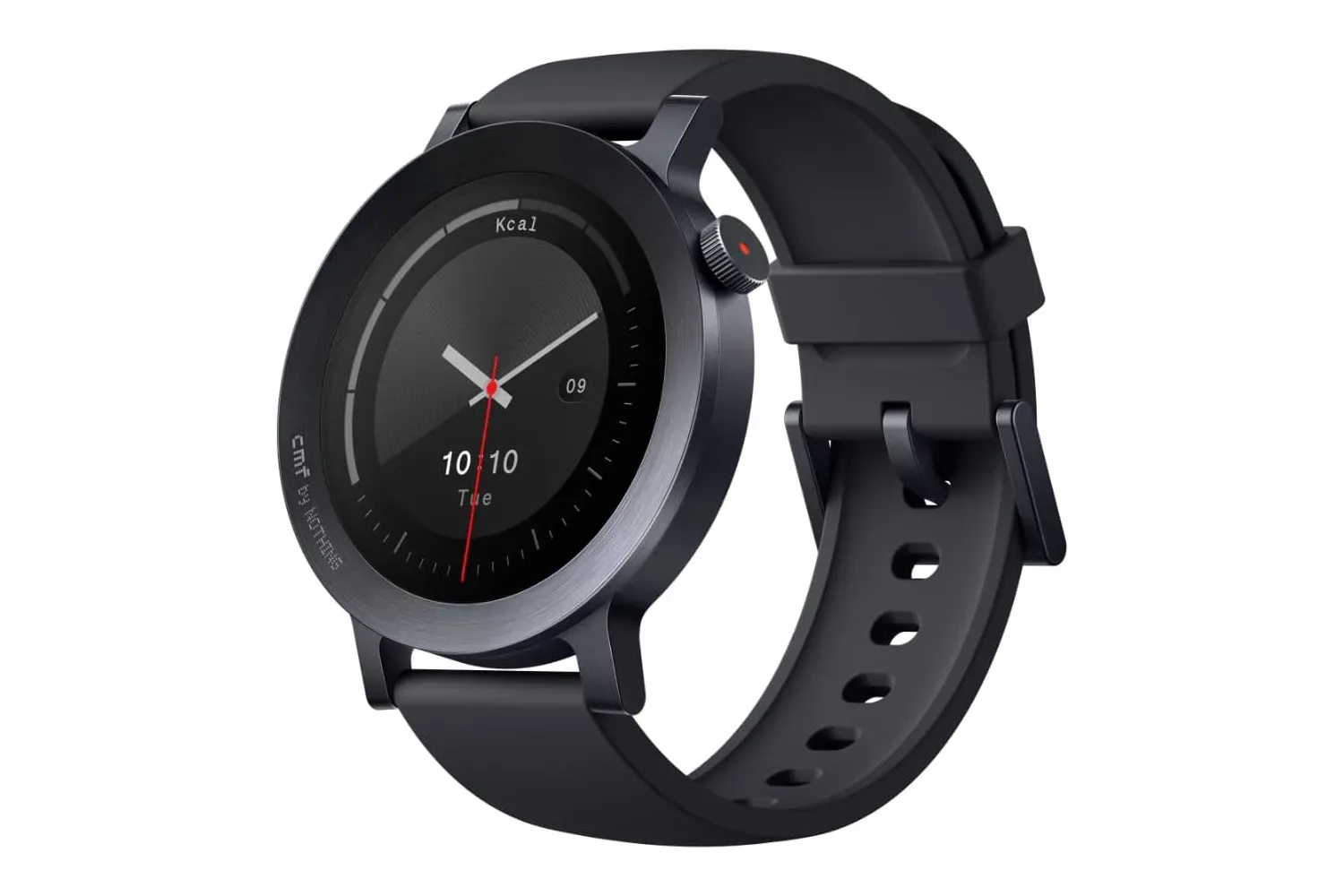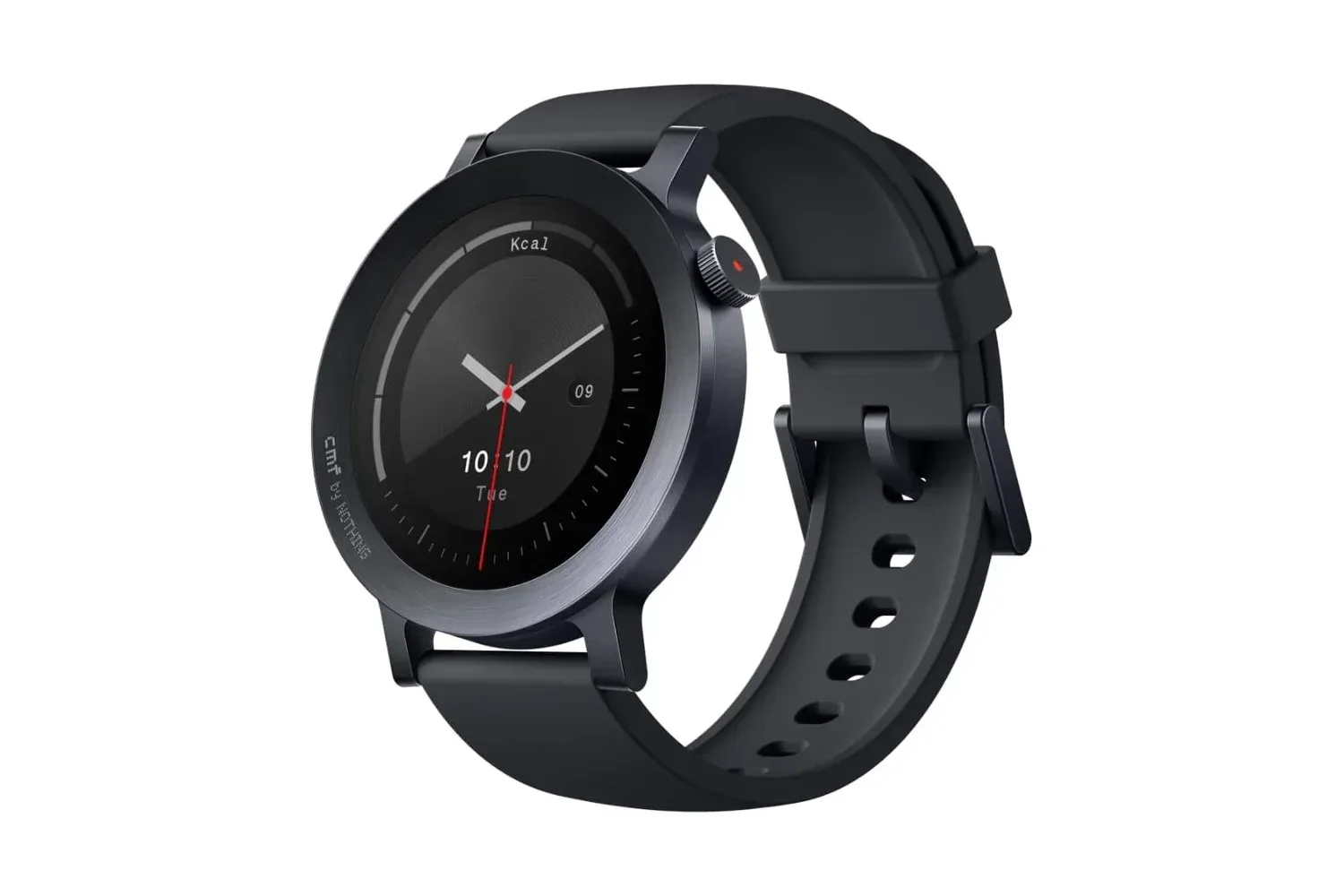
The CMF by Nothing Watch 3 Pro is listed at $59, reduced from $79—a $20 difference, or 25% off the stated regular price. For that price, the watch’s headline specifications are unusually broad: a 1.43-inch AMOLED display, built-in dual-band GPS, Bluetooth calls, 131 sport modes, continuous health-related tracking features, and a claimed battery life of up to 13 days with average use.
That does not make every specification equally important to every buyer. A smartwatch can be a notification screen, a workout log, a navigation-recording tool, a calling accessory, or a combination of all four. The strongest case for this model is for someone who wants independent route tracking for runs, rides, or hikes, plus a large display and infrequent charging, without moving into a premium-priced device.
The deal: $59 versus $79
The current listed price is $59, down from $79. The arithmetic is straightforward: buyers save $20, which is 25% of the $79 listed price. That lower cost is meaningful because GPS, an AMOLED panel, and calling capability are all included in the watch’s stated feature set rather than being absent in favor of a simpler fitness-band approach.
As with any retailer price, shoppers should check the listing at the time they intend to buy. The useful question is not simply whether the watch is discounted, but whether its particular mix of functions matches how it will be used. Someone who only wants step counts and basic alerts may not benefit much from dual-band GPS. Conversely, an outdoor runner who prefers to leave a phone behind during route recording may see much more value in that feature.
Those comparing connected devices may also want to consider practical setup questions before buying, especially phone support and app reliance. The Watch 3 Pro supports both Android smartphones and iPhones, with settings and collected trend data managed through the Nothing X app. That cross-platform support matters for households where a phone upgrade—or a switch between mobile operating systems—could happen later.
Why the display specifications matter
The Watch 3 Pro has a 1.43-inch AMOLED display with a 466 x 466 resolution, a 60Hz refresh rate, and brightness rated as high as 670 nits. AMOLED is a display technology in which pixels produce their own light. In practical terms, the supplied specifications position the screen for high-contrast watch faces, text, notifications, and workout data.
The 466 x 466 resolution describes the panel’s pixel grid. It is useful context for tasks that happen at a glance: reading elapsed time, pace information, call prompts, or a short notification. The 60Hz refresh rate means the display updates 60 times per second, which should support smooth transitions for the interface and scrolling information. It is not a sports-performance measure; it is a screen responsiveness specification.
Brightness is especially relevant to a wrist device because it is often checked outdoors. The stated peak of 670 nits is intended to help readability in brighter conditions. “Nits” is a measure of display luminance, or how much light the screen emits. It is worth treating that number as a maximum specification rather than assuming every display mode will always operate at that level.
An Always-On Display is also included. This mode keeps selected information, such as the time, visible without fully waking the interface. It can be convenient when a quick look is all that is needed, though buyers should recognize that display settings and usage patterns can affect real-world battery results. The up-to-13-day figure is specifically framed around average use, not as an unconditional promise for every combination of GPS, calls, tracking, brightness, and display behavior.
Customization is part of the package as well. The watch supports more than 120 watch-face designs, while swappable bands provide a way to change its look for exercise, work, or daily wear. Its metal frame is another design-focused element, rather than a fitness metric, but it helps explain the product’s attempt to combine a lower price with a less basic visual presentation.
Dual-band GPS is the key fitness feature
For many prospective buyers, built-in dual-band GPS is the most consequential item on the list. GPS enables the watch to record location-based activities such as running, cycling, and hiking while away from a smartphone. That can make the device more useful for documenting a route and activity session without relying on the phone for location tracking.
Dual-band GPS refers to a GPS implementation that uses two signal bands. The practical aim is better positioning accuracy. The watch is described as being able to record outdoor activities accurately while the phone is not present, making it a more appropriate fit for users who care about route records than a device that depends entirely on a paired handset.
The Watch 3 Pro lists 131 sports modes. Walking, jogging, and cycling are among the named examples, and the watch can automatically log certain activities if recording was not manually started. Automatic workout detection is a convenience feature: it is designed to capture a session that might otherwise be missing from a user’s activity history. It should not be confused with a guarantee that every movement or every type of workout will be identified exactly as intended.
The Nothing X app also includes an AI-powered running coach that can build personalized workout plans. In this context, “AI-powered” describes the plan-customization component. It does not turn the watch into a substitute for a medical, coaching, or training professional. Prospective users should view it as a software tool for organizing a running routine based on the information available to the app.
Health and activity features are about trends, not diagnosis
The watch has a four-channel heart-rate sensor and is described as continuously tracking heart rate and blood oxygen levels. It also tracks sleep and stress levels. Trend data is shown in Nothing X, together with a weekly Active Score that summarizes total activity for the week.
Continuous tracking is different from a one-off reading. It is meant to build a record over time, allowing a wearer to look at broader patterns in activity, sleep, or the other tracked categories. The weekly Active Score similarly condenses activity into an easier-to-read weekly summary. That can be helpful for people trying to establish consistency, since it emphasizes accumulated activity rather than a single workout.
These functions are best understood as wellness and activity features. The supplied details describe monitoring and trend presentation, not medical diagnosis, treatment, or a clinical-grade measurement claim. Anyone with a health concern should avoid interpreting a smartwatch reading as professional medical advice.
For routine exercise use, the combination of automatic activity logging, sport modes, sensor tracking, GPS route recording, and app-based trends gives the Watch 3 Pro a relatively complete tracking proposition on paper. The main limitation buyers should keep in mind is that a large list of metrics is not inherently useful unless they intend to review the results and act on them—whether that means keeping an eye on training volume, sleep patterns, or the consistency of a weekly exercise habit.
Calls, durability language, and battery expectations
The Watch 3 Pro supports Bluetooth calling from the wrist. Its AI-based noise reduction is intended to make a wearer easier to hear during calls. Since the calling feature uses Bluetooth, it belongs in the wider phone-connected experience rather than suggesting the watch operates as a standalone cellular device; no cellular capability is specified here.
The watch carries an IP68 rating. An IP rating is an ingress-protection classification concerning resistance to dust and water. The stated description says the device is protected against dust and minor exposure to water splashing onto its surface. Buyers should stay within that described use case rather than assuming that the rating alone answers every question about swimming, water pressure, or long-term exposure.
Battery capacity is listed as 350mAh, with up to 13 days of life on one charge under average usage. Milliamp-hours, abbreviated mAh, are a measure of battery capacity, but they do not by themselves predict how long a device will last. Display use, Always-On Display settings, GPS sessions, Bluetooth calling, notifications, and health monitoring can all shape actual battery behavior. Still, a multi-day claim is potentially valuable for users who do not want charging to become a daily part of their routine.
That battery proposition also fits the watch’s broader identity. It is built around keeping core smartwatch and fitness functions available over a longer period, rather than focusing on the shortest possible interval between charges. For people deciding between a feature-rich watch and a simpler tracker, that balance may be more useful than any individual specification.
Who should consider the Watch 3 Pro?
At its listed $59 price, the CMF by Nothing Watch 3 Pro is most compelling for buyers who want an affordable smartwatch with outdoor activity tracking as a real priority. The built-in dual-band GPS, large AMOLED screen, 131 sport modes, automated detection for supported activities, and claimed 13-day battery are the features that distinguish the overall package.
- Runners, cyclists, and hikers may value phone-free route recording through integrated GPS and the running-plan functionality in Nothing X.
- Gym-goers and everyday exercisers may prefer the broad sport-mode selection, automatic activity detection, and weekly activity summary.
- People who dislike frequent charging may find the up-to-13-day claim more appealing than a device designed around daily charging.
- Android and iPhone users can consider it because support is specified for both platforms.
- Users seeking a watch-like design get a metal frame, more than 120 faces, and interchangeable bands alongside the fitness functions.
Potential buyers should weigh the features they will actually use. The value proposition is not merely a low price; it is the inclusion of GPS, an AMOLED screen, calling, sensor-based tracking, and extended claimed battery life at that price. Buyers whose needs are limited to a basic time display and occasional step counting may not need the extra capability. Those who want a connected workout companion without committing to a premium-tier cost have a clearer reason to look closer.
For related context on connected-device pricing and feature trade-offs, see our coverage of early Apple discounts involving Mac, Watch, and AirTag products.
Shop the products
Check current price, model and availability at the retailer.