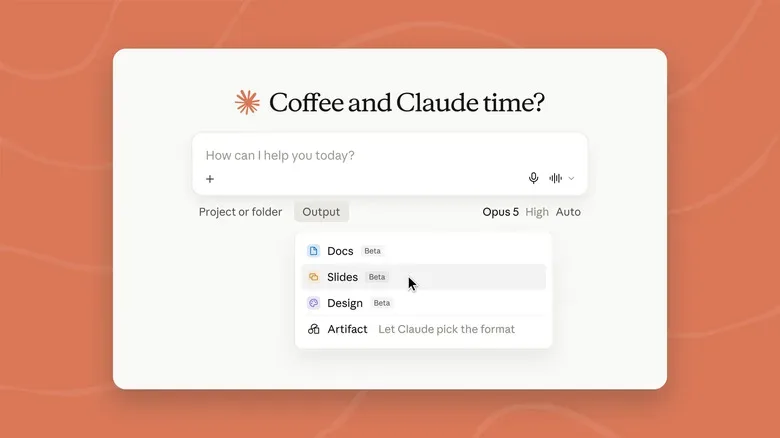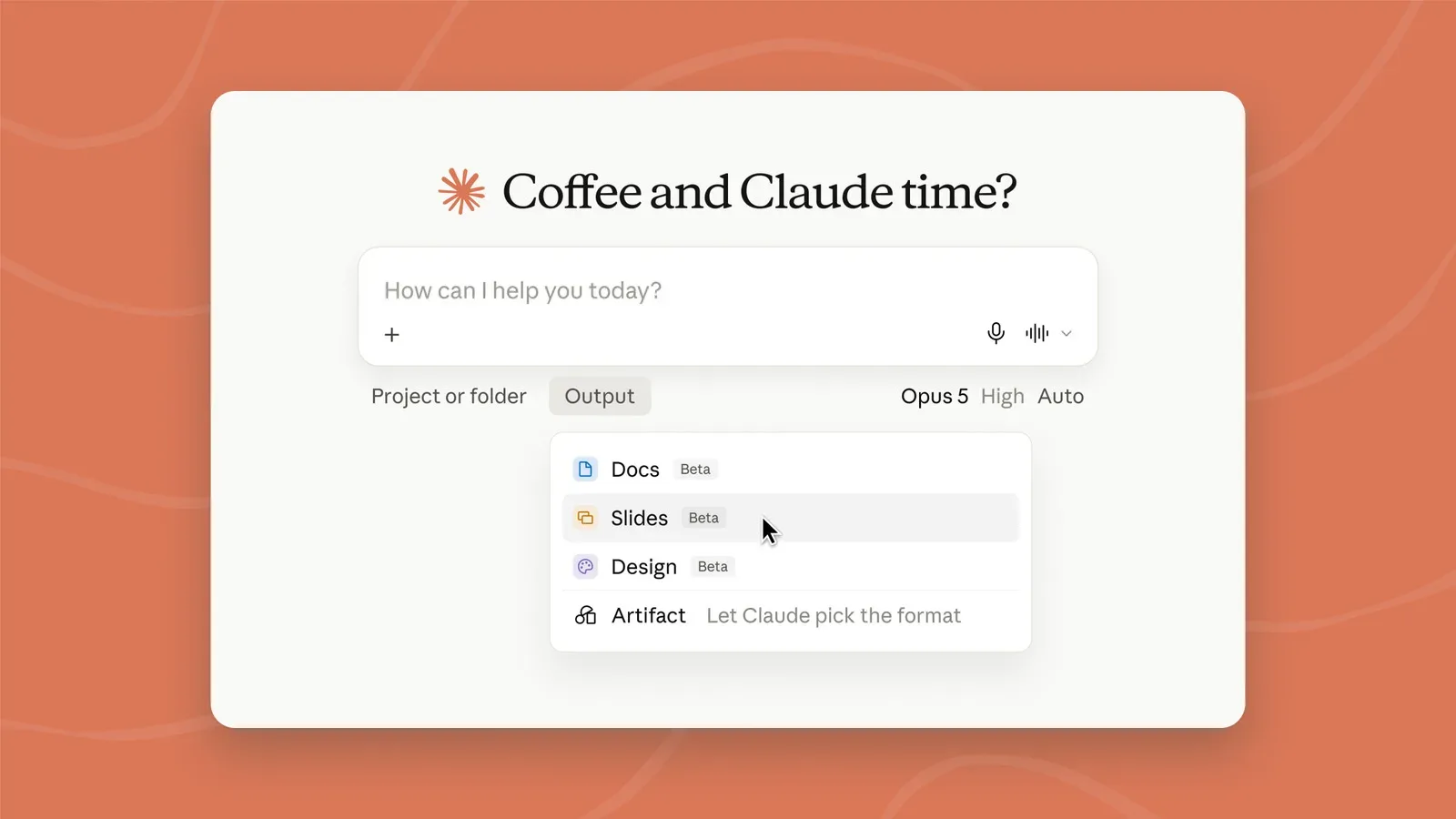
Anthropic is turning Claude’s chat window into a more direct workspace with Claude Docs, a feature designed to create editable documents from a conversation. Instead of treating a chat response as the end product, users can ask Claude for a document—such as a compact one-page brief—and receive an item inside the same chat that can be edited, kept private or shared with collaborators.
The change is paired with in-chat presentation creation and a broader effort to put Claude’s previously distinct work modes under one roof. The stated goal is a “One Claude” experience: rather than requiring someone to decide whether a task belongs in Chat, Cowork or Design, the assistant is intended to determine which available capabilities are needed while retaining the conversation’s context.
For Pro and Max subscribers, the rollout is scheduled over the next few weeks across web, desktop and mobile. Team and Free users are also expected to receive the changes later, though no more specific timing has been given.
What Claude Docs adds to a conversation
Claude Docs makes the document itself an editable result within the chat. A person can ask Claude to assemble information into a one-page sheet, then work on that output without immediately moving it into a separate document application. The document is private at creation, with an option to share it when colleagues need to collaborate.
That privacy-by-default starting point is notable in a workplace-oriented feature. A generated document can contain notes, summaries or work material that is still being shaped. Keeping it private initially gives the creator a chance to review and revise before choosing whether it becomes collaborative material.
Editing does not have to remain within Claude. Documents can be exported and opened in Google Docs or Microsoft Word. In practical terms, that means Claude can serve as the drafting and structuring layer without asking teams to abandon the document software where their later review, formatting or approval process already happens.
Export support should not be confused with a claim of flawless document production. The feature described is about producing an editable starting point and moving it into established formats. Users still need to inspect the accuracy of statements, the completeness of a summary and the presentation of material after export—particularly if a document will be shared outside a small working group.
Presentations move into the chat window too
Claude can also create slides and presentations directly from a conversation. Previously, visual presentation work required going to Claude Design. Now, asking for a presentation in chat is intended to place the slides there, where they can be edited or downloaded as a PowerPoint file or a PDF.
This reduces a basic friction point: the separation between discussing what a presentation should say and constructing the slides. A user can work through the scope of a presentation in a chat, ask for the deck, revise it and then take a portable file into a conventional presentation workflow.
The two download options serve different purposes. PowerPoint is an editable presentation format, useful when the work will continue in slide software. PDF is generally better suited to a fixed version for reading or distribution. Neither format removes the need for a human to check whether an AI-produced deck communicates clearly, represents its subject fairly and contains only verified information.
Why Cowork, Design and Artifacts are being brought closer together
The larger product story is consolidation. Claude had separate places for different kinds of work: Design for visual output and Cowork for more substantial task flows. Anthropic has said that this split left people unsure where they should start, especially because work begun in one place did not carry into the other.
Cowork is a mode in the Claude app built around agentic AI. In this context, agentic means the AI can pursue a multi-step task rather than merely answer a single prompt. The supplied example is illustrative: it can read work documents and then create documents, slides and spreadsheets. The point is a workflow that can involve gathering material, interpreting it and producing a result across more than one step.
Artifacts, meanwhile, are saved pieces of content accessible from a sidebar. They can include documents, HTML websites and diagrams. Calling these outputs “artifacts” distinguishes them from ordinary chat messages: they are reusable work products that can be kept available after the immediate exchange is over.
Under the revised approach, capabilities associated with Cowork and Design are intended to be available from any conversation, using the context, skills and connectors already available there. Context here refers to the information established in the chat that helps the assistant understand what the user is working on. Connectors refers to the linked capabilities or services Claude can use in that workflow, although no specific connectors are identified in the announced changes.
The practical benefit is not that every task suddenly becomes simple. It is that the user should not need to navigate a product map before beginning. A request may begin as a plain-language prompt, then become a document, a set of slides, a spreadsheet-oriented task or a saved artifact without a handoff between isolated sections of the app.
A workflow change, not merely another export button
It would be easy to view Claude Docs as a document generator with export buttons. The more consequential change is the attempt to collapse the distance between conversation and output. In many AI workflows, the chat contains planning, revision requests and source material, while the usable result lives somewhere else. This update makes the output visible as an object within the same thread where those instructions were established.
That setup can be especially useful for iterative work. A person might establish a topic and audience in chat, request a brief, edit the brief, ask for a corresponding presentation and then download the appropriate format. The announcement supports those component actions: creating documents in chat, creating slides in chat, editing both there and exporting to the named file destinations. It does not establish that the system will independently validate the substance of the work, so review remains part of the process.
It also has implications for collaboration. A private document that can later be shared creates a clear division between drafting and group review. That is a familiar editorial pattern, but the difference here is that the draft is tied to the assistant conversation that generated it. Teams should still be deliberate about what they share, who can access it and whether the finished work meets their own standards for accuracy and confidentiality.
What users can reasonably expect
- Create an editable document inside a Claude conversation.
- Start with the document private and choose to share it with colleagues.
- Edit the document within Claude, then export it to Google Docs or Microsoft Word.
- Create and edit slides in a conversation rather than moving separately to Claude Design.
- Download presentations as PowerPoint files or PDFs.
- Access capabilities previously divided across Chat, Cowork and Design through a more unified interface.
What still calls for care
- Review generated text before relying on it, particularly for summaries and work documents.
- Check layout and content after exporting to Word, Google Docs, PowerPoint or PDF.
- Consider privacy and sharing choices before inviting collaborators into a draft.
- Recognize that the rollout is phased: Pro and Max are first, while Team and Free access is only described as coming soon.
How this fits the growing AI workspace race
AI assistants increasingly compete on the work that happens after a question is answered: drafting, formatting, organizing and handing material to the applications people already use. Claude Docs is aimed squarely at that part of the process. The ability to export to Google Docs, Word, PowerPoint and PDF acknowledges that generated content often needs to travel beyond the assistant before it is finished.
There is a parallel lesson in other software changes that make a familiar action happen closer to the device or interface a person already uses. For example, Apple-related code has pointed to the possibility of gift-card redemption through NFC verification, a change centered on reducing steps in a routine process. Read more about the iOS 27 NFC gift-card indication here. Claude’s new direction similarly emphasizes reducing detours: the chat is becoming the place where a request, the resulting file and the revision process can meet.
That said, unification carries a usability challenge of its own. Combining tools can remove confusion about where to start, but the resulting interface must still make it clear what Claude is creating, what can be edited, what is being saved and what will be shared. The announcement describes the intended simplification, while the real value for users will depend on whether those choices remain understandable in day-to-day work.
For now, the concrete takeaway is straightforward. Claude is expanding from conversational output toward editable, shareable work products inside the conversation itself. Documents can move into Google Docs or Word; slides can move into PowerPoint or PDF; and Cowork, Design and Artifacts are being reorganized around a single interface intended to carry more of the work without forcing users to switch modes.