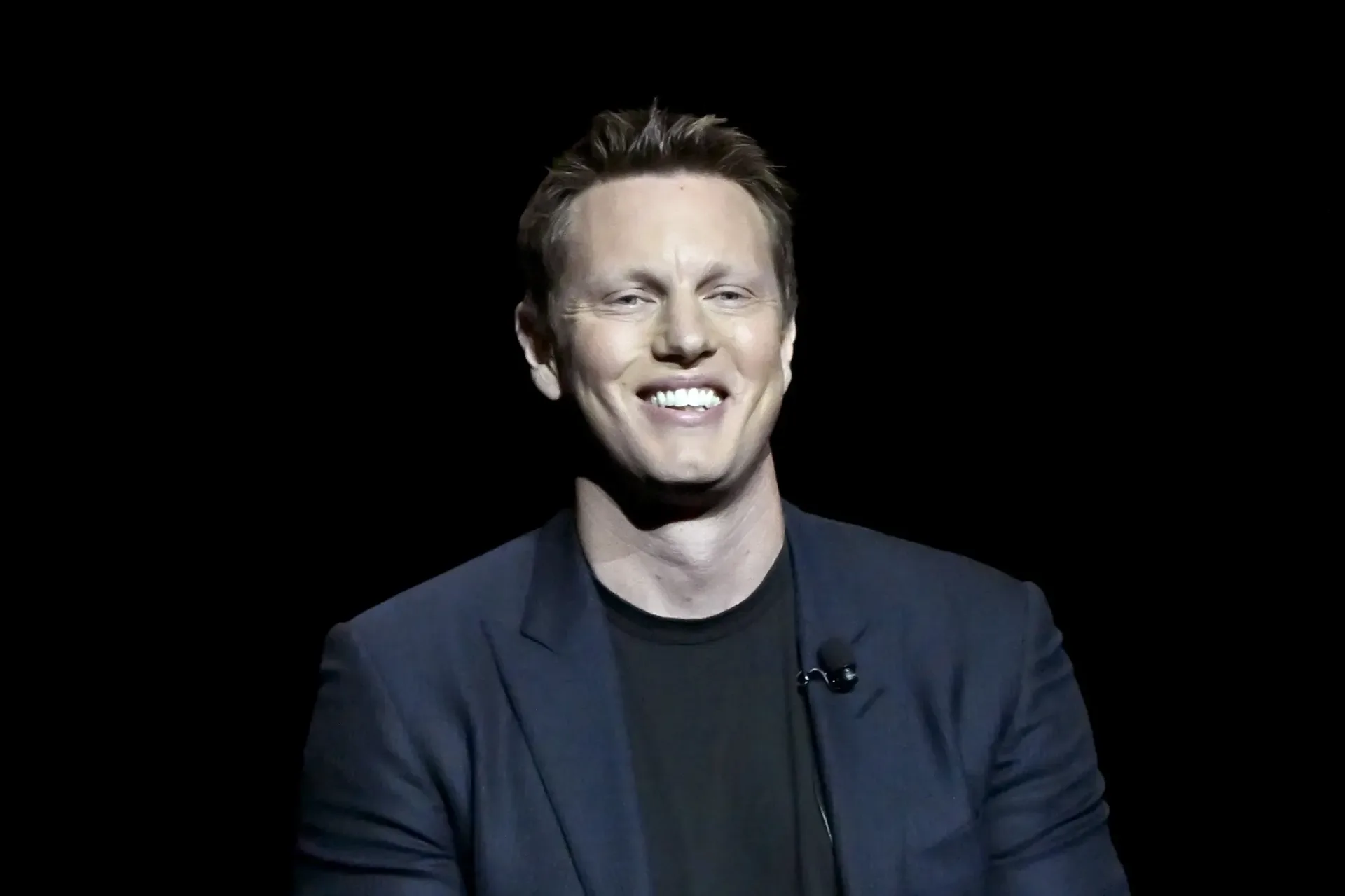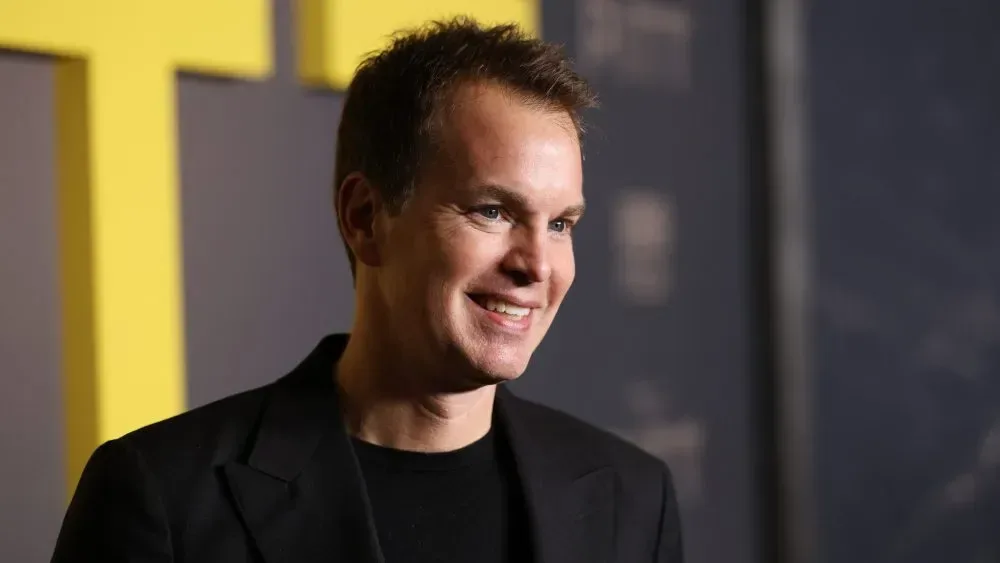
HBO’s place inside a prospective combined Paramount-Warner Bros. operation remains unsettled, but Casey Bloys is signaling confidence that the brand’s core identity will endure. Speaking while the merger is still unfinished, the HBO Max leader declined to confirm his own role or a finalized organizational chart. Still, he said David Ellison has shown respect for the work HBO has built over its history and appears committed to maintaining it.
That is a meaningful distinction in a period when media mergers can prompt immediate speculation about executive departures, platform consolidation and abrupt changes to programming strategy. Bloys did not offer a timetable for a combined streaming operation, did not confirm a future job description and did not say that HBO Max and Paramount+ will merge. The leadership decisions, he indicated, belong to Ellison’s team to announce after the transaction is complete.
For viewers, that leaves several major questions open. It also provides a fairly clear picture of the principles Bloys believes should shape the next stage: protect the HBO proposition, follow audience behavior rather than simply stacking every available asset into one product, and recognize that a broad streaming service can contain distinct programming identities without forcing them into a single editorial voice.
Leadership remains an open question
Expectations have circulated that Bloys could continue leading HBO Max while also taking responsibility for Paramount+. He would not validate that scenario. His restraint matters because the merger has not closed, and because there has already been movement elsewhere in the streaming leadership landscape, including Paramount streaming chief Cindy Holland’s planned departure.
Rather than turn expectation into confirmation, Bloys emphasized the difference between ongoing conversations and a public decision. He said he has spoken with Ellison many times and came away believing that the incoming ownership group appreciates HBO not only under its current leadership, but across its longer history.
That is not a formal guarantee about staffing, budgets or individual shows. It is an account of intent, and the practical details remain unknown. But it frames HBO less as a library to be absorbed than as an established entertainment brand whose distinct reputation is considered valuable in its own right.
What a streaming combination could look like
The immediate consumer question is whether HBO Max and Paramount+ would become one service, remain standalone products, or be offered in some kind of package. Bloys gave no answer on timing and did not say that any specific route has been chosen. He did, however, point to the success of the HBO Max-Disney bundle as evidence that a similar arrangement can make sense.
A bundle is not necessarily the same thing as a platform merger. In a bundle, separate services can be sold together while retaining their own apps, subscriptions and product identities. A merged service, by contrast, usually means a unified destination, catalog presentation and account experience. The distinction matters because a bundle can add consumer value without requiring the companies to immediately solve the harder challenge of blending brands, recommendation systems and user expectations.
Bloys’s comments support the idea that there is more than one viable path. They do not establish which path Paramount and Warner Bros. will take, nor whether a bundle would arrive before any larger product integration. Anyone looking for a near-term promise of one app, one subscription or a confirmed launch plan will have to wait.
A lesson from the Discovery integration
Bloys’s most substantive comments concerned the programming and product logic behind a potential combined offering. He described a lesson learned during the Warner Bros.-Discovery combination: owning a large volume of content does not automatically mean audiences want it presented together under the same service proposition.
In the earlier effort, the company put HBO, the Warner Bros. library and pay-one films alongside Discovery programming. Pay-one movies are films appearing in a premium subscription window after their initial theatrical and home-entertainment runs. In research cited by Bloys, current and potential subscribers were more interested in movies, HBO, dramas, comedies and documentaries than in some of the additional material being offered.
His shorthand for that finding was that a service has to provide what subscribers want, rather than merely showcase what the company owns. That principle has obvious relevance if HBO Max and Paramount+ are ever more closely linked. Paramount brings well-known properties and programming categories that are not identical to HBO’s traditional image. The question is not whether those programs can physically sit beside one another in a digital catalog. The question is whether their presentation helps people understand why they should subscribe and what they should watch next.
Bloys pushed back on the assumption that HBO viewers only want one narrow kind of show. His argument was that people who choose HBO are generally television consumers, not viewers restricted to HBO-branded dramas. He cited South Park, previously a major title on the platform, as an example of a Paramount-associated property that performed strongly there. In that sense, a service can be expansive without becoming incoherent—but its curation and presentation have to respect audience preferences.
Why curation is more than a branding exercise
Streaming libraries are frequently discussed as though the biggest catalog always wins. Bloys’s comments suggest a more complicated equation. A large catalog creates options, but it can also create confusion if subscribers cannot easily tell what a service stands for or find what they value. The mix of HBO, Warner Bros., Paramount and other programming could be a strength if viewers see it as a meaningful range of choices. It could be a problem if the mixture dilutes the reasons audiences already associate with HBO Max or Paramount+.
This is partly an editorial matter—how shows, films and brands are marketed and grouped—but it is also a technical product matter. Recommendation tools, navigation, search, personalized homepages and account systems influence what subscribers discover and whether they keep using a service. Bloys highlighted Netflix’s advantage in this area, calling it the leader in streaming and specifically noting its technological head start.
Two of the terms he raised explain why this matters. Engagement refers broadly to how actively subscribers use a service: the viewing time, frequency and ongoing interaction that show whether it is part of their entertainment routine. Churn is the rate at which customers cancel. A platform can reduce churn by giving viewers a reason to return, helping them find something relevant and making the service feel consistently useful between headline releases.
Bloys’s point was not that technology replaces programming. Rather, product capabilities can support the business around the programming. Netflix’s experience has given it an advantage in tools that affect discovery, engagement and retention, while other streamers continue trying to catch up. For a future combined service, adding content alone would not settle those challenges; it would also need to make that added content legible and appealing to users.
Competition is not a single-season contest
Bloys did not treat a weaker awards season for Netflix as proof of a long-term creative decline. He said media companies naturally experience peaks and dips, and a single breakout series can rapidly change the prevailing narrative. That approach fits his wider argument about HBO’s endurance: it is better to judge brands by their ability to keep producing and adapting over time than by a particular awards cycle.
He made a similar case in response to descriptions of Apple TV as “the new HBO.” Bloys recalled a long sequence of competitors that have received comparable labels over the years, including Showtime, Starz, AMC, FX, Netflix and Amazon. The more important question, in his view, is not which rival is temporarily cast as a successor, but how HBO continues being HBO.
That is a useful reframing because “the new HBO” often compresses very different issues into one phrase: prestige, awards success, critical enthusiasm, subscription appeal and cultural conversation. Those are related, but they are not interchangeable. A strong year at the Emmys may demonstrate creative momentum. It does not, by itself, define a company’s technological maturity, platform strategy or ability to keep viewers subscribed over many years. Conversely, a rough awards stretch does not erase a company’s competitive position.
The Apple comparison also arrives as Apple TV updates parts of its movie offering, including a rotating U.S. bonus movie lineup. But Bloys’s broader point is that each platform should be assessed on its own strategy rather than reduced to a successor label.
What remains unknown
There is still considerably more uncertainty than certainty around the prospective Paramount-Warner Bros. structure. Bloys did not announce:
- his own position after the merger closes;
- the final leadership team for the combined company;
- whether HBO Max and Paramount+ will merge into a single service;
- whether a bundle is imminent;
- how Paramount programming would be organized alongside HBO and Warner Bros. content; or
- when consumers should expect any streaming product changes.
Those absences are important. They prevent his remarks from being treated as a launch plan or a binding commitment. What they do offer is a view into the decision-making philosophy likely to influence the conversation: HBO’s identity has value, audience research should guide presentation, and a sprawling content portfolio works best when it is shaped around what subscribers actually want to use.
Bloys has already experienced two mergers in an industry he described as disrupted, so he said the possibility of surprising corporate outcomes no longer shocks him. That perspective may explain why he was willing to discuss the situation publicly without pretending that the map has been fully drawn. For now, the central message is measured rather than definitive: the transaction is not done, the roles are not public, and the streaming plan is not set out. Yet HBO’s current leadership believes its defining qualities are something the incoming team intends to preserve.