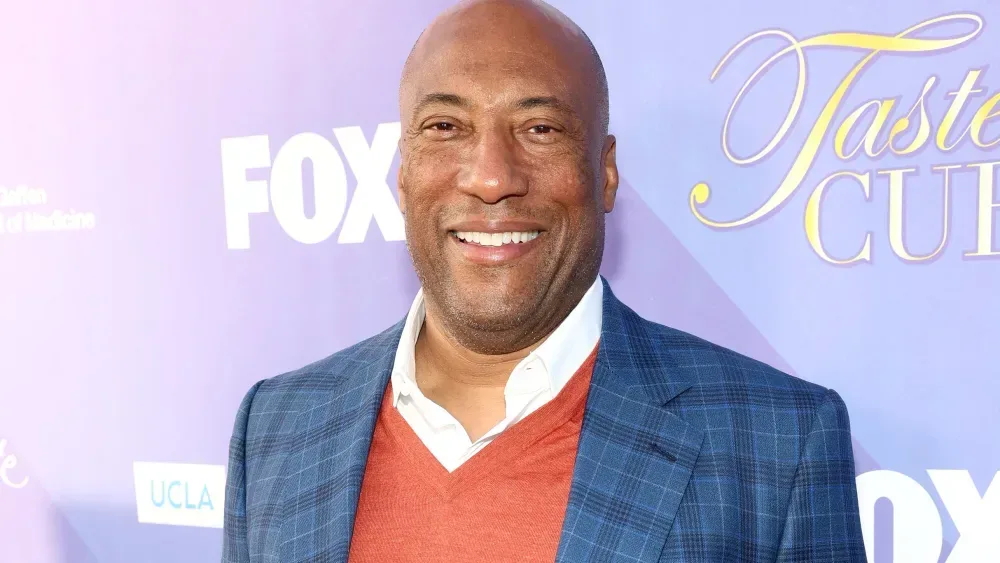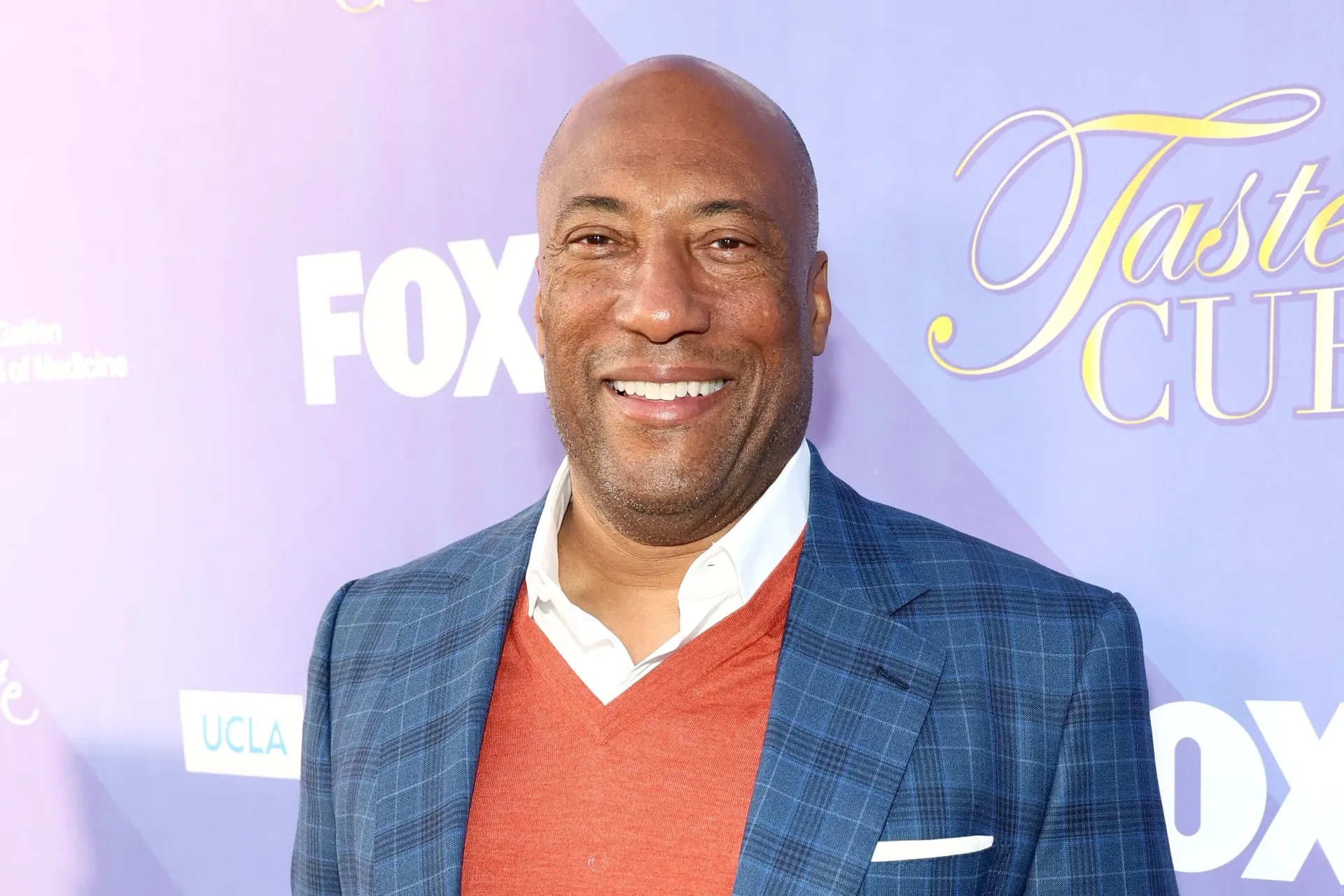
Byron Allen has sold his entire stake in Starz, completing a sharp turnaround on an investment made earlier in 2026. Allen Family Capital sold all 1.8 million Starz shares it held across August and September for a combined $44.9 million, as detailed in a new securities filing.
The position had been acquired in March in a private transaction with Liberty 77 Capital, the investment firm of Steve Mnuchin. Allen Family Capital paid $25 million for the shares, which represented a 10.7% ownership stake in Starz at the time. On the simple difference between the reported purchase and sale totals, the exit generated about $19.9 million more than the initial outlay before any transaction costs or taxes.
That is an approximate 79.6% increase over the $25 million purchase price. It is important, however, to distinguish that calculation from a definitive statement of Allen’s realized after-tax profit: public filing totals describe the value of the transactions, while expenses, fees and tax treatment are not detailed here.
A complete exit, not a partial trim
The key detail is that Allen sold all of the Starz stock purchased earlier this year. This was not a reduction that left Allen Family Capital with a smaller strategic position in the standalone premium-TV and streaming company. The disclosed sale eliminated the 1.8 million-share holding.
Allen is chairman and CEO of Allen Media Group, whose holdings include 13 broadcast television stations and 10 networks, among them the Weather Channel. He has also made other high-profile media moves this year, including acquiring a controlling 51% stake in BuzzFeed. That deal involved $20 million in cash at closing and a $100 million promissory note due within five years, carrying annual interest of 5%.
Read together, those deals underline a distinction worth making: a stock position and operating control are very different tools. A minority shareholding can offer financial exposure to a company’s valuation without conferring operational control. A controlling stake, by contrast, places an investor in a materially different position regarding the business’s direction and financial commitments. Allen’s Starz transaction began as the former and has now ended; the BuzzFeed deal remains a controlling investment.
What the Starz numbers say—and what they do not
The sale was disclosed alongside Starz’s third-quarter 2026 financial results. Starz reported a net loss of $34.8 million for the period, improved from a $52.6 million net loss in the equivalent period a year earlier. In other words, the company still reported a loss, but the loss narrowed by $17.8 million year over year.
Total revenue was essentially unchanged at $322.4 million. Streaming revenue reached $226.6 million, a 1.7% year-over-year increase.
Related coverage includes Byron Allen Sells Entire Starz Stake for $44.9 Million.
Those results supply useful context but do not, by themselves, establish why Allen chose to sell. A company can narrow its loss while revenue remains flat, and its market value can move for reasons that are not captured by a single quarterly report. Likewise, a modest rise in streaming revenue does not reveal subscriber trends, programming costs, marketing spending, debt, cash flow or the many other factors investors may examine. The filing demonstrates the timing and value of the sales; it does not attach a stated rationale to them.
Key terms in the filing
- Stake: An ownership interest in a company. Allen Family Capital’s March purchase was described as a 10.7% stake in Starz.
- Private transaction: A deal negotiated directly between parties rather than a broad public offering of shares.
- Net loss: The amount by which a company’s expenses exceed its revenue during a stated reporting period. A narrower net loss is an improvement, but it is not the same as profitability.
- Streaming revenue: Revenue generated by a company’s streaming operations. Here, it was $226.6 million in the third quarter and rose 1.7% from the prior-year period.
- Promissory note: A written commitment to repay borrowed money under defined terms. In Allen’s BuzzFeed deal, the note totals $100 million, is due within five years and accrues 5% annual interest.
Starz is operating independently after its Lionsgate separation
Starz separated from Lionsgate last year, placing its current financial reporting in the context of a newly independent corporate structure. The company’s third-quarter figures now stand as Starz’s own reported performance rather than simply one piece of a combined parent-company picture.
For viewers, the immediate practical effect of Allen’s sale is limited. The disclosed transaction concerns ownership of shares, not a newly announced change to Starz programming, its streaming service or its customer offering. Allen was a minority investor, and the sale itself should not be confused with an acquisition of Starz or a change in who runs it.
For media-industry watchers, though, the development is a compact example of how quickly a minority investment can be entered and exited. Allen Family Capital bought in during March, then sold the full position over August and September. The purchase was reported at $25 million; the later share sales totaled $44.9 million. That sequence is clear even though the underlying investment thesis has not been made public.
It also arrives at a time when media companies are balancing legacy television businesses, streaming operations and broader ownership changes. The boundaries between screen entertainment, digital publishing and game-related adaptation continue to shift; for a separate example of how entertainment companies are pursuing IP across formats, see the report on a planned film adaptation of the indie horror game Mouthwashing. Allen’s Starz exit is not an adaptation story, but it belongs to the same wider business environment in which companies and investors weigh where capital and attention can be most effectively deployed.
Allen’s broader media portfolio remains active
Allen’s business activity extends beyond Starz and BuzzFeed. Allen Media Group’s television and network portfolio gives him a large operating footprint, while his recent move into BuzzFeed places him in control of a digital-media company that includes HuffPost and Tasty. In July, BuzzFeed cut 35% of its workforce—about 180 jobs—across the company, including those divisions.
Separately, Allen has leased a two-hour nightly comedy block on CBS. The block takes over a slot previously occupied by Late Night With Stephen Colbert and features episodes of Comics Unleashed With Byron Allen, followed by Funny You Should Ask. It is another indication that Allen’s work spans investment activity, television ownership, syndicated-style programming and comedy, a field in which he first worked as a standup performer.
None of those operations changes the straightforward result of the Starz filing: Allen Family Capital no longer holds the 1.8 million Starz shares it acquired from Liberty 77 Capital in March. The reported sales brought in $44.9 million, compared with a $25 million purchase price only months earlier.
The remaining unanswered question is strategic rather than arithmetic. Publicly available details establish the scale of the purchase, the timing of the complete sale and Starz’s latest quarterly figures. They do not say whether Allen views the sale as a one-off investment realization, a reallocation toward other media interests, or something else entirely. Until further disclosure addresses that question, the most accurate reading is also the most restrained one: this was a full exit from a minority Starz position at a substantially higher reported sale value than its reported entry cost.