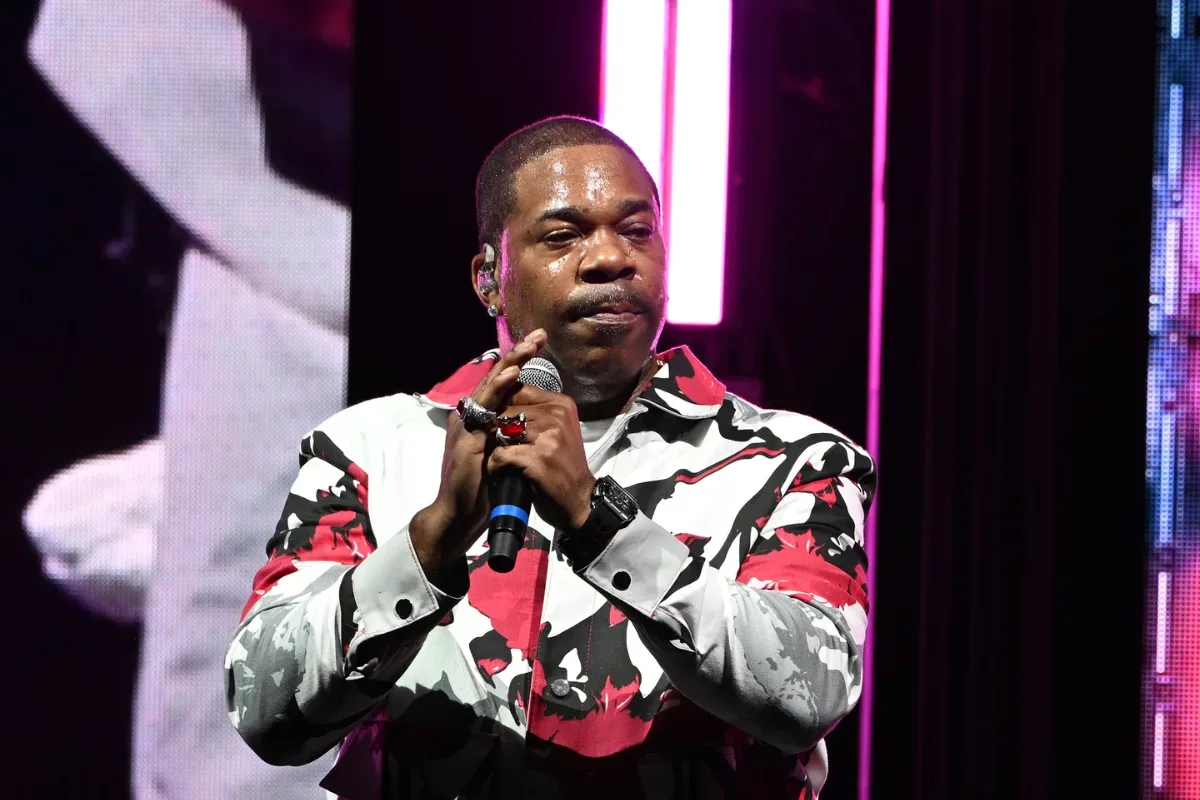
Busta Rhymes has put a blunt question at the center of the streaming-era music business: what does it mean to be paid in an amount so small that it is described as a fraction of a penny?
While discussing Dillagence II, the rapper challenged the logic and dignity of compensation built around microscopic per-play sums. His objection is not simply that the number is low. It is that the unit itself can feel detached from the everyday financial language artists use to track work, pay collaborators and plan a career.
“They don’t even have a name for the currency that is called fractions of a penny, because that name and that currency doesn’t actually exist,” Busta Rhymes said.
That framing gets at the practical frustration behind a debate that can otherwise dissolve into a battle of enormous stream totals. A stream is easy to count. Its value is much harder to feel when the payment attached to each play is far below a cent. For an artist, the important number is ultimately not applause expressed as plays, but the money that reaches the people who made and own the music.
The problem with an almost-invisible unit of payment
A fraction of a penny means less than one cent for a stream. It is a useful expression because it makes the scale immediately understandable, but it also makes the underlying accounting feel abstract. The source material cites T-Pain’s characterization of roughly 0.003 cents per play. Whether listeners encounter a song once or return to it repeatedly, the artist’s criticism is that each individual event can carry a vanishingly small value.
That does not mean a single stream is intended to fund a career. Streaming is fundamentally a volume model: plays accumulate, then revenue is divided and paid out through the relevant ownership and rights arrangements. But Busta Rhymes’ critique is about what that structure communicates. If an artist’s compensation is expressed in quantities smaller than a normal unit of currency, it becomes difficult to explain in ordinary commercial terms—and potentially difficult for artists to evaluate with confidence.
His comments also raise an auditing question. Auditing is the process of checking records and calculations to establish whether payments match the activity they are supposed to represent. In this context, that means comparing reported usage and royalty calculations with the money paid. The smaller each underlying payment becomes, the greater the emotional and administrative distance between a reported hit and an artist’s actual income.
Busta Rhymes’ larger concern is the gap between culture and compensation. Music can be everywhere at once, reach a vast audience and generate an impressive public stream count, while the financial return described by an artist remains modest. That disconnect is the “math problem” at issue: success can look massive on a platform dashboard but less substantial on a payment statement.
Other artists are making the same argument
The criticism is broader than one album cycle or one artist’s negotiating position. T-Pain has similarly contrasted the older idea of selling a song for a dollar with the fractional-cent returns he associates with streams. The comparison is powerful because it puts two ways of valuing recorded music beside each other: a direct transaction for a discrete purchase, and a recurring access model where payment is distributed across an enormous volume of listens.
T.I. has focused on another side of the same pressure: supply. He has argued that streaming has “watered down” the industry, pointing to roughly 150,000 songs being uploaded each day. That figure matters because greater access can create two realities at once. It can give more people a route to release music, while also making it much more difficult for any individual release to attract sustained attention.
In other words, low per-play value and a crowded release environment can compound one another. An artist may need substantial listening volume to turn streaming into meaningful income, while also competing against a constant flood of new tracks. T.I.’s complaint is not merely about technology; it is about the loss of scarcity and the changing perceived value of becoming an artist after years spent developing a craft.
Snoop Dogg has supplied the most striking figure in this discussion. He said he received less than $45,000 from one billion Spotify streams, then said he had moved his focus to Tune.FM, a blockchain-based platform that he characterized as offering artists more control. His reaction condensed the argument into a simple expectation: a billion plays sounds like a scale that should produce millionaire-level revenue.
It is important to separate the claim from a universal rule. Snoop Dogg’s figure is his stated outcome, not proof that every artist receives the same amount for the same stream total. Payments can be shaped by ownership, contracts and other rights arrangements, and the supplied material does not provide a complete breakdown of those factors. Still, the number is central to why artists are questioning the model: it makes the difference between cultural scale and reported compensation unusually stark.
Why physical editions remain part of the answer
Busta Rhymes’ response is not presented as a retreat from modern listening habits. It is diversification. Dillagence II has been released on vinyl, CDs, cassettes and merchandise as well as through the wider streaming ecosystem.
Diversification means drawing revenue from more than one format or channel rather than depending on a single source. In this case, a physical album and a piece of merchandise are direct products with a clear sale attached to them. They do not turn every fan into a buyer, and the provided information does not establish what any particular item costs or earns. But they give artists a more tangible commercial relationship with supporters than a fraction-of-a-cent play.
Vinyl, in particular, is described as having expanded sharply in recent years. That makes it more than a nostalgia item in this conversation. For artists, it can be a format that turns an album into a physical object people intentionally choose to own. CDs and cassettes extend that approach to other kinds of listeners and collectors, while merchandise connects the music to an artist’s identity and fan community.
The practical implication is not that every artist should abandon streaming. Streaming remains a major way audiences discover and repeatedly hear music. Instead, Busta Rhymes’ approach suggests that streaming visibility and direct-to-fan products can serve different purposes. One can create reach; the other can provide a sale that is easier to recognize as a conventional transaction.
That distinction may be especially significant for artists trying to build something lasting. Busta Rhymes has framed the issue in terms of wealth and respect, questioning how artists can create generational stability from payments that barely register in familiar money terms. Physical editions and merchandise do not automatically solve the fairness question, but they can reduce dependence on a single payment model that artists increasingly regard as inadequate.
A fight over value, not just arithmetic
The debate is often reduced to whether a given per-stream amount is technically accurate. Busta Rhymes’ criticism reaches beyond that calculation. He is asking whether the terms themselves deserve to be treated as respectful compensation for creative labor.
That is why his language centers on basic dignity as much as finance. The challenge is not only to make the spreadsheet balance, but to explain why a creator should accept a framework in which enormous consumption can coexist with returns described in tiny fractions of a cent.
The concern also lands at a moment when ownership and income are under close scrutiny across music. Questions around assets, estates and obligations do not stop at the recording process; they shape the financial reality surrounding a catalog and its proceeds, as seen in this report on creditor claims involving Tay Keith’s estate.
For Busta Rhymes, the immediate answer is clear: put Dillagence II in formats that can be bought, held and collected, while continuing to challenge the premise that fractions of pennies are an acceptable endpoint for artists whose work drives the system. His argument is likely to resonate because it is easy to understand. A massive number of streams may signal demand. Artists want that demand to translate into compensation that feels just as real.