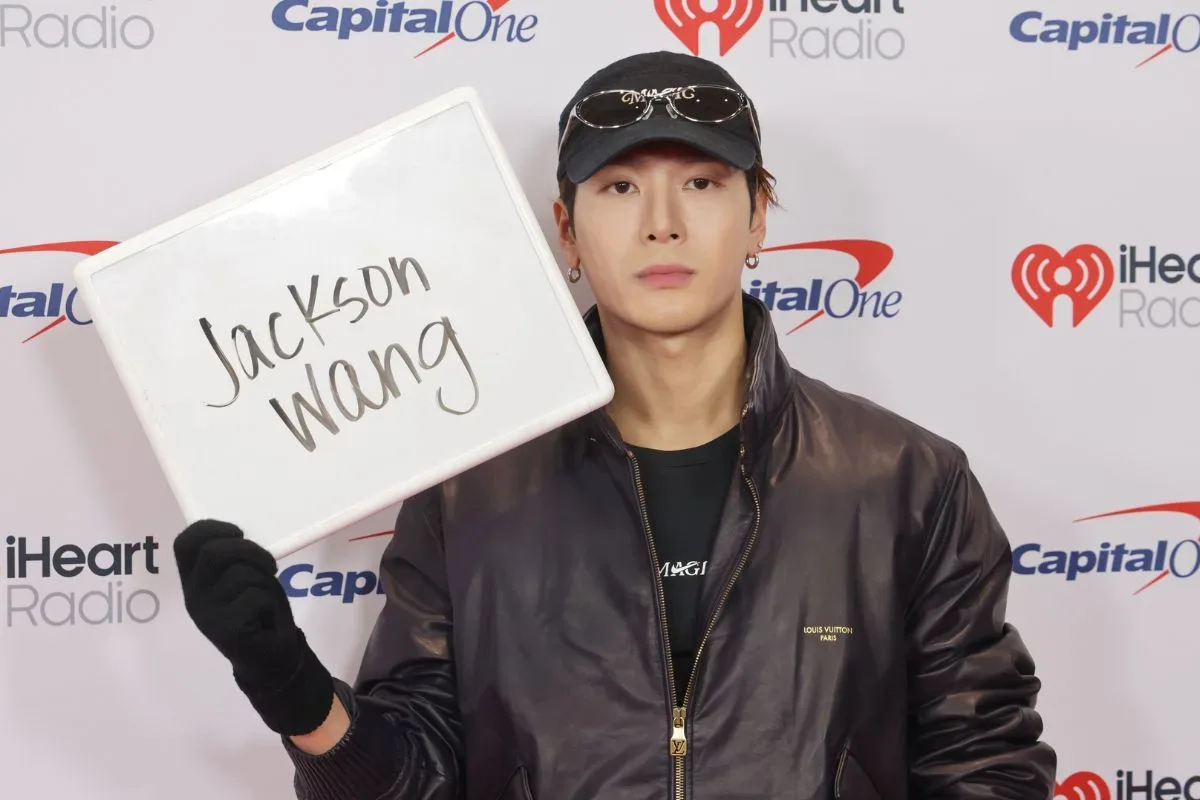
Jackson Wang has entered a global management agreement with Roc Nation, joining Jay-Z’s entertainment company at a moment when its founder’s broader business activity is becoming more closely tied to Asian entertainment and consumer markets.
The deal brings together an artist whose career already reaches music, fashion, creative direction and live entertainment with a management company built to help steer big-picture opportunities. Wang marked the partnership with “Thank You,” a new single accompanied by a black-and-white visual that he co-directed with Ojun Kwon.
For Wang’s audience, the clearest immediate output is the song and its fan-focused video. For the businesses involved, however, the agreement is also a meaningful example of how global music careers increasingly operate across more than recordings, touring and traditional celebrity endorsements. The important detail is not simply that an American-founded management company has signed an established Asian artist. It is that Wang arrives with his own companies, an international profile and a creative identity already in place.
What a global management agreement means
Management is different from a recording contract. A record deal is generally centered on recording and releasing music, while a management agreement concerns career direction and coordination. A manager can help an artist evaluate partnerships, assemble teams, pursue opportunities across territories and keep projects aligned with a long-range strategy. The precise duties and commercial terms of Wang’s agreement were not disclosed.
That distinction matters in this case. Wang has already built a solo career after becoming internationally known as a member of GOT7, and he founded Team Wang Records. The new arrangement does not erase that existing foundation. Instead, it places Roc Nation alongside an artist whose creative and commercial operations are already broad.
Roc Nation described Wang as someone unwilling to fit neatly into a single label, pointing to his background as an athlete, artist, entrepreneur and creative director. That framing matches the visible shape of his work: music is central, but it sits within a wider set of creative and business pursuits across Asia and Western markets.
For fans, “global” should not be mistaken for a promise of a particular album, tour, brand collaboration or regional release. None of those specific plans were announced. It more accurately signals the geographic and strategic scope available to the partnership: Wang and Roc Nation can consider opportunities without treating one local market as the entirety of the artist’s career.
“Thank You” puts fans at the center of the moment
Wang used the new single “Thank You” to frame the relationship in unusually direct terms. In an Instagram post, he wrote that he did not want “a middle person or a filter” between himself and his fans, adding that he wanted supporters to know who he is as a person without “guessing” or “assumptions.”
The accompanying video follows that idea in its production. Wang co-directed the black-and-white visual with Ojun Kwon, filming it on an iPhone 18 Pro. Thirty supporters appear after fans from more than 80 countries applied to take part.
Those details make the visual more than a routine promotional extra. It gives the launch a participatory dimension, bringing a small group of fans into the finished work while acknowledging the breadth of Wang’s international following. The fact that applicants came from more than 80 countries is an especially useful indicator of why a worldwide management framework makes sense: the audience is not being described as confined to a single territory.
There is also a practical creative message in the format. A phone-shot visual and black-and-white presentation can put attention on people and performance rather than elaborate staging. That does not mean the production was simple—co-direction and casting still involve decisions—but it does make the video’s fan connection feel like the key idea rather than a footnote.
Wang’s career was already built for several lanes
Wang, 32, first found wide international recognition through GOT7 before pursuing a solo path. He subsequently established Team Wang Records and expanded into business activities that include music, fashion, creative direction and live entertainment.
His earlier experience is also outside the usual pop-star biography: Wang was a Junior Olympic-level saber fencer. Roc Nation pointed to that competitive history in discussing the signing. The comparison is not a claim that sport automatically translates into business success; rather, it supplies context for the discipline and multi-field ambition the company says it sees in him.
Most important, his existing work means this is not a case of a company attempting to invent a crossover narrative for a newcomer. Wang already has international recognition, a record company and activity in both Asian and Western markets. Roc Nation’s contribution, based on the announced management relationship, is best understood as added strategic capacity around an already developed platform.
That can be especially relevant when an artist’s career contains several interlocking pieces. Music releases affect fashion visibility; fashion and creative-direction work can influence brand identity; live entertainment creates direct contact with audiences; and every new market adds partners, schedules and rights considerations. A management organization cannot make those pieces effortless, but it can help make them more coordinated.
Why the signing fits a wider Asia-focused business picture
The deal also lands alongside Jay-Z’s expanding investment exposure in the region. MarcyPen Capital Partners has partnered with Hanwha Asset Management to establish MarcyPen Asia, a proposed $500 million growth-equity fund focused on established Korean businesses with potential to expand internationally.
Growth equity generally means investment in companies that are already operating and looking to scale, rather than very early-stage financing for an unproven concept. The intended MarcyPen Asia focus includes entertainment, beauty, fashion, food, beverages, health, media and sports. Those sectors have an obvious overlap in the way culture travels today: a performer, a beauty label, a food brand or a sports property can each carry a regional identity into other markets.
MarcyPen itself was formed in 2024 through the merger of Marcy Venture Partners and Pendulum Holdings’ investment arm. It reportedly manages about $1.1 billion in assets. The proposed Asia vehicle should remain distinct from Wang’s Roc Nation management deal, though. One is an investment initiative aimed at companies; the other is a career-management relationship with an individual artist. They occupy different parts of the broader commercial picture.
Jay-Z’s existing Asian interests also include Indonesian coffee chain Kopi Kenangan, which Roc Nation backed in a 2019 funding round alongside Serena Ventures. The company operates more than 1,300 stores and has held preliminary conversations with banks regarding a possible public offering that could value it near $1 billion. Preliminary discussions are not the same as a completed listing, so that possibility remains uncertain.
Taken together, these strands show an approach that links entertainment to consumer-facing businesses without suggesting that every move is one unified project. Wang’s signing gives Roc Nation a prominent creative partner with an established international audience. MarcyPen Asia, if it proceeds as proposed, is designed to finance established Korean companies with global growth potential. Kopi Kenangan is a consumer-brand investment. The common thread is interest in businesses and cultural figures capable of traveling across borders.
A partnership about reach, not a shortcut
The most sensible reading of the Wang-Roc Nation agreement is neither that global success begins here nor that it is guaranteed by a management deal. Wang’s international visibility predates the arrangement, and his Team Wang ventures establish that he has long worked beyond the boundaries of a conventional recording career.
What changes is the support structure around those ambitions. A global management relationship can help an artist decide which opportunities reinforce one another, and which merely create noise. That decision-making becomes valuable as the number of possible territories and commercial categories grows.
There is a broader industry lesson as well. International expansion is not only about exporting a performer from one market into another. It can also mean building from an artist’s existing cultural position, preserving a direct relationship with fans and connecting different creative disciplines without flattening them into one generic global brand.
Wang’s language around “Thank You” emphasizes that directness. The fan selection process for the video puts it into practice on a small but concrete scale. Roc Nation’s description emphasizes range and competitive drive. Meanwhile, the company’s founder is involved in investment efforts targeting businesses with room to grow internationally. All of that makes this signing notable as a management move with implications beyond the next release cycle.
As music-business leadership changes elsewhere, including recent executive shifts in music publishing, Wang’s agreement is another reminder that the industry’s major moves are often about infrastructure as much as artistry. The material outcome to watch first is straightforward: how Wang’s future releases and creative ventures present his own voice and his relationship with fans. The larger business significance will unfold more slowly, through the partnerships and markets the new management structure chooses to pursue.