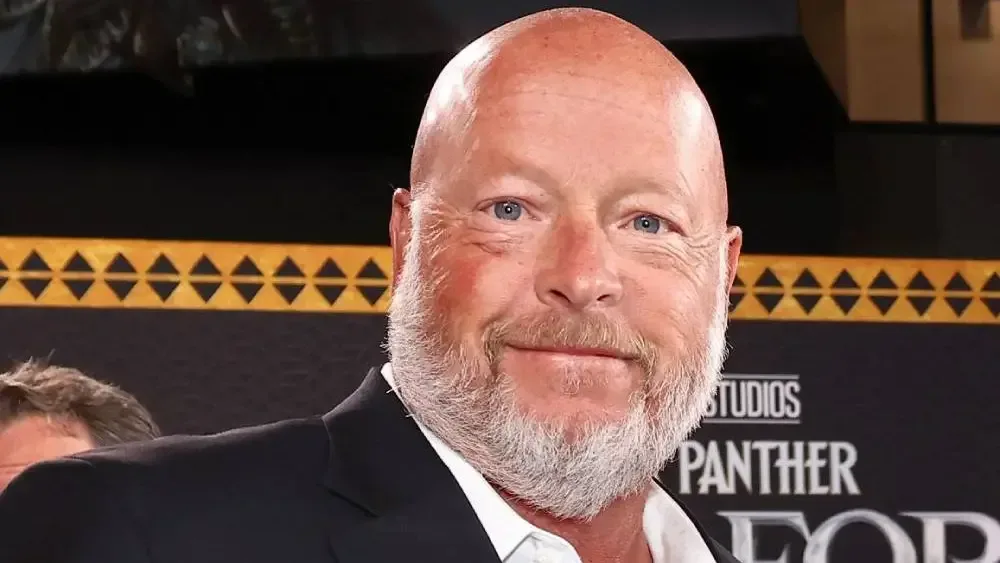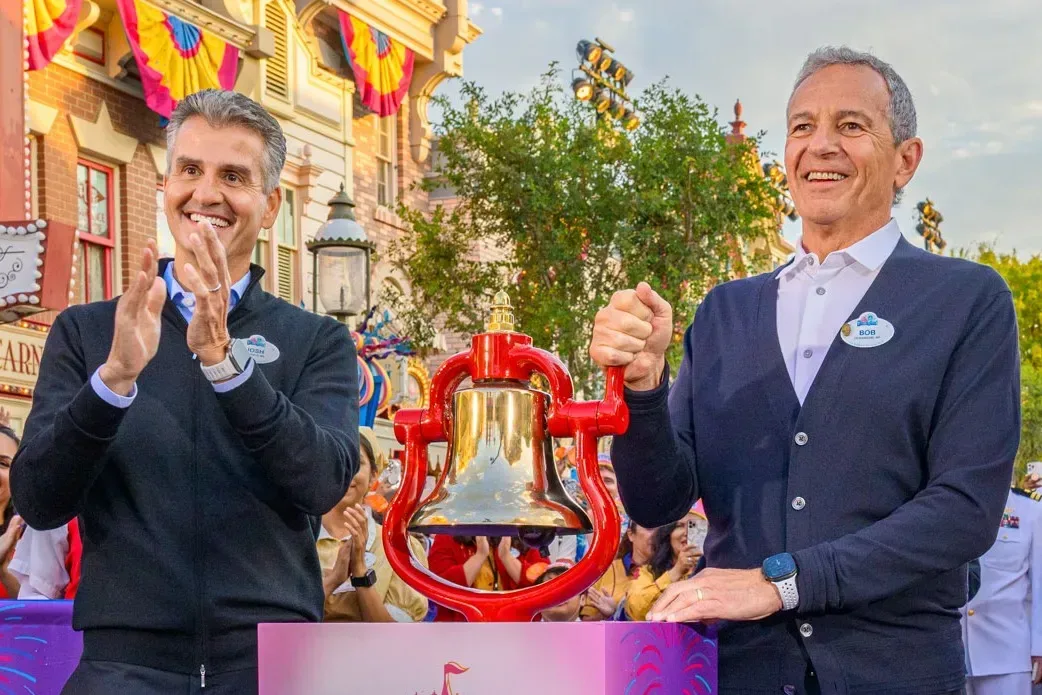
Bob Chapek’s upcoming memoir, Behind the Castle Walls, is positioned as his most sustained answer yet to the story of his unusually brief tenure as Disney chief executive. Chapek took the role in February 2020, was dismissed in November 2022, and was replaced by returning CEO Bob Iger. Now, Chapek says the feeling that remains is not anger so much as disappointment.
That distinction is central to the former executive’s account. Chapek says he was angry for roughly the first year after his departure, but that time has changed the emotional register without resolving the underlying grievance. He believes Iger wanted to return to the top role and worked to undermine him over a prolonged period. Those are Chapek’s allegations and interpretations; representatives for Disney and Iger declined to comment.
The memoir is due September 29 and runs 272 pages. Iger is mentioned 121 times, an unusually blunt numerical indication of the book’s focus. But the larger story is not simply personal friction between two executives. Chapek’s account revisits a leadership transition conducted amid COVID-era shutdowns, the costly race to build streaming, a major corporate acquisition and a series of public cultural disputes. It is also an attempt to contest the conventional shorthand applied to his tenure.
A succession fight in Chapek’s telling
Chapek says he does not claim to have been flawless as CEO. He concedes that nobody could lead for almost three years without errors. His argument is narrower: that none of his mistakes caused, or justified, the board’s decision to remove him.
He puts the decisive cause elsewhere, arguing that Iger could not fully relinquish the chief executive position. Chapek points to the early period when Iger was executive chair and he was CEO, including public reporting in April 2020 that described Iger as taking a more active role during the emerging COVID crisis. Chapek says that episode, alongside what he perceived as tension during the original succession announcement, became evidence to him that Iger intended to resume control.
Importantly, Chapek says neither Iger nor the board explicitly warned him that specific changes were necessary to save his job. He also says he has had no communication with Iger since leaving Disney. Their last brief encounter, by Chapek’s recollection, was at the Sun Valley conference in July 2022, months before his dismissal.
The absence of a direct private reckoning is striking. Chapek says he has never asked Iger why he believes he was betrayed. His public explanation instead relies on his reading of events, his own leadership record and the timing of the board extending his contract through July 2025 only months before removing him.
Why the memoir is arriving now
Chapek says he initially declined the idea of writing about his exit. After allowing time to pass, he concluded that too much of the account that followed his departure was, in his view, inaccurate. The memoir is therefore not framed as a legal escalation—he says he did not consider suing Disney—but as an effort to establish his version of the record.
Related coverage includes Bob Chapek Says Disney Exit Still Leaves ‘Disappointment’ Ahead of Memoir Release.
That difference matters. Litigation would require testing claims in a legal process; a memoir is an author’s interpretation of professional and personal events. Readers should treat its corporate accusations accordingly. Chapek’s account can clarify how he saw decisions from inside the company, but it does not independently settle contested questions of motive, responsibility or effectiveness.
His perspective is nevertheless relevant because he is challenging the explanatory framework that became attached to his tenure. Public memory often compresses his time in charge into a short list: the Florida legislation controversy commonly called “Don’t Say Gay,” the dispute with Scarlett Johansson over Black Widow, escalating dissatisfaction with theme-park pricing and a difficult period for streaming. Chapek does not deny that those episodes were serious. He disputes that they offer a complete explanation for his removal.
COVID, Fox debt and the pressures behind the headlines
Chapek describes taking over a company dealing with several converging stresses. The pandemic disrupted operations and revenue, while the Fox acquisition had left Disney carrying tens of billions of dollars in debt. He says the shutdown environment required the company to furlough 110,000 people while also managing social controversy, investor scrutiny and internal disagreement.
That context does not erase accountability for executive decisions, but it does explain why isolated controversies can be a poor measure of an entire CEO term. A chief executive’s work is often less visible than a single statement, release strategy or earnings report. It includes debt management, organizational structure, labor decisions, investment planning and the competing demands of employees, consumers and shareholders.
Chapek repeatedly returns to that balancing act. In the parks business, he says leaders face conflicting pressures: investors expect returns, employees seek higher wages, and visitors want lower prices and broad access. He distinguishes frequent local and annual-pass guests from destination visitors making a more occasional trip, arguing that their expectations do not always align.
His position is that the pricing decisions associated with his parks leadership were necessary under the business conditions of the time, even if they created lasting resentment among some fans. It is an economic defense, not an argument that guests liked the outcome. Chapek acknowledges that loyal annual-pass holders in particular had reason to feel frustrated.
Creative control and the distribution dispute
A major thread in Chapek’s rebuttal concerns Disney Media and Entertainment Distribution, often shortened to DMED. The group consolidated distribution decisions across formats and businesses. In plain terms, distribution is the machinery that determines how content reaches audiences and earns money—whether through theaters, television, physical media or digital services.
Critics saw the structure as moving power away from creative leaders. Iger dismantled it after returning as CEO, describing the shift as a way to give more decision-making back to creative teams while rationalizing costs. Chapek rejects that characterization. He says the executive running DMED, Kareem Daniel, did not have creative personnel reporting to him, and argues that the group put distribution decisions with the executives responsible for distribution.
Chapek further says the framework echoed an earlier integration of distribution that Iger had encouraged when Chapek worked in studio distribution. In Chapek’s telling, the principle had been endorsed when Iger was CEO, then recast as a mistake once Chapek used a comparable approach from the top job. He cites the shorter theatrical window as an example of the kind of cross-platform decision that an integrated distribution group could facilitate.
The disagreement is more than an organizational-chart dispute. It reflects two different ways of viewing media management. A centralized model can coordinate how one film or show is monetized across multiple outlets. A creative-led model emphasizes authority closer to the people making programming and films. Neither label alone proves success or failure; the results depend on execution, market conditions and who has final authority when commercial and creative goals conflict.
Streaming losses and the long lead time of content
The financial pressure was especially visible in Disney’s fourth-quarter 2022 results. The company missed Wall Street forecasts, and its streaming business reported a $1.47 billion loss. Chapek says decisions that produced much of that quarter’s content spending had been made three or four years earlier, before he became CEO, and argues that creative-content decisions were outside his remit.
This is a useful reminder of how entertainment accounting and production schedules work. A streaming loss reported in one quarter can reflect projects approved years earlier, contracts negotiated under different conditions and a strategy designed for a market that has since shifted. It cannot automatically be assigned to the executive occupying the CEO seat when the results arrive. At the same time, boards typically evaluate a CEO on the company’s present direction as well as the inherited decisions that feed into it.
Chapek’s explanation therefore does not end the debate over responsibility. It defines the fault line: he sees the results as a legacy of earlier greenlights and limited authority over creative choices, while the board ultimately chose to act during his tenure.
Black Widow, altered release plans and a communication failure
Chapek defends the 2021 decision to release Black Widow simultaneously in theaters and on Disney+ during the pandemic. He argues that with many theaters closed, holding the movie for years would have disrupted the interconnected schedule of Marvel stories. The move, in his view, was unavoidable given the conditions.
He does, however, say he wishes the situation had been handled differently with Johansson and her agent. Johansson sued Disney, alleging that the release strategy deprived her of box-office-linked compensation. Chapek’s assessment is that the release itself was justified but the process became damaging for both sides when the disagreement proceeded quickly to litigation.
That distinction is among the clearer admissions in Chapek’s defense. It acknowledges that a business decision can be strategically understandable while its communication, negotiation or contract adaptation still fails. The pandemic changed the practical value of theatrical terms negotiated years before release. The challenge was not merely choosing a new distribution route, but ensuring that talent agreements were renegotiated in a way that matched the altered route.
For Marvel audiences, release sequencing carries an additional complication: the films’ stories are interconnected. As the scale and storytelling choices around the Marvel universe continue to invite debate, Chapek’s argument is that leaving one major installment indefinitely unreleased would have affected a wider narrative cadence.
The Florida controversy and a direct acknowledgment of reversal
Chapek also addresses Disney’s handling of Florida legislation restricting discussion of gender and sexual identity in early school grades. He acknowledges without qualification that he reversed his initial approach after initially declining to make a public statement. He says that first approach was what he believed to be appropriate for Disney as a company, while adding that executive decisions and public statements are shaped by multiple internal influences.
He declined to identify those influences, beyond describing them generally as people within the company who affected such decisions. Chapek also says that while many Disney employees were unquestionably upset, he believes particular demonstrations were organized and largely attended by outsiders. He says that point was not meant to dismiss employees’ concerns or their commitment to representation.
It is one of the few places where Chapek’s account contains an explicit acceptance of a reversal rather than a dispute over how events are remembered. But accepting that he changed course does not answer the broader question of whether Disney’s response was timely or adequate. That remains part of why this moment continues to define public assessments of the period.
Parks, legacy and a relationship still broken
Chapek’s most personal remarks concern Disney parks. He says the enduring magic of a park visit is the interaction between guests and cast members, more than any individual attraction. He recalls visiting Walt Disney World as a child in 1971 and says his own family marked children’s birthdays at Disneyland and made annual trips to Orlando.
Yet he does not anticipate returning to the parks in any capacity soon. Chapek says he felt hurt by the removal of a sign at Castaway Cay recognizing him as “Master Ship Builder” after he secured approval to build three ships. He also says Disney’s company timeline was edited to remove his period as CEO. He attributes the effort to erase him to Iger, though he presents that as a presumption rather than a stated fact.
The memoir arrives while Chapek is working across several ventures. He says he is advising private-equity and entrepreneurial businesses, is involved with NinjaTech AI, is exploring private-equity real estate, and, with his wife, is producing Todrick Hall’s musical Midnight, which premiered in New York on September 27.
He also offers a positive assessment of Josh D’Amaro, the newly appointed Disney CEO and a fellow parks veteran. Chapek says D’Amaro combines business ability with a personable manner and had appeared on Chapek’s succession list for years. That endorsement supports Chapek’s broader rebuttal to claims that a parks executive could not oversee a media and entertainment company.
Ultimately, Behind the Castle Walls does not promise a tidy resolution to a contentious corporate exit. Chapek is not seeking one. His message is that he feels let down after three decades at the company, that he believes his record has been unfairly reduced to a handful of crises, and that the CEO succession itself was never as settled as it appeared. The book is his effort to put that case on the page—even if the divide at its center remains unresolved.