Apple Music has been added as a native service in BluOS, the multi-room audio platform used by Bluesound and a collection of compatible hi-fi brands. The free software update launched on October 20 and lets Apple Music subscribers sign in through the BluOS Controller app, then play their music directly on supported equipment.
The important distinction is that the compatible player, rather than an iPhone or iPad, retrieves the music stream. Apple users can still use AirPlay 2, but the new option brings Apple Music into the same application and device-management system already used for BluOS playback.
What “native” Apple Music support means here
Native support means Apple Music is available within the BluOS Controller app itself. After a subscriber signs in, a compatible BluOS player handles music playback directly. That is different from using a phone or tablet as the device that sends audio onward via AirPlay 2.
For an everyday listener, the result is principally about control and system integration. The music service can now sit alongside the rest of a BluOS household setup instead of requiring Apple Music playback to begin from an Apple device. A phone or tablet may still be useful as a controller, but it no longer has to be the audio-streaming middleman for this route.
That distinction matters most in homes built around more than one networked speaker or audio component. BluOS is designed to link audio equipment across rooms, and Apple Music can now participate in those controls directly. Users can group compatible products to play music together, or direct different music to individual rooms.
BluOS becomes the shared control point
Bluesound makes high-end home-audio products including wireless speakers, soundbars and streaming components for existing hi-fi systems. BluOS is the platform tying those devices together. The Apple Music addition therefore is not limited to a single speaker type or a simple casting shortcut; it is an expansion of the services available inside the platform’s established whole-home workflow.
In practical terms, a BluOS household can use the BluOS Controller app to select Apple Music, choose where it should play and decide whether devices should act as one group or as separate rooms. Someone could use the grouped option for the same music throughout compatible areas, while another setup can keep rooms independent with different selections. Those capabilities were part of BluOS’s wider multi-room role; the update brings Apple Music into that arrangement.
This is also why retaining AirPlay 2 matters. The native path does not replace Apple’s wireless streaming feature. It gives listeners a second route: Apple Music through BluOS for player-led playback and BluOS-centric multi-room management, or AirPlay 2 when that better suits what they are doing.
Player-led playback, explained
A network audio player is the speaker, soundbar or hi-fi component that connects to a music service and plays the audio. With the new integration, that player retrieves Apple Music after the subscriber has authenticated in BluOS. The phone or tablet is not responsible for carrying the stream to the player in the way it would be during an AirPlay 2 session.
That is not a claim that one approach is automatically better for every situation. It simply describes two different playback paths. The native option is tailored to people who want Apple Music available in the BluOS interface and within its house-wide grouping controls. AirPlay 2 remains a useful choice for listeners who prefer to initiate playback from Apple’s own device ecosystem.
More than Bluesound-branded products are covered
The update extends to compatible BluOS equipment made by NAD Electronics, PSB Speakers, DALI Loudspeakers, Cyrus and Monitor Audio, in addition to Bluesound’s own hardware. Compatibility remains the key word: the announcement concerns products that support BluOS, rather than every product sold by those companies.
That broader reach is significant because BluOS is used across several kinds of home-audio hardware. A listener with a wireless speaker may care most about quick room-to-room playback, while an owner of a streaming component connected to an existing hi-fi system may see the appeal in keeping service selection and playback control within the component’s wider ecosystem. The newly available Apple Music route is shared by compatible devices across those participating brands.
It also creates a more consistent experience in a mixed-brand BluOS system. If a household combines compatible equipment from more than one listed manufacturer, Apple Music can be managed as part of the same BluOS environment rather than being treated as an outside addition that relies entirely on AirPlay 2.
The audio-quality question remains open
One material detail has not been specified: the streaming quality offered by the native Apple Music integration. No quality tier, codec information, lossless support or high-resolution capability has been confirmed for this implementation. Those are separate technical questions from whether the service is available natively, and they should not be assumed from the presence of Apple Music in the app.
For buyers and existing owners who place particular importance on format and stream-quality details, that means waiting for clear information from Bluesound or the relevant compatible-device maker before drawing conclusions. The confirmed improvement is service access and playback architecture: Apple Music is now selectable in BluOS, and the player can obtain the stream directly.
The absence of those specifications does not erase the utility of the update. It simply defines its current scope. The launch provides a new way to access a subscription service on supported BluOS products, but it does not establish every technical characteristic of the stream.
What existing BluOS owners should take from the update
- Check device compatibility: The feature applies to compatible BluOS equipment, including products from Bluesound, NAD Electronics, PSB Speakers, DALI Loudspeakers, Cyrus and Monitor Audio.
- Install the free BluOS software update: The Apple Music integration arrived through the October 20 update rather than a separate paid add-on.
- Sign in inside BluOS Controller: Apple Music access is handled through the BluOS Controller app after the subscriber logs in.
- Choose the playback arrangement: Compatible products can be grouped for shared music or assigned different music in different rooms.
- Keep AirPlay 2 in the toolkit: The previous Apple-device streaming route remains available alongside native BluOS playback.
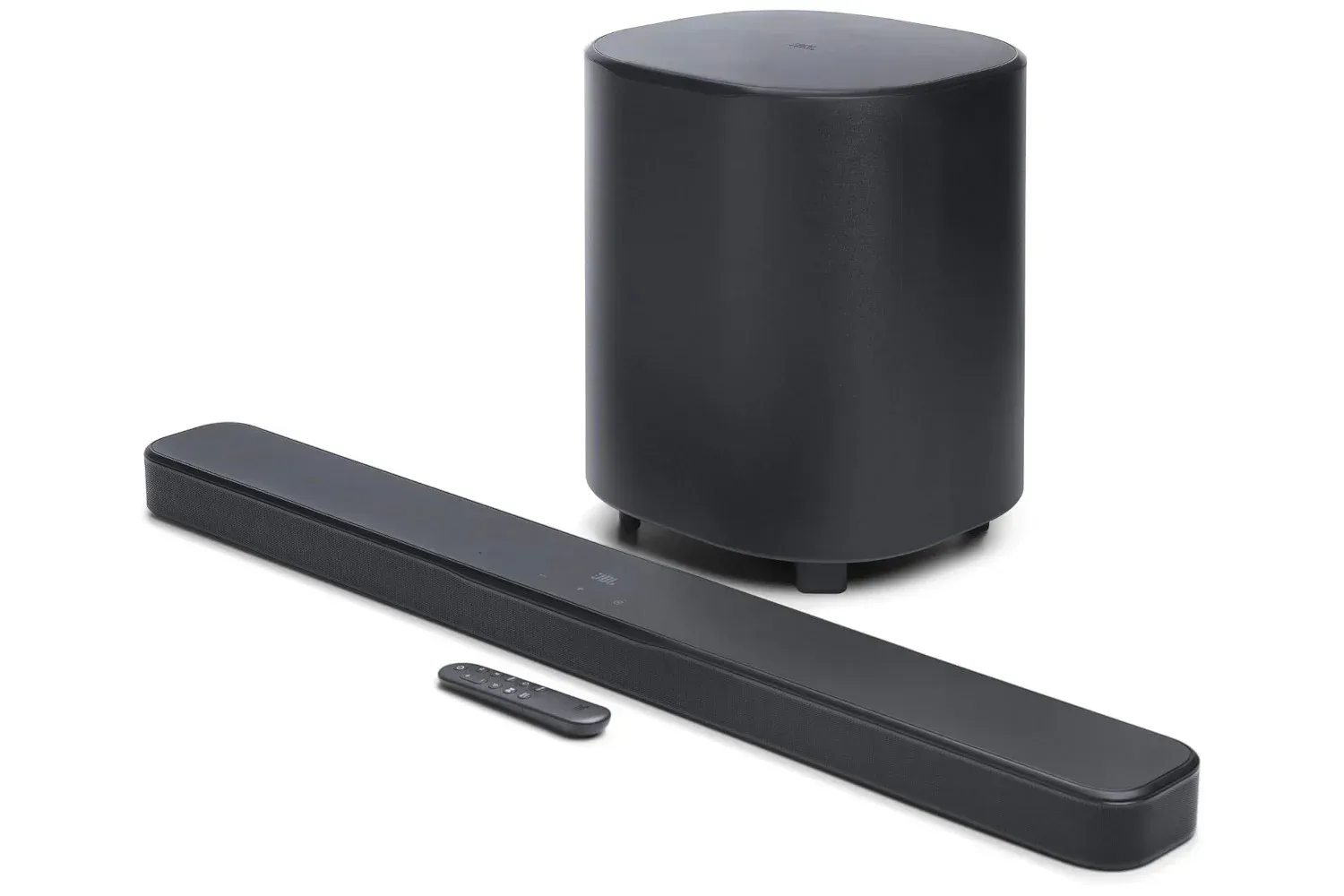
The update may be particularly neat for a living-room system where a BluOS soundbar or component is already central to listening. Readers considering a soundbar setup can also see how another current home-theater option is positioned in our JBL Bar 500MK2 coverage, though Apple Music’s new BluOS integration is specifically about compatible BluOS products and should not be presumed to apply elsewhere.
Why the change is useful without making AirPlay obsolete
Apple Music subscribers with compatible BluOS hardware now have a choice of control models. Native access favors a BluOS-first setup: open the platform’s controller, browse or select Apple Music, then send it to the desired BluOS rooms. AirPlay 2 favors an Apple-device-first setup, where playback is sent from within the Apple ecosystem.
Neither model cancels out the other. Their coexistence is arguably the sensible part of the rollout. People who built routines around AirPlay 2 can retain them, while people who want their music service in the same app that organizes their BluOS devices have a direct alternative.
For the platform, the update closes a practical gap for subscribers who want Apple Music to behave like an integrated service in their home-audio system. For listeners, the tangible benefits are direct playback at the player, BluOS-based room grouping and independent-room choices, with AirPlay 2 still available when it is the preferred route. The only major technical unknown left by the launch is the quality level of the stream.