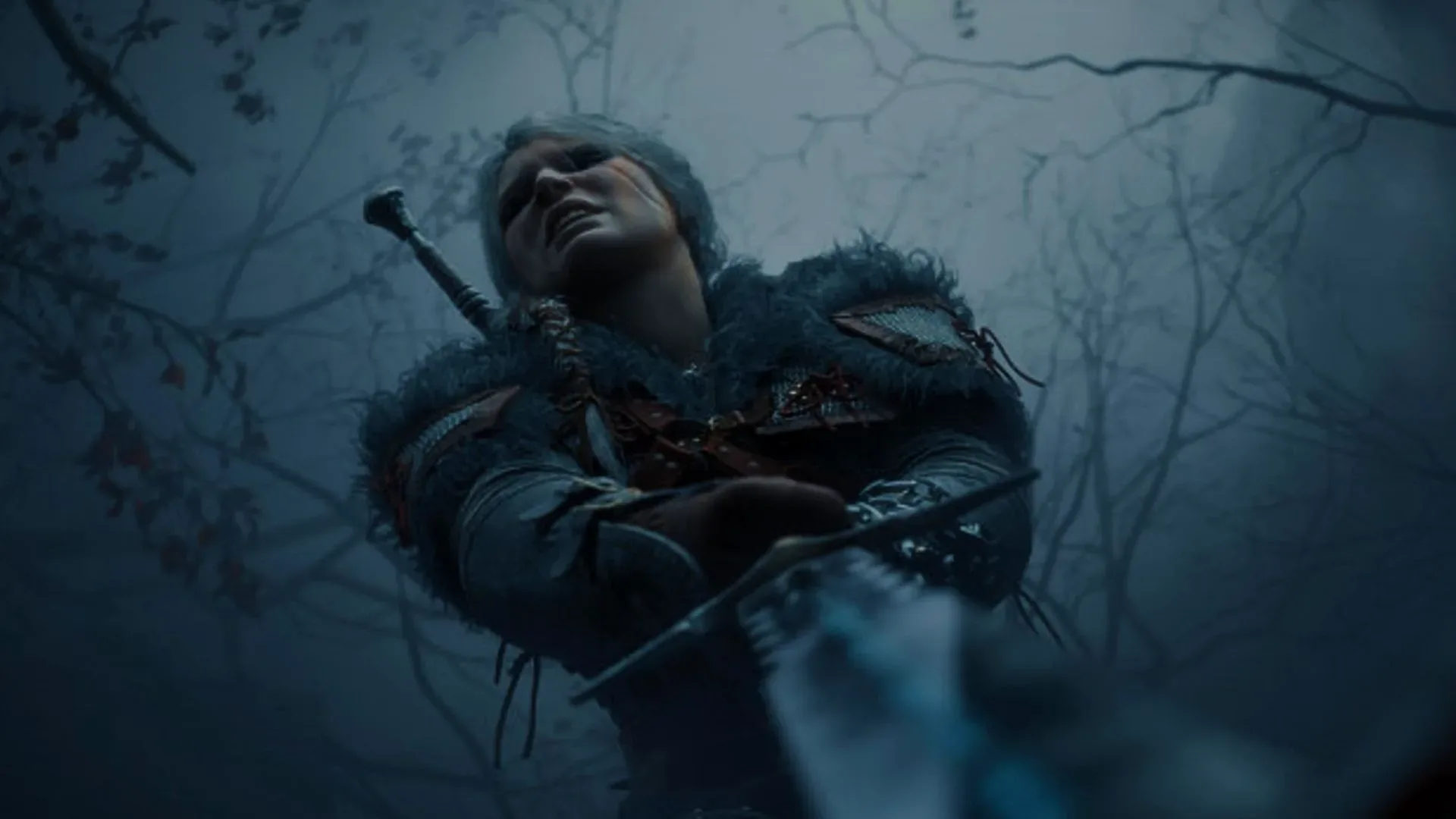
CD Projekt Red has multiple major projects in development, including The Witcher 4, Cyberpunk 2 and the new IP known as Project Hadar. That slate is ambitious by any measure. It is also the context for a caution from Mark Darrah, a veteran developer who served as co-director on Dragon Age: Origins and executive producer of Anthem: games built at the very largest scale can put studios in a financially dangerous position.
Darrah’s argument is not that CD Projekt Red has disclosed a specific budget, sales forecast or financial shortfall for any of those games. None of that is established here. Rather, he is describing the economics that can emerge when a studio is expected to compete in the same broad blockbuster space as Grand Theft Auto: enormous production efforts can require extraordinary sales before a game becomes profitable.
In Darrah’s view, CD Projekt Red’s games may now need to sell roughly 15 million to 20 million units to make money. He calls that “a really dangerous place to be.” It is a pointed assessment, and it should be understood as Darrah’s industry perspective rather than a confirmed target from CD Projekt Red.
The risk is the sales floor, not ambition itself
Big games are not automatically a problem. The pressure comes when the minimum commercial outcome needed to sustain the project becomes exceptionally high. Darrah frames the issue through the industry’s pursuit of games on the scale of the forthcoming GTA 6. If developers and publishers seek the next game of that magnitude, they may also accept development costs and expectations that only the biggest hits can satisfy.
That changes the meaning of success. A game can be widely discussed, positively received and sell millions of copies, yet still fall short if its development and marketing spend has risen further still. Darrah’s most dramatic illustration is a project that would need to move 50 million units merely to avoid losing money. He regards that threshold as unreasonable.
For players, that sort of financial structure matters because it can shape the kinds of games that get funded. A publisher facing an enormous break-even point may be more inclined to prioritize ideas with the widest possible reach, established franchises and giant launches. “Break-even” is the point at which revenue has covered the costs tied to making and bringing a product to market; it does not mean a project has produced a surplus. The higher that line rises, the less room there may be for a respectable-but-not-record-breaking result.
Darrah contrasts that scenario with titles that need to sell around 3 million to 4 million copies. He points to Clair Obscur: Expedition 33 as an example of a more appealing model. The key distinction in his argument is not simply the game’s genre or creative style. It is the prospect of a business model where several million sales can be meaningful enough to support the work.
Why CD Projekt Red is part of the discussion
CD Projekt Red is not pursuing one isolated sequel. Its active portfolio includes a new Witcher installment, a second Cyberpunk game and Project Hadar, an original project whose work has progressed from world-building into prototype testing. Prototyping generally refers to making early playable or technical experiments to test concepts before full-scale production. World-building, by comparison, concerns establishing the setting, concepts and foundations of a fictional universe. That Project Hadar is at the prototype-testing stage offers a narrow but useful indication that it remains in earlier development work than a finished release.
Related coverage includes BioWare Veteran Warns CD Projekt Red's Biggest RPGs Face Rising Financial Pressure.
These projects do not necessarily share a budget, release plan, team size or commercial target. It would be a mistake to assume they do. Still, the lineup illustrates why Darrah’s comments invite attention: CD Projekt Red is simultaneously attached to two prominent RPG brands while also investing in a new universe.
The Witcher and Cyberpunk are recognizable names, but brand recognition does not eliminate the underlying concern. Darrah’s warning is about the burden created when each major release must deliver sales on a blockbuster scale. A famous IP can improve a game’s visibility, yet a studio can still face substantial exposure if costs and expectations climb alongside that visibility.
That is also why calling the company’s position “dangerous” should not be mistaken for a prediction that its games will fail. It is a warning about concentration of risk. The more a project depends on a huge audience, the narrower the margin may become between a major hit and an expensive disappointment.
What this does—and does not—tell us about the upcoming games
The available details support several concrete points: The Witcher 4, Cyberpunk 2 and Project Hadar are in progress; Project Hadar has moved on from world-building to prototype testing; and Darrah believes games at CD Projekt Red’s apparent scale face demanding commercial requirements.
They do not establish release dates, prices, development budgets, platform plans, team counts, sales targets set by CD Projekt Red or the eventual quality of any project. Nor do they show that the company has adopted a GTA-like business strategy in a literal sense. Darrah uses Grand Theft Auto as shorthand for an industry pattern: chasing the kind of massive cultural and commercial result associated with the biggest games.
That distinction is important when reading industry commentary. A veteran’s analysis can be valuable precisely because it identifies incentives and risks that are not visible in a trailer or a release calendar. But analysis is not the same as financial reporting. The 15 million-to-20 million range is Darrah’s stated view, not a figure independently confirmed by CD Projekt Red.
Scale can affect creative choices as well as accounting
In practical terms, rising expectations can affect a project long before launch. A game designed to serve an enormous audience may need more content, more technology, more localization, more marketing reach or more time in development. Those elements are not inherently bad; players often want richly realized worlds and long-form RPGs. The concern is that each added layer can increase the pressure to reach a correspondingly larger audience.
Darrah’s comparison with games able to work at 3 million to 4 million sales presents another possibility: a healthier environment may not depend on every notable release becoming a once-in-a-generation phenomenon. In that environment, more projects can plausibly succeed at different scales. The result could be greater room for games that do not need to compete directly with the largest entertainment launches in the market.
For CD Projekt Red, the eventual question is not whether a large RPG can earn a large audience. Its forthcoming projects are clearly positioned to attract attention. The question raised by Darrah is whether the cost of meeting modern blockbuster expectations can outrun even the commercial power of leading RPG franchises.
AI is a separate development decision
The conversation around scale also sits alongside a different question about how games are made. CD Projekt Red’s CEO has said the company is still predominantly using people over AI in development, while adding that each organization must make its own choices. That comment does not resolve the budget concern, nor does it specify exactly how AI is or is not used across projects. It does show that production tools remain part of the broader debate over how studios manage growing complexity.
AI in this context can cover a wide range of software-assisted practices, so broad claims about it need specificity. Whether a tool is used for experimentation, routine support or creative content can make a material difference. The wider industry is also wrestling with questions of originality and imitation, as explored in a recent discussion of AI copycats and game originality.
Darrah’s warning ultimately centers on a simpler issue: a business where a game must sell at extraordinary volume to be viable leaves little room for ordinary success. CD Projekt Red’s packed development slate makes that question especially relevant, even though the specific financial thresholds he cites remain his own assessment rather than confirmed company guidance.