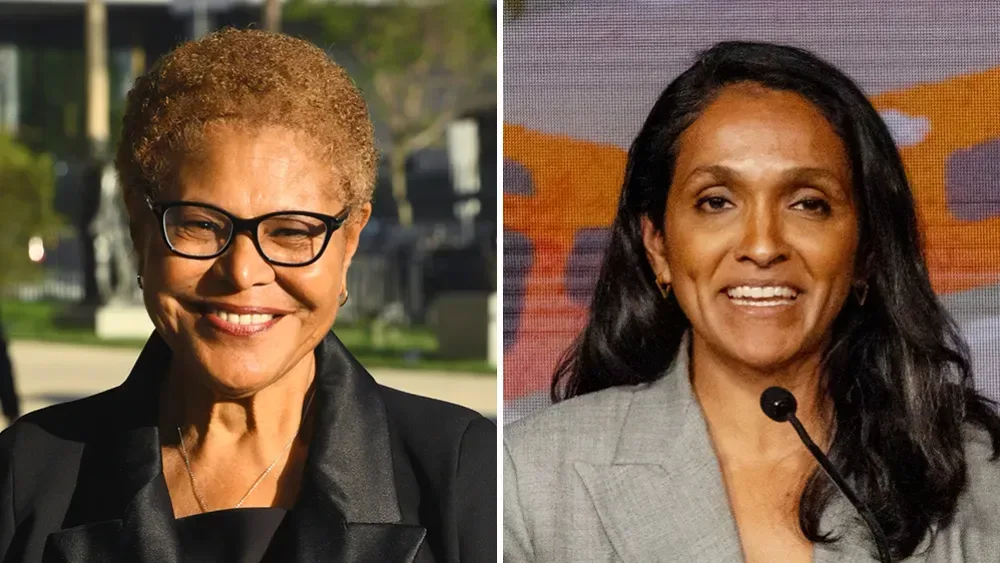
Los Angeles Mayor Karen Bass and City Councilmember Nithya Raman are locked in a close race in early returns, with no immediate resolution expected. The narrow margin leaves both campaigns reading incomplete vote totals carefully rather than treating the first count as a final verdict.
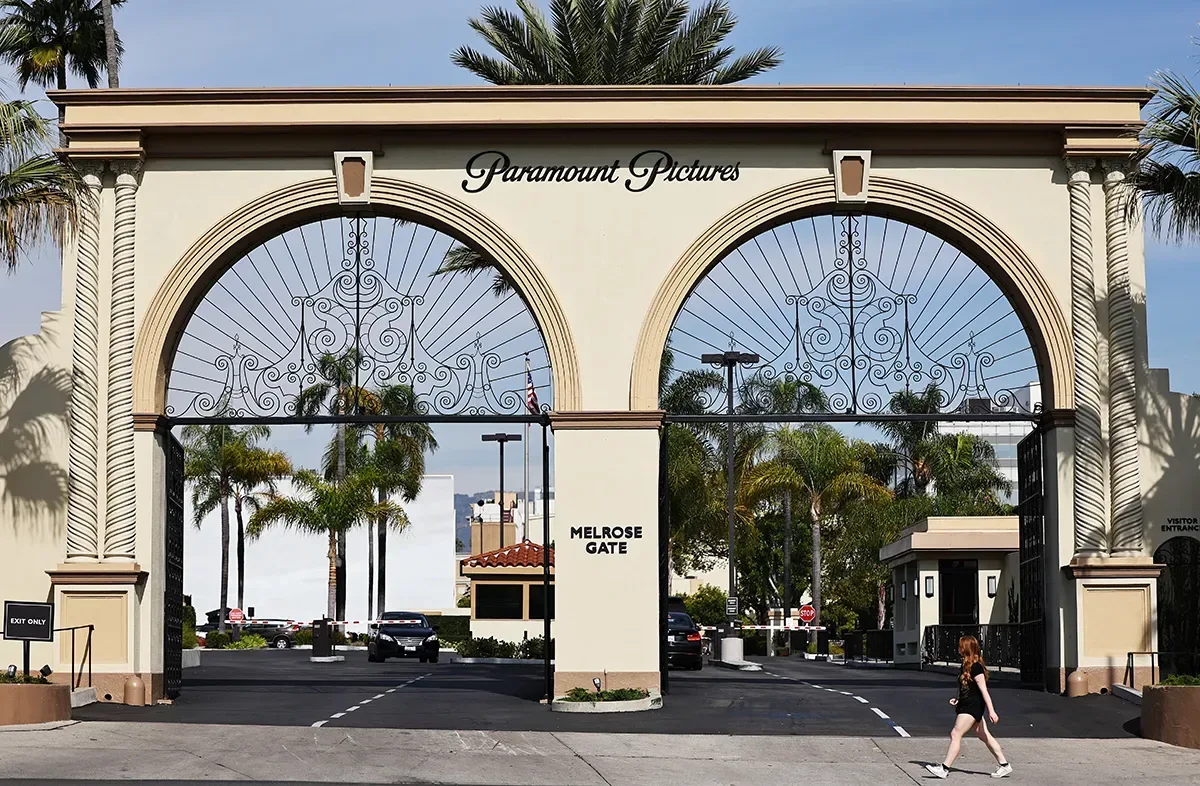
The contest has put a familiar set of Los Angeles pressures at the center of the ballot: affordability, housing, homelessness and civic disorder. It has also carried unusually direct stakes for entertainment workers, as Bass and Raman have each addressed the loss of film and television jobs and backed broader tax-incentive efforts meant to keep production in the United States.
Early numbers leave little room for certainty
Bass began the evening with a one-point lead in the initial ballots, but that edge narrowed as additional voters arrived and the count evolved. Prediction-market odds that had leaned slightly toward the incumbent before the first ballots were reported later swung heavily toward Raman. Neither development settles the election. Early ballots, later-arriving votes and outstanding counts can represent different parts of the electorate, which is precisely why a tight race may not be called on election night.
The more meaningful fact at this stage is not a momentary lead, but the closeness of the contest. Raman’s supporters treated a near tie with a sitting mayor as an encouraging signal, while Bass allies argued that her closing campaign had built momentum and that later returns could be more favorable. Those are competing campaign interpretations, not results.
The two election-night scenes underscored their different political cases. Raman’s gathering in the plaza at the Greek Theatre brought together a young, visibly progressive crowd energized by Democratic victories elsewhere. At the Los Angeles County Democratic Party celebration, Bass’ side projected steadiness and familiarity, the posture of an incumbent trying to retain office amid a difficult but competitive challenge.
An incumbent record versus an outsider argument
Bass is asking voters for another term on the basis of experience, established relationships and a record that supporters believe provides continuity for a city confronting major civic problems. Organized labor was prominently behind her, including the Los Angeles County Federation of Labor, while supporters pointed to trust and her long history in Los Angeles public life.
For some voters, continuity has extra weight as Los Angeles approaches the 2027 Super Bowl and the 2028 Olympics. That argument does not claim the city’s problems are solved. Instead, it frames a change in leadership as a risk during a period of high-profile logistical demands.
Raman has offered the opposite diagnosis. She has portrayed herself as a challenger to a City Hall establishment that she argues has accepted too much mediocrity. Her campaign has criticized Bass over homelessness, civic disorder, affordability and housing, as well as the mayor’s handling of the 2025 Palisades fire. The political contrast is clear: Bass argues she has the experience to continue the work; Raman argues that the city requires a sharper break from its current direction.
Related coverage includes Bass and Raman Locked in Tight Early Los Angeles Mayor Race.
That contrast explains why the race has remained competitive even with Bass entering as the early favorite. Incumbency can communicate competence and stability, but it also makes an officeholder the obvious target for frustrations about conditions that residents encounter daily. Raman’s bid has attempted to convert those frustrations into a mandate for higher expectations.
Why the film-and-TV workforce matters in a mayoral race
Entertainment production is not the only issue in the election, but it is one where the candidates have outlined a concrete disagreement about the city’s posture. Raman has faulted Bass for being slow to appoint an industry liaison and for relying on an appointee who is not full-time. Raman has said she would establish a fully staffed film office serving the industry.
A film office, in this context, is a public-facing unit intended to coordinate with productions and the broader screen-business ecosystem. Raman’s proposal is therefore about administrative capacity: a dedicated office could give the industry a defined point of contact rather than treating its concerns as one responsibility among many. The supplied information does not establish the prospective size, powers, budget or timetable of such an office, so those details remain unknown.
The dispute arrives as both candidates acknowledge a broader challenge: film and television work has been leaving Los Angeles. Their common ground is notable. Bass and Raman have both said they would support unlimited state-level film and TV tax credits and seek a federal incentive intended to make the United States more competitive with overseas production centers.
Tax credits are government incentives that lower a qualifying production’s tax burden, generally in exchange for spending and employment that meet program rules. In this case, the shared policy objective is to make domestic production financially more attractive. “Unlimited” describes the candidates’ stated preference at the state level, but the supplied details do not specify a legislative plan, eligibility terms or how such credits would be funded.
The mayor of Los Angeles does not single-handedly enact statewide or federal tax policy. That makes the candidates’ pledges an advocacy agenda as much as a municipal one: a mayor can use the office to press state and federal officials, align local stakeholders and make the economic case for production incentives. A city-run film office, by contrast, is closer to a local administrative commitment and is one of the clearer points of separation between the campaigns.
The industry’s labor organizations have split their support. Raman received backing from the Writers Guild of America West, of which her husband is a member. Bass was endorsed by the Hollywood Teamsters, IATSE and the American Federation of Musicians Local 47. The division reflects that “the industry” is not a single voting bloc. Writers, crew members, drivers, musicians and other workers can share an interest in jobs while differing on who they believe is best equipped to deliver policy results.
That split also makes the race relevant beyond the immediate mayoral count. The next mayor will inherit pressure to respond to employment concerns in an industry that remains culturally central to Los Angeles and important to many local households. For a related look at the statewide policy picture, California’s coming film tax-credit decision is another important part of the discussion.
What remains unresolved
The early count cannot yet answer the core political question: whether voters ultimately prefer Bass’ experience or Raman’s promise of a more confrontational reset. It also cannot show whether the candidates’ common commitment to larger production incentives will translate into tangible action after the election.
For Bass, a win would be read as an endorsement—though not necessarily an uncomplicated one—of continuity in the face of criticism over housing, homelessness, public order and the Palisades fire response. For Raman, a win would validate an outsider campaign that treated dissatisfaction with City Hall as an opening for progressive change and placed the entertainment workforce within a wider economic-affordability case.
Until more ballots are counted, the practical takeaway is restraint. A close preliminary tally is evidence of a close preliminary tally, not proof of a winner. What is already clear is that Los Angeles voters have been asked to choose between two sharply different governing narratives, while both candidates recognize that restoring film and television employment will demand attention beyond campaign rhetoric.