The Atari name is heading from the screen to the construction site. Atari Hotels has broken ground on its Phoenix, Arizona property, beginning a project first outlined in January 2020 and now targeting completion in late 2028 or early 2029.
The proposed Roosevelt Row development is positioned as considerably more than a branded place to sleep between convention panels or late-night ranked matches. Plans call for high-tech guest rooms, creator studios, restaurants, shopping, immersive experiences, several bars, a sportsbook, and an esports and concert space capable of holding more than 2,000 attendees.
That combination makes the Phoenix project an ambitious test of whether gaming culture can function as the organizing idea for a destination venue rather than simply its decor. Atari’s recognizable name supplies the nostalgia, but the planned amenities point at a much wider audience: competitors, performers, online creators, tourists, local residents, and people who may never boot up an Atari game at all.
Construction has moved into Phase One
Work is currently in Phase One. It involves demolishing the building already on the site and preparing the foundation for the new hotel. Phase Two is expected to begin shortly after that work is finished.
A groundbreaking is not the same thing as an opening date, and the late-2028 to early-2029 completion window remains a projection. There are several years between the current demolition-and-foundation work and a finished, operating hotel. For now, the most concrete development is that the project has progressed beyond early renderings and long-range branding plans into initial site work.
Intersection Development is involved in the Phoenix property. Jordan Taylor, a partner at the company, described the milestone as the beginning of an interactive venue intended for the developer’s hometown. Atari chairman and CEO Wade Rosen said the project reflects the company’s view of gaming as a durable part of popular culture and is meant to serve fans, visitors and Phoenix residents.
The 2,000-plus venue is the central gaming proposition
The most consequential element of the plan is likely the combined esports and concert venue. With capacity for more than 2,000 attendees, it is envisioned as a space for live, communal events rather than a small hotel lounge with a row of gaming PCs.
Esports refers to organized competitive video gaming, typically played before an audience in person, online, or both. An esports venue therefore has potential uses well beyond a single tournament: competitive events, watch parties, broadcasts, creator appearances, community competitions, music performances and other ticketed programming can all fit under that broad label. The announced plans do not specify which game publishers, tournament operators, teams, event formats, technical infrastructure, or regular programming would be involved. Those details will matter greatly once the building gets closer to opening.
Related coverage includes Atari Hotel Breaks Ground in Phoenix With Esports Arena, Creator Studios Planned.
Still, the scale is notable. A venue designed for thousands of people suggests the hotel’s entertainment component is intended to stand on its own, attracting people who are not overnight guests. That matters practically for Phoenix locals: a hotel can have a destination event space without making every event a hotel-only experience. Whether that potential becomes reality will depend on the eventual calendar, ticketing, access arrangements and partnerships, none of which have yet been detailed.
Creator studios could make the property more than an event hall
The planned creator studios are another important piece of the concept. “Creator” is a broad modern media term that can include streamers, video producers, podcasters, commentators and other people making material for online audiences. A studio usually implies dedicated production space, though the exact equipment, booking model, eligibility rules and services for these studios have not been announced.
That ambiguity is worth keeping in mind. Creator studios could range from a meaningful production facility to a more limited amenity. Either way, their inclusion shows the project is built around the contemporary gaming ecosystem, where gameplay, live commentary, community content and events increasingly overlap.
It also separates the plan from a conventional retro-themed hotel. Atari is a historic gaming brand, but a property with production rooms and a major event venue is looking toward present-day media habits. Visitors might arrive for an esports event, a concert, a recording session, a meal, a drink, or simply the hotel itself. The project’s pitch appears to be that these activities can reinforce one another under a gaming-centered identity.
Gaming’s broader place in mainstream consumer technology is also visible in products that bundle entertainment access with everyday hardware. For example, Apple’s A16 iPad listing includes Apple Arcade trial eligibility, a small illustration of how game access now travels alongside general-purpose devices. Atari Hotels is pursuing the physical counterpart: an environment designed to host gaming as one part of a larger social and entertainment offering.
What “immersive” means here remains to be seen
Plans also mention immersive bars and immersive experiences, but those terms are not accompanied by operational specifics. In entertainment and hospitality, immersive usually describes an attraction or venue designed to surround visitors with a themed environment rather than offering a single passive activity. That can involve architecture, sound, lighting, displays, interactive installations or performance. It does not, by itself, confirm a particular technology or attraction format.
So readers should distinguish the broad announced categories from confirmed features. The project is expected to have high-tech rooms, but the precise technology has not been outlined. It is expected to offer immersive experiences, but their subject matter and form have not been explained. It will include a sportsbook in the plan, though no operating partner, rules of access or launch details have been provided.
These are not minor distinctions. A concept can communicate a venue’s ambition while still leaving the practical guest experience unresolved. The reliable takeaway at this stage is the intended mix of lodging, dining, shopping, gaming-adjacent production and live entertainment—not a definitive list of installed attractions or services.
New designs have shifted away from the early cyberpunk concept
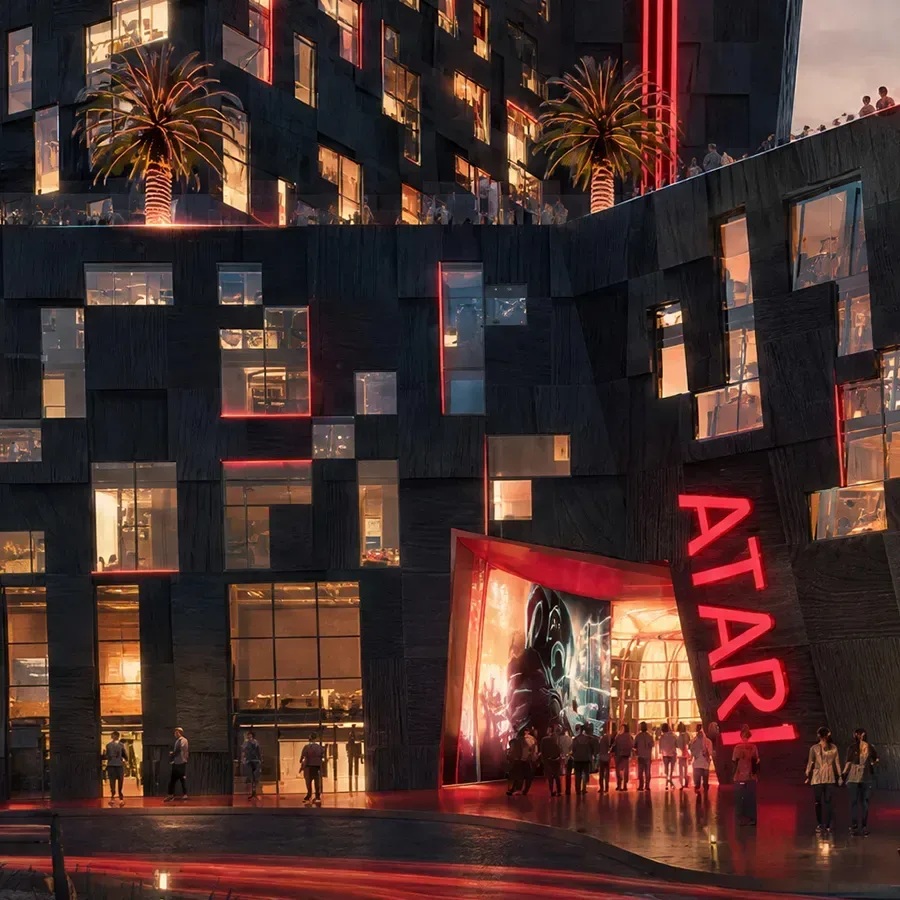
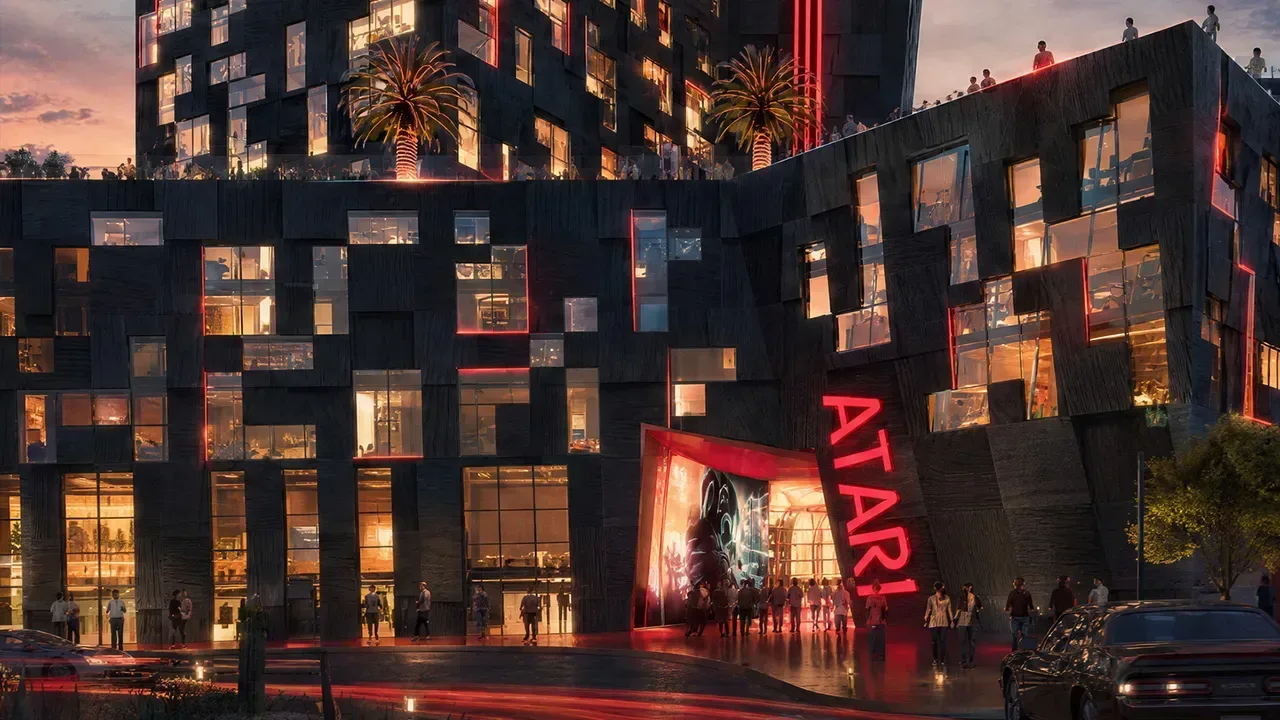
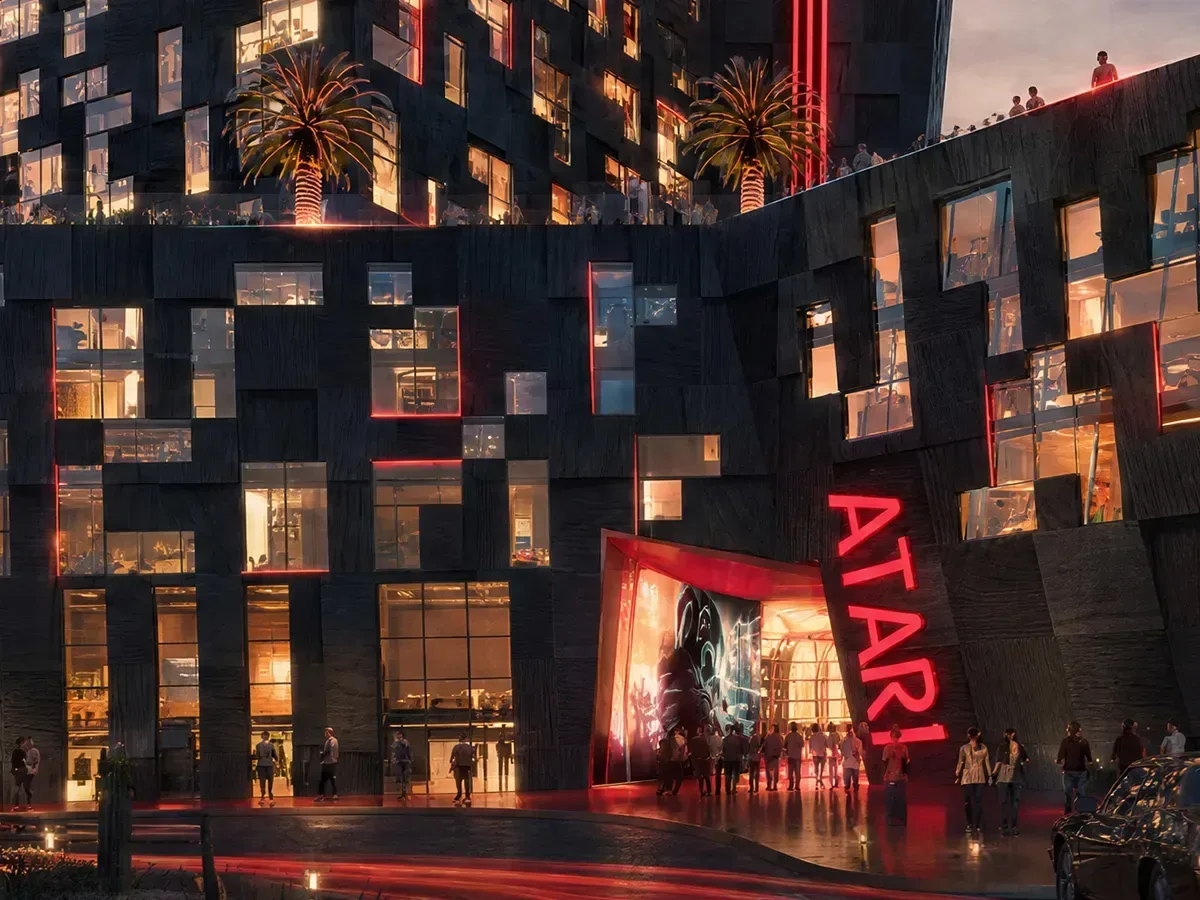
Early artwork that circulated in October 2020 presented a dramatically futuristic image. That version used a form resembling Atari’s logo and leaned heavily into neon lighting, robotic figures and a cyberpunk-style exterior. It was the kind of visual designed to make a hotel look like a piece of science-fiction architecture.
More recent concept images depict a different direction. The newer visual approach appears less tied to that earlier, highly stylized Atari-logo structure and more grounded in the present period. Concept art is useful for understanding creative intent, but it is not a construction guarantee; the shift between the older and newer imagery is a reminder that major projects can evolve substantially before opening.
The hotel is being designed by räkkhaus, an architecture studio. Atari’s involvement is through a license, placing the company’s brand at the heart of the development rather than suggesting that the hotel itself is a game studio or a conventional Atari product launch.
A brand built for nostalgia, aimed at a current entertainment audience
The most interesting tension in the plan is between Atari’s legacy and the present-day spaces proposed for the hotel. Atari evokes gaming history, while esports venues, creator studios, sportsbooks and entertainment districts are distinctly contemporary ideas. That blend can be a strength if the property gives both sides room to exist: recognizable branding for people drawn to Atari’s heritage, alongside facilities that are useful for current events and media production.
The announced celebrity investors and partners include FaZe Adapt and professional wrestler Henry Cejudo, another sign that the venture is placing itself across gaming, creator culture and sports entertainment rather than within a narrow retro-gaming lane.
For prospective guests and eventgoers, the practical questions will arrive closer to the scheduled opening window. What does a “high-tech” room provide? How can creators use the studios? Will the 2,000-plus-capacity venue host recurring esports competitions, concerts, or a mixture of both? How much of the experience will be available to the public without a room reservation? None of that is confirmed yet.
For now, Phoenix has the start of a construction project with a notably broad gaming-and-entertainment brief. If it opens on its stated timeline, Atari Hotels will have had nearly a decade to transform an announced concept into a real venue—one built not just to display gaming culture, but to accommodate the many ways people gather around it.