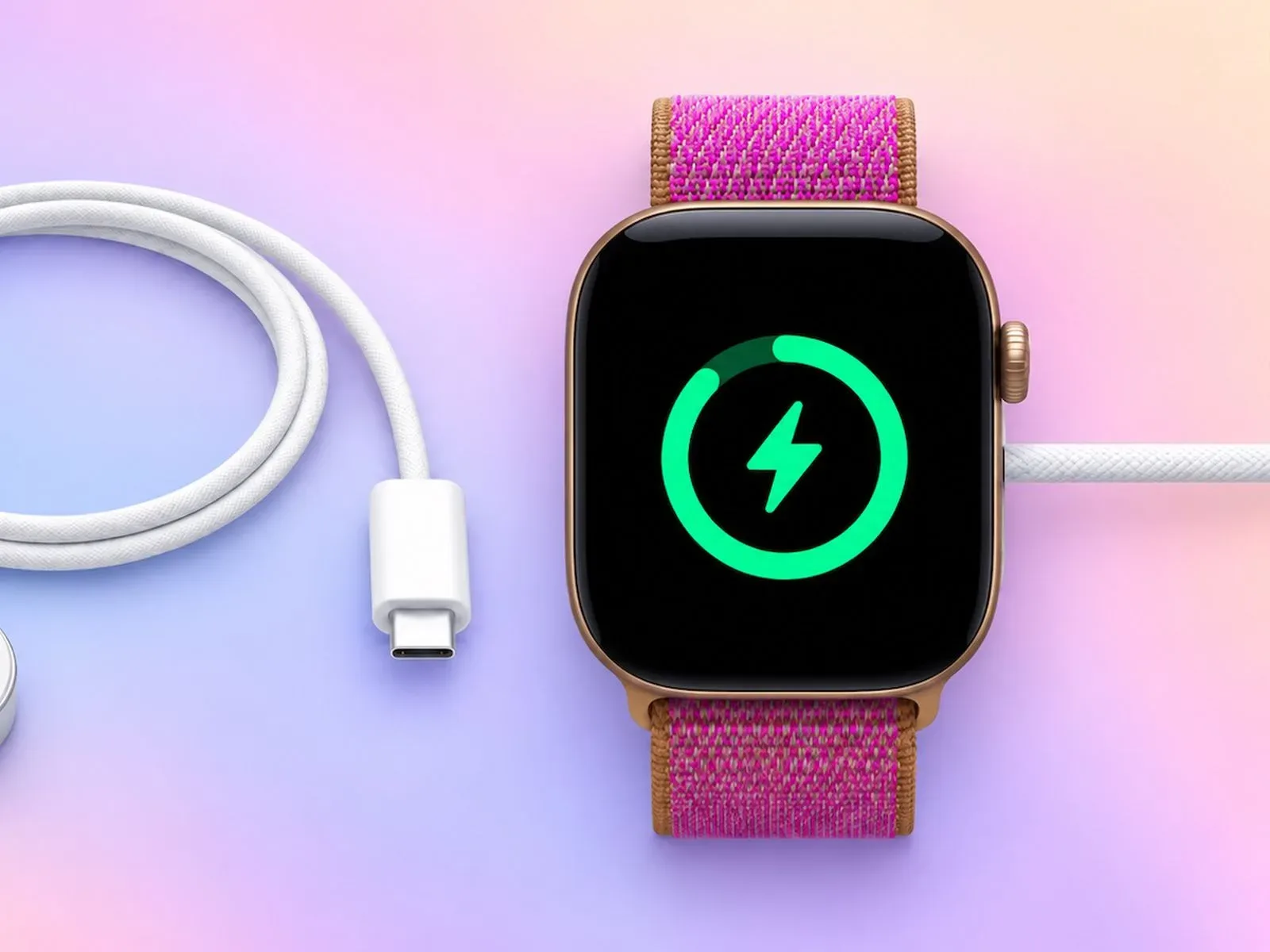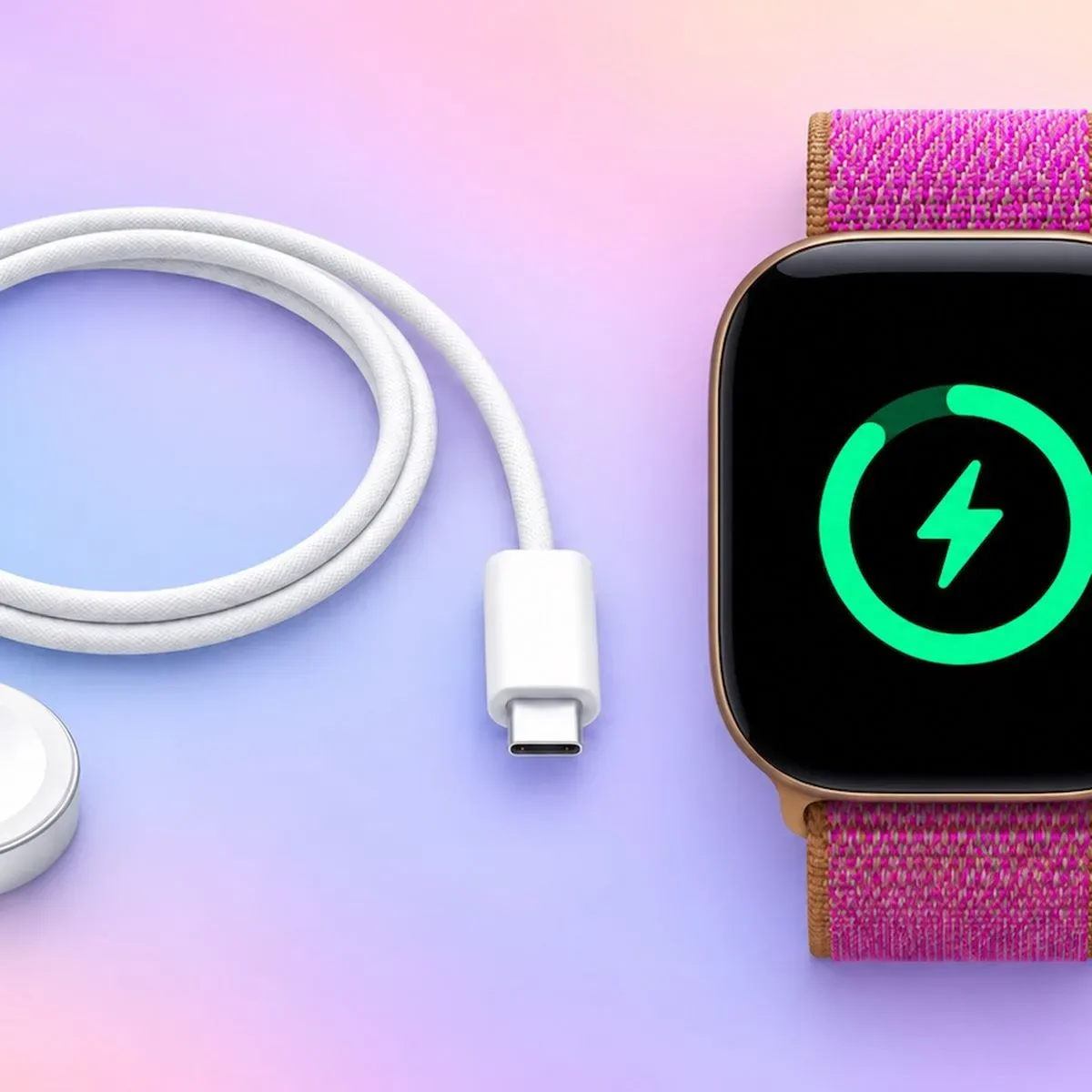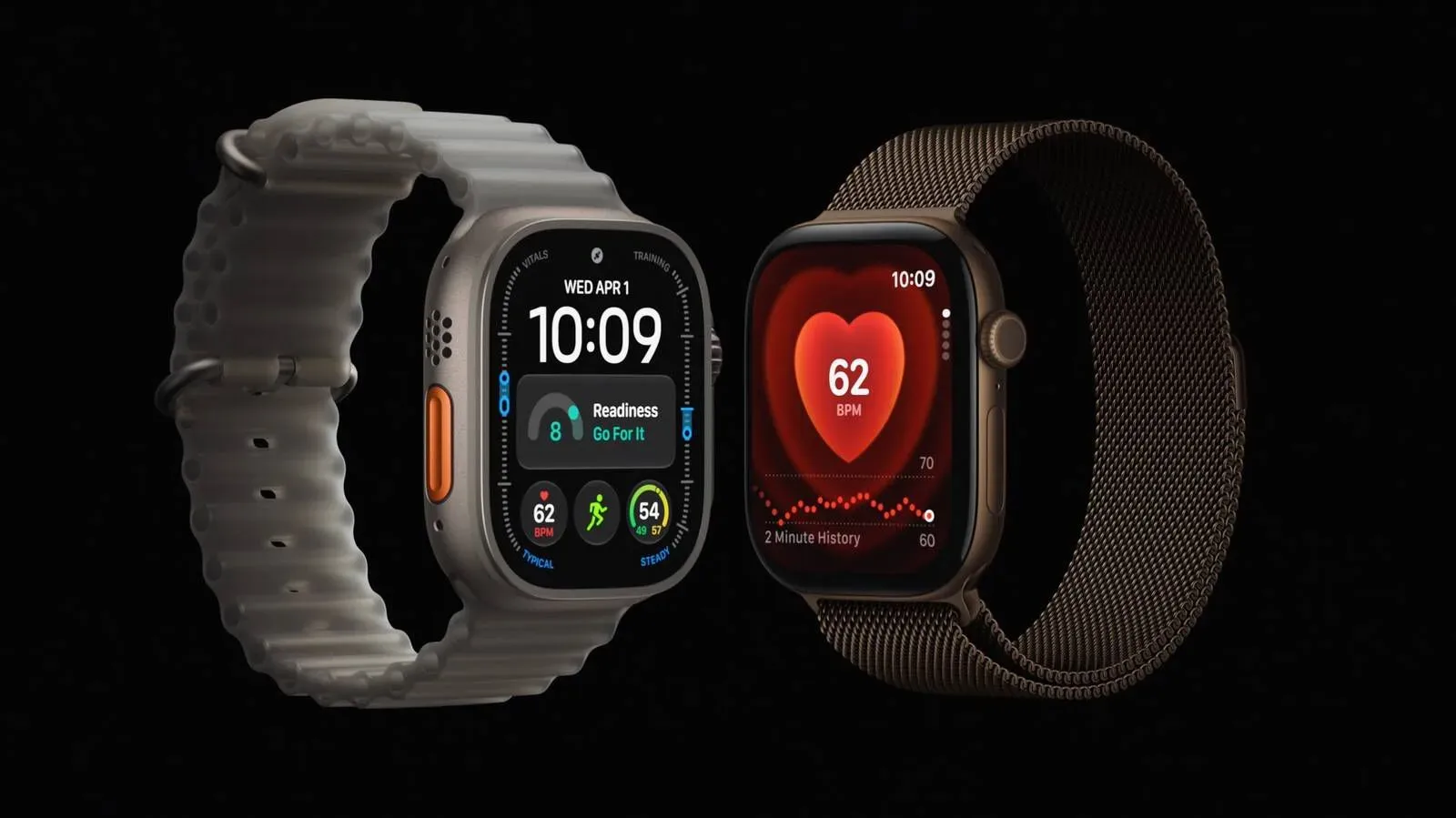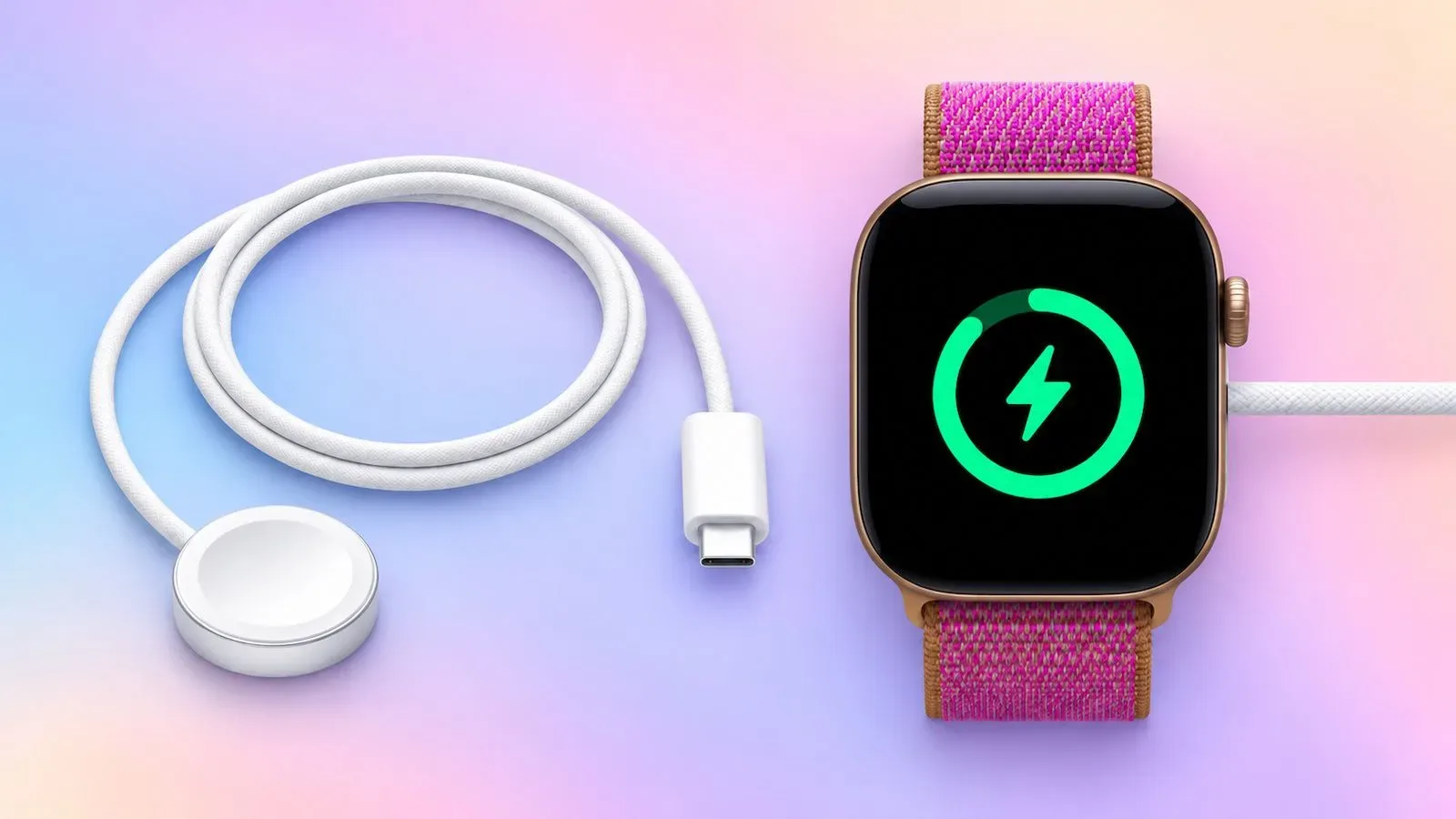
A new Apple Watch charging puck has arrived with a small exterior change and a much more consequential technical distinction. The updated 1-meter Apple Watch Magnetic Fast Charger to USB-C Cable, model A3277, supports up to 10W of power. The earlier version is limited to 5W.
That doubled power ceiling is part of what enables the faster charging figures attached to the Apple Watch Series 12 and Apple Watch Ultra 4. But it is not a universal performance upgrade for every Apple Watch that can attach to the magnetic puck. The new cable, the new watch hardware, and an adequately rated USB-C wall adapter all have to be present for the headline result.
Apple lists the new one-meter cable on its online store for $29 in the United States. It is included with the Series 12 and Ultra 4, while separate cables may matter for people who keep chargers in different rooms, build a travel kit, or use a charging stand that relies on a removable Apple Watch cable.
The three-part requirement for the fastest charging
Fast charging is often described as though a single cable solves the equation. Here, it is better understood as a chain with three required links:
- A compatible new watch: Apple Watch Series 12 or Apple Watch Ultra 4.
- The updated charging puck: model A3277, which can provide up to 10W.
- A suitable power adapter: a USB-C Power Delivery charger rated at 10W or higher.
If one element remains at the older specification, the faster result does not automatically follow. In particular, plugging the new puck into an underpowered adapter would prevent the charging setup from reaching its intended maximum. Likewise, installing the new puck in an older charging setup does not give an older watch the new generation’s faster-charging behavior.
USB-C Power Delivery, often shortened to USB-C PD, is the charging standard named in this requirement. In straightforward terms, it is the mechanism that lets compatible devices and chargers negotiate an appropriate power level. The important practical detail is the rating: for the fastest Series 12 and Ultra 4 charging, the adapter needs to be rated for at least 10W.
What 10W means—and what it does not
Watts are a measure of power. A 10W-capable puck has twice the supported output of the prior 5W version, but that does not mean every Apple Watch charges twice as quickly in every situation. Charging speed is determined by the whole system: what the charger can supply, what the cable and puck support, and what the watch’s charging hardware can accept and manage.
Apple Watch Series 12 and Ultra 4 include hardware changes that make use of the updated setup. That hardware dependency is the key reason Apple has issued a fresh puck rather than treating the change as merely a new cable accessory.
For buyers, the model number is the clearest identifying detail supplied for the new version: A3277. This is useful when purchasing an extra cable specifically for a charging stand or a bag, since the physical form of a magnetic charging puck alone does not communicate its maximum supported power.
The 15-minute battery-life claims
Apple’s short-charge estimates are substantial, though they should be read as estimates of added battery life rather than as a statement that a watch reaches a particular battery percentage.
- Apple Watch Series 12: 15 minutes of charging can add up to 12 hours of battery life.
- Apple Watch Ultra 4: 15 minutes of charging can add up to 18 hours of battery life.
Those figures frame the benefit around the everyday question people actually face: “How much usable time can I gain before leaving?” For a quick stop at a desk or a short pre-departure charge, added runtime is more meaningful than a raw power specification.
The distinction between battery percentage and battery-life estimate also matters. A percentage tells users how full the battery is at a point in time. An estimate of hours added translates that charge into anticipated use. The latter is convenient, but it is not a promise that every owner will see the identical number of hours, because real-world battery life depends on how a watch is used.
Older models do not receive the new speed boost
The updated puck may be tempting for existing owners, but the supplied compatibility information sets a firm limit. Apple Watch Series 11 and Apple Watch Ultra 3 do not charge more quickly simply because they are connected to the 10W-capable A3277 puck.
Apple’s stated 15-minute figures for those preceding models are:
- Apple Watch Series 11: up to 8 hours of battery life added.
- Apple Watch Ultra 3: up to 12 hours of battery life added.
By comparison, the Series 12’s 12-hour figure is four hours above the Series 11’s stated result, while the Ultra 4’s 18-hour estimate is six hours beyond the Ultra 3’s. Those are meaningful generational differences in a brief charging window. Still, they arise from the combination of the new watch hardware and the new charger—not from the charger in isolation.
This makes the A3277 more of a necessary matching accessory for Series 12 and Ultra 4 owners than a performance retrofit for earlier Apple Watch generations. Someone with a Series 11 or Ultra 3 may still have reasons to buy another cable for convenience, but should not expect it to alter the cited charging times.
Who should consider an extra A3277 cable?
The clearest audience is someone who owns a Series 12 or Ultra 4 and needs charging in more than one location. A separate cable can be useful at a work desk, beside a bed, in a travel pouch, or as part of a stand-based setup. The important caveat is that the rest of the setup must also be compatible: the wall adapter needs USB-C PD support and a rating of 10W or greater if maximum speed is the goal.
It is also worth checking the charging stand itself before assuming a cable swap is simple. Some stands are designed around a removable puck and cable; others may not be. The available information establishes that the new cable can be used for personal charging stands, but it does not establish compatibility for every stand on the market. In practice, owners should confirm how their particular stand accommodates an Apple Watch charging cable before buying a spare for that purpose.
Travelers are another natural audience. A second cable avoids moving a primary bedside cable from place to place, and fast top-ups are particularly useful when time near an outlet is limited. But the charger in the wall remains part of the equation. Carrying the A3277 while connecting it to a lower-rated adapter will not recreate the fastest supported charging arrangement.
A simple buying and setup checklist
- Identify the watch model. The faster results described here apply to Apple Watch Series 12 and Apple Watch Ultra 4.
- Check the puck model when buying separately. The updated unit is A3277.
- Check the adapter specification. It must be a USB-C Power Delivery charger rated at 10W or above for the fastest charging.
- Assess stands separately. Confirm that a stand accepts the cable arrangement you plan to use.
- Set expectations for older watches. Series 11 and Ultra 3 do not gain the newer models’ faster charging speeds from the updated puck.
Why the detail matters
Accessory names can obscure meaningful revisions. The new product is still called an Apple Watch Magnetic Fast Charger to USB-C Cable, so shoppers comparing cables need to look beyond the broad label. In this case, A3277’s 10W capability is the functional difference: it doubles the previous puck’s 5W limit and completes the hardware path Apple Watch Series 12 and Ultra 4 use for their faster short-charge claims.
That does not make every older charging puck obsolete. It means it has a different ceiling and cannot deliver the new watches’ fastest supported outcome. The simplest rule is also the most accurate one: owners seeking the 15-minute estimates for a Series 12 or Ultra 4 need the newer puck and a 10W-or-higher USB-C PD adapter; owners of older watches should not buy the puck expecting a speed upgrade.
Apple’s wider accessory and device ecosystem continues to add small compatibility details worth watching. For another Apple-related development, see the report on iOS 27 code pointing to NFC verification for tap-to-redeem Apple Gift Cards.