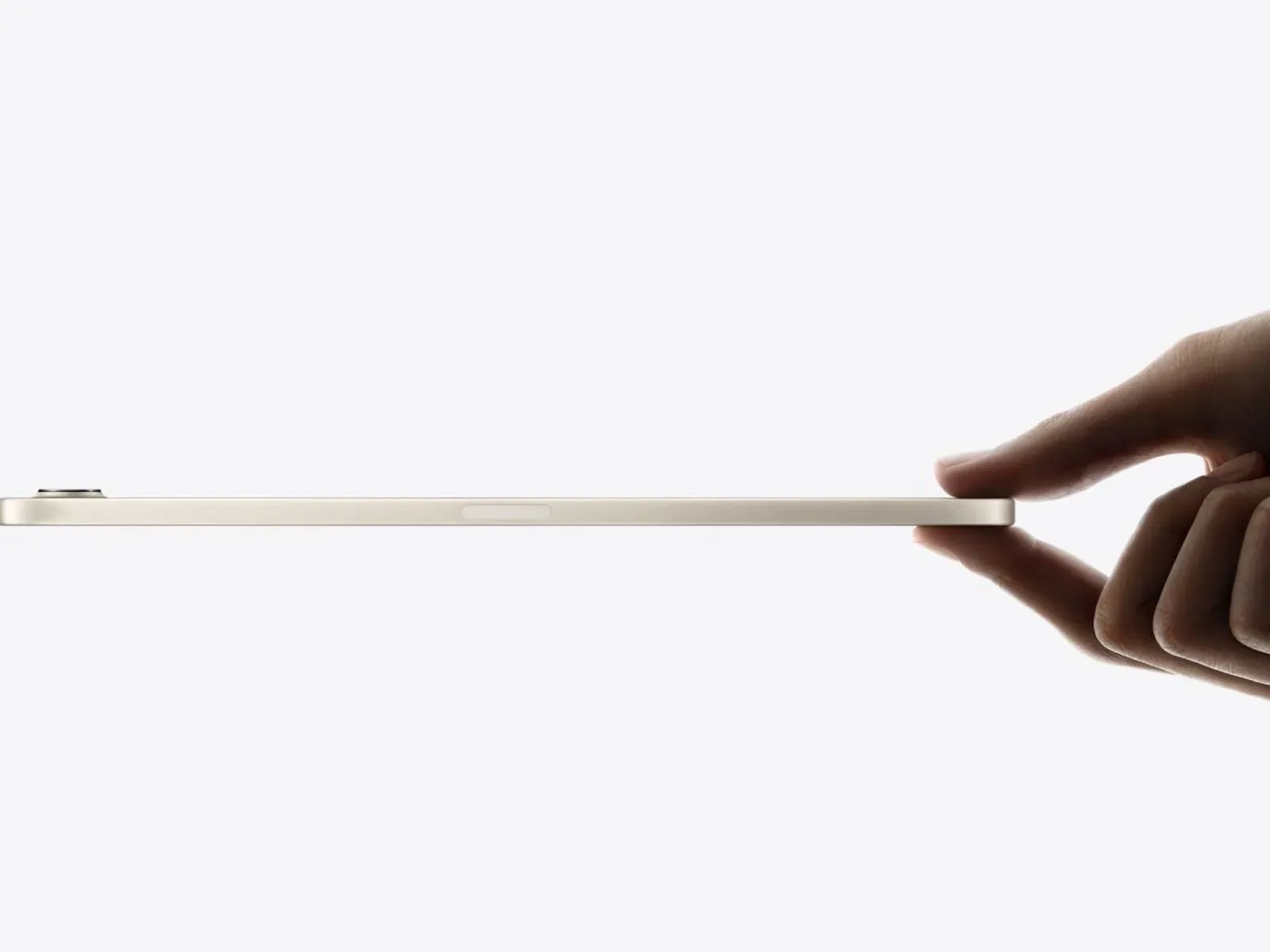
Apple’s iPad mini marketing page is not visually identical in every market. On the U.S. site and in most other countries, the device is shown held with pinched fingers. The South Korean version does not use that particular hand presentation.
That small image change has drawn attention because the pinched-fingers gesture, and similar emoji imagery, has reportedly taken on a separate and contentious interpretation in South Korea. Some people interpret it as a symbol mocking the size of men’s genitals. Apple has not commented on the differing iPad mini imagery or explained why the South Korean page uses another visual.
A product image can be more than a product image
At first glance, a hand holding a compact tablet is ordinary product photography. It can communicate scale, portability, grip, and the everyday use of a device faster than a paragraph of specifications. A pinched hold especially makes intuitive visual sense for a smaller tablet: it presents the product as light enough to lift or carry with one hand.
But marketing images do not arrive in a vacuum. Gestures are a kind of visual shorthand, and shorthand depends on shared context. The same arrangement of a thumb and finger can read as a practical way to hold an object in one place and as a loaded cultural reference in another. That difference is what makes Apple’s localized iPad mini page notable.
The available information establishes the image difference, not Apple’s reasoning. It is fair to observe that the South Korean page omits the pinched-fingers presentation found in the U.S. and most other markets. It is not possible, from that fact alone, to state definitively that Apple changed the asset because of the gesture’s local meaning. The company has offered no public comment on the matter.
What localization means in this case
Localization is the adaptation of a product, service, or message for a specific market. It is broader than translation. Copy may need a different phrase, a date format may change, and an image may be replaced if it risks communicating something unintended to a local audience.
Apple’s differing iPad mini image is a useful example of why visual localization belongs alongside language localization. A global campaign can have one core purpose—here, showing the physical device—while the presentation varies by region. That does not necessarily mean the product itself differs. It means the creative material surrounding it can be tailored to reduce ambiguity or avoid a locally sensitive association.
For companies with large international storefronts, this is a practical editorial challenge. Product pages are assembled from many components: device imagery, user-interface screenshots, product descriptions, legal information, purchasing details, and promotional graphics. Some of those elements are universal, while others can be swapped market by market. A hand pose can seem insignificant during a global design review, yet prove far more consequential once the page is read through a particular cultural lens.
The issue also illustrates a basic limitation of intent. A photographer, designer, or company may mean a gesture only as a visual cue for size or handling. Audiences may still recognize it through associations built elsewhere. In public-facing marketing, reception matters as much as the original creative intention because the audience experiences the finished image, not the internal brief behind it.
Why the lack of comment matters
Apple has not commented, leaving the change open to interpretation. That absence does not confirm a strategy, a complaint, or a response to any particular reaction. It simply means the public record here is narrow: the product page imagery differs, the gesture has a reported local interpretation, and the company has not explained the distinction.
That uncertainty is worth preserving. Online discussion often turns a visible change into a complete narrative, assigning a precise motive with more confidence than the evidence supports. In this case, the strongest version of the story is also the most straightforward one: South Korean visitors see an alternative to the pinched-fingers iPad mini image used elsewhere, in a context where that gesture can be read differently.
There is a broader lesson for consumers and marketing teams alike. A regional page is not always merely a translated copy of a U.S. page. It can be a separately considered version of the same campaign, with visual choices adjusted for audience and context. The difference may be subtle enough that visitors never notice it unless they compare pages across territories.
The wider Apple context is still separate
This image question concerns product-page presentation, rather than a change to the iPad mini itself. Nothing in the available information indicates a different device, feature set, or release plan for South Korea. It is a localized visual difference, not evidence of a hardware variation.
Apple’s regional business decisions can also vary for reasons unrelated to advertising assets. For example, the company’s App Store policy in Taiwan has its own separate commercial implications, as covered in Apple Will Cut Taiwan App Store Commission to 26% for Paid Apps and In-App Purchases. That is a different issue from a localized product image, but together they underscore a simple point: global technology companies do not operate as though every market has identical expectations, rules, or cultural signals.
A small change with a large communications lesson
The iPad mini image difference is unlikely to alter what the tablet is or how it works. Its significance lies in the communication around the product. A single hand pose can make a routine product shot part of a larger conversation about cultural reading, online symbolism, and the care required when global campaigns meet local meanings.
For shoppers, the practical takeaway is modest: regional Apple pages may use different creative assets even when they present the same product. For designers and publishers, the takeaway is more durable. Images should be checked not only for clarity and aesthetics, but also for how gestures, symbols, and visual conventions may be understood in the places where they will appear.
Apple’s silence means there is no official explanation to attach to this particular switch. Still, the contrast between the U.S. and South Korean iPad mini pages demonstrates why localized imagery is not a trivial finishing step. In international marketing, even two fingertips can carry more meaning than intended.