Apple’s 2026 Black Friday shopping event has begun rolling out, bringing the company’s familiar version of a holiday deal: buy selected hardware at the usual purchase price, then receive an Apple Gift Card for a later purchase. It is live in Australia, New Zealand, and Thailand, with availability expanding across other regions as November 27 arrives locally.
For shoppers in the United States, the offer runs from 12 a.m. Pacific Time on November 27 through 11:59 p.m. Pacific Time on November 30. Eligible purchases can be made in an Apple Store, through the Apple Store app, or at Apple.com.
The headline ceiling is a $300 Apple Gift Card, attached to select 16-inch MacBook Pro configurations. That is not an instant $300 price reduction. The distinction matters: the card is issued for a future purchase, so its value is strongest for someone who already expects to buy another Apple product, an accessory, software, storage, media, or a service. For anyone who only wants the initial item, a reseller’s direct price cut can be more valuable even when its advertised number is lower than Apple’s gift-card amount.
In other words, this is less a coupon code and more a two-step loot drop. The first purchase unlocks credit for a later trip through Apple’s storefront.
How Apple’s promotion works
The deal pairs a qualifying product with a specified gift-card tier. Apple Gift Cards can be used for hardware and accessories, as well as Apple Music, Apple TV, apps, film and television purchases or rentals, iCloud+ storage, and other purchases within Apple’s ecosystem.
That broad redemption list gives the card genuine flexibility, but it does not turn it into a cash discount. Buyers should separate two questions before treating the offer as a saving:
- Is the product I want eligible? Many of Apple’s newer devices are not.
- Will I realistically spend the gift card later? If not, its practical value can be lower than its face value.
This is particularly relevant for gamers and app buyers. A card can eventually go toward App Store purchases, subscriptions, storage, or other Apple purchases, but shoppers should not count future credit as money saved unless that follow-up spending was already in the plan. The promotion does not identify any game-specific hardware bundle or discount.
Apple’s direct offer is one of the comparatively rare times it attaches a formal promotion to its own hardware catalog. Still, direct gift-card offers and retailer discounts are structurally different. A retailer reduction lowers the amount paid now. Apple’s approach preserves the initial ticket price while giving credit that remains inside Apple’s purchasing system. Neither is automatically better; it depends on the product, the competing price, and whether the card will be used.
Related coverage includes Apple’s 2026 Black Friday offer rolls out with gift cards up to $300.
The U.S. gift-card tiers and eligible products
$25 Apple Gift Card
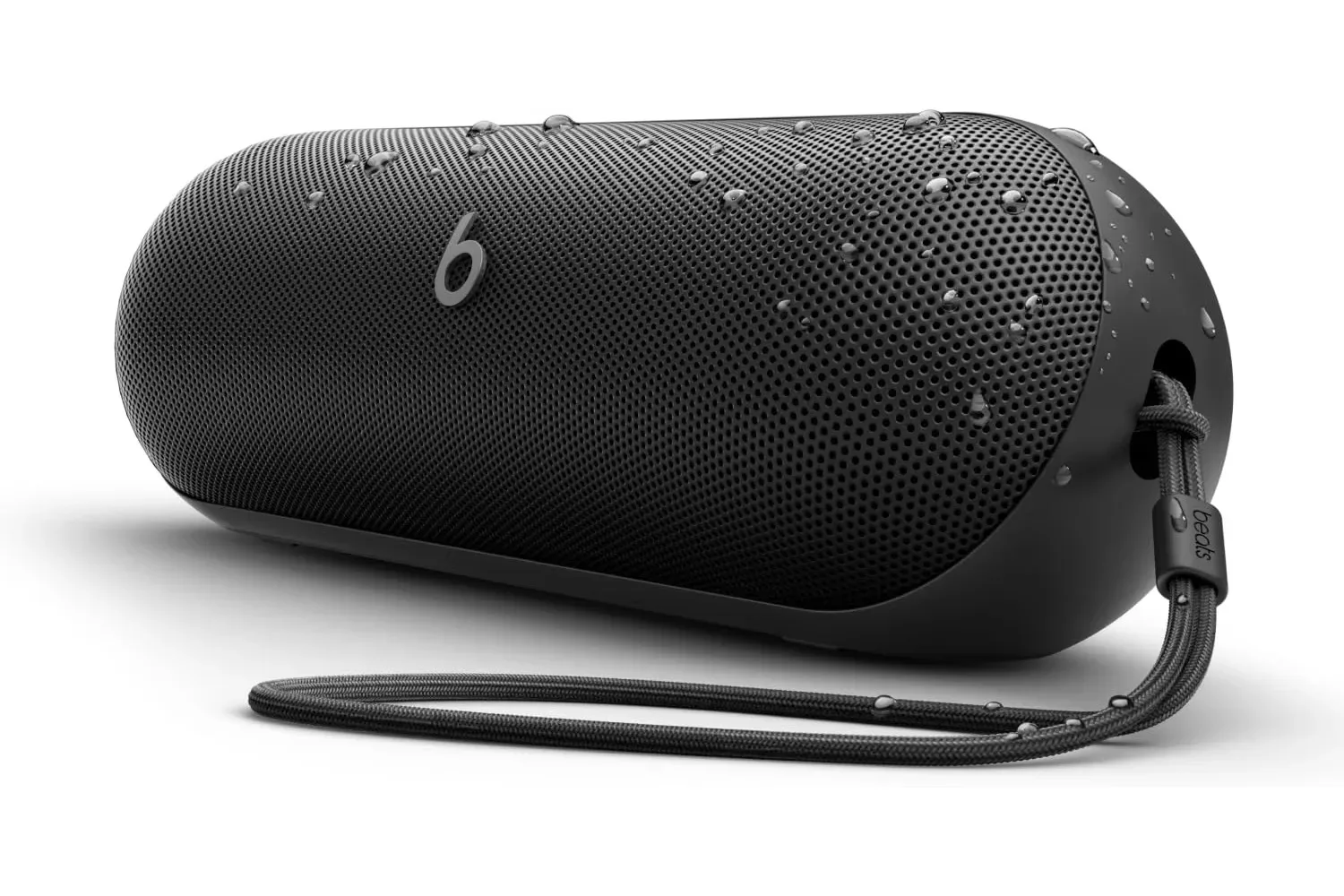
The $25 tier covers AirPods 5, AirPods 5 with Wireless Charging Case, HomePod mini 2, Beats Pill, Apple Pencil Pro, and Magic Keyboard models for the 11-inch and 13-inch iPad Air and 11-inch and 13-inch iPad Pro.
It also applies to a newly included group of third-party accessories. Apple is offering a $25 card with the Anker 3-in-1 Cube with Qi2; Belkin UltraCharge Pro 2-in-1 Convertible Magnetic Charger and 3-in-1 Magnetic Charging Dock; Mophie 3-in-1 Wireless Charge Stand, 4-in-1 Wireless Charge Stand, and Roam 3-in-1 Travel Charger; Twelve South ButterFly SE 2-in-1 USB-C Qi 2.2 Travel Charger; Nimble Podium 3-in-1 Wireless Charger; and Rains laptop covers and Utility MacBook sleeves in listed 14-inch and 16-inch sizes.
This is the first time the event includes a $25 gift-card offer on selected third-party accessories. It is a notable expansion because the eligible list reaches beyond Apple-branded devices into chargers, travel charging products, covers, and sleeves. Buyers should nevertheless make sure the exact model and size match the qualifying listing rather than assuming every product from those brands is covered.
$50 and $75 Apple Gift Cards
The $50 tier includes iPhone 17e, Apple Watch SE 3, Apple Watch Series 12, AirPods Pro 3, HomePod, Beats Studio Buds +, Beats Solo 4, Powerbeats Fit, Powerbeats Pro 2, and Beats Studio Pro.
The $75 tier applies to iPhone 16, iPhone 17, AirPods Max 2, and Beats 360.
For audio shoppers, it is worth comparing the final outcome against current retailer offers rather than assuming the official deal wins. The Beats Pill, for example, is part of Apple’s $25-card tier, while it has separately appeared in Black Friday price-cut coverage. A direct reduction and a future card are not interchangeable offers. Our report on the Beats Pill’s Black Friday price drop is a useful reminder to compare the same product across sellers and account for the form each promotion takes.
$100 and $125 Apple Gift Cards
Apple is attaching a $100 card to iPhone Air, Mac mini, both the 11-inch and 13-inch iPad Air with M4, and Apple Watch Ultra 4.
The $125 tier is reserved for the 11-inch and 13-inch iPad Pro models with M5. The modest step between the $100 iPad Air tier and $125 iPad Pro tier should be read as a promotion difference, not as a complete explanation of which iPad represents better value. A gift-card amount is one component of a purchase decision; the buyer still needs the particular device, configuration, and price to make sense independently.
$200, $250, and $300 Apple Gift Cards
The 13-inch and 15-inch MacBook Air models with M5 receive a $200 card. The 14-inch MacBook Pro with either M5 Pro or M5 Max receives $250. At the top of the schedule, the 16-inch MacBook Pro with M5 Pro or M5 Max receives the event’s maximum $300 card.
Those figures are large enough to make the offer look unusually generous at first glance. But the same arithmetic still applies: the card only delivers its full practical value when it replaces a future Apple purchase that would otherwise have been paid for separately. It cannot be combined with educational pricing, and refurbished hardware is excluded.
What is not included
Newer Apple products are substantially absent from this year’s promotion. The exclusion list includes iPhone 18 Pro, iPhone 18 Pro Max, iPhone Duo, MacBook Neo, the latest iPad mini models, Apple TV 4K, iMac, and Mac Studio, among others. Refurbished products do not qualify.
This makes the event a poor fit for buyers who have already settled on one of those excluded devices. It also means that seeing a product in Apple’s catalog is not enough to assume it earns a card. Eligibility is model-specific, not a blanket discount on every category Apple sells.
The education-pricing limitation is also important. Shoppers eligible for that program cannot stack it with this promotion, so the relevant comparison is not merely Apple’s public price versus Apple’s public price plus a gift card. It is the best available route for that individual buyer, subject to the separate offer terms.
A practical way to compare Black Friday offers
A quick comparison process can keep the seasonal marketing fog from becoming a permanent resident of the browser tab:
- Confirm exact eligibility. Check the device generation, screen size, chip, and configuration. Similar names can belong to different gift-card tiers or be excluded entirely.
- Write down the upfront cost. This is the amount leaving the account today, not the amount after mentally spending a future card.
- Value the card honestly. Treat it at face value only if there is a planned Apple purchase that it will cover. Otherwise, regard it as conditional future value.
- Check direct-discount alternatives. Apple itself notes that higher immediate discounts are often available from Amazon and other resellers. Compare like for like: same product, same configuration, and the same purchasing conditions.
- Check incompatibilities. Educational pricing cannot be combined with the offer, and refurbished items are ineligible.
- Shop within the window. For the U.S. promotion, that means November 27 through November 30 on Pacific Time.
There is no universal winner between a gift-card promotion and a straight discount. Someone planning to buy a MacBook Pro now and pay for Apple services, apps, iCloud+ storage, or accessories later may be able to use the card efficiently. Someone purchasing a single item with no intended future Apple spend may prefer the largest verified upfront discount elsewhere.
That is the useful framing for Apple’s 2026 event: it is a targeted credit offer, not a storewide sale. The best tier is not necessarily the largest card. It is the eligible product a buyer actually wants, paired with a card they will genuinely use and a deal that still holds up against the wider Black Friday market.