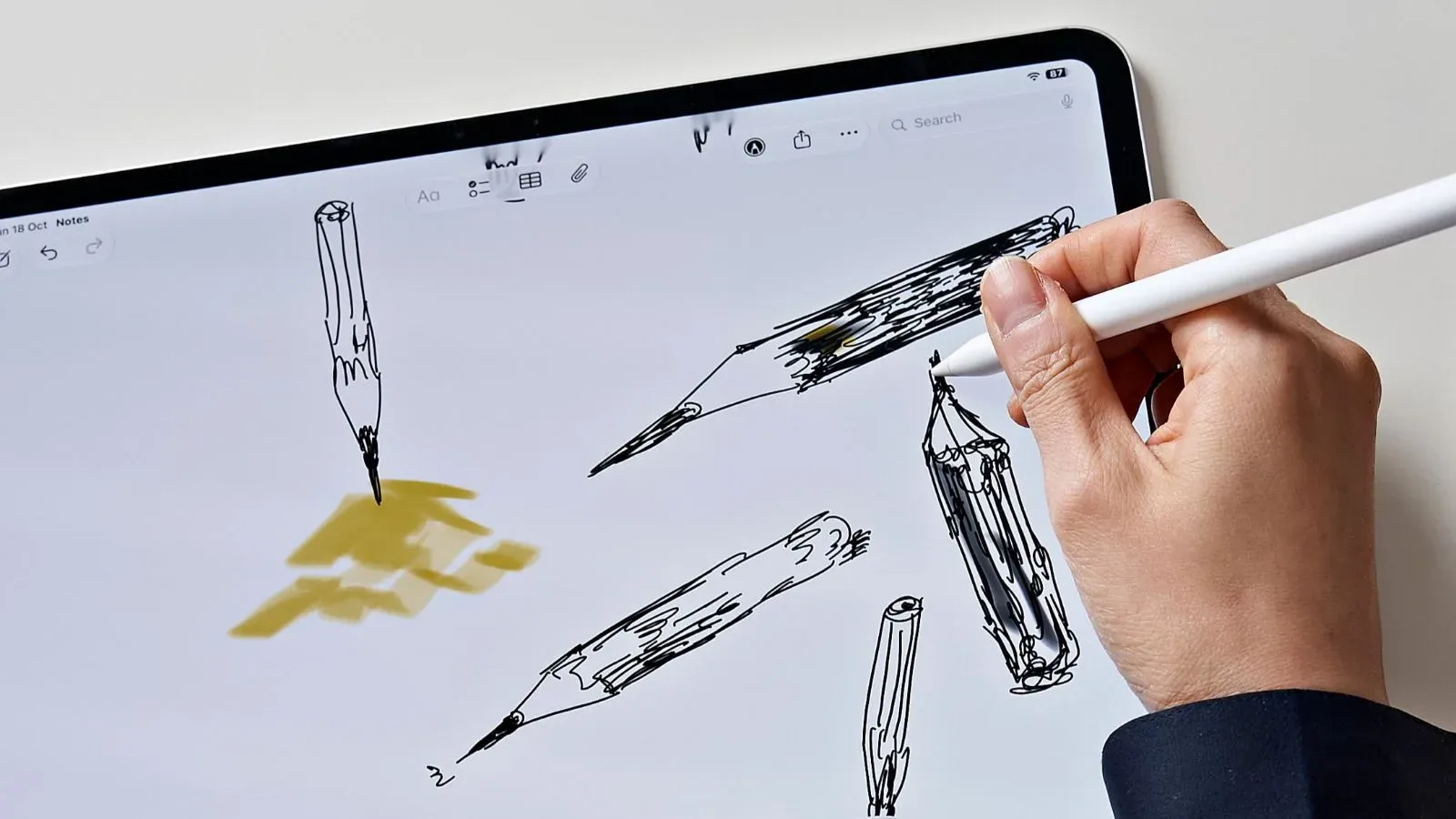
Apple’s latest design showcase is making a fairly persuasive argument that the modern studio is less a single room full of foam models and more a small electronic ecosystem with a very expensive charging situation. Four projects in the second annual Designers of Tomorrow exhibition in Paris were developed with Apple products and software, connecting the company’s hardware to furniture and lighting rather than to its more typical worlds of apps, entertainment, and office work.
The exhibition opened October 20 at Hôtel de Maisons and takes presence as its theme. In this context, presence is not a device specification or a remote-work status indicator. It is the idea that an object affects a room—and the people inside it—through its scale, light, material, physical use, and visual character. That makes furniture and lighting a suitable focus: they are designed to be encountered in person, even when portions of their creation happen on screens.
Apple’s role in the projects is presented through the tools each designer used during development. The result is not a claim that software replaces material craft. Instead, the four examples outline distinct digital jobs in a physical-design workflow: sketching and modeling, exploratory drawing, documentation and presentation, plus communication between people working in different cities.
Four projects, four versions of a digital studio
Architect Salem S. Charabi used a MacBook Pro to sketch and model a lantern. Modeling here means building a digital representation of an object: a way to explore form before that form becomes a physical piece. A lantern is particularly apt for this kind of process because its silhouette and structure matter alongside the way it is intended to function as lighting. Digital sketching and modeling can place early visual ideas beside more structured object development without pretending the computer itself is the finished lamp.
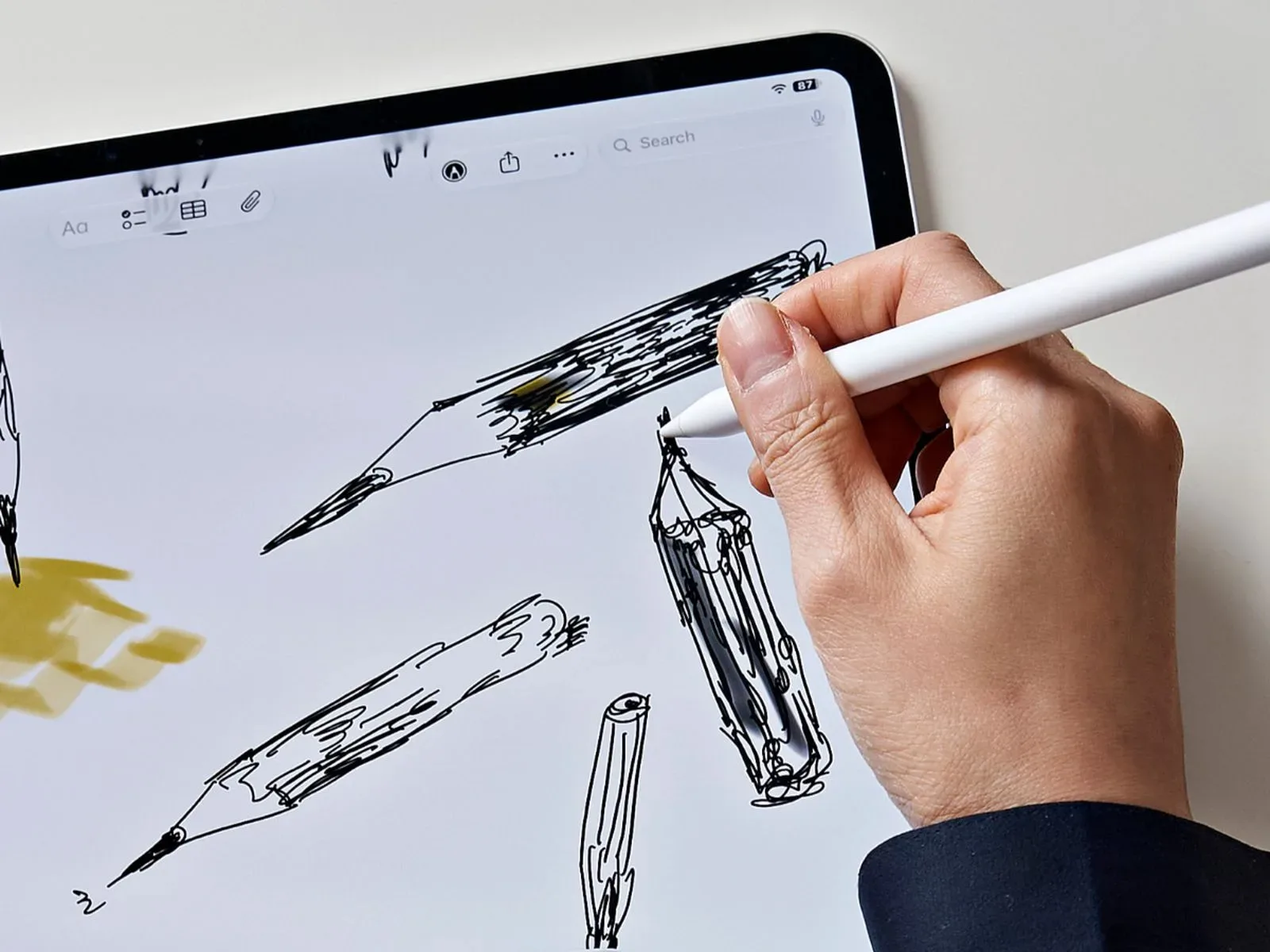
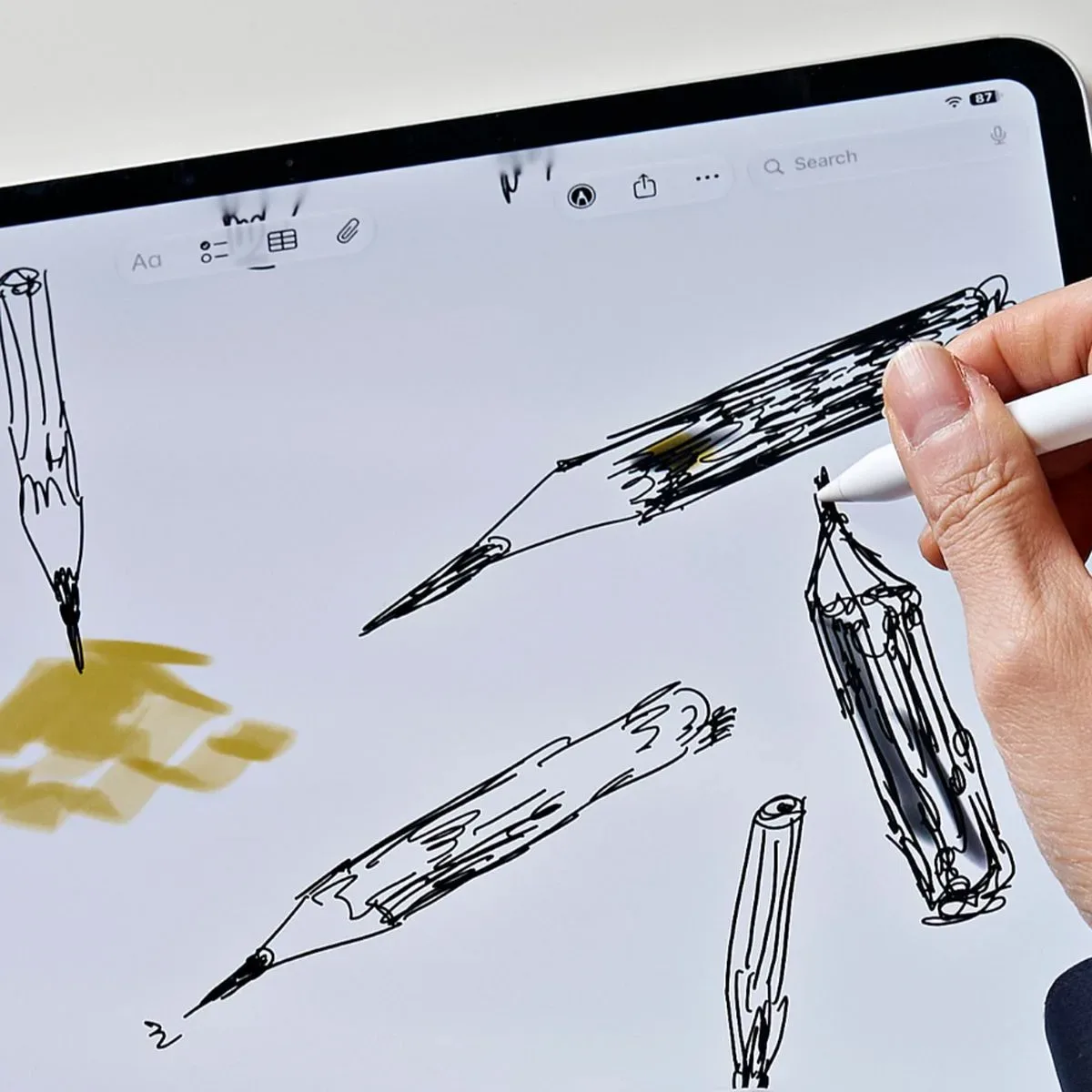
Designer Yoonjeong Lee used an iPad Pro and Apple Pencil while developing a combined table and lamp. That pairing underlines a different kind of early-stage work. A stylus-equipped tablet is positioned as a direct drawing surface, useful for moving ideas from hand gestures into a digital workspace. The reported object also combines two familiar domestic functions in one piece, making the relationship between form, surface, light, and use central to the design idea.
Isabel Rower’s process included using an iPhone to document her work and Keynote to test visual ideas for a chair with ceramic bead fringe. Documentation can sound like the administrative step after creativity has ended, but it can also be part of the creative record: images provide a way to track iterations, materials, and progress. Keynote, meanwhile, is presentation software. Its appearance in the project is a reminder that designers may use general-purpose tools for arranging and comparing visual possibilities, not solely software made for a narrow professional category.
The ceramic bead fringe is also a useful detail because it locates the chair’s identity in a material treatment, not in the device used to develop it. The phone and presentation tool are parts of the route to the work; the chair, beads, and their physical presence are the actual subject of the exhibition. It is a distinction worth keeping clear whenever a technology company places creative work in its spotlight.
Finally, Parafernalia founders Genki Matsumura and Sebastián Zorrilla used Procreate, Messages, and FaceTime to work between Monterrey and Mexico City. Their steel piece opens into a table and stools. The listed tools cover both image-making and communication: Procreate is used for digital art and drawing, while Messages and FaceTime support text-based and video conversation. Their project makes the show’s most direct case for collaboration across distance. The finished object is built from steel and changes configuration, but its development involved an exchange that crossed two locations.
Why the workflow matters more than a device checklist
It would be easy to read the exhibition as a roll call of Apple hardware: MacBook Pro, iPad Pro, Apple Pencil, iPhone. But the more meaningful pattern is that no two participants are described as using the same kit for the same reason. One designer sketched and modeled. Another developed ideas through tablet-and-stylus work. Another documented work and arranged visual experiments. The final pair connected drawing and discussion across a geographic gap.
That differentiation matters because “made using” can be an overly broad label. Digital tools can enter a project at many points, from a first line on a blank canvas to an image archive, a discussion, or a presentation. The provided details do not establish that any of these products performed every technical task required to fabricate the furniture or lighting. Nor do they need to. The interesting claim is narrower and more credible: the devices and apps were integrated into particular moments of the designers’ creative processes.
For readers who make games, illustrations, props, fan projects, or other creative work, that is arguably the practical takeaway. A productive setup need not mean owning a mythical all-in-one creativity machine that draws, communicates, documents, models, exports, and makes the tea. It can mean assigning clear roles to the tools already in use. A laptop may suit structured development, a tablet may suit quick visual exploration, a phone may capture an evolving project, and communication software may keep a distant team aligned.
That broader Mac ecosystem has also remained relevant to gaming-adjacent technical work, as seen in the separate story on an unofficial Skyrim and modding path for Apple Silicon Macs. The contexts are different, but both illustrate a basic point: the value of a platform is often determined by what people are able to build, adapt, and share with it, rather than by the product category printed on the box.
Presence, with a remote-work asterisk
The theme creates a pleasing tension. These projects concern presence, while at least one was developed through a workflow that included long-distance communication. Yet that is not necessarily a contradiction. Matsumura and Zorrilla’s collaboration between Monterrey and Mexico City suggests that being absent from the same room does not prevent a shared design process. It simply makes the channels of exchange—drawings, messages, calls, and visual references—more important.
At the same time, the exhibition itself returns attention to the real-world encounter. Furniture and lighting are not merely images. A table and stools need to be understood as objects that occupy space. A lantern’s effect involves light. A chair with ceramic bead fringe invites attention to surface and detail. Screen-based development may enable, record, and communicate ideas, but the exhibition format emphasizes the final physical works.
That balance is perhaps the strongest idea in the program. Technology is shown neither as a magical substitute for a studio nor as an intruder that must be banished so the “real” design can begin. It is treated as a collection of tools around the edges and within the center of creative work: capable of carrying a sketch forward, helping visual thoughts take shape, preserving process, or maintaining a collaboration that otherwise spans cities.
The program behind the display
Designers of Tomorrow is in its second year and is organized with Design Miami. Rodman Primack curated the exhibition, while Apple’s Molly Anderson served on the jury that selected participants. Those roles matter because they distinguish the work of organizing, curating, and selection from the work of creating the featured objects.
For Apple, the exhibition is also a polished demonstration of its creative-tool message. The company can point to a MacBook Pro, iPad Pro, Apple Pencil, iPhone, Procreate, Keynote, Messages, and FaceTime appearing in genuine project narratives rather than assembling a generic grid of product images. For the designers, the framing places their work in Paris within a program centered on emerging design and a shared conceptual theme.
The device list may be familiar; the projects are what give it purpose. A lantern, a table-lamp hybrid, a fringed chair, and a steel object that becomes a table and stools are all physical answers to questions of presence. The digital processes behind them do not erase that physicality. If anything, they show that contemporary design can move between pencil-like gestures, recorded images, slides, messages, calls, and material objects without having to declare one medium the winner.