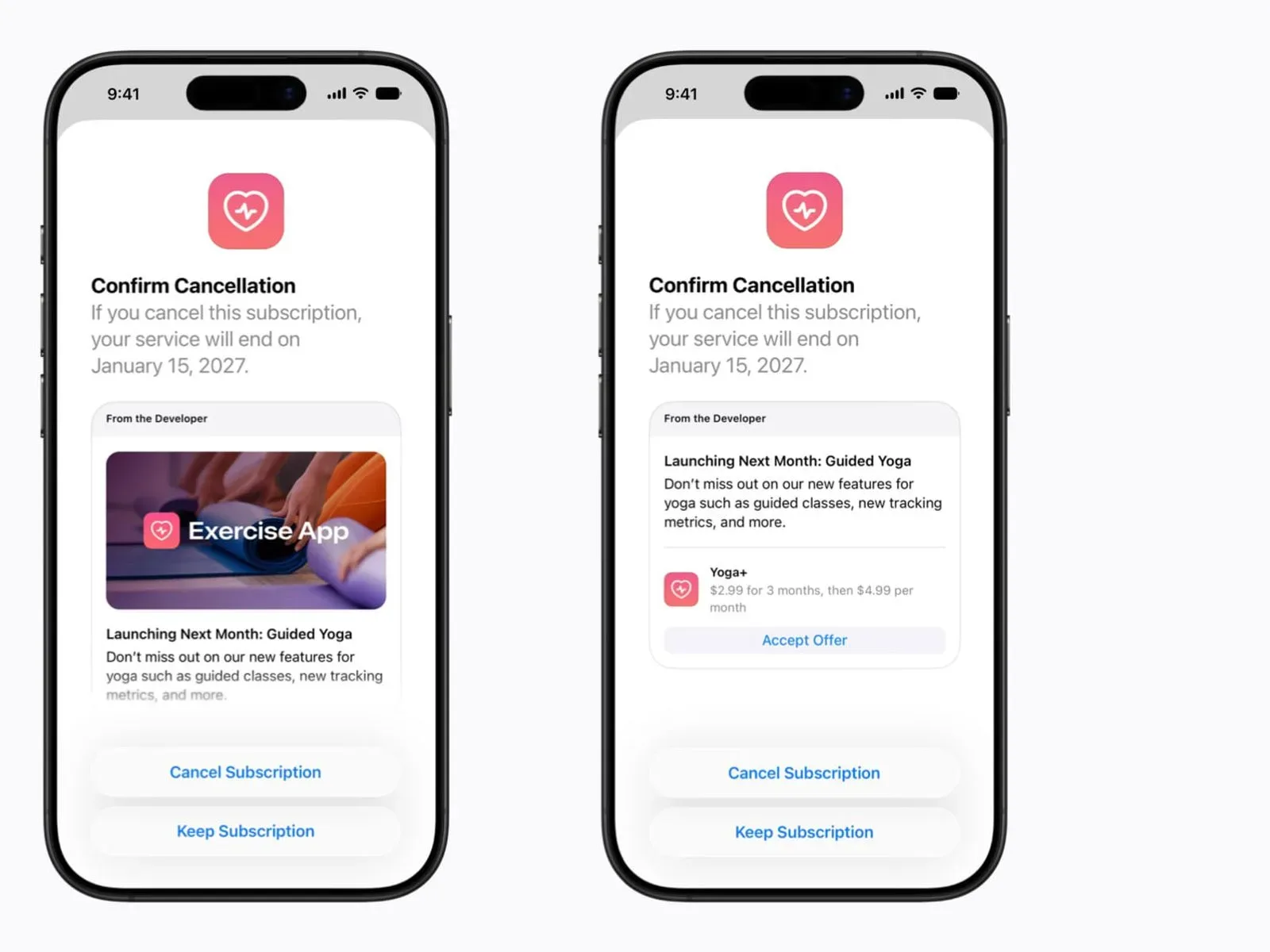
Canceling an App Store subscription may now come with a final interruption: a message from the app asking a customer to reconsider.
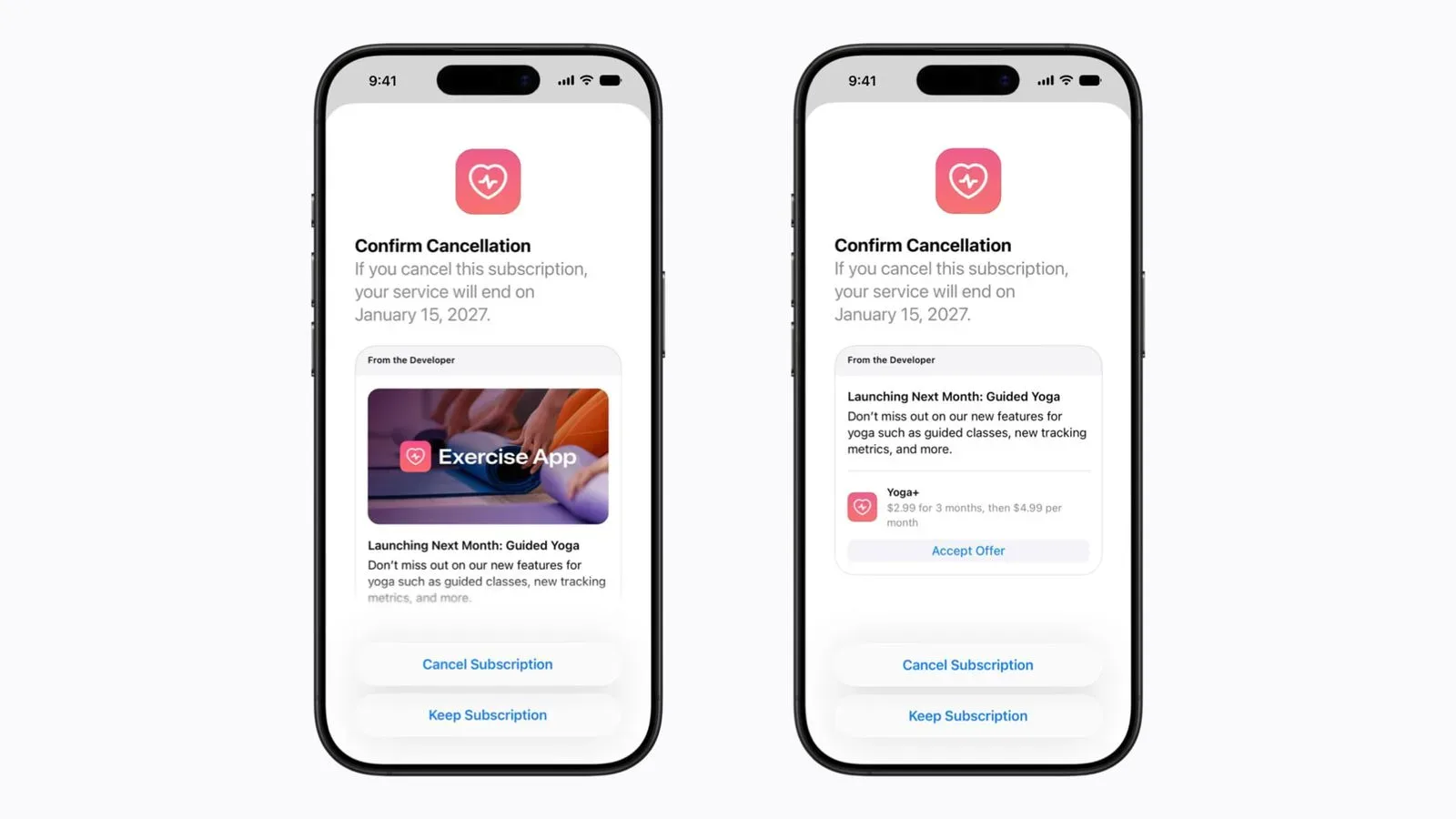
Apple has introduced subscription retention messages for developers offering auto-renewable subscriptions. The feature lets an app present material within the cancellation flow when a subscriber begins the process of ending a plan. That material can be text, an image, or a special offer, meaning a straightforward cancellation screen may sometimes become a brief pitch to stay.
For players and app users, the immediate takeaway is simple. An attempt to end a recurring charge could produce a discount, a reminder of benefits, or another reason supplied by the developer before the subscription is canceled. The existence of a message does not mean a cancellation has been blocked; the described feature is a retention prompt appearing as part of the cancellation process.
What Apple has added
The new option is available for auto-renewable subscriptions managed through the App Store. An auto-renewable subscription is a recurring plan that continues unless the subscriber cancels it. This is the model used by many apps and services for premium features, continuing access, or other ongoing benefits.
Developers can configure retention messages through App Store Connect, Apple’s developer-facing system for App Store distribution and subscription management. They can decide who is eligible to receive a message and set a waiting period between messages. Those controls matter because they allow developers to avoid serving the same appeal every time an individual enters the cancellation path—or, conversely, to tailor campaigns around selected subscriber groups.
Apple has also created a separate Retention Messaging API. An API, or application programming interface, is a technical mechanism that lets software communicate with a service under defined rules. In this case, the Retention Messaging API allows a developer to select which message a subscriber sees based on that subscriber’s subscription details. Access to that API is available by request.
The two routes suggest differing levels of complexity. A developer can add messages through App Store Connect, while developers that need to choose messages dynamically using subscription information may seek access to the API. Apple has not detailed the specific subscription fields that can be used in that selection process, so it would be premature to assume every kind of customer data or every imaginable targeting rule is supported.
What a retention message may look like
The announced formats are deliberately broad: text, images, or a special offer. A text message could explain why a subscription is useful. An image could make the prompt more visually noticeable. A special offer could give a subscriber a financial reason to remain enrolled.
That makes the system a potential win for people who were planning to leave chiefly because of cost. A discount shown at the point of cancellation may be more useful than a generic marketing email sent days later, because it arrives while the user is making the decision. It can also give a developer a direct place to clarify the value it believes a continuing subscription provides.
There is a clear trade-off, though. The cancellation flow is where a user goes to end a paid recurring relationship. A well-targeted offer can feel relevant; an overly dramatic or repetitive appeal can feel like needless friction. Apple’s wait-time control is therefore a meaningful part of the tool. It gives developers a way to limit message frequency, but it does not dictate how restrained any individual app’s messaging will be.
Why the feature matters for games and subscription-heavy apps
Recurring billing has become a central business model across mobile software, including games and game-adjacent services. Apps may bundle premium tools, content, access, or other benefits behind an ongoing subscription. For those businesses, every cancellation is a moment where a developer can either lose a subscriber or offer a different arrangement that better fits that person’s circumstances.
Retention messaging does not create a new subscription product by itself. Instead, it changes the communication available at a sensitive point in the existing subscription lifecycle: the moment someone is trying to stop renewal. The practical goal is retention, which means convincing a current customer not to leave rather than acquiring a new one.
The feature may be especially relevant to developers that offer more than one subscription level or that can make a limited discount available. Still, the details supplied so far do not establish how offers must be structured, whether every app will use them, or how often users will encounter them. The right expectation is not that every cancellation attempt will trigger a deal, but that App Store users may now encounter offers or explanations before completing a cancellation.
Subscription pressure is already a familiar subject across digital entertainment. As more services compete for recurring payments, users often evaluate which plans are worth keeping at a particular time. That broader reality is reflected in the growth of paid subscription services beyond games, including the figures discussed in Snapchat’s subscription plans. Apple’s new capability gives App Store developers another formal tool for responding when a customer decides that a plan may no longer be worth the renewal.
Practical implications for subscribers
Users should distinguish between an offer and an obligation. A retention prompt can present information or a deal, but it is not itself a reason to continue a subscription. If the app is no longer being used, if the recurring cost does not fit a budget, or if the offer does not provide meaningful value, the original intention to cancel remains valid.
It is also worth reading any special offer carefully. The supplied information confirms that developers can show offers, but it does not describe the terms those offers will use. Before accepting one, a subscriber should understand what is being offered and whether the arrangement changes the value of keeping the plan. A discount can be worthwhile, but only if it genuinely aligns with what the person intends to use.
For developers, the challenge is not simply to put a message in front of every departing customer. A generic plea may do little. The more useful application is likely to be a clear, limited explanation or a relevant offer shown to an eligible subscriber at an appropriate interval. Apple’s eligibility and wait-time settings provide the basic controls needed to make those choices, while the API offers a more subscription-detail-driven way to choose the message.
A small change to a consequential screen
Cancellation screens are not glamorous product surfaces, but they are consequential. They sit at the intersection of customer choice, recurring revenue, and trust. Apple’s retention messaging feature turns that screen into a new communication channel for developers, with text, images, and offers now available before an App Store subscriber exits an auto-renewing plan.
How welcome that change feels will depend on execution. A concise, useful offer could help a user keep a service at a better value. A poorly timed message may simply become another step on the way out. The important boundary is that users should still be able to make the decision they came to make: continue the subscription, or cancel it.