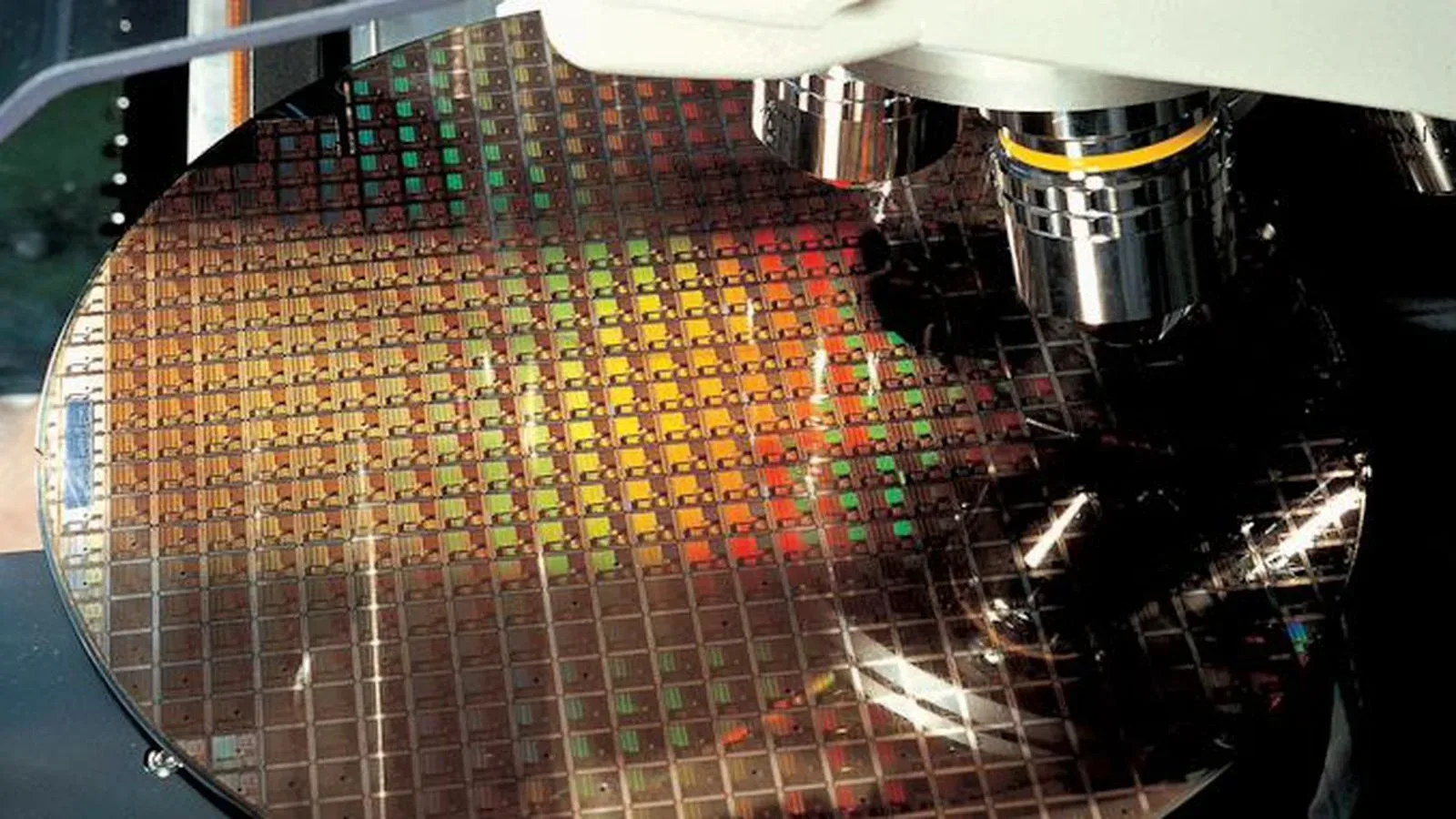
Apple appears to be exploring a key piece of data-center technology: using light, rather than conventional electrical signaling alone, to move information between server chips. A newly highlighted job listing for a Silicon Photonics Engineering Program Manager calls for experience in optical I/O, silicon photonics and co-packaged optics, with work extending from an early concept through mass production.
That does not amount to confirmation of a finished Apple server, an announced data-center platform, or a shipping product. It is, however, a notable indicator of the technical areas Apple is staffing for. The role’s focus on server chips and production planning suggests the company is evaluating technology that could matter well beyond a laboratory project.
What the listing signals—and what it does not
The central fact is fairly narrow: Apple is seeking an engineering program manager with expertise in optical chip-to-chip connectivity. Program-management roles commonly coordinate complicated work across design, engineering, validation and manufacturing disciplines. In this case, the stated scope from concept to mass production is significant because it frames optical interconnects as a technology with a potential route to deployment, rather than a purely theoretical research interest.
Still, a hiring listing is not a product roadmap. It cannot establish which hardware Apple may ultimately build, when it might arrive, how widely it could be used, or whether the work is intended for internal infrastructure, a future server product, or another purpose. The measured reading is that Apple is investing attention in an important class of data-center connection technology.
The company was reported in September to be considering a return to the server market with its own M-series chips, amid questions of cost and speed. This hiring activity is compatible with that possibility, but it should not be treated as proof that those plans will materialize. Apple ended its previous Xserve line in 2011, making any renewed server effort a meaningful shift in emphasis if it were to happen.
Silicon photonics in plain language
Silicon photonics is technology that uses light to transmit data through components built using silicon-related manufacturing techniques. In this context, it is about communications, not calculation: the optical connection carries data between chips rather than replacing the chips’ processors with light-powered computing.
That distinction matters. A server chip may still perform its calculations electronically. The challenge being addressed is the flow of data around the system: from one chip to another and across the high-performance links needed by large computing installations. The listing’s language points specifically to that connective layer.
Optical I/O means optical input/output. “I/O” is the exchange of information entering and leaving a chip or system. When I/O is optical, data is converted into light for transmission and then received at the other end. The appeal is that light-based links are considered an emerging core technology for AI data centers, where fast movement of immense quantities of data between many chips is increasingly crucial.
Co-packaged optics is a related design approach. Rather than placing optical components farther away from the computing or switching silicon, it brings them into a more tightly integrated package. The intended goal is to make the chip-to-chip connection more efficient and capable as data-transfer demands climb. Apple’s listing explicitly seeks familiarity with this area, placing it close to a major technical conversation in AI-oriented infrastructure.
Why AI data centers care about connections
AI data centers are often discussed in terms of the processors inside them, but processors are only part of the system. Large workloads require data to travel among chips. If that movement becomes a limiting factor, faster individual processors cannot fully solve the system-level problem.
That is the practical significance of optical interconnects. They are concerned with the pathways between chips—the digital equivalent of roads between districts, rather than the activity inside each building. As workloads spread across more hardware, those pathways must cope with heavy traffic at speed. The technology mentioned in Apple’s recruitment effort is meant to address that communications problem.
For game players, this is largely upstream infrastructure rather than a feature that changes a controller, console or PC overnight. Yet the expansion of AI data-center hardware has effects across the wider technology supply chain, including the competition for advanced chips, manufacturing capacity and power-efficient system design. Apple’s existing chip efforts are also relevant to the broader industry conversation; the company’s M-series silicon is named in reporting around a possible server-market return.
Apple’s consumer-device work remains separate from the evidence here. It would be a mistake to infer that light-based chip links are headed to a phone, tablet or game device from this listing. For consumer-side Apple coverage, the recent iPad mini 8 pricing news concerns a very different product category and should not be read as connected to this server-chip work.
From concept to production is a demanding path
The wording around concept-to-mass-production responsibilities helps explain why this is more than a simple recruitment curiosity. Turning a specialized interconnect concept into something manufacturable requires a chain of decisions: what the components are, how they fit into a package, how they are tested, and how they can be built consistently at scale. The supplied information does not disclose Apple’s proposed implementation, suppliers, manufacturing schedule or performance targets. Those details remain unknown.
But the requested combination of expertise makes the technology direction clear. Apple is looking at optical I/O and silicon photonics alongside co-packaged optics, not merely generic networking. That points to a tightly focused interest in improving the communication links around server-class silicon.
What to watch next
The most useful next signals would be concrete ones: additional roles in adjacent server or optical-hardware disciplines, official product disclosures, or clearer evidence that Apple is building infrastructure around its own chips. Until then, the listing supports a restrained but interesting conclusion: Apple is investigating light-based data connections as part of server-chip work, in a field increasingly important to AI data centers.
For now, it is best understood as an infrastructure clue—not an announcement. Apple has not publicly laid out a new server platform in the information available here, and optical interconnects should not be confused with optical computing. What the role does show is that the company is allocating attention to the less glamorous, highly consequential part of modern computing: getting data between powerful chips quickly enough for the rest of the system to keep up.